


Indoor Flowering Plants
Indoor flowering plants bring colour, and often scent, to the months when the garden outside is resting. Our range is led by three groups: Anthurium andraeanum cultivars in red, pink, purple and near black; Phalaenopsis moth orchids with long-lasting sprays; and citrus plants, from the calamondin orange tree to Meyer lemon and kumquat. Peace lily, Hoya, Paphiopedilum and Hippeastrum complete the selection. These are flowering house plants chosen for life indoors, with blooms that last for weeks or repeat through the year, and orchids and Anthurium make considered gifts.


















About Flowering House Plants
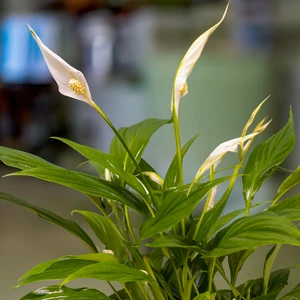
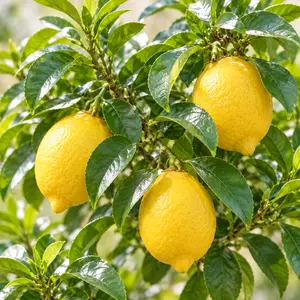
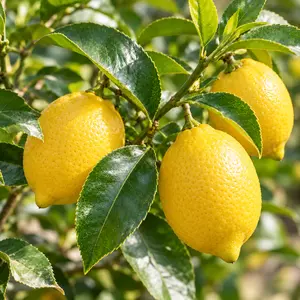
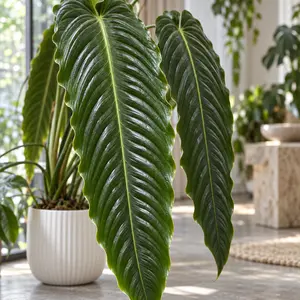
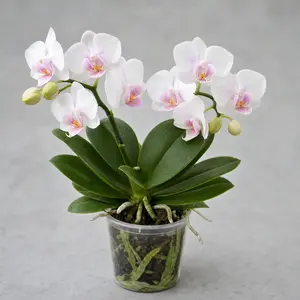
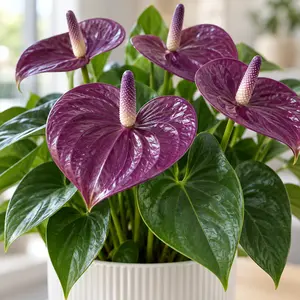
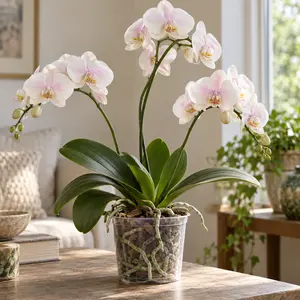
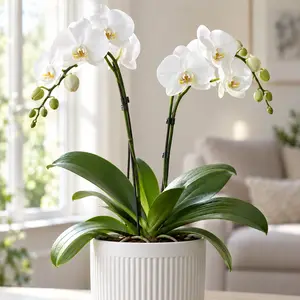
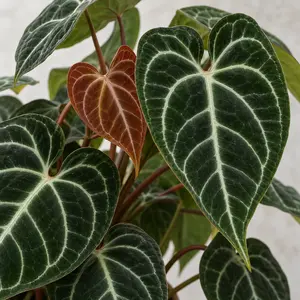
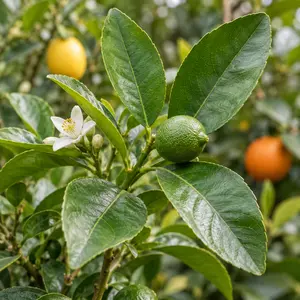
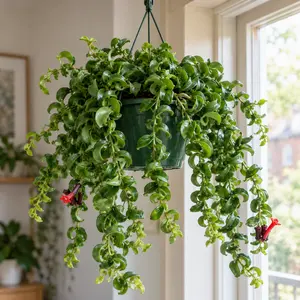
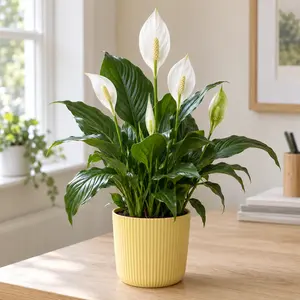
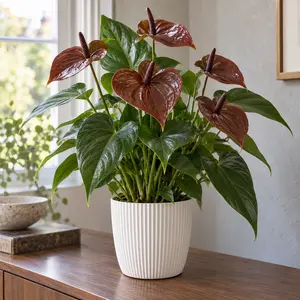
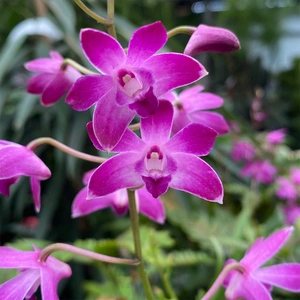
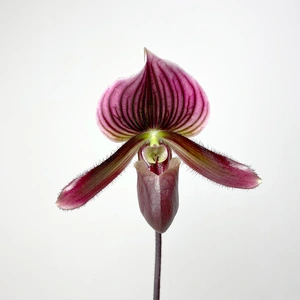
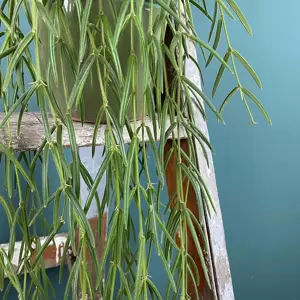
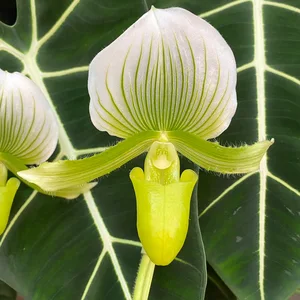
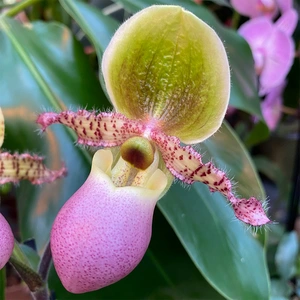
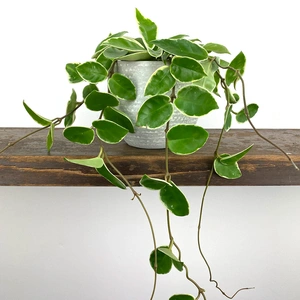
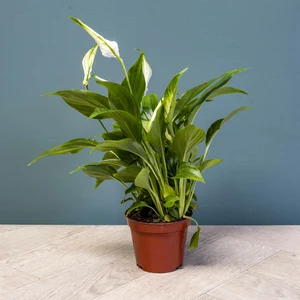
Anthurium is our largest line, with andraeanum cultivars such as 'Royal Zizou', 'Karma Purple', 'Karma Black' and 'Yellow Champion' offering a flower colour for most schemes. Phalaenopsis follows, including 'Liberty White', 'Jaguar' and the branching multiflora 'Optifriend', alongside Paphiopedilum slipper orchids and Miltonia. Our citrus includes Citrus × microcarpa 'Calamondin', Citrus × limon 'Meyer', kumquat, limequat, makrut lime and sweet orange. Peace lily cultivars such as 'Bingo Cupido', Hoya carnosa with its waxy flowers and glossy foliage, Medinilla magnifica, Clivia miniata and potted Hippeastrum bulbs complete the range.
Anthurium and Phalaenopsis want bright, filtered light: an east window, or a south window behind sheer curtains, at a temperature of 16 to 24°C. Check soil moisture before watering Anthurium and let the top few centimetres dry; water orchids when the roots in their bark turn silver, then drain fully so nothing sits in the saucer. Grouping plants raises humidity and supports healthy growth. Citrus, shrubs of warmer climates, differs: these plants require full sun, a free-draining compost and a cool, bright winter at 10 to 15°C, with time outdoors in the summer months.
Central heating, draughts and short winter days are the real constraints in London homes, and our selection reflects them. Phalaenopsis and Anthurium flower for weeks on a bright windowsill and tolerate warm, dry rooms better than most houseplants. Peace lily accepts the lower light of north facing rooms and hallways, though it flowers more freely in a brighter location. An indoor lemon tree or calamondin needs the sunniest position you have, ideally a conservatory or south facing bay. Our Kentish Town team can match each plant to your rooms. Visit Boma to explore our collection of indoor flowering plants.