


Japanese Anemone Plants
Japanese Anemone (Anemone x hybrida) is one of autumn's most elegant border perennials, producing its simple, saucer-shaped flowers on tall wiry stems from August through to October. It establishes slowly but spreads freely once settled, making it ideal for underplanting trees or filling difficult dry-shade positions in urban gardens. 'Honorine Jobert' (white, single) and 'König Charlotte' (soft pink, semi-double) are well-proven cultivars. Tolerates London clay and partial shade better than most late perennials. Boma's Japanese anemone collection covers key cultivars in white, pink, and rose shades — available as plug plants and potted plants. Visit our Kentish Town centre for our current seasonal selection.
About Our Japanese Anemone Collection
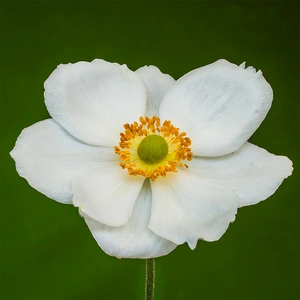
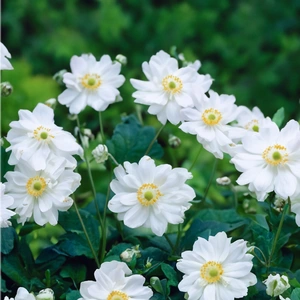
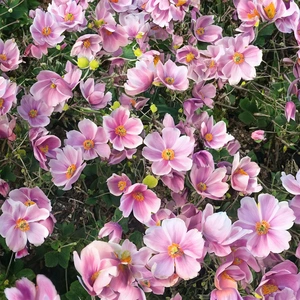
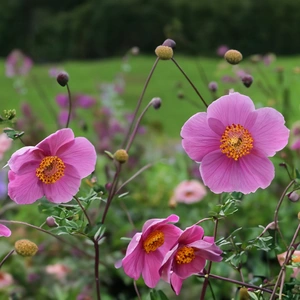
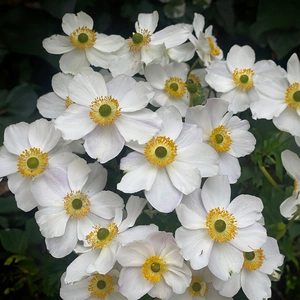
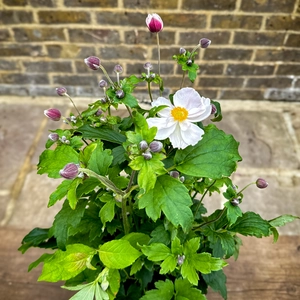
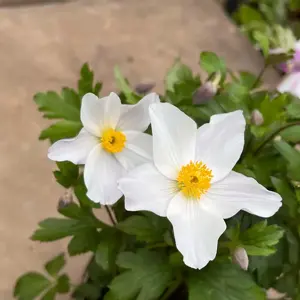
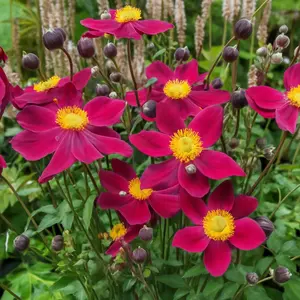
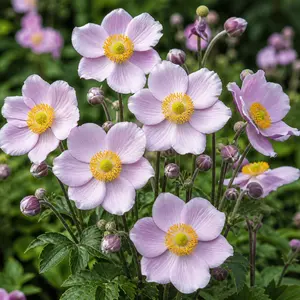
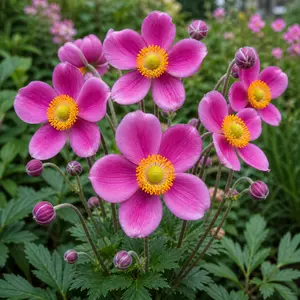
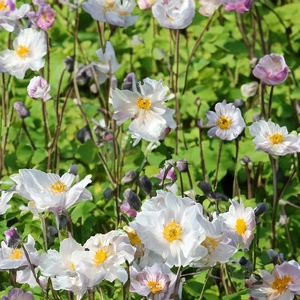
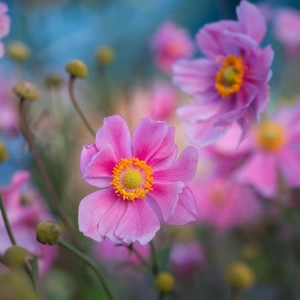
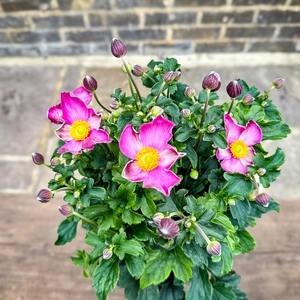
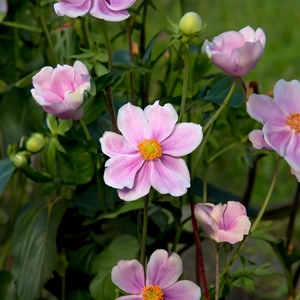
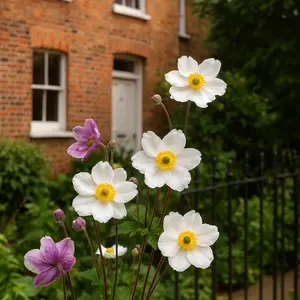
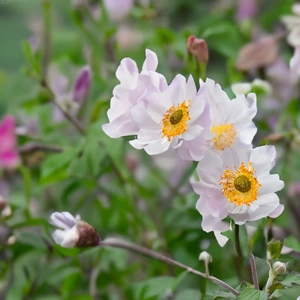
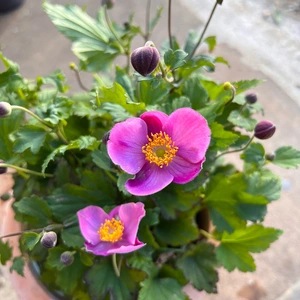
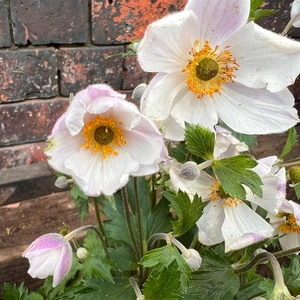
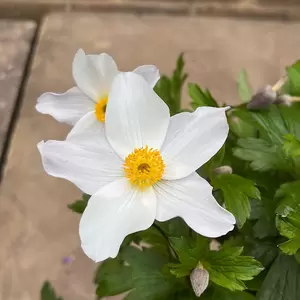
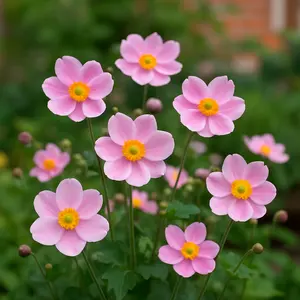
Boma's Japanese anemone collection covers the most reliable cultivars for UK autumn gardens. Hybrida Honorine Jobert is the classic: single, pure white flowers with prominent yellow stamens on tall stems to 1m, flowering reliably from late summer into October — one of the most elegant and dependable Japanese anemone plants in cultivation. 'Pamina' offers semi-double, deep rose-pink flowers on stems to around 75cm, a more compact choice for smaller mixed borders. 'Whirlwind' produces abundant semi-double pure white flowers. Anemone hupehensis 'Hadspeen Abundance' carries shades of rose pink flowers in a simple single form, and anemone tomentosa 'Robustissima' is among the most vigorous plants in the genus, spreading generously with pale pink flowers above dark green leaves. Most cultivars are members of the buttercup family, producing saucer-shaped blooms to about 8cm across.
Plant japanese anemones in partial shade in fertile soil enriched with organic matter — they dislike full sun in very hot or dry positions but tolerate full sun well in moister, cooler soils. They are best planted in spring or early autumn; use plug plants or potted plants from the nursery and establish in a prepared planting hole with added compost to improve fertility. Keep the soil moist during dry spells until plants are fully established — in the first season, regular watering is particularly important as the shallow root system of newly planted Japanese anemones is vulnerable to drought. Once settled, Japanese anemone plants are remarkably tolerant of London clay and partial shade, one of the very few late-season perennials to flower reliably in difficult positions beneath established trees.
Japanese anemone plants spread steadily by underground roots once established, forming substantial clumps in fertile soil — this vigorous habit makes them outstanding for covering ground beneath trees and naturalising in difficult positions, though they may spread into neighbouring plants in open borders over time. They are resistant to slugs, snails, deer, and rabbits, making them unusually low maintenance for an autumn-flowering perennial. Cut back Japanese anemone stems to ground level in early spring before new growth starts, tidying the plant and making space for the fresh dark green leaves that emerge through spring.