


Calathea Indoor Plants: Decorative Foliage Houseplant
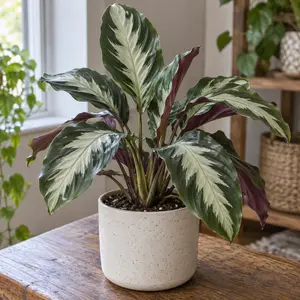
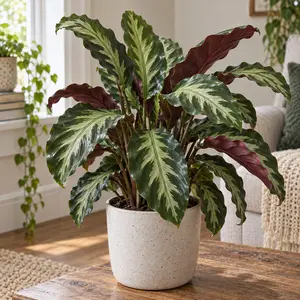
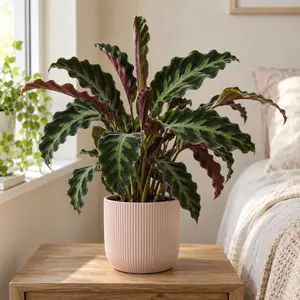
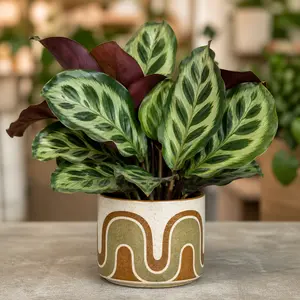
Calathea is grown for its foliage: striking leaf markings, painted, pinstriped or feathered, over undersides of purple and rose. Botanists have moved most species to Goeppertia, but the trade name persists, and our collection covers both classic species and newer cultivars. These tropical plants, native to the forest floor of Central and South America, raise their leaves at night, which gives them and their relatives the name prayer plants. Calatheas prefer steady warmth, high humidity and bright but indirect light, and repay consistent care with beautiful leaves all year.










About Calathea Plants at Boma
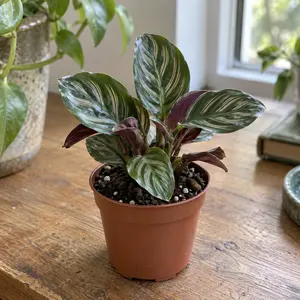
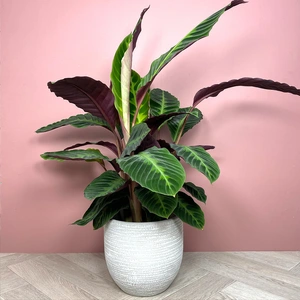
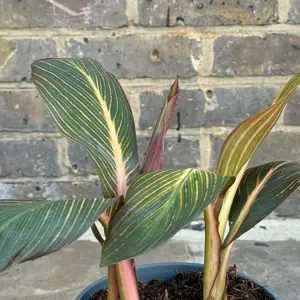
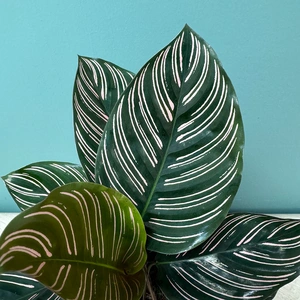
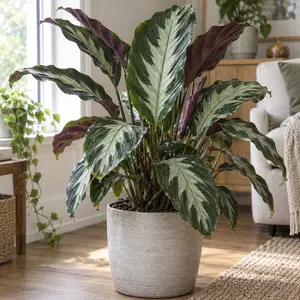
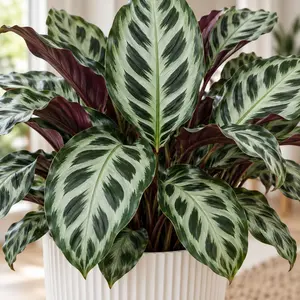
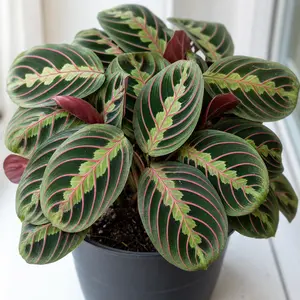
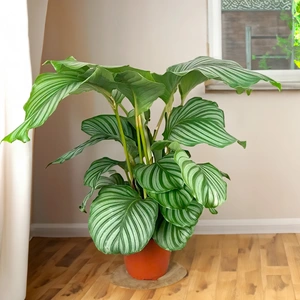
The range is led by Calathea ornata, the pinstripe calathea, including 'Beauty Star', and Calathea makoyana, the peacock plant. Calathea orbifolia has broad round leaves banded in silver and pale green, while Calathea majestica 'White Star', Calathea zebrina, Calathea leopardina and the velvety Calathea warscewiczii add contrast. Calathea lancifolia, the rattlesnake plant, has long wavy leaves, and Calathea crocata, the eternal flame, carries small flowers in orange bracts on tall stems. Cultivars include 'White Fusion', 'Yellow Fusion', 'Rosy', 'Crimson', 'Vittata' and 'Freddie'. Stromanthe 'Triostar', sold here alongside them, and Maranta 'Fascinator' are related Marantaceae, not true Calathea.
Give a calathea plant bright but indirect light: a north facing window, or a position set back from an east or west window. Avoid direct sunlight, since midday sun and too much light bleach the markings. Keep the soil evenly moist through spring and summer, never waterlogged, as excess water around the roots causes root rot, and reduce watering in autumn and winter. Use free-draining, peat-free compost in a pot with drainage. Aim for around 60 percent humidity and 18 to 24°C, away from temperature fluctuations, and feed monthly through the growing season with a liquid fertiliser at half strength.
Hard water and centrally heated rooms are the two things these houseplants resent, so position matters more than plant size. A steamy bathroom with a frosted window, or a kitchen away from the oven, gives the humid rooms they need; elsewhere, group plants together on a pebble tray, which does more than a daily mist. Because they want bright light without direct sun, calatheas make a striking houseplant for a north facing room in a flat or terraced house, where sun-loving flowering plants struggle. Visit Boma to explore our calathea collection in store and online.