


Jasmine Plants — Jasminum
Jasmine (Jasminum) splits neatly into two distinct performers: Jasminum officinale, the classic summer jasmine, produces its intensely fragrant, highly fragrant white flowers from June to September and is a vigorous climber capable of covering a large pergola or fence in a few seasons. Winter jasmine (Jasminum nudiflorum) is a different shrub entirely — deciduous, scrambling, and bright with yellow flowers from November to March with no scent. Both jasmine plants are tolerant of London conditions and suit a range of aspects. Visit Boma to browse our jasmine plants in store — grow jasmine as a climbing plant on walls, trellis, and fences for summer and winter flowers.
About Our Jasmine Collection
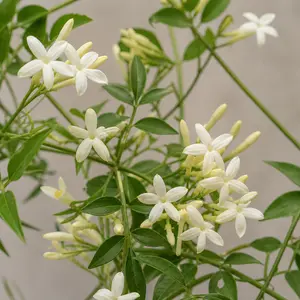
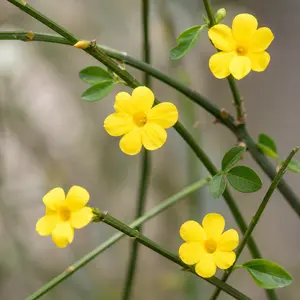
Boma's jasmine plants range covers the key Jasminum species for UK gardens. Jasminum officinale — common jasmine — is a vigorous climber producing clusters of highly fragrant white flowers with pink buds throughout summer on long, twining stems. Jasminum officinale is fully hardy in sheltered gardens and grows rapidly on walls, fences, and trellis in full sun to partial shade. Summer jasmine plants including Jasminum officinale 'Fiona Sunrise' (golden foliage) and the highly fragrant Jasminum × stephanense (pink-flushed flowers) add summer colour and scent to warm walls. Winter jasmine (Jasminum nudiflorum) is a wall shrub rather than a twining climber — its arching stems produce yellow flowers on bare stems through the winter months, providing much needed colour from November to March.
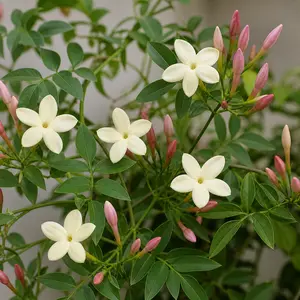
Star jasmine (Trachelospermum jasminoides) is an evergreen climber with highly fragrant white flowers in summer, very hardy in sheltered positions. Pink jasmine (Jasminum polyanthum) produces masses of pink buds opening to white flowers in spring but needs pot cultivation or a frost-free position.
Grow jasmine plants in fertile, well-drained soil in a warm, sheltered position in full sun to partial shade. Jasmine plants perform best on south or west-facing walls and fences — a west facing aspect is ideal for common jasmine and winter jasmine alike, providing warmth and shelter. In partial shade, jasmine plants flower less prolifically but grow well; avoid deep shade. Grow jasmine as a climbing plant on trellis, wires attached to walls, or fences — Jasminum officinale is a vigorous climber that needs appropriate support and regular tying in as growth develops.
Prune jasmine immediately after flowering to maintain shape and encourage a strong side shoot framework for the following year's flowers. Summer jasmine plants (Jasminum officinale and summer flowering jasmines) should be pruned in early autumn after the flowers fade; remove one-third of older stems to ground level to encourage fresh growth. Winter jasmine prune: cut back winter jasmine plants immediately after flowering in spring — prune winter jasmine hard if needed to remove congested old stems. Jasmine plants in pots should be repotted every 1–2 years as the roots fill the pot; refresh compost and cut back stems.