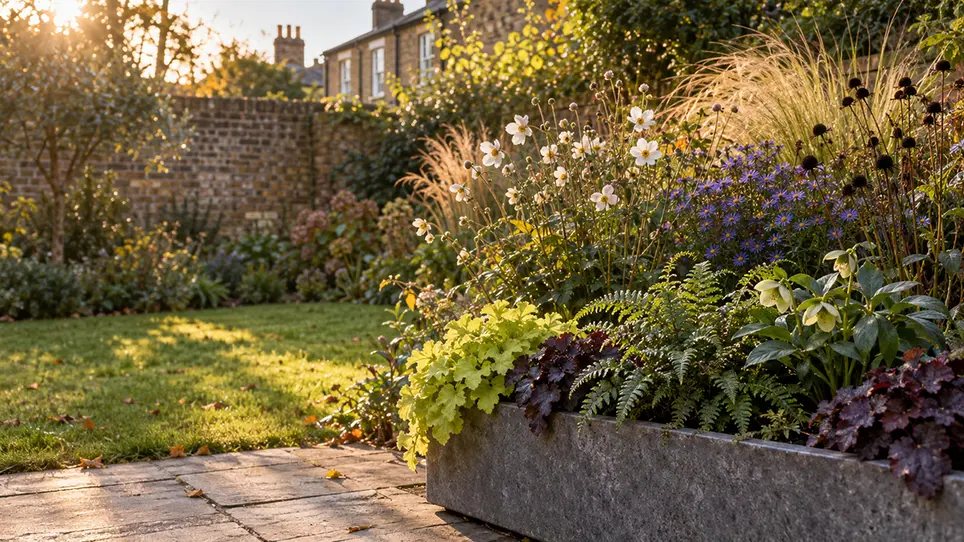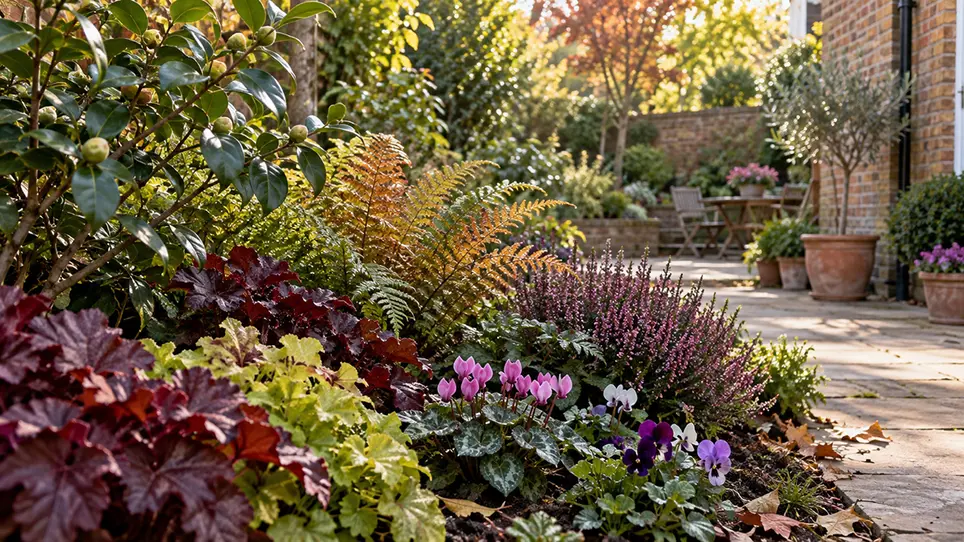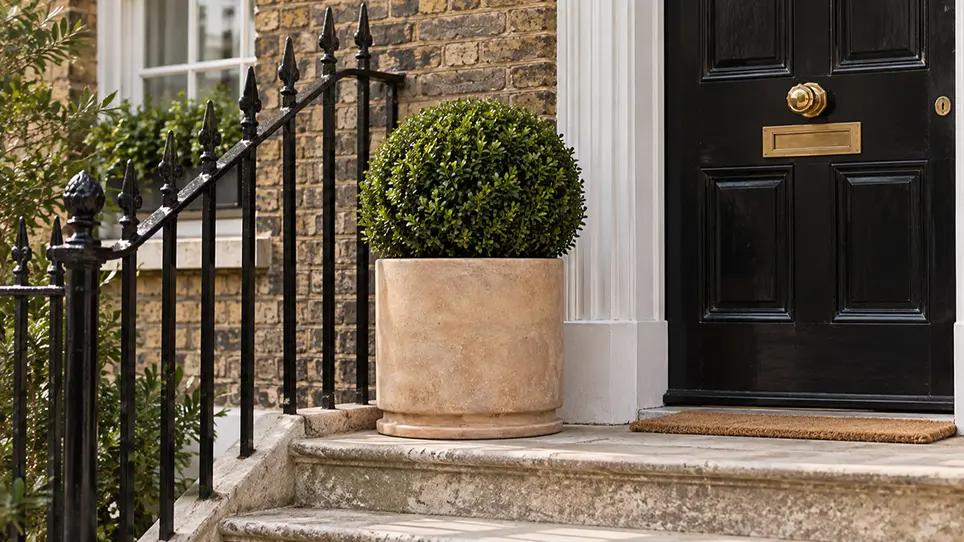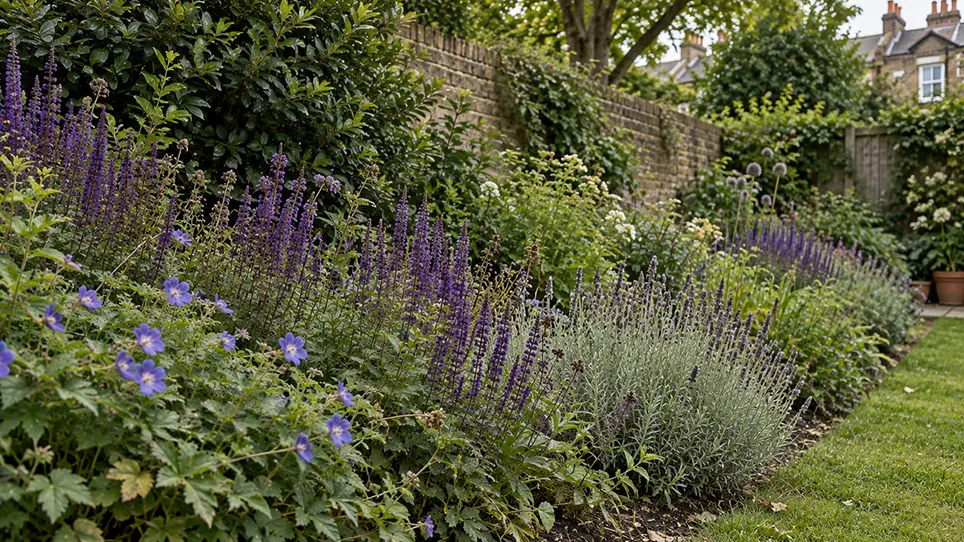


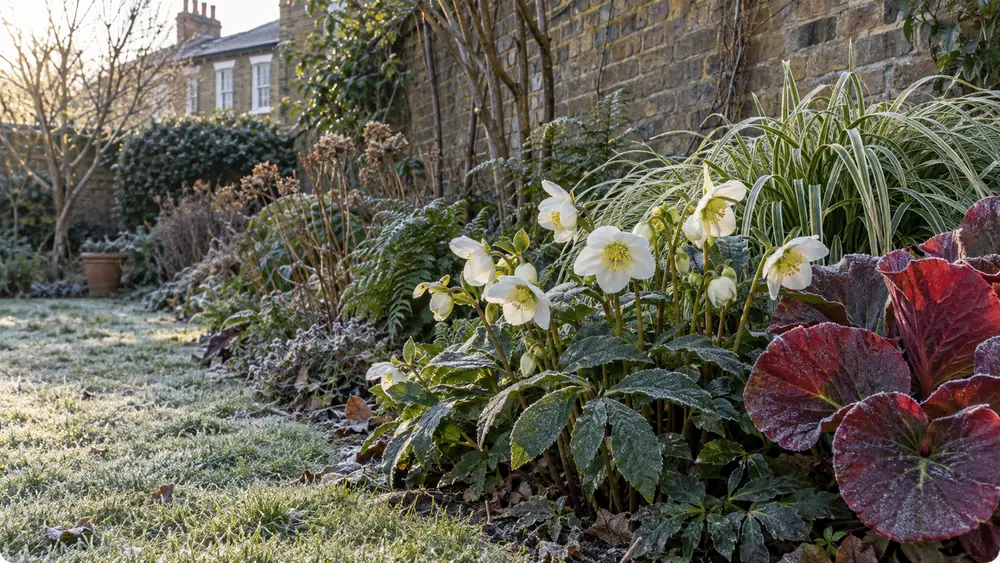
In a London garden this winter, established perennials mostly need protecting from wet rather than cold, since a dormant crown sitting in cold, saturated clay is more likely to rot than to freeze. Hellebores, Bergenia and evergreen Heuchera carry real interest of their own from December to February, while structural stems and grasses stay standing for frost and wildlife until spring.
What Are Winter Perennials?
Winter perennials are perennial plants that stay alive through the colder months, either as evergreen foliage above ground or as dormant crowns and roots below it. Herbaceous perennials such as Echinacea and Hylotelephium die back to ground level after the first hard frost and regrow from the crown in spring. Evergreen perennials such as Heuchera, Bergenia and Carex keep their leaves all year and supply most of a border's winter interest. A dormant herbaceous crown mainly needs protection from waterlogging; an evergreen perennial mainly needs good light, air movement and the occasional removal of dead leaves.
What Perennials Survive Winter Outdoors?
Most perennials sold at UK garden centres survive a London winter outdoors, provided they carry an RHS hardiness rating of H4 or above, meaning hardy to around minus 10°C. Many plants fail not from cold but from sitting wet through winter, so position matters as much as rating. Reliable performers in our range include:
- Bergenia crassifolia 'Overture': leathery evergreen leaves that turn deep beetroot red in cold weather, with magenta flowers in spring.
- Heuchera 'Palace Purple': bronze-purple evergreen foliage that deepens in colour through the cold months.
- Asplenium scolopendrium, the native hart's tongue fern, evergreen and tolerant of dry shade and alkaline soil.
- Polystichum setiferum, the soft shield fern, whose finely cut fronds stay green through winter.
- Carex oshimensis 'Evergold': an evergreen sedge with cream-striped leaves that brightens shaded borders and window boxes.
Which Perennials Bloom in Winter?
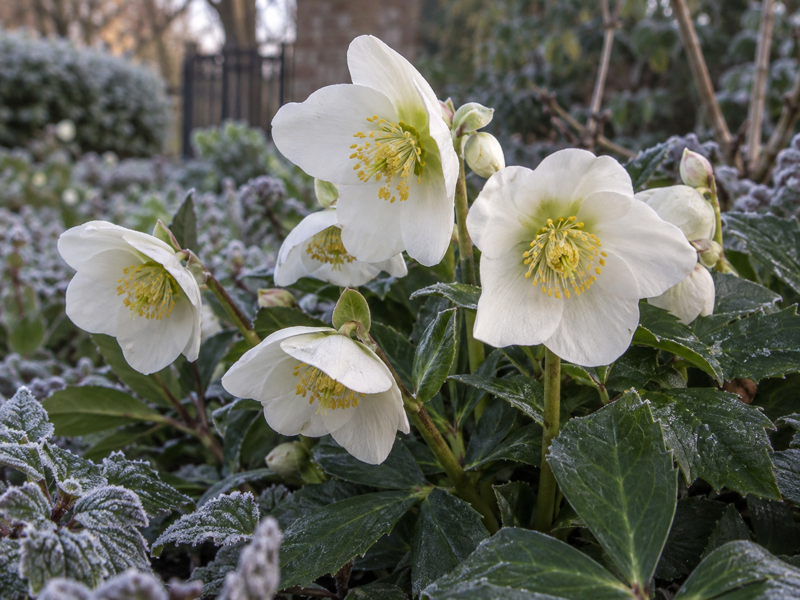
Hellebores are the most dependable perennials in flower through a London winter: Helleborus niger opens from December and hybrid forms carry on from January into spring, both with cup-shaped flowers held above leathery evergreen foliage. Winter heath and Cyclamen coum, with its silver-patterned leaves, extend the season at ground level. Current recommendations from our range:
- Helleborus niger 'Christmas Carol', the Christmas rose: white flowers with prominent yellow stamens above dark, glossy foliage.
- Helleborus × lempergii 'Linda': a niger hybrid with greater vigour and a long flowering season from early winter.
- Helleborus × sternii 'Wester Flisk': grown as much for its marbled, red-stemmed foliage as for its green, pink-flushed flowers.
- Erica × darleyensis 'Kramer's Red': a lime-tolerant winter heath that flowers from early winter into spring and gives early nectar for bumblebees.
For scent to go with them, Sarcococca confusa (Christmas box) flowers through winter and carries a vanilla fragrance into a doorway or courtyard. Our full hellebore range is in store and online, and for more on choosing and displaying them, see the art of hellebore in winter.
Do Perennial Plants Keep Coming Back Every Year?
Yes, returning from the same crown or root system for three years or more. Short-lived perennials such as Aquilegia and Verbena bonariensis last three to five years; long-lived plants such as hellebores, peonies and Bergenia persist for decades in the right position.
Cutting Back Perennials Over Winter
Leave structural stems, seed heads and ornamental grasses standing over winter: they hold frost attractively on a cold morning and shelter overwintering solitary bees and ladybirds. Hold off cutting back until late winter or early spring, just before new growth appears. Deciduous grasses such as Hakonechloa macra are cut hard at that point; evergreen types such as Carex are never cut back — comb out dead leaves by hand instead. Woody-stemmed plants such as penstemons keep their top growth until April, since it protects the crown from cold. For the full guide to what to cut back in autumn and what to leave, see our Autumn Perennials FAQs Answered.
How to Protect Perennials Over Winter
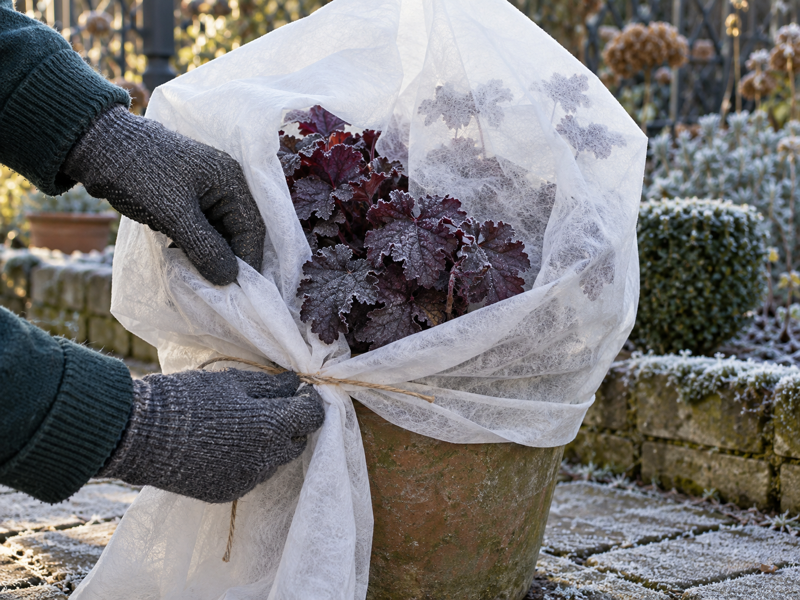
Protect perennials over winter by improving drainage, mulching borderline crowns with 5–8cm of organic matter, and covering tender plants with horticultural fleece during a hard frost. Winter wet kills more London perennials than cold does: heavy clay stays saturated for weeks, and a dormant crown sitting in cold, airless soil rots long before frost reaches it.
How to Care for Perennials in Winter
- Mulch: spread well-rotted organic matter, such as SylvaGrow Farmyard Organic Matter or Melcourt Composted Fine Bark, over bare soil, keeping it clear of evergreen crowns such as Heuchera to prevent rot. A 50-litre bag covers roughly 0.8m² at 6cm deep. See our garden compost FAQs for help choosing between them.
- Drainage: dig horticultural coarse grit into planting holes on clay before you plant perennials, particularly Mediterranean types such as Salvia, Nepeta and Agapanthus.
- Hellebore care: remove last year's leaves from hybrid hellebores in December or January to expose the flowers and reduce hellebore leaf spot.
- Frost protection: tie Kniphofia leaves into a loose wigwam over the crown, cover Agapanthus crowns with a dry mulch, and lift and store tender perennials such as Dahlia under cover on heavy clay, where tubers left in the ground rot.
- Stay off wet soil: walking on saturated clay compacts it and drives out the air roots depend on.
Can You Use Bubble Wrap or Fleece to Protect Plants in Winter?
Yes: use bubble wrap around containers to insulate roots, and horticultural fleece over foliage to guard against frost. Bubble wrap on foliage traps condensation and causes rot, so keep it on the pot rather than the plant. Fleece lets air and light through and can stay on for days at a time. A cardboard box works as a one-night cover but blocks light, so remove it once the frost lifts.
What to Do With Perennials in Pots in Winter
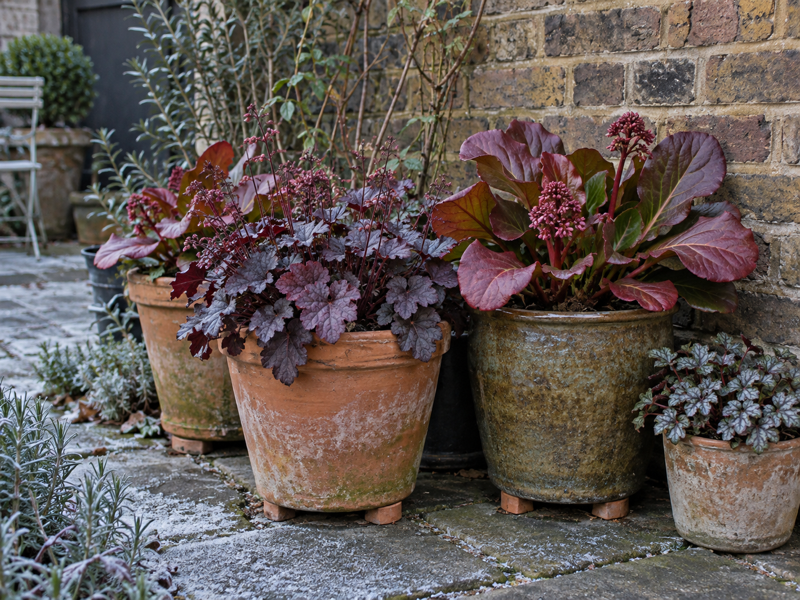
For perennials in pots over winter, raise containers on pot feet, group them in a sheltered spot against a house wall, wrap the pots, and water sparingly. Roots in a container have none of the insulation that surrounding soil provides, so a plant hardy in the border can become vulnerable in a pot during a prolonged freeze. For permanent containers, choose plants rated at least one step hardier than the border would need, such as H5 rather than H4.
- Pot feet lift containers off paving so water drains freely and the compost never freezes into a solid, waterlogged block.
- Pots pushed together against a south- or west-facing wall share warmth and shelter.
- Potted plants under eaves or balconies sit in a rain shadow; evergreens there still need water every two to three weeks in dry spells.
- For long-term containers, plant in a good-quality compost such as SylvaGrow John Innes No. 3, which holds structure and nutrients better than multipurpose mixes.
Heuchera 'Timeless Night' and Tiarella 'Pink Skyrocket' make good winter container plants for shade, pairing dark purple or burgundy-marked foliage with the white flowers of Helleborus niger. For a splash of seasonal colour in a sheltered spot, Cyclamen Compact 'White' flowers through autumn and early winter, though as a Persian cyclamen it tolerates only light frost, so treat it as a seasonal plant rather than a permanent one.
Can You Leave Perennials in Pots Outside Over Winter?
Yes, hardy perennials stay outside in pots all winter, provided the pot is frost-resistant and drains freely. Glazed terracotta and stoneware rated frost-proof survive; cheap unglazed terracotta absorbs water and cracks as it freezes.
Can You Overwinter Plants in an Unheated Garage?
Yes, an unheated garage suits dormant plants such as potted Dahlia tubers, Canna and hardy fuchsias, but not evergreen perennials, which need good light. Keep the compost barely moist, check every few weeks for rot, and move plants back outside in April once the risk of frost passes.
How to Revive Perennials After Winter
To revive perennials after winter, remove dead and frost-damaged growth, firm back any crowns lifted by frost, and feed with a balanced fertiliser and a fresh mulch once new growth appears. Heuchera is the plant most often lifted by frost heave; press the crown back into the soil or replant it slightly deeper.
Divide congested clumps of herbaceous perennials in early spring as they break dormancy, replanting the vigorous outer sections. This rejuvenates plants such as Aster, Geranium and Hemerocallis for the growing season ahead. A top dressing of mulch after planting locks in spring moisture.
How Do You Know if a Plant Will Come Back After Winter?
A perennial will come back if its crown is firm and its roots are pale and plump; a soft, dark or foul-smelling crown has rotted. On woody stems, scratch the bark with a fingernail: green tissue underneath means the stem is alive. Wait until late May before writing plants off, because Ceratostigma, Platycodon and hardy fuchsias are late to emerge.

Winter Perennials at Boma Compared
| Plant | Winter Interest | Flowering | Position | Container Suitability |
|---|---|---|---|---|
| Helleborus niger 'Christmas Carol' | White flowers, glossy evergreen leaves | December to March | Part shade, humus-rich soil | Good |
| Bergenia crassifolia 'Overture' | Red winter foliage | Spring | Sun or shade, tolerates clay | Good |
| Heuchera 'Timeless Night' | Dark purple evergreen leaves | Late spring | Part shade | Excellent |
| Erica × darleyensis 'Kramer's Red' | Magenta flowers, dark foliage | Winter to spring | Sun, lime tolerant | Excellent |
| Asplenium scolopendrium | Glossy strap-shaped fronds | None (fern) | Shade, dry or moist | Good |
| Carex oshimensis 'Evergold' | Cream-striped evergreen leaves | Insignificant | Sun or shade | Excellent |
Most of our customers garden on London clay: fertile and moisture-retentive, but slow to drain from November to March. Bergenia, hellebores, Asplenium scolopendrium and evergreen shrubs such as Sarcococca thrive on it once established, while plants that resent winter wet, including many Salvia and Agapanthus, need grit and a raised position.
London's urban heat island keeps city gardens a few degrees warmer than the surrounding countryside, so walled courtyards and roof terraces often overwinter plants that fail outside the M25. In those spaces, rain shadow rather than cold is usually the main winter stress.
Frequently Asked Questions
How Long Does a Plant Take to Recover From Cold Shock?
Frost-damaged evergreen perennials such as Heuchera and hellebores push fresh leaves within a few weeks of milder spring weather. Leave the damaged foliage in place until then, since it shields the crown from further frost.
Can You Plant Perennials in Winter?
Yes, plant hardy container-grown perennials any time the ground is not frozen or waterlogged. Planting in early winter gives roots time to establish before spring, and hellebores planted in flower settle in well. A plant that went into the garden in October has an easier winter than one planted into cold, saturated soil in January.
What Is the Most Hardy Perennial Flower?
Bergenia is among the hardiest, rated H7 by the RHS, meaning it copes with the coldest European winters. Hellebores, Heuchera and Erica carnea are similarly tough in UK conditions.
What Plants Can I Put in Pots That Will Come Back Every Year?
Hellebores, Heuchera, Tiarella, Bergenia, Carex and evergreen ferns all return year after year in pots. Repot or top-dress with fresh compost every two to three years.
Which Plant Gives 12 Months of Flowers?
No single hardy perennial flowers for 12 months, but combining a few gives continuous colour. Pair winter-flowering hellebores and Erica with spring Bergenia, summer perennials and autumn grasses for a border that is never empty.
See this winter's hellebores, Bergenia and evergreen perennials at 51–53 Islip Street, Kentish Town NW5 2DL, or browse the range online for delivery within the M25. If a border or courtyard needs a planting scheme that holds through the colder months, our Garden Planting Service can help.
Shop Winter Perennials Book a Consultation Check Delivery