

What Is the Difference Between Garden Compost and Potting Compost?
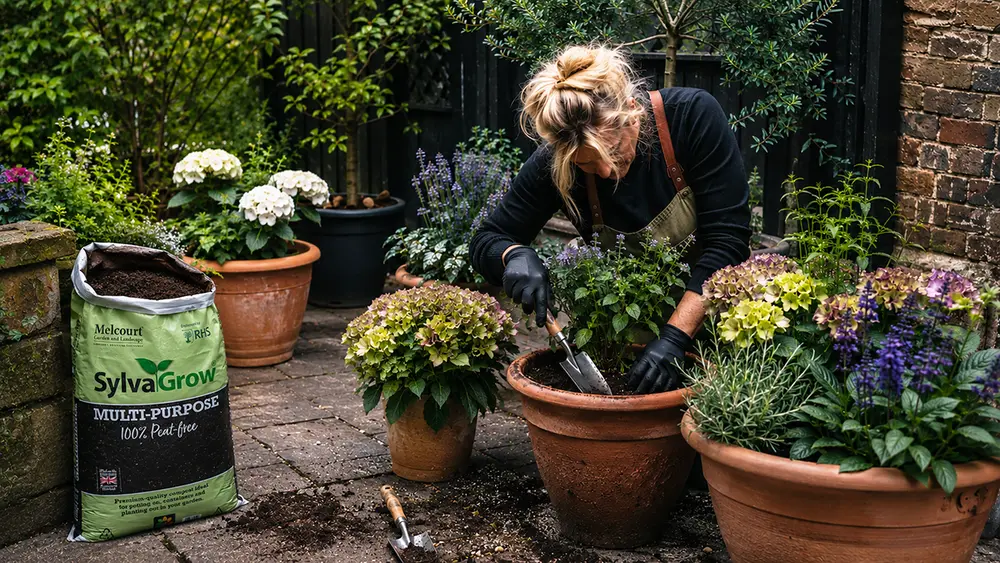
Garden compost is designed to be worked into existing ground or applied as a surface mulch — it improves soil structure, increases microbial activity, and feeds plants slowly over time. Potting compost is a different product entirely: lighter, more free-draining, and calibrated to support active root growth in the confined volume of a container. SylvaGrow Multi Purpose Peat Free Compost and SylvaGrow Organic Peat Free Compost suit general garden use; SylvaGrow Tub & Basket Peat Free Compost is the right choice for containers and hanging baskets.
Using garden compost alone in pots is a common and costly mistake. It compacts under repeated watering, restricts drainage, and quickly becomes anaerobic around the roots. The rule is straightforward: garden compost improves and feeds the ground; potting compost grows plants in a container.
What Is Compost Used For?
Compost serves distinct functions depending on the type you choose and where you use it. Understanding which product to reach for — rather than defaulting to a single all-purpose bag — is where most improvements to a garden's productivity start.
- Soil improvement: Incorporated into borders at 5–10cm depth before planting, compost increases organic matter content, improves drainage in the heavy clay soils common across North London, and aids moisture retention in stony or sandy ground.
- Surface mulching: Applied as a 5–7cm layer over the soil surface, compost suppresses annual weeds, reduces evaporation during dry spells, and feeds plants slowly as it is drawn down by earthworms and rain. Melcourt Composted Fine Bark is particularly effective for this purpose on established beds and borders.
- Container growing: Potting composts provide the growing medium for containerised plants, from window boxes and balcony planters to large terracotta and glazed pots. Match the formulation to the plant — a general mix suits most; specialist mixes are needed for acid-lovers, cacti, orchids and bonsai.
- Seed sowing and propagation: Low-nutrient, fine-textured seed composts support germination without burning tender roots. The Seed & Cuttings Compost Mix is calibrated for this purpose; high-nitrogen general composts are not.
- Specialist applications: Ericaceous mixes for acid-loving plants, orchid bark for epiphytes, cactus blends for succulents — each addresses specific cultural requirements that no general mix can meet.

What Is Peat, and Why Does It Matter?
Peat is partially decomposed Sphagnum moss harvested from boggy habitats where anaerobic conditions arrest decomposition. As a growing medium it is effective — lightweight, moisture-retentive, reliably acidic — and for decades it dominated commercial compost. The problem is geological: peatlands take thousands of years to form, sequester enormous quantities of carbon (UK peatlands hold an estimated 3.2 billion tonnes), and support ecosystems that cannot be recreated. Commercial extraction destroys them in years. The shift away from peat is not a trend; it is a necessary correction that the professional sector has already largely made.
Is Peat-Free Compost as Good as Peat-Based?
Yes — the current generation of peat-free composts performs genuinely well across sowing, planting and general garden use. Early formulations were inconsistent; that is largely a historical objection now. Melcourt All Purpose Peat-Free Compost is RHS-endorsed and used at commercial show gardens; SylvaGrow Organic Peat Free Compost carries organic certification. Two small habits make all the difference:
- Water little and often rather than in large volumes — wood-fibre mixes can be slow to re-wet once dry.
- Don't firm aggressively — the structure is more compressible than peat and needs air to remain viable around the roots.
What Is Ericaceous Compost?
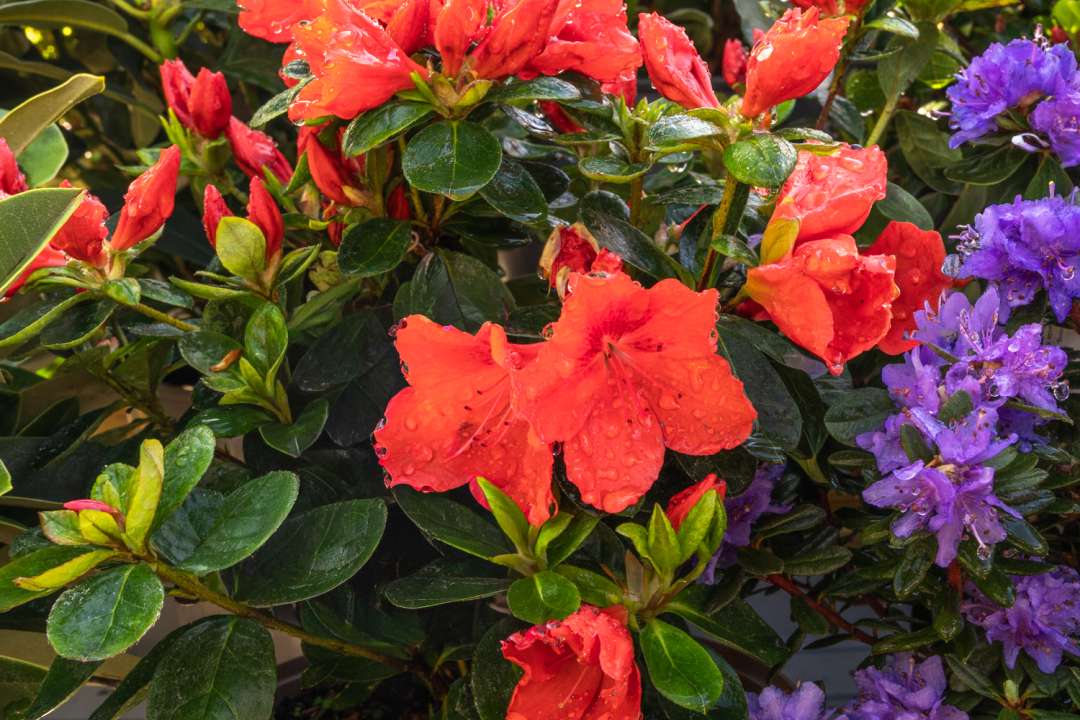
Ericaceous compost is formulated to a low pH — typically 4.5 to 5.5 — to support acid-loving plants that cannot tolerate alkaline conditions. Standard multipurpose compost sits at approximately pH 6 to 6.5: enough of a difference to lock out iron and manganese through a process called nutrient tie-up, producing the characteristic interveinal chlorosis of an acid-lover in the wrong soil. Leaves yellow between the veins while the veins remain green. Adding general fertiliser does not fix it — the problem is availability, not supply, and only correcting the pH resolves it.
Melcourt Ericaceous 100% Peat Free Compost is the right choice for acid-loving plants in containers or when planting into naturally alkaline ground. North London's chalk and London clay geology trends alkaline, which means gardeners here need to work harder to support ericaceous planting than those on naturally acidic soils. Where possible, water these plants with collected rainwater — London tap water runs at pH 7.5 to 8 or above, and over time will raise the pH of even the most carefully prepared compost.
Which Plants Need Ericaceous Compost?
Plants native to naturally acidic, often nutrient-poor habitats — heathland, upland moors, woodland margins — are those that require ericaceous compost. Find your plant below:
| Plant | Notes |
|---|---|
| Rhododendron / Azalea | The most uncompromising in this group — require pH 4.5–5.5 and fail quickly in alkaline conditions |
| Camellia | Similarly intolerant of alkalinity, particularly in containers |
| Pieris | A reliable acid-lover for shaded North London spots |
| Calluna (heather) / Erica (heath) | Heathland natives; require acidic conditions throughout |
| Vaccinium | Blueberries, bilberries and cranberries — won't fruit well otherwise |
| Kalmia / Enkianthus | Both require ericaceous conditions to thrive |
| Magnolia | Benefits from slightly acidic conditions, particularly in containers |
| Skimmia | Tolerates some alkalinity but performs better with ericaceous compost in pots |
For specific questions about acers, roses and hydrangeas, see the FAQs below.
What Is John Innes Compost and When Should I Use It?
John Innes is not a brand — it is a standardised loam-based compost specification. Sterilised loam forms the base, combined with horticultural grit and fertiliser in graded ratios across three numbered versions. The loam base offers significantly better moisture retention and structural stability than lighter peat-free mixes, making John Innes the right choice for long-term container plantings — specimen Agapanthus, clipped topiary, established Acer palmatum in deep pots — that may not be repotted for several years. Boma stocks both SylvaGrow John Innes No. 2 and SylvaGrow John Innes No. 3 in peat-free formulations.
- John Innes No. 1: low nutrient — for seedlings and young cuttings
- John Innes No. 2: moderate nutrient — for potting on established young plants
- John Innes No. 3: high nutrient — for mature plants in large containers
What Is the Best Compost for Seeds and Propagation?
Seed compost must be low in nutrients: high-nitrogen environments inhibit germination and can damage tender emerging roots. Melcourt Seed Compost Peat-Free and the Seed & Cuttings Compost Mix are both fine-textured, low-fertility media designed specifically for propagation. General multipurpose compost — however good — is the wrong tool for seed sowing. Once seedlings have developed their first true leaves and are large enough to handle without damage, pot on into a general multipurpose or John Innes No. 1.
How Much Compost Do I Need, and How Do I Apply It?
For border top-dressing, apply 5 to 7cm in autumn or early spring. Use the box below to estimate quantities.
Quick calculation
Depth: 5–7cm for borders (use 6cm in the formula)
Volume: area in m² × 0.06 = cubic metres · × 1,000 = litres
Coverage: one 50-litre bag of SylvaGrow Farmyard Organic Matter or Melcourt Composted Fine Bark covers roughly 0.8 m² at 6cm depth.
Apply mulch to moist soil — never to dry or frozen ground — keeping it clear of direct stem and crown contact to avoid collar rot. For containers, replacing the top 5–8cm of existing compost each spring refreshes available nutrients without disturbing established root systems in years when plants do not yet need potting on.
If you have established beds and borders that need more than just a seasonal top-dress — a new planting scheme, clearance of existing growth, or a properly considered design — Boma’s Garden Planting Service covers consultation, planting design and installation within a 5-mile radius of Kentish Town.
Garden Compost Comparison
| Product | Best Use | Key Characteristic | pH |
|---|---|---|---|
| SylvaGrow Multi Purpose Peat Free | General garden planting, borders, raised beds | Versatile peat-free; RHS-approved performance | ~6.0–6.5 |
| SylvaGrow Organic Peat Free | Soil improvement, border enrichment | Certified organic; consistent across sowing and planting | ~6.0–6.5 |
| Melcourt All Purpose Peat-Free | Sowing, planting, containers | RHS-endorsed; used commercially at show gardens | ~5.5–6.5 |
| Melcourt Ericaceous Peat Free | Acid-loving plants; containers in alkaline areas | 100% peat-free; essential in North London's chalk conditions | 4.5–5.5 |
| SylvaGrow John Innes No. 3 | Long-term container plantings, mature specimens | Loam-based; structural stability, good moisture retention | ~6.0–6.5 |
| SylvaGrow Farmyard Organic Matter | Border mulching, deep soil conditioning | Bulky organic matter; feeds borders slowly over time | Neutral |
| Melcourt Composted Fine Bark | Surface mulch for established beds | Weed suppression, moisture retention, clean finish | Slightly acidic |
| Melcourt Seed Compost Peat-Free | Seed sowing and propagation | Fine-textured, low-fertility; calibrated for germination | ~5.5–6.5 |
We stock over 60 compost, mulch and aggregate products at our garden centre at 51–53 Islip Street, Kentish Town NW5 2DL — covering general and organic garden composts, peat-free and ericaceous mixes, John Innes formulations, and the full range of specialist houseplant and propagation media. If you’re in Hampstead, Highgate, Muswell Hill, Primrose Hill or further into Central London, we deliver to all postcodes within the M25. The team in store can advise on the right growing medium for any plant, container or project — no guesswork required. Check delivery zones and charges.
How Does Houseplant Compost Differ from Garden Compost?
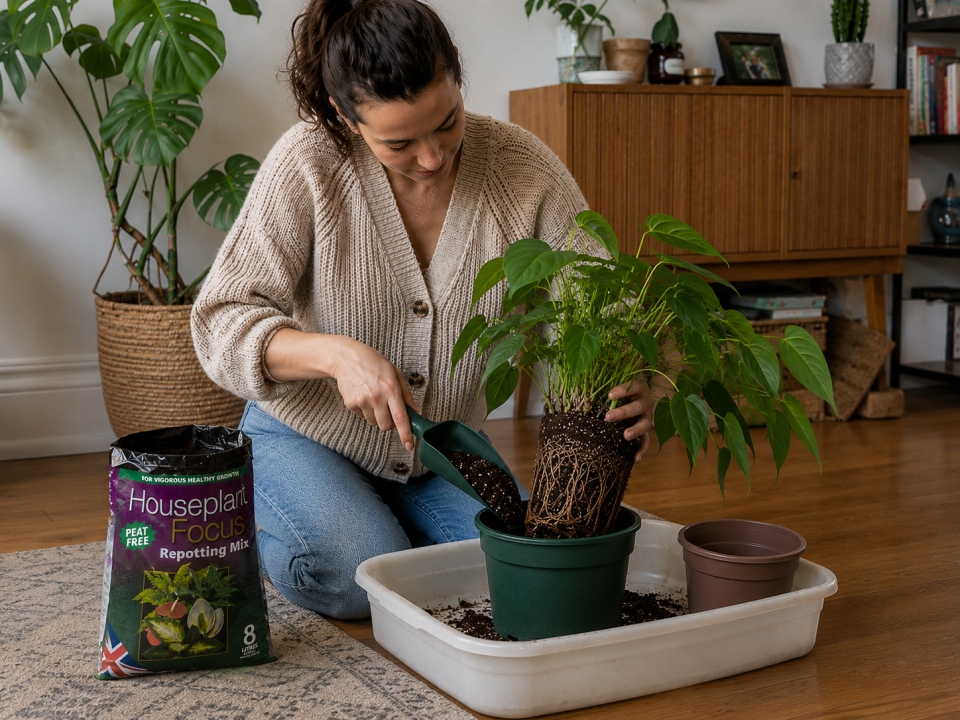
Houseplant compost is engineered for a fundamentally different set of conditions: low light, restricted root volume, irregular watering, and a much-reduced microbial environment compared to open soil. A general garden mix is too dense for indoor use — it compacts and becomes anaerobic around the roots. Good houseplant compost is lighter, free-draining, and structured to maintain aeration between waterings, with a nutrient load calibrated for the slower growth rates of indoor plants. Not a premium option — a basic requirement, especially in London homes where low light, central heating and hard tap water already present challenges.
Which Houseplant Compost for Which Plant?
The Growth Technology Focus range takes a species-specific approach rather than offering a single catch-all mix — matching the growing medium precisely to the cultural requirements of different plant groups. The difference between the right and wrong compost here is the difference between a plant that thrives and one that fails.
| Compost | For | Why It Works |
|---|---|---|
| House Plant Focus Repotting Mix | Most foliage and flowering houseplants | Balanced peat-free mix suited to general indoor growing conditions |
| Orchid Focus Repotting Mix | Phalaenopsis and epiphytic orchids | Bark-dominant open structure allows aerial roots to breathe — essential for epiphytes |
| Cactus & Succulent Focus | Cacti, succulents, and drought-adapted plants | Gritty, fast-draining, low in organic matter — prevents the root rot that kills more cacti than neglect |
| Bonsai Focus | Containerised bonsai trees | Fine-grained and moisture-retentive; supports the controlled root restriction bonsai cultivation requires |
| Terrarium Focus | Closed and semi-closed terrariums | Low-nutrient and moisture-stable for enclosed environments where excess nutrition causes problems |
| Carnivorous Plant Specialist Mix | Venus flytraps, sundews, pitcher plants | Nutrient-poor and acidic — carnivorous plants evolved in poor soils and are intolerant of conventional fertiliser |
Repotting a Phalaenopsis into a general houseplant mix, or a cactus into a moisture-retentive blend, is the most direct route to root failure. The species-specific approach is not fussy — it is precise, and the difference shows quickly.
What Is Coir Compost?
Coir is the fibrous husk of the coconut (Cocos nucifera), processed as a byproduct of coconut production. As a growing medium it offers good moisture retention, excellent aeration, a neutral to slightly acidic pH of around 5.5 to 6.5, and — critically — it is a renewable resource derived from an existing agricultural waste stream rather than a peatland being destroyed to produce it.
Raw coir is low in nutrients and is typically blended with compost, fertiliser, or other organic matter rather than used alone. Its moisture-holding capacity sits between peat and perlite: better than perlite for water retention, lighter and more aerated than pure bark or wood-fibre mixes. It also resists compression well over time — a practical advantage in houseplant containers that may not be repotted for a year or two, where structure matters.
Aggregates: Drainage, Aeration and Structure
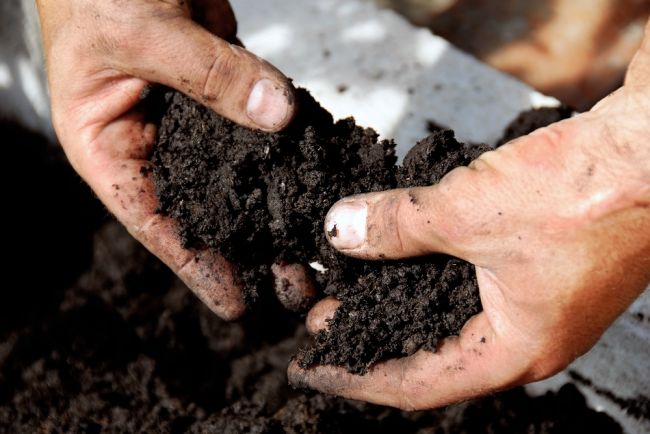
Aggregates are inorganic materials — grit, sand, perlite, vermiculite, LECA — incorporated into compost to modify its physical properties. Used correctly, they solve problems of compaction, waterlogging and poor aeration that no amount of good compost alone can fix. The right aggregate for the job depends on whether your problem is too much drainage, too little, or a need to reduce weight without sacrificing structure.
For Garden and Outdoor Use
Horticultural Coarse Grit and Horticultural Sharp Sand added to standard compost at roughly 20–30% by volume open up the structure for Mediterranean plants — Lavandula, Cistus, Salvia — alpine species and any plant requiring sharp drainage through a North London winter. Essential for raised alpine troughs and terracotta pot plantings that will sit in rain through the colder months.
Decorative aggregates — Cotswold Chippings, Plum Slate, Scottish Pebbles — serve a different function as surface mulch: weed suppression, moisture retention and a clean finish to beds and pots. On North London's clay-heavy soils, a gravel mulch also prevents the surface from capping and compacting after heavy rain.
For Indoor and Container Use
Perlite (expanded volcanic glass) and vermiculite (expanded mica) do opposite jobs: perlite is ultra-lightweight and improves drainage and aeration without adding weight, ideal for hanging baskets and roof-terrace containers; vermiculite increases moisture retention. Choose perlite for overwatered or compacted mixes, vermiculite where the problem is drying out too fast.
LECA (Leca Clay Pebbles) — kiln-expanded clay balls — work as a standalone medium in semi-hydroponic systems or as a drainage layer in container bases. Reusable, pH-neutral, and well-suited to moisture-sensitive aroids, increasingly popular in design-led London homes.
Frequently Asked Questions
Is Compost the Same as Soil?
No. Soil is a complex, living ecosystem of mineral particles, organic matter, water, air and microbial life built up over geological time. Compost is a concentrated organic amendment used to improve existing soil, feed plants slowly, or provide a growing medium in containers. Adding compost improves soil; it does not replace it, and using compost as a direct substitute for topsoil produces poor results over time as it breaks down and compacts.
Can You Use Compost as Topsoil?
In the short term, yes — but it is not a sustainable substitute. Compost breaks down quickly and compacts under foot traffic in a way that topsoil does not. For filling raised beds, blend compost with quality topsoil at roughly 1:3 for a better long-term result. For surface application and improving the structure of existing garden beds, compost is exactly the right material.
Does Compost Go Off?
Sealed and unused, most compost has a practical shelf life of around two years. Nutrient content degrades gradually and some peat-free formulations begin to lose structure. Once opened and exposed to moisture, use it within a season. Compost that smells sour or has become waterlogged can be spread thinly on a border to air out but should not be used in containers, where drainage is critical.
Do Acers Need Ericaceous Compost?
Acer palmatum and its cultivars prefer a slightly acidic to neutral pH of around 5.5 to 6.5 — they do not strictly require ericaceous compost, but they perform poorly in strongly alkaline conditions. In London's clay and chalk soils, blend SylvaGrow Multi Purpose Peat Free Compost with a proportion of ericaceous compost. For acers in long-term containers, SylvaGrow John Innes No. 3 blended with one third by volume of ericaceous gives excellent results: structural stability from the loam base, with the pH where it needs to be.
Do Roses Like Ericaceous Compost?
No. Roses prefer a slightly acidic to neutral pH of 6.0 to 6.5 — the range of standard multipurpose compost. Planting roses into a strongly acidic ericaceous mix causes nutrient imbalances and poor performance. A well-made general compost worked into the planting area, with good drainage, is the right approach.
Do Hydrangeas Like Ericaceous Compost?
It depends on the species and what you want from them. Hydrangea macrophylla (mopheads and lacecaps) produces blue flowers in acidic conditions below pH 5.5 and pink flowers in neutral to alkaline conditions. The colour shift is driven by aluminium availability: in acidic soil aluminium is soluble and taken up by the plant, producing blue pigmentation; in alkaline soil it is locked out, and flowers pink. Grow them in ericaceous compost if you want blue. White-flowered hydrangeas — H. arborescens 'Annabelle', H. paniculata — are not affected by pH in this way.
What’s the Best Compost for Terracotta Pots in Summer?
Terracotta is porous — water wicks through the walls and evaporates faster than from glazed or plastic pots, so the rootball dries out quickly in hot weather and exposed positions. Combine SylvaGrow Tub & Basket Peat Free Compost, formulated for containers, with Miracle-Gro Moisture Control Gel 200g mixed in at one to two teaspoons per 10 litres of compost at planting — the gel's water-storing crystals absorb and slowly release moisture across the whole growing season. A 2–3cm gravel mulch on the surface slows evaporation further. Even so, terracotta in full sun will need regular watering through a London summer — the gel reduces frequency, not the need.
Where Is the Best Place to Buy Compost in North London?
Boma Garden Centre at 51–53 Islip Street, Kentish Town NW5 2DL stocks over 60 compost, mulch and aggregate products — the full SylvaGrow and Melcourt peat-free ranges, specialist houseplant mixes from Growth Technology Focus, ericaceous, John Innes, and aggregates from grit and perlite through to LECA. Delivery is available to all M25 postcodes, with charges zoned by postcode from £10. The team in store can advise on the right growing medium for any specific plant or project.
Boma stocks over 60 compost, mulch and aggregate products — browse the full compost range online or come and see us at 51–53 Islip Street, Kentish Town NW5 2DL. We deliver to all M25 postcodes, and the team in store are always on hand to advise on the right growing medium for any plant, container or planting project. As of spring 2026, all our stocked composts are peat-free.
Shop Compost Check Delivery Garden Planting ServiceWritten by the Boma team · Updated May 2026