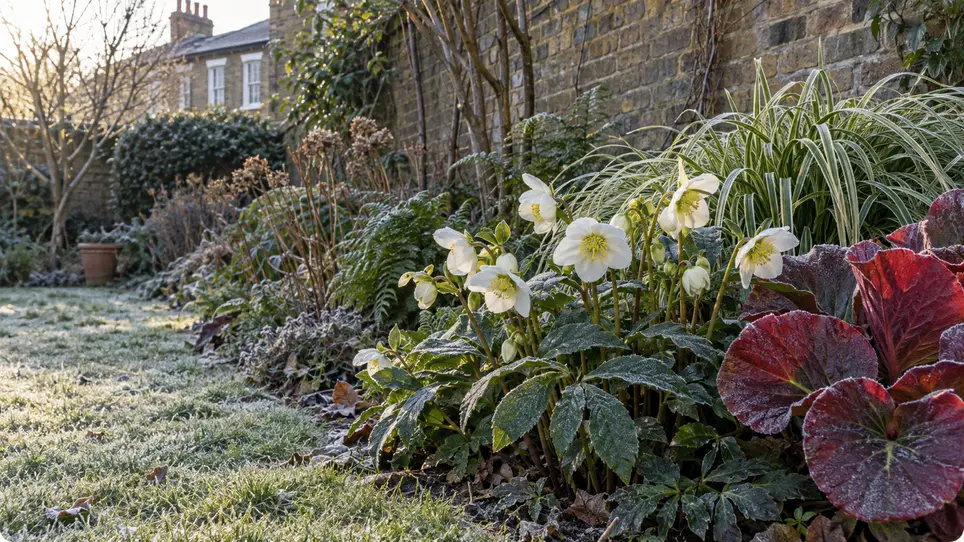


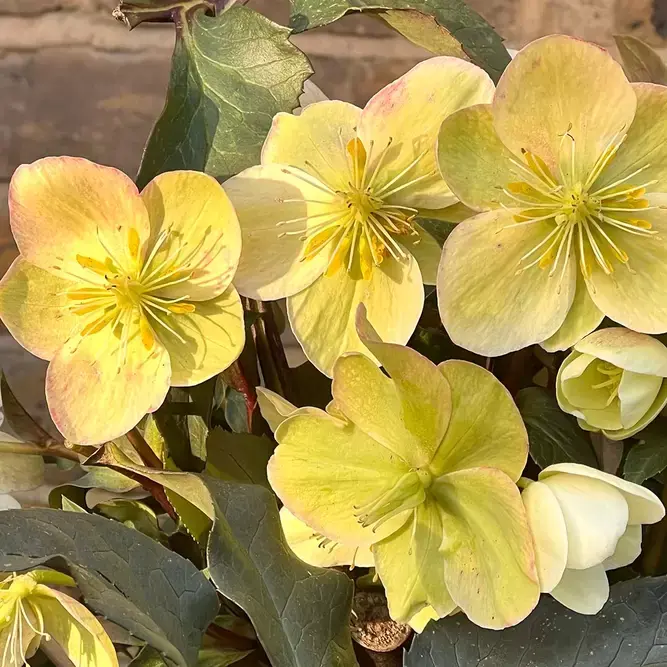
If you’ve gardened in London for any length of time, you already know hellebores are the undisputed stars of the winter garden. Hellebores provide exceptional winter interest in the garden, offering colour and texture when most other plants are dormant.
What separates a pleasant winter border from a truly distinguished one, however, lies in how thoughtfully you curate your collection.
This January, we invite you to look at hellebores through more discerning eyes — considering not just colour, but form, habit, foliage, and the subtle art of successional display. A well-curated collection can showcase the unique qualities of hellebores during the winter months, making your garden stand out even in the coldest season.
Shop our Christmas Rose collection
The Modern Breeding Revolution
The winter-flowering hellebores arriving at Boma today bear little resemblance to the shy, nodding woodland plants of decades past. A quiet revolution has transformed this genus, driven largely by dedicated breeders in Germany, the Netherlands, and the UK. Most hellebores are now known for their toughness, evergreen foliage, and ornamental value, making them standout choices for winter gardens.
The breakthrough came with the HGC (Helleborus Gold Collection) breeding programme, which produced plants with outward and upward-facing flowers — a significant departure from the traditional downward nod that required gardeners to lift each bloom to appreciate it. The Ice N’ Roses series exemplifies this achievement: robust plants with flowers held proudly above handsome evergreen foliage, blooming from as early as November and continuing through to April. These varieties are a good choice for gardeners seeking reliable winter interest and are commonly referred to as Christmas or Lenten roses due to their seasonal bloom times.
Meanwhile, breeders have expanded the colour palette far beyond the white of Helleborus niger. Today’s hybrids offer a wide range of colours, from near-black aubergine to soft apricot, and the emergence of picotee edges, freckling, and double forms has given collectors an almost overwhelming choice. The Winter Ballet series represents the newest generation — compact, floriferous, and bred specifically for extended performance in containers and borders alike, with a long flowering period that extends well into late winter and early spring.
For the discerning gardener, this means building a collection is no longer simply about adding “a hellebore” to the shade border. It’s about selecting varieties with intention, considering how each contributes to an evolving winter tapestry and making a good choice for specific garden conditions such as dry shade or deer resistance.
What the Discerning Eye Seeks
Before choosing varieties, it helps to understand the qualities that elevate a hellebore from pleasant to exceptional.
- Flower orientation matters enormously. Upward or outward-facing blooms (found in the Ice N’ Roses and HGC series) create immediate impact and enhance the overall appearance of the plant, showcasing the beautiful flowers more prominently. Traditional nodding flowers suit naturalistic woodland schemes where discovery is part of the pleasure, subtly adding to the plant's visual appeal.
- Petal form ranges from clean singles to extravagantly doubled blooms, with anemone-centred forms sitting elegantly between. These features contribute to the beautiful flowers hellebores are known for. Picotee edges — where colour bleeds delicately around petal margins — add refinement, while spotted or veined interiors reward close inspection.
- Foliage character deserves equal consideration. Some varieties, particularly the Frostkiss and marbled-leaf selections, offer silver-veined or intricately patterned leaves that provide year-round architectural interest. Others, like Helleborus argutifolius and H. foetidus, contribute bold, structural presence.
Winter Hellebores: A Curated Collection by Colour
The Purists: Whites and Creams
Nothing quite captures winter light like a pristine white hellebore. These are the foundation of any refined collection, with their white flowers standing out beautifully against the dark green foliage.
- Christmas Carol — The benchmark H. niger selection, often called the christmas rose, with pure white flowers appearing from December. Multiple flower stems create a generous display.
- Molly’s White — Larger blooms with a soft greenish centre, ageing gracefully to lime. Superb in a prominent position.
- Ice Breaker — Outward-facing white flowers with green tints; exceptionally long flowering season and robust constitution.
- Snow Dance — Elegant, nodding white flowers with excellent foliage.
- Shooting Star — Pure white with a distinctive green eye; refined and understated.
- Mont Blanc — Strong grower with abundant white blooms, another classic christmas rose type.
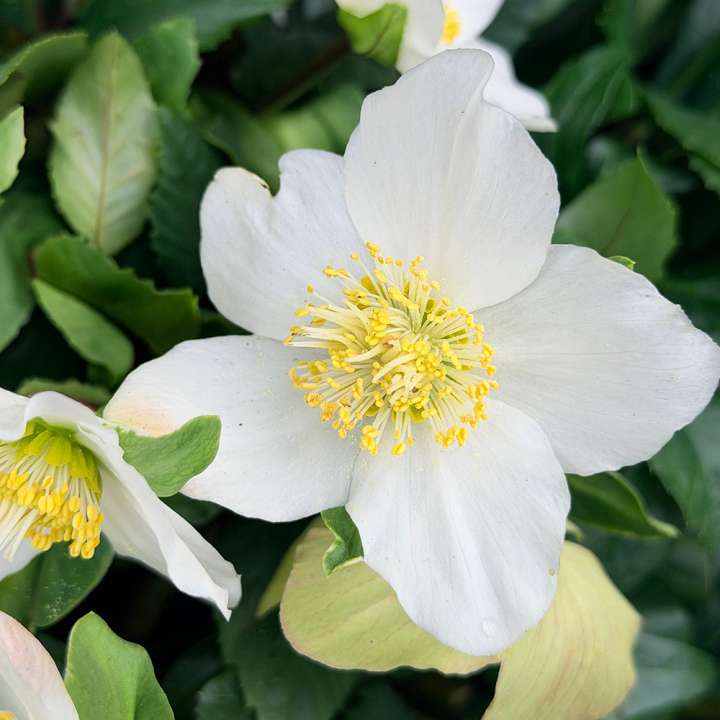
Helleborus HGC CR ‘Jesse’ |
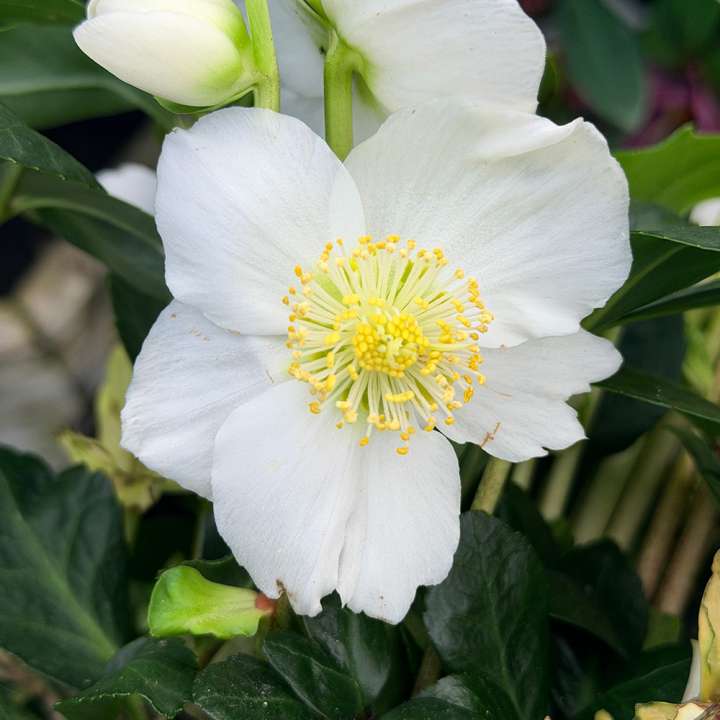
Helleborus niger ‘Christmas Carol’ |
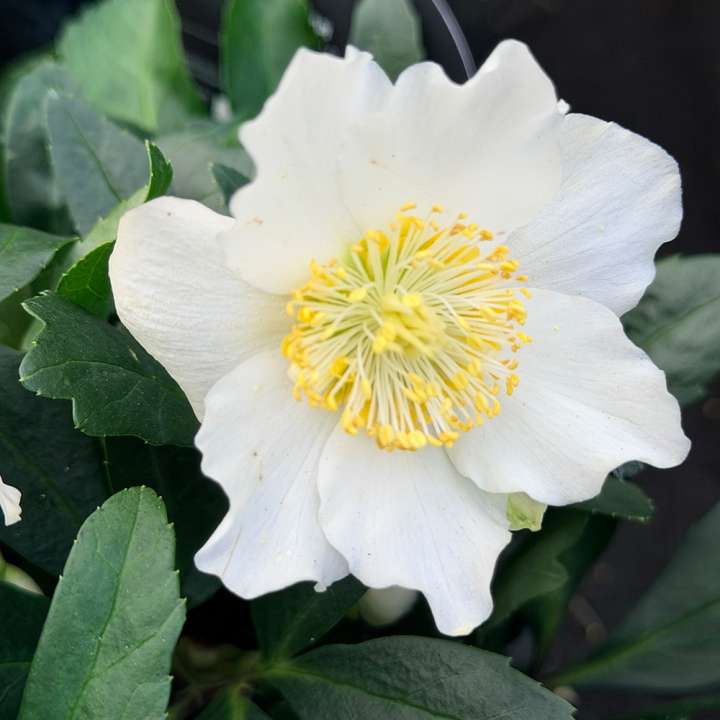
Helleborus niger ‘Jasper’ |
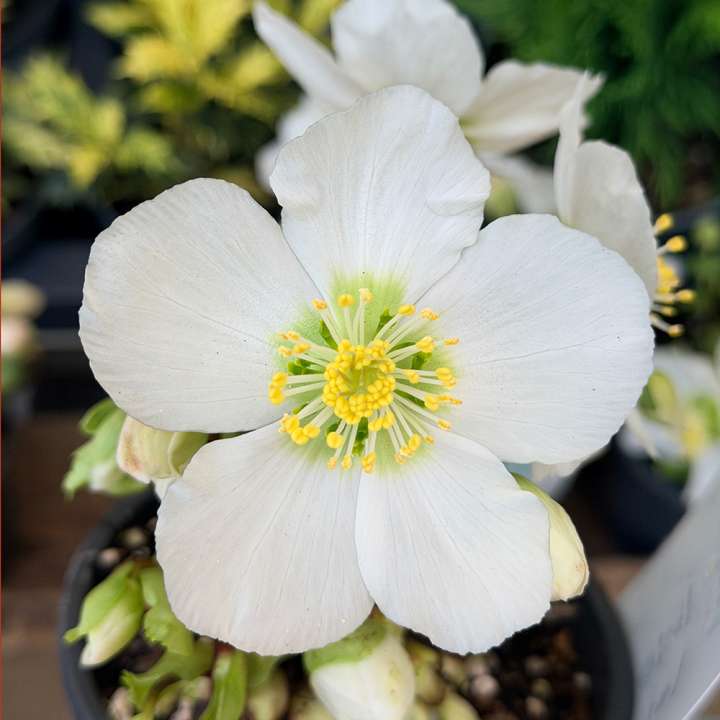
Helleborus niger ‘Verboom Beauty’ |
The Romantics: Pinks and Roses
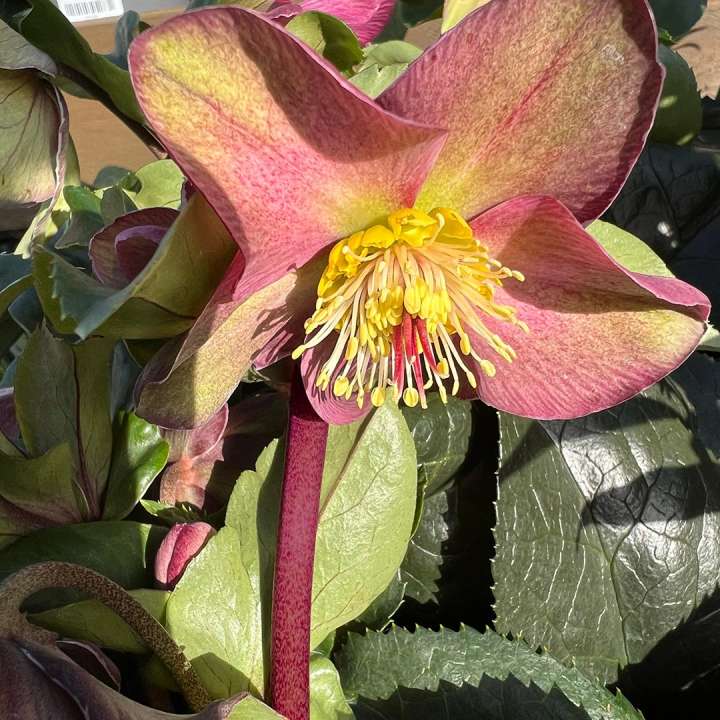
Pink hellebores, often called lenten roses, bring warmth to the cold garden, their soft tones complementing winter light beautifully.
- Pink Promise — Delicate soft pink; floriferous and reliable.
- Penny’s Pink — Rich rose-pink flowers with hints of plum held above handsome foliage.
- Victoria — Deep pink to ruby blooms on a compact, well-proportioned plant.
- Verboom Beauty — Compact habit with profuse flowering; excellent for containers.
- Early Rose — Part of the Ice N’ Roses breeding, with blooms from late autumn.
- Rosetta — Soft rose with good substance and lasting power.
- Winter Ballet Liara — Newer selection with graceful pink flowers.
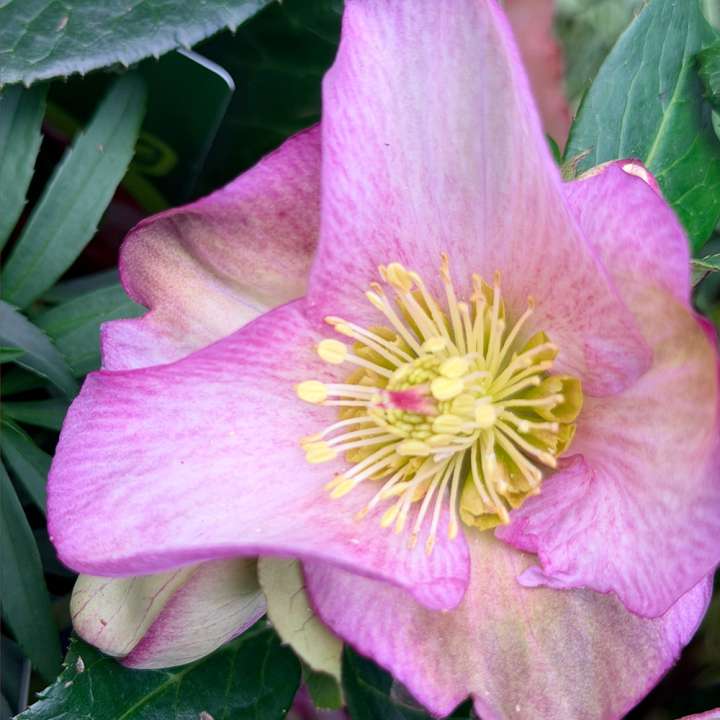
Helleborus HGC Ice n Roses Rosetta |
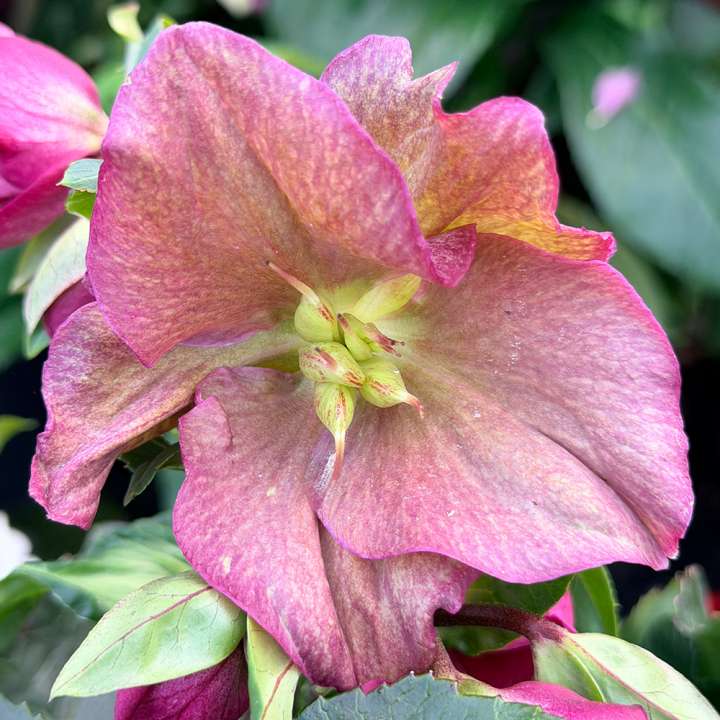
Helleborus HGC Ice Breaker Ruby |
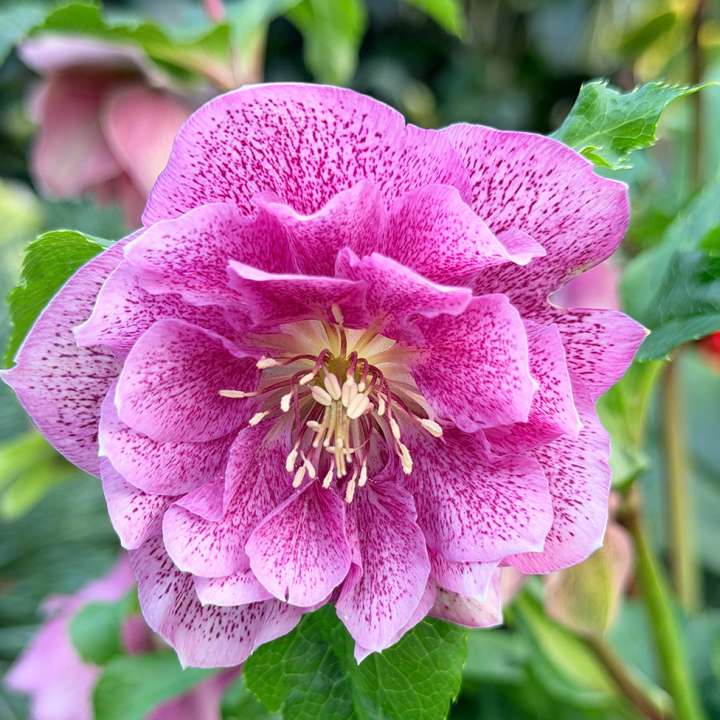
Helleborus Viv Double Flowered Bicolour |
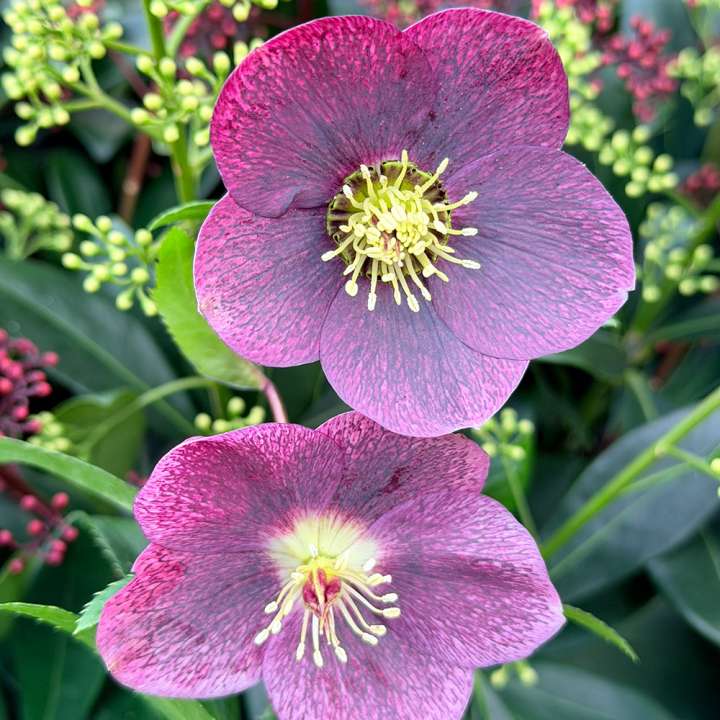
Helleborus x Hybridus Viv Victoria |
The Dramatists: Reds and Dark Tones
For those who favour bold statements, deep reds and near-blacks create striking focal points. These hardy hellebores are well-suited for challenging winter conditions and are low maintenance, making them ideal for gardeners seeking easy-care plants.
- Red Romance — The definitive red hellebore. Deep crimson flowers against lustrous dark foliage; truly spectacular.
- Anna’s Red — Rich maroon-red with contrasting yellow stamens.
- Merlot — Wine-red blooms with excellent vigour.
- Early Red — From the Ice N’ Roses series; vivid red-pink from November.
- Pippa’s Purple — Dark purple with mottled foliage; a collector’s favourite.
- Purple Marble — Deep purple flowers complemented by marbled leaves.
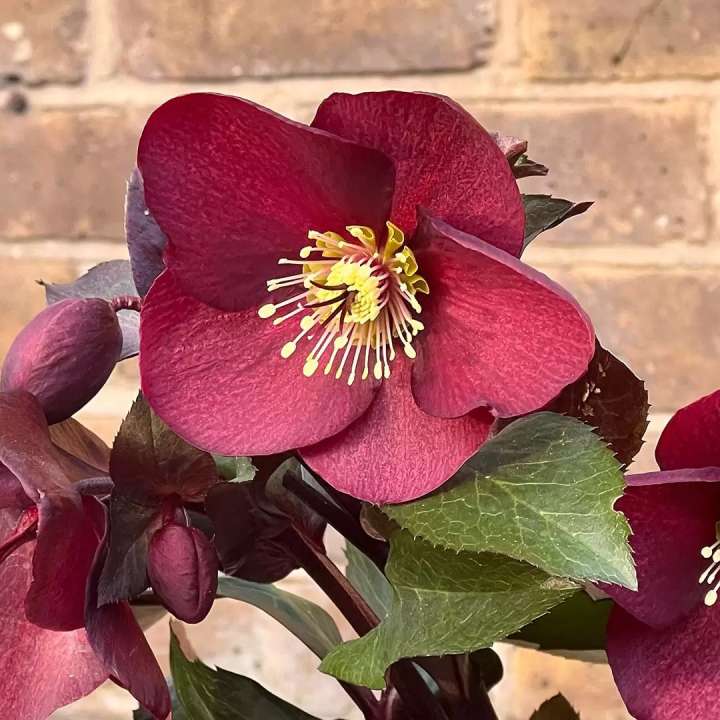
Helleborus HGC Ice N Roses Merlot |
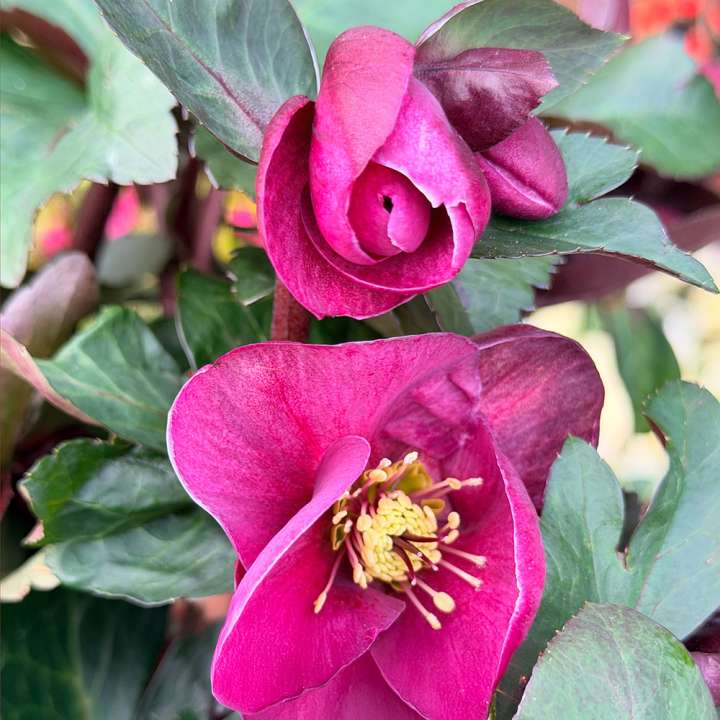
Helleborus HGC Ice n Roses Brunello |
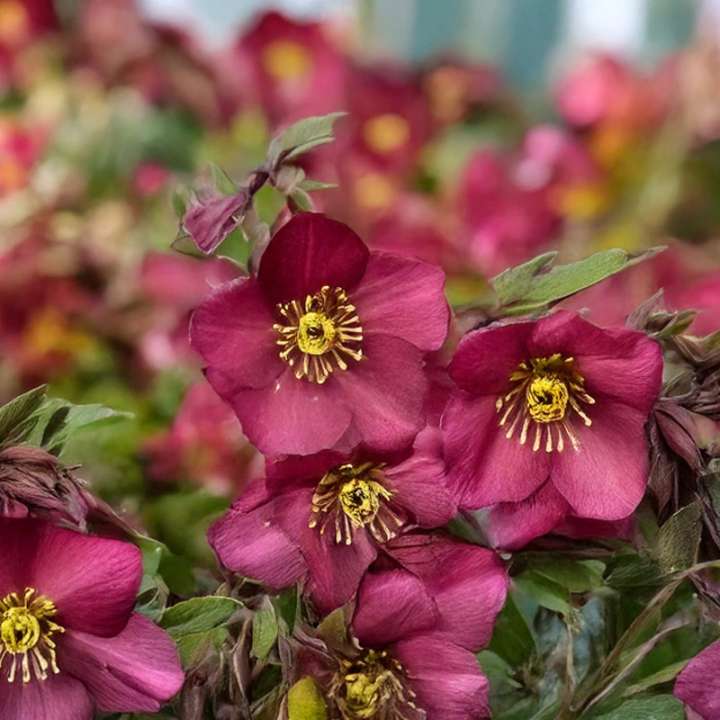
Helleborus Glandorfensis Ice N Roses Red Romance |
Helleborus 'Purple Marble' |
The Sophisticates: Unusual Tones and Picotees
These varieties reward the closer look.
- Picotee — White petals edged with fine pink or purple margins.
- Frostkiss Charmer — Outstanding marbled silver foliage with complementary flowers.
- Strawberry Moon — Soft peachy-pink, quite unlike typical hellebore colours.
- Silver Lace — Creamy flowers paired with distinctive silvery foliage.
- Diva Terra — Unusual terracotta-pink tones.
Beyond Single Flowers: Form and Habit
Double-Flowered Varieties
The doubling of petals creates a peony-like opulence that suits formal settings or container displays.
- Double Ellen series (Pink, Red, White) — Reliable doubles with ruffled petals.
- Double Mixed — For those who enjoy serendipity.
Architectural Species
These provide bold foliage structure throughout the year, with flowers as a winter bonus.
- Helleborus argutifolius (Corsican Hellebore) — Large, leathery, serrated leaves; pale green flower clusters. Substantial presence. This species is also resistant to deer, making it a good choice for gardens where deer are a concern.
- Helleborus foetidus (Stinking Hellebore) — Finely divided, dramatic dark foliage; clusters of pale green, red-rimmed bells. Despite its name, leaves only release scent when crushed. It is also deer-resistant and well-suited for areas prone to deer browsing.
- Helleborus sternii and Silver Star — Silvery-flushed foliage with subtle pink-green flowers; elegant throughout the seasons.
- Helleborus lividus — Compact with beautifully marbled grey-green leaves.
Placing Your Collection: Aspect and Display
For Shade and Dappled Light
This is generally the classic hellebore territory. All varieties thrive here, but the following particularly excel: H. orientalis hybrids and the broader hybridus group; Foetidus and argutifolius for structural effect; whites and pale pinks, which illuminate darker corners. In shaded areas, monitor for disease, as poor air circulation can increase risk—ensure good airflow to help keep hellebores healthy.
Companion planting: Ferns (particularly Polystichum), Pulmonaria, snowdrops, winter aconites, and the emerging shoots of hostas.
For Morning Sun with Afternoon Shade
This aspect suits the more robust modern hybrids, which tolerate greater light exposure: Ice N’ Roses series; HGC selections (Christmas Carol, Verboom Beauty, Ice Breaker); Winter Ballet series. While some hybrids can tolerate full sun, most hellebores prefer protection from intense sunlight, especially as their main flowering period is from late winter to early spring, before summer begins.
Companion planting: Evergreen Carex grasses, heucheras with burgundy or silver foliage, early bulbs such as Iris reticulata.
For Containers on Patios, Balconies and Doorways
Choose compact, outward-facing varieties with extended flowering: Verboom Beauty — Purpose-bred for container display; Winter Ballet series (Liara, Karli, Katie, Kacy) — Compact and floriferous; Christmas Carol — Classic choice for festive displays; Ice Breaker and Ice Breaker Max — Long season, strong habit.
Companion planting in pots: Trailing ivy, Festuca glauca, dwarf evergreens, Cyclamen coum.
For Naturalising Under Trees and Shrubs
Select varieties with good self-seeding potential and relaxed habit: H. orientalis hybrids; H. foetidus (seeds freely); species types and mixed hybridus selections. For best results, plant hellebores at ground level to ensure proper root establishment and healthy growth. When naturalizing hellebores under trees and shrubs, watch for new leaves as a sign that the plants are establishing well and adapting to their environment.
Companion planting: Winter-stemmed dogwoods (Cornus), Mahonia, Sarcococca, early-flowering Narcissus.
The Art of More Flowers, Longer
A well-managed hellebore will reward you with increasing generosity each year. Here is how to maximise flowering and extend the display.
- Pruning: Remove old foliage in late autumn or early winter. As new flower stems begin to emerge (typically November to January depending on variety), cut away the previous year’s leaves at the base. This serves three purposes: it prevents fungal diseases such as hellebore leaf spot from spreading; it allows flowers to be displayed without competition; and it directs the plant’s energy into bloom production rather than maintaining tired foliage. When pruning, always wear gloves to protect your skin from the sap, which can be an irritant. Take care to avoid contact with the sap, as it may cause skin irritation.
- Mulch annually with rich organic matter. In autumn, apply a generous layer of well-rotted compost, leaf mould, or farmyard manure around the base of each plant, taking care not to bury the crown. Hellebores are hungry plants, and this annual feed significantly increases flower count.
- Avoid disturbance. Unlike many perennials, hellebores resent division and transplanting. Choose their position thoughtfully from the outset and allow them to mature in place. A well-established clump will produce dramatically more flowers than a recently moved plant.
- Water during dry spells in autumn. Flower buds are forming during September and October, so drought stress at this time reduces the following winter’s display. Once established, hellebores are reasonably drought tolerant, but attention to autumn watering pays dividends.
- Deadhead selectively. If you wish to prevent self-seeding (which can produce variable offspring), remove faded flowers before seed sets. However, if you welcome natural spread, allow some seed heads to mature and scatter — new plants will appear the following year.
- Choose successional varieties. The secret to months of hellebore interest lies in variety selection. The Ice N’ Roses and H. niger types begin flowering as early as November. Mid-season hybrids peak from January to March. By planting across the season, you create a seamless display from early winter through to spring. Hellebores have a long flowering period, blooming from late winter to early spring, providing valuable colour when little else is in flower.
When caring for hellebores, observe new growth carefully and remove old or dead leaves to encourage healthy development and maximize the flower display. Be aware that all parts of hellebores are toxic if ingested, so handle with care and keep away from children and pets.
Visit the Collection
At Boma, our January hellebore selection represents one of London's most comprehensive offerings. We encourage you to visit us and see the varieties in flower — there is no substitute for observing how light plays across a petal, or how foliage complements bloom.
Our team is always pleased to discuss your garden's conditions and help you curate a collection that will bring distinction to your winter garden for years to come.