

What Should I Plant in a London Garden in November?
November is tulip month, the start of the bare-root season, and still a good time for evergreen shrubs while the soil is moist and workable. Anything planted now spends the winter growing roots rather than leaves, so it starts spring ahead of anything bought in April.
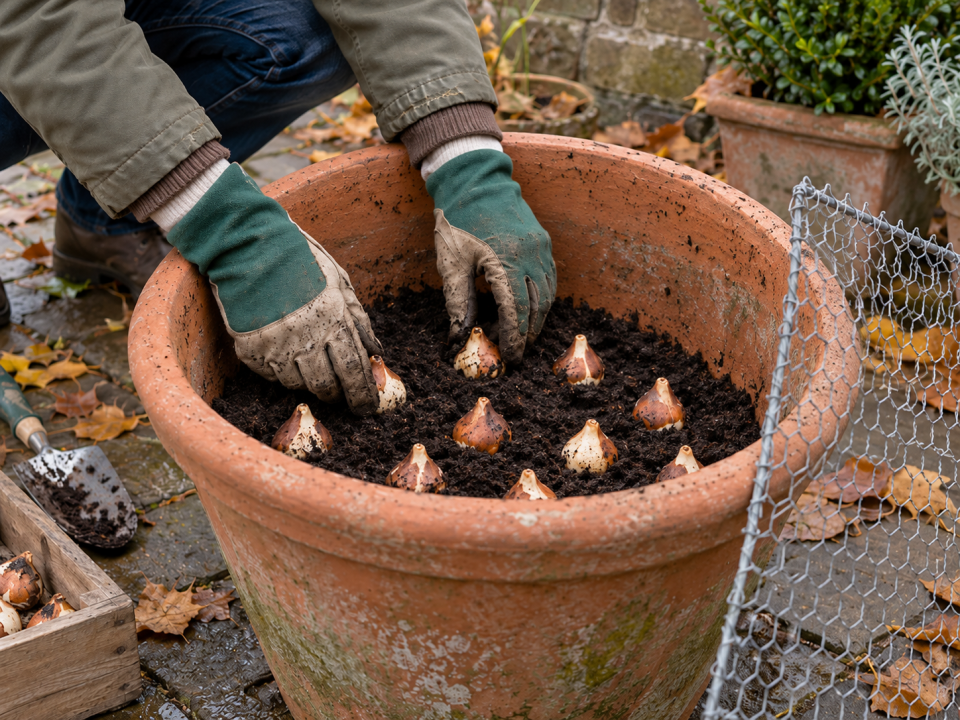
- Tulips — the main bulb job of the month. Planting in November, once the soil has cooled, reduces the risk of tulip fire, a fungal disease that spreads in warm, damp autumn soil. Plant around 15cm deep, roughly three times the height of the bulb, pointed end up. Deep purple 'Queen of Night' flowers late and looks especially good against pale stone or rendered walls, while lily-flowered, orange 'Ballerina' is lightly scented and holds up well in a pot. The rest of the range is in our tulip bulbs collection.
- Bulbs in pots — a free-draining mix matters more than anything else; SylvaGrow peat-free bulb compost is made for the job. London squirrels dig up freshly planted bulbs, so lay a piece of chicken wire over the compost surface and remove it once shoots appear.
- Daffodils and other spring bulbs — late plantings still flower, though they may come a little later in their first spring. Get them in early in the month if you can.
- Roses and hedging — November is an ideal time to plant roses, according to the RHS. Avoid planting a new rose where an old one grew, as replant disease can hold it back. Bare-root deciduous hedging, such as beech and hornbeam, comes into season this month and is an economical way to plant a long run of hedge. Potted David Austin roses can go in now too.
- Winter shrubs for scent and colour — Sarcococca (sweet box) is small, evergreen and shade-tolerant, and its tiny white flowers scent a front path in midwinter. Skimmia japonica holds red or white buds through the coldest months; female plants need a male nearby to produce berries. Both suit the shaded front gardens of Victorian terraces.
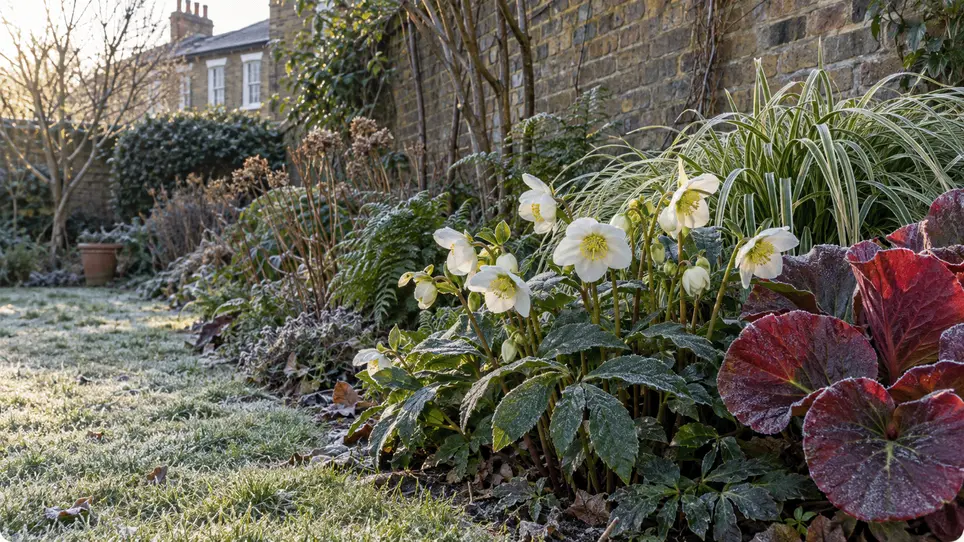
- Hellebores — the Christmas rose (Helleborus niger) can be planted now for white flowers from around the turn of the year. Our winter perennials guide covers hellebores in more depth.
How Do I Protect Pots and Tender Plants From Frost?
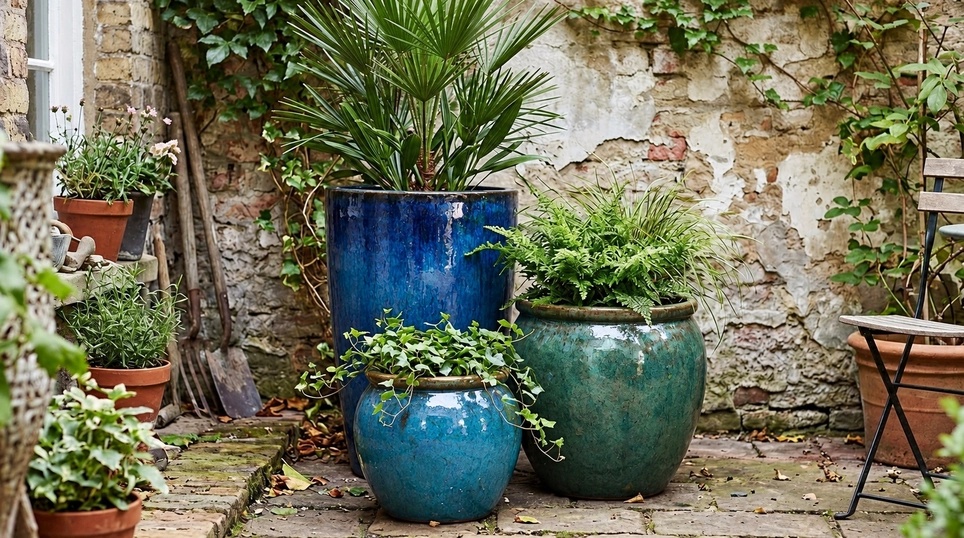
In most London gardens, winter wet does more damage than cold. Compost that stays waterlogged rots roots, and a saturated terracotta pot is far more likely to crack in a frost than a dry one. Raising containers on pot feet lets them drain freely and is the single most useful job for a patio, balcony or roof terrace this month.
| Plant | What to Do in November |
|---|---|
| Olive and bay trees in pots | Stand on pot feet and keep compost on the dry side. Wrap the crown in fleece only during a hard frost, and remove it afterwards. |
| Pelargoniums, tender succulents, citrus | Bring indoors or into a frost-free porch or greenhouse before the first frost. A cool, bright windowsill suits most of them. |
| Dahlias | In a sheltered garden with free-draining soil, cut back once frost blackens the foliage and mulch the crown thickly. On wet London clay, lift the tubers and store them somewhere cool and dry. |
| Tree ferns (Dicksonia) | Before a cold spell, tuck straw or fleece into the crown to protect the developing fronds. |
| Newly planted shrubs | Firm in any plants lifted by frost, and stake anything over a metre tall in an exposed spot to stop wind rock. |
A mulch of garden compost or well-rotted manure around borderline-hardy plants protects their crowns and improves the soil as it breaks down. Apply it to moist ground, not frozen soil.
What Should I Do With Leaves, Lawns and Borders?
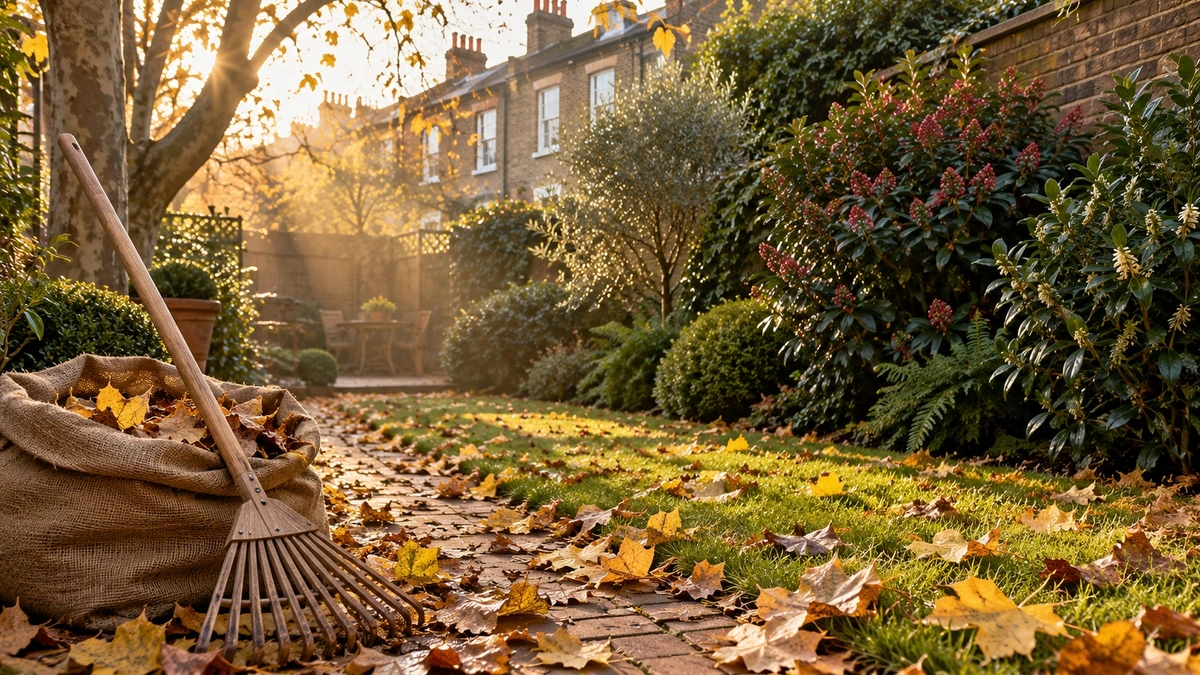
Rake leaves off lawns and paths, where a wet layer smothers grass and makes paving slippery. On borders, a thin covering can stay as a natural mulch. Collected leaves make leaf mould: pack them damp into a bin bag, pierce a few holes, and leave it somewhere out of the way for a year or two. The result is a fine, crumbly conditioner for beds and pots.
The lawn needs little now. If the weather stays mild and the grass is still growing, give it a final cut with the blades set high. Keep off it when it is frozen or waterlogged, as footprints damage the grass and compact the soil.
In the border, cut back perennials that have collapsed into a soggy heap, but leave sturdy seedheads and hollow stems standing. They hold frost beautifully on a clear morning, feed birds, and shelter overwintering insects. Our autumn perennials guide covers what to cut and what to leave, plant by plant.
What Can I Plant in the Veg Patch in November?
Garlic and overwintering broad beans both go in this month. Each needs free-draining ground, which is the challenge on London clay: a raised bed or deep containers will give far better results than heavy, wet soil. Broad beans sown now crop several weeks ahead of a spring sowing.
Pigeons strip brassicas such as kale and sprouting broccoli over winter, so cover them with netting or fleece. Empty beds can be covered with cardboard and a layer of compost, which suppresses weeds and leaves the soil easier to work in spring.
What Can I Plant in a Winter Window Box or Doorstep Planter?
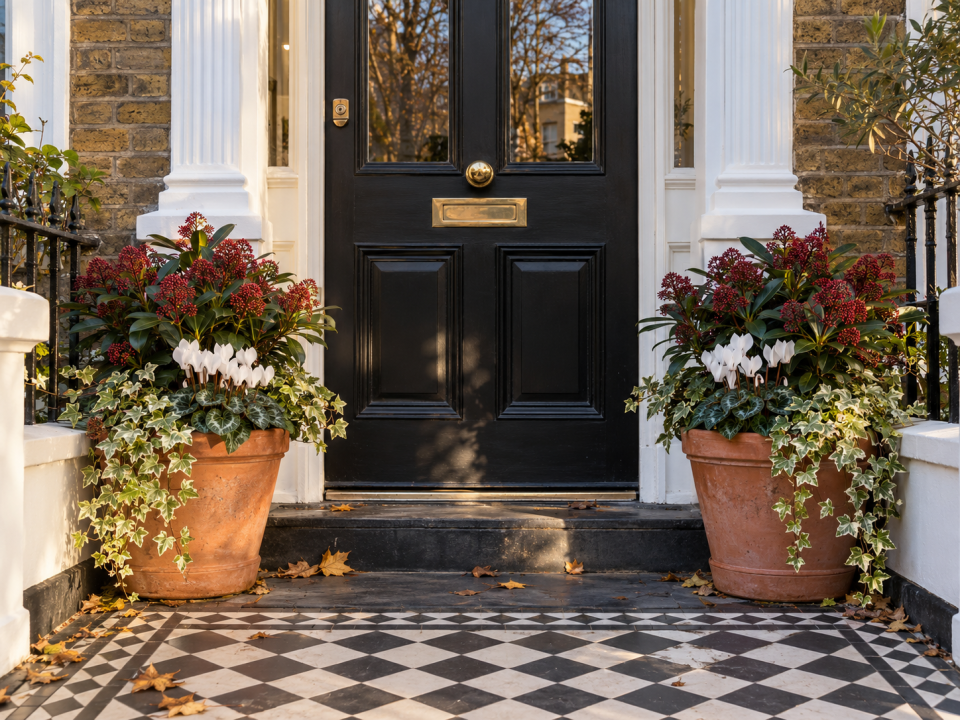
A winter container works best built around evergreen structure, with seasonal flowers tucked in for colour. Skimmia, ivy, small conifers and euonymus provide the framework; cyclamen, violas and heathers add colour from now until spring. Plant closely, as there is little growth over winter to fill the gaps.
If you would rather start with something already planted, our festive winter planters are designed to see a doorstep through Christmas and beyond. A matched pair of the Oxford Evergreen Planter either side of a front door makes a smart welcome, and the Mayfair Evergreen Screen Window Box comes in three lengths to fit a sash window ledge.
On a balcony or roof terrace, choose heavier pots that won't move in the wind, and keep an eye on watering: containers under an overhang can stay dry even in a wet week. If you would like a winter scheme designed and planted for you, Boma's Courtyard & Roof Terrace Container Planting service covers window boxes through to large troughs, within a five-mile radius of Kentish Town.
How Can I Help Birds and Hedgehogs in November?
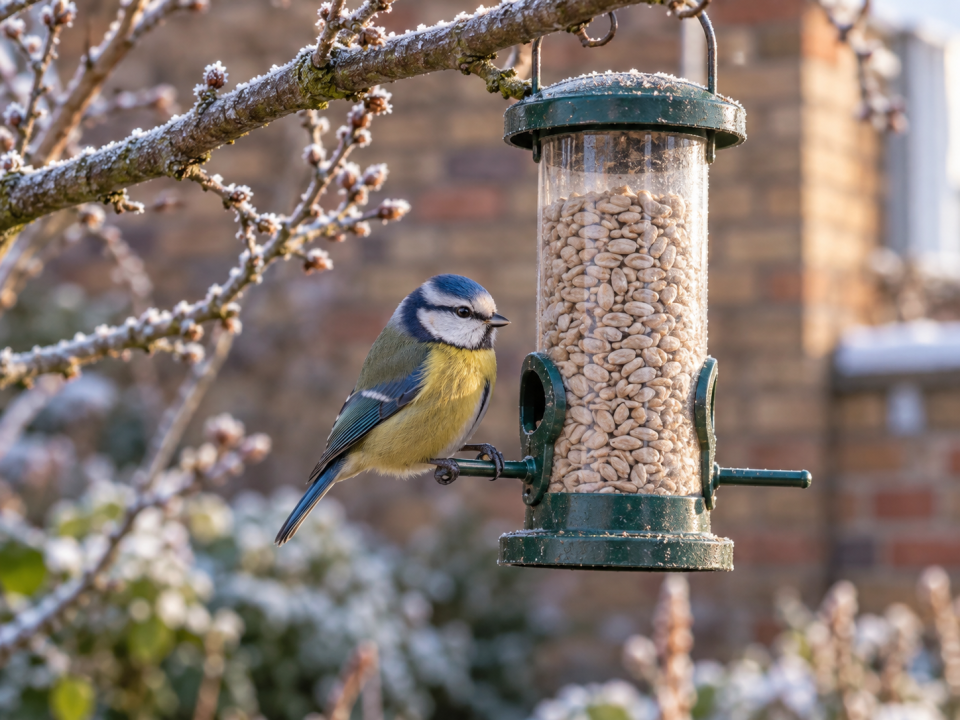
Natural food grows scarce as November goes on, and a well-stocked feeder makes a real difference. Sunflower hearts suit the widest range of garden birds and leave no husks on the patio below. Offer whole peanuts only in a mesh feeder, take fat balls out of any plastic netting before hanging them, and put out fresh water, which birds struggle to find in a freeze. Clean feeders regularly to stop disease spreading. Feeders, food and squirrel-resistant designs are all in our bird care range.
Hedgehogs are looking for somewhere to hibernate. A pile of leaves or logs in a quiet corner gives them shelter, and a gap of around 13cm at the base of a fence lets them move between gardens. If you are building a bonfire for Bonfire Night, build it on the day you light it, or move it to a new spot first, so nothing has crawled inside.
How Should I Care for Houseplants Once the Heating Is On?
November brings the lowest light levels of the year so far and the first weeks of central heating, and houseplants feel both. Move them closer to the window, but not touching cold glass, and keep them away from radiators, where the dry heat browns leaf edges. Wiping dust off broad leaves, such as those of a rubber plant or Kentia palm, helps them make the most of the light there is.
Most houseplants need no feed until spring and far less water than in summer; our October guide covers adjusting the watering routine. Humidity-loving plants such as calatheas and indoor ferns do best grouped together, or in a bright bathroom.
When Should I Plant Paperwhites for Christmas?
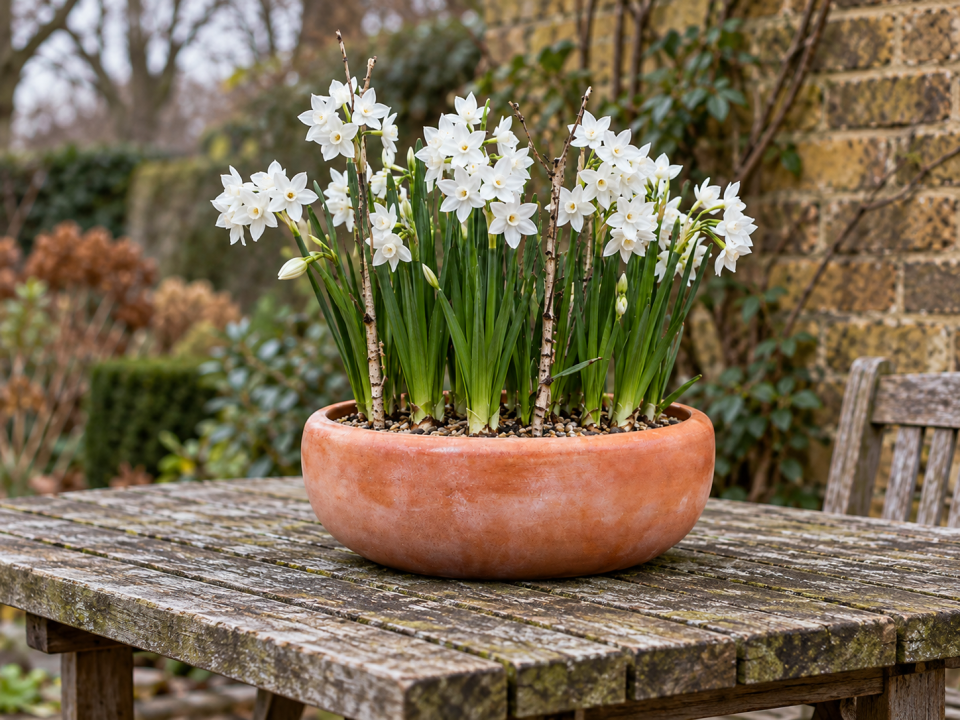
Plant them in mid-November. Paperwhite narcissus need no cold period and usually flower four to six weeks after planting, so a mid-month start brings clusters of white, strongly scented flowers in time for Christmas. Plant them shoulder to shoulder in a bowl of bulb fibre or gravel, keep them just moist, and grow them somewhere cool and bright. In a warm room they stretch and flop, so a few twigs pushed in among the stems help keep them upright.
Winter-flowering houseplants start arriving this month too. Indoor cyclamen prefer a cool room and water from below, onto a saucer rather than the crown. Christmas cactus (Schlumbergera) can drop its buds if it is moved once they have formed, so choose its spot and leave it there. Poinsettias dislike cold draughts, so keep them well wrapped on the journey home. You will find them all in our flowering indoor plants range as they come into season.
London's built-up warmth often delays the first hard frost compared with the surrounding countryside, but a clear, still night can still catch a tender plant left out, and the heavy clay common across Kentish Town, Camden and much of North London stays wet for months once winter sets in. Drainage, rather than cold, is usually the deciding factor in what survives.
We stock tulips and spring bulbs, winter shrubs and bedding, festive planters, bird care and houseplants at our garden centre at 51–53 Islip Street, Kentish Town NW5 2DL. If you are in Hampstead, Highgate, Primrose Hill or further across London, we deliver to all postcodes within the M25. Check delivery zones and charges.
Frequently Asked Questions
Is November Too Late to Plant Tulips?
No, November is the best month for tulips. Waiting until the soil has cooled reduces the risk of tulip fire, a fungal disease. They can still go in during early December if the ground is not frozen.
Can I Still Plant Daffodil Bulbs in November?
Yes. Daffodils prefer to go in earlier, but bulbs planted in November still flower, sometimes a little later than usual in their first spring. Plant them as soon as you can and check that the bulbs are firm before planting.
Should I Cut Back Perennials in November?
Cut back only what has collapsed or turned mushy. Sturdy seedheads and stems can stand until late winter, where they feed birds, shelter insects and look good in frost.
Do Olive Trees in Pots Need Protecting in a London Winter?
Established olives usually cope with a London winter. The greater risk in a pot is cold, waterlogged roots, so raise the pot on pot feet, keep the compost on the dry side, and wrap the crown in fleece during a hard frost.
When Does Bare-Root Season Start?
Bare-root trees, roses and deciduous hedging become available from November, once plants are fully dormant. Plant them promptly, on a day when the ground is neither frozen nor waterlogged.
When Should I Plant Paperwhites to Flower at Christmas?
Mid-November. Paperwhites usually flower four to six weeks after planting and need no cold period, so a bowl planted in the middle of the month should be in flower for Christmas.
Where Should I Put Houseplants When the Heating Is On?
Close to a window for light, but away from radiators and not touching cold glass. Most houseplants dislike both dry heat and sudden chills, so a bright spot with a steady temperature suits them best.
Come and see this month's tulips, winter shrubs, festive planters and houseplants at 51–53 Islip Street, Kentish Town NW5 2DL, or order online for delivery across all M25 postcodes. If you are planning new roses, hedging or a winter border, our Garden Planting Service can design and plant it for you, within a five-mile radius of Kentish Town.
Visit Us in Kentish Town Book A Consultation