

The stakes extend beyond the garden. Plantlife estimates that 97% of the UK's wildflower meadows and grasslands have been lost since the 1930s, so even a few square metres of well-managed wildflower planting in a London garden genuinely adds up.
Which Type of Wildflower Garden Suits Your Plot?
The right approach depends on your soil's current fertility. Perennial meadows take at least two years to flower well from seed, according to the RHS, but return for years once established. Most wildflower plants need full sun; shaded London gardens suit a woodland-edge planting rather than a sunny meadow. Use the table below to match the approach to your garden before you buy seed.
| Approach | Best for | Soil fertility | Sun | First flowers | Main cut |
|---|---|---|---|---|---|
| Annual cornfield patch | Former borders and vegetable beds | Medium to high | Full sun | First summer | Late summer to early autumn, once seed heads ripen |
| Perennial meadow from seed | Open, sunny ground you can strip of topsoil | Low | Full sun | Year two | Late June to end of August |
| Lawn conversion | Existing lawns with no recent feed or weedkiller | Low to medium | Full sun | Year two or three | Late June to end of August |
| Woodland-edge glade | Plots shaded by buildings or deciduous trees | Medium | Dappled shade | Year one (bulbs) | Light trim after foliage dies back |
| Mini meadow in a raised bed | Patios, courtyards, roof terraces | Low (use a lean mix) | Full sun | First summer (annuals) | Hand-cut with shears in early autumn |
Source: Boma synthesis of guidance from the RHS, Plantlife and Islington Council's mini meadow guide.
Annual Wildflowers: Fast Colour on Fertile Soil
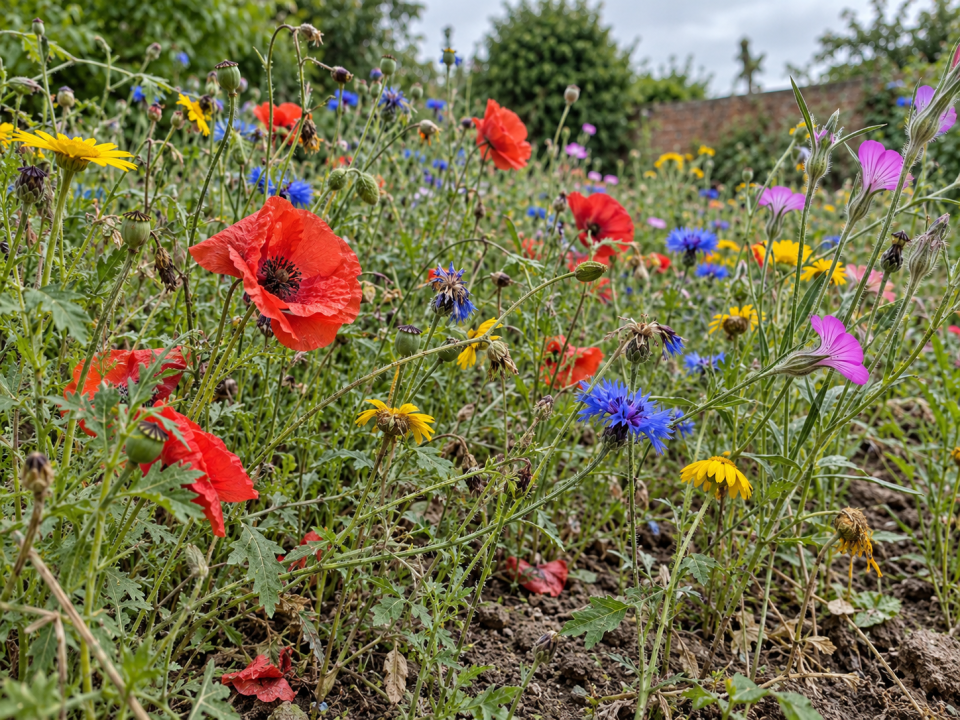
Annual wildflowers are the practical choice for most London gardens with fertile soil. A cornfield mix of field poppy (Papaver rhoeas), cornflower (Centaurea cyanus), corn marigold (Glebionis segetum) and corncockle (Agrostemma githago) flowers from June in its first summer. Annual plants need bare, disturbed soil to germinate, so the display fades in year two unless you rake the ground over and resow fallen seeds or saved seed each autumn.
Perennial Wildflowers: A Meadow That Returns for Years
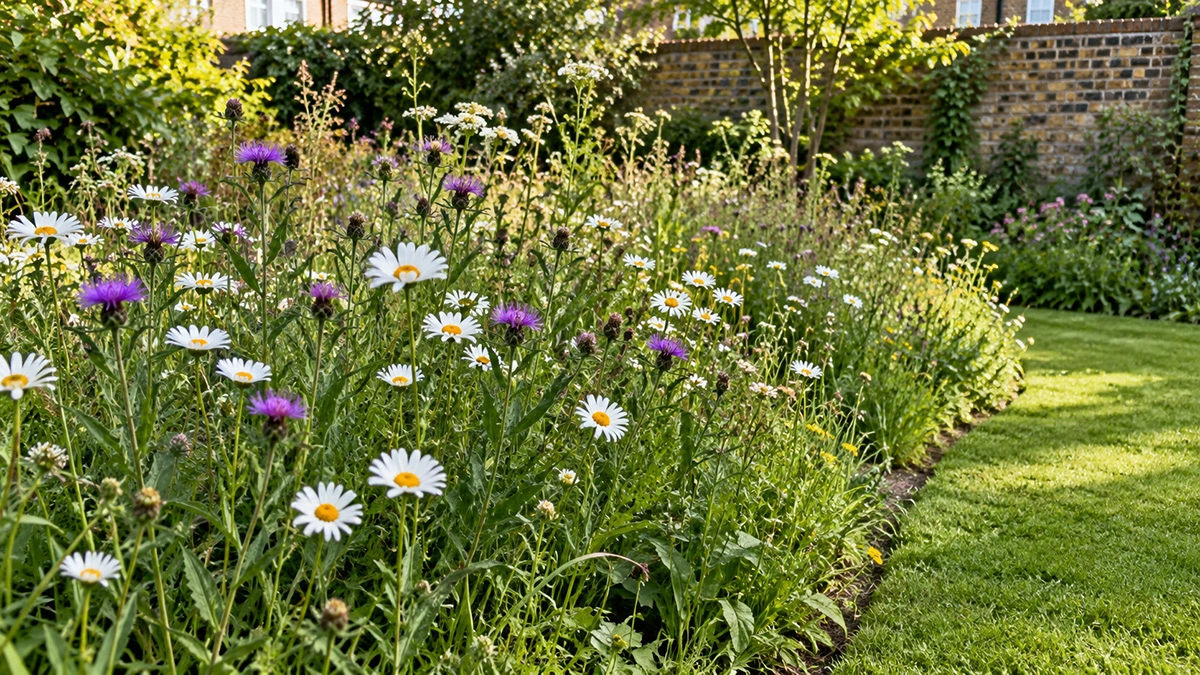
Perennial wildflowers such as ox-eye daisy (Leucanthemum vulgare), common knapweed (Centaurea nigra), field scabious (Knautia arvensis), lady's bedstraw (Galium verum), selfheal (Prunella vulgaris) and bird's-foot trefoil (Lotus corniculatus) form permanent meadows in a fine grass sward. Perennial meadows reward patience: year one is mostly leaf and root, and the full display arrives in the second or third summer. Sow yellow rattle (Rhinanthus minor) into established meadows; this semi-parasitic annual weakens dominant grasses and leaves space for wildflower diversity. Native wildflower plants are naturally hardy, survive winter through their root systems and need no feeding or protection.
How Does London Soil Change the Design?
London soil changes the design because most gardens sit on heavy London clay that has been fed for decades, and fertile soil favours vigorous grasses over wildflowers. Wildflowers evolved on poor ground. Add nutrients and the grasses and perennial weeds grow faster, shade out young plants and reduce the meadow to rough grass within a few seasons.
There are three reliable ways to reduce soil fertility before sowing a perennial mix:
- Strip the turf and the top 5cm of topsoil, as Plantlife's meadow guide recommends, to expose less fertile soil beneath.
- Mow an existing lawn weekly for a year and remove every clipping, so nutrients leave the site with the grass.
- Choose an annual mix instead, which tolerates the medium to high fertility of former beds and borders.
The RHS advises against sowing mustard to draw out nutrients on clay or organic-rich soils, which rules it out for most London plots. Never add compost, manure or fertiliser to a wildflower area. Feeding and summer watering encourage excessive vigour in grasses; water only during establishment, after which native wildflowers need no irrigation. Avoid lawn weedkillers, pesticides and herbicides, which kill wildflowers and the insects that feed on them.
When to Sow on London Clay
On London clay, sow wildflower seeds in March or April, once the soil has dried enough to crumble. The RHS notes that most meadow mixes can go in during early to mid-spring or in September on lighter soils; heavy soil that stays cold and wet over winter should wait until spring. Free-draining or raised-bed soils can be sown in early autumn, which gives seed a cold spell to break dormancy.
Choosing a Wildflower Seed Mix
Choose a wildflower seed mix of native UK species from a supplier that states the seed's origin, rather than a generic packet, which often relies on non-native annuals. Native seed of UK, and ideally local, provenance matters because native species are adapted to the regional climate and feed the pollinators and other wildlife that depend on them. Pick a mix whose species flower at different times, so the wildflower garden offers nectar from spring into autumn.
How to Lay Out a Wildflower Garden
A wildflower garden layout works best when loose planting sits inside a crisp, deliberate frame. Design researcher Joan Nassauer called these signals of intent "cues to care" in her paper Messy Ecosystems, Orderly Frames: a mown edge, a path or a clipped hedge tells neighbours and visitors that the long grass is planned, not neglected. In a small London garden, the frame matters as much as the flowers.
- Site the wildflower area in the sunniest part of the garden; most meadow plants need full sun and well-drained soil.
- Mow a path at least one mower width through or around it, so you can walk among the flowers in summer.
- Keep a mown or paved strip along the house side, where the garden is seen most often.
- Plant perennial plugs in groups of the same species rather than dotted singly; groups read as drifts and compete better with grass.
- Add bulbs for spring interest, choosing species whose foliage dies back before your main cut (see the bulb section below).
A wildflower patch does not need acres. A 2m by 3m bed of annuals, edged with mown grass, produces a summer of flowers and seed heads for birds. For a softer border approach using garden perennials and grasses, see Boma's guide to naturalising borders and beds.
How to Sow Wildflower Seeds in Your City Garden
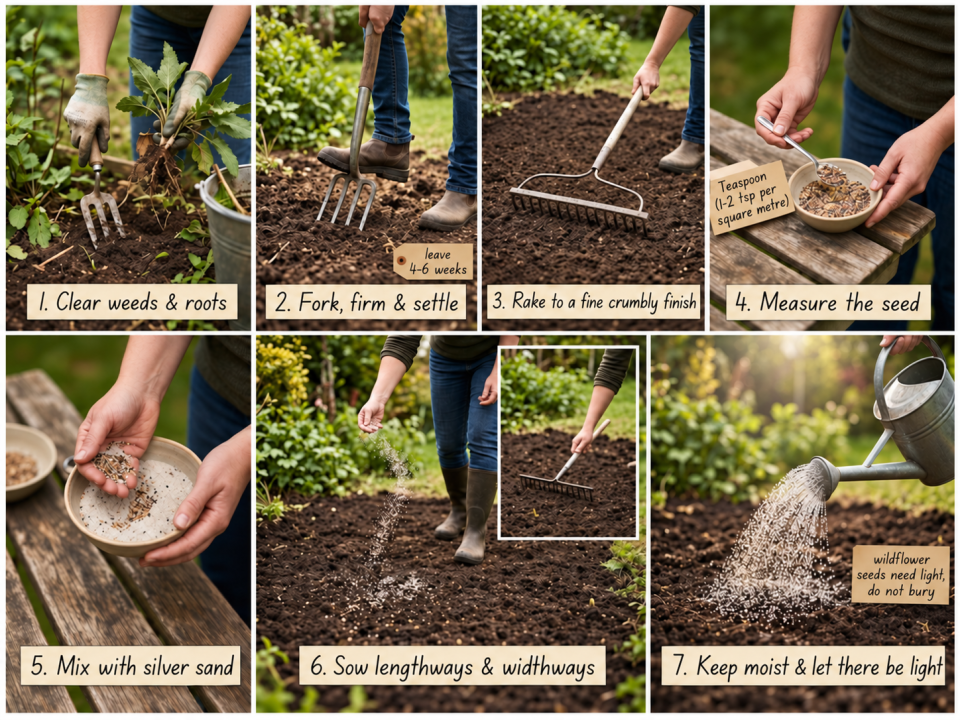
Sowing wildflower seeds succeeds when seed goes onto bare, weed-free, firmed soil at a light rate and is not covered deeply. You cannot just scatter wildflower seeds onto existing lawn or rough ground; seed that lands on turf rarely reaches the soil and the grass outcompetes any seedlings that do.
- Remove unwanted weeds, especially perennial weeds such as docks, nettles and thistles, including all roots.
- Fork the soil, firm it by treading and leave it to settle for four to six weeks, then hoe off the weeds that germinate.
- Rake the surface to a fine, crumbly finish.
- Measure the seed: Plantlife advises one or two teaspoons per square metre.
- Mix the seed with roughly three times its volume of silver sand, so you can see where it has fallen.
- Sow half the seed mix walking lengthways and half walking widthways, then rake in very lightly.
- Keep the soil moist until seedlings are well rooted if no rain falls; wildflower seeds need light to germinate, so never bury them deeply.
How to Plant Plugs in Your London Garden
Plug plants establish faster than seed and suit lawn conversions, where bare soil is scarce. Islington Council's guide recommends 3 to 15 plugs per square metre, with fewer for larger biennials such as teasel (Dipsacus fullonum) and wild carrot (Daucus carota), which flower in their second year, produce seed and then die. Raise your own perennial plugs by sowing in 24-cell seed tray inserts filled with Melcourt peat-free seed compost, then plant out the following spring.
Which Bulbs Work in a Wildflower Garden?
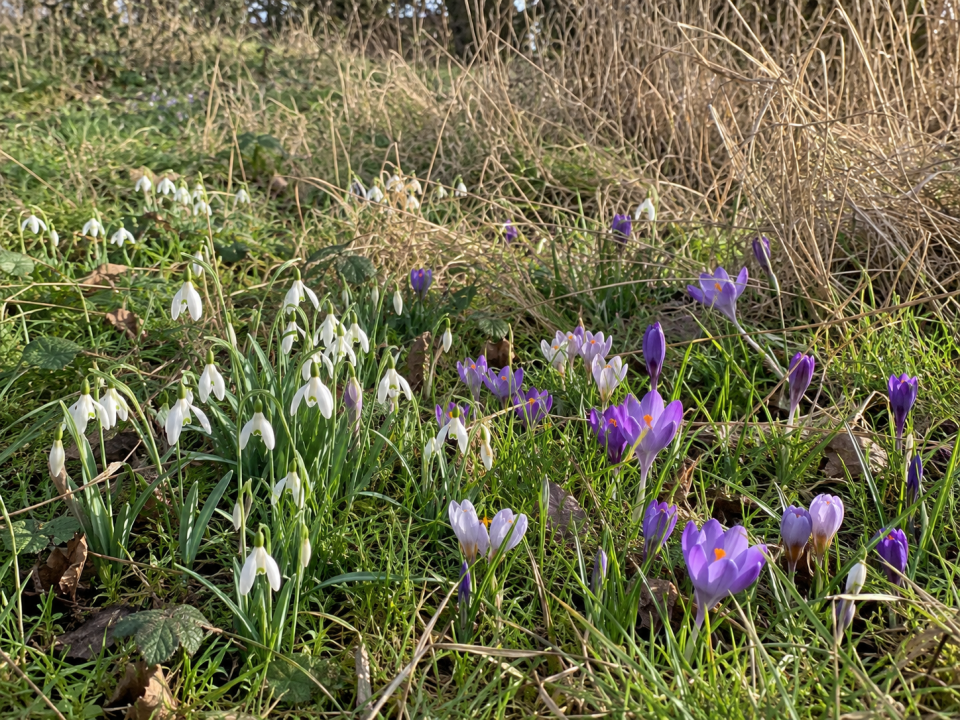
Bulbs work in a wildflower garden when their flowering time fits your cutting regime. The RHS advises leaving grass uncut for at least six weeks after bulbs flower, so the foliage can feed next year's bulb. That rule decides which bulbs you can grow.
| Bulb | Flowers | Safe to cut from | Compatible with a spring cut? |
|---|---|---|---|
| Snowdrop (Galanthus nivalis) | February | Late March | Yes |
| Crocus | February to March | Late April | Yes, if cut at the very end of April |
| Daffodils and Narcissus hybrids | March to April | Late May to early June | No |
| Snake's head fritillary (Fritillaria meleagris) | April | Late May | No |
| Pheasant's eye (Narcissus poeticus var. recurvus) | May | Late June | No; pairs with a late June hay cut |
Plant this autumn's bulbs to suit the cutting regime you will follow — browse spring bulbs and perennials online, or come and see the range in store.
When to Cut Back a Wildflower Garden in the UK
In the UK, cut back a wildflower garden once flowering has finished and the seed has ripened: late summer to early autumn for annual wildflowers, and late June to the end of August for established perennial meadows. Cutting earlier removes seed before it drops; never cutting lets grasses and vigorous species take over and lowers wildflower diversity.
| Wildflower garden | Main cut | Optional cuts | Cut height |
|---|---|---|---|
| New perennial meadow (year one) | Six to eight weeks after seedlings appear, roughly every two months through the first summer | None | 5cm, as low as 4cm |
| Established perennial meadow | Late June to end of August (hay cut) | Spring cut by end of April; autumn cut from end of August to late November | 7.5cm for the spring cut; 5 to 10cm for the hay cut |
| Annual wildflower patch | Late summer to early autumn, once seed heads are brown | None; remove faded plants in autumn | Cut or pull out spent plants |
| Lawn conversion | Late June to end of August | Mow paths through summer | 5 to 10cm |
Sources: RHS wildflower meadow maintenance and Meadowmania.
The timing of the hay cut changes the meadow over time. The RHS notes that an earlier cut favours spring flowers such as cowslip and bugle, while an August cut favours summer flowers such as knapweed and lady's bedstraw. New meadows are cut to 5cm roughly every two months in their first year, because frequent mowing in the first growing season encourages strong root growth and stops fast annual weeds shading out slower perennial wildflowers.
How to Cut Back Your Wildflower Meadow
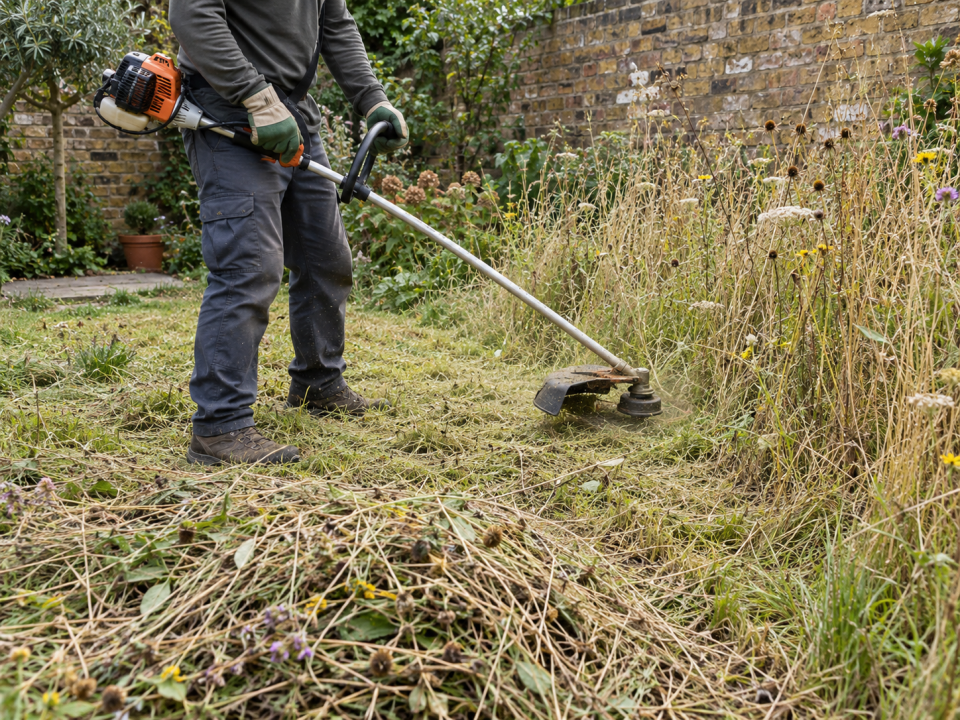
To cut back your wildflower meadow, cut to 5 to 10cm, leave the cut material on the ground for a few days so remaining seed can drop, then rake it up and remove it. Removing the hay is what keeps soil fertility low and the meadow in good shape; a mower without a collector, or a mulching mower, returns nutrients to the soil and should be avoided.
- Walk the area first and move frogs, toads, hedgehogs and small mammals; Islington Council's guide advises rescuing animals before any cut.
- Cut long grass in stages, starting high and working down, so animals have time to move.
- Divide larger meadows into two or three sections and cut them a few weeks apart rather than all at once, rotating the order each year to extend nectar and leave refuge habitat.
- Compost the cut material away from the meadow, never on it.
What to Do With a Wildflower Garden in Autumn and Winter
In autumn, a wildflower garden needs seed collected, bulbs planted, yellow rattle sown and any optional autumn cut finished by late November. The RHS recommends sowing yellow rattle in August onto grass that has just been cut short. Annual patches need the soil scratched over and resown in early autumn or early spring; skip this and the following spring brings more grass than flowers.
In winter, the established meadow can be kept short after the last cut, or left with some stems standing. Kew's Grow Wild programme notes that you can leave tall stems and dead flower heads standing over winter, because they shelter overwintering insects and other wildlife, and seed heads feed birds.
A practical compromise for a small garden is to cut most of the area and leave one uncut strip along a boundary, then cut back that strip in early spring before new growth starts, giving new plants space and light.
Boma's Local View: Wildflowers in North London Gardens
North London gardens share the same constraint: a perennial meadow sown into rich, well-fed clay without first reducing fertility looks lush in its first year and reverts to grass within a few seasons. The gardens that succeed reduce fertility first, accept a thinner first year, and frame the planting so it reads as intentional. To see meadow management at scale nearby, Islington's Gillespie Park nature reserve maintains meadow areas cut by volunteers each year.
If you'd rather have the design and the first year's establishment handled for you, Boma's Garden Planting Service covers site assessment, a planting scheme suited to your soil and light, and installation, within a 5-mile radius of Kentish Town.
Start with the decision table above: identify your soil fertility and sun, choose the matching approach, and plant this autumn's bulbs to suit the cutting regime you will follow.
Wildflower Garden FAQs
What Happens if You Don't Cut a Wildflower Meadow?
A wildflower meadow that is never cut fills with coarse grasses, brambles and perennial weeds within a few years. Uncut old growth smothers low rosettes, the soil grows more fertile as dead material rots down, and the more delicate wildflowers disappear.
Do Wildflowers Return Each Year?
Perennial wildflowers return each year from the same roots. Annual wildflowers return only from seed, and only if the plants set seed and the fallen seeds land on bare, disturbed soil; most annual patches need raking over or resowing every autumn or spring.
Can I Just Scatter Wildflower Seeds?
Wildflower seeds scattered onto lawn or weedy ground rarely establish, because seed needs contact with bare soil and existing grass outcompetes the seedlings. Clear and rake the ground first, then sow at one or two teaspoons per square metre.
What Is the Best Month to Plant Wildflowers?
The best months to sow wildflowers in the UK are September on light, free-draining soil and March or April on heavy clay. Plug plants go in during autumn or spring, and spring bulbs for a wildflower garden are planted in October and November.
Is October Too Late to Cut Back a Wildflower Garden?
October is not too late to cut back a wildflower garden in the UK. The RHS allows an autumn cut on established perennial meadows from the end of August to late November, which uses up nutrients on fertile ground; remove the cuttings the same way as after the summer cut.
Plan your wildflower garden with the right mix for your soil and sun — browse spring bulbs and perennials online, or come and see us at 51–53 Islip Street, Kentish Town NW5 2DL. We deliver to all M25 postcodes, with charges zoned by postcode from £10, and the team in store can help you choose a mix and plan the layout.
Shop Spring Bulbs Check Delivery Garden Planting Service