

What Should I Plant in a London Garden This October?
October is bulb-planting month, a good window for evergreens and acid-loving shrubs while the soil still holds some warmth, and the start of the bare-root season for hedging. Getting these in during October, rather than waiting for spring, gives roots time to establish before the coldest weeks.
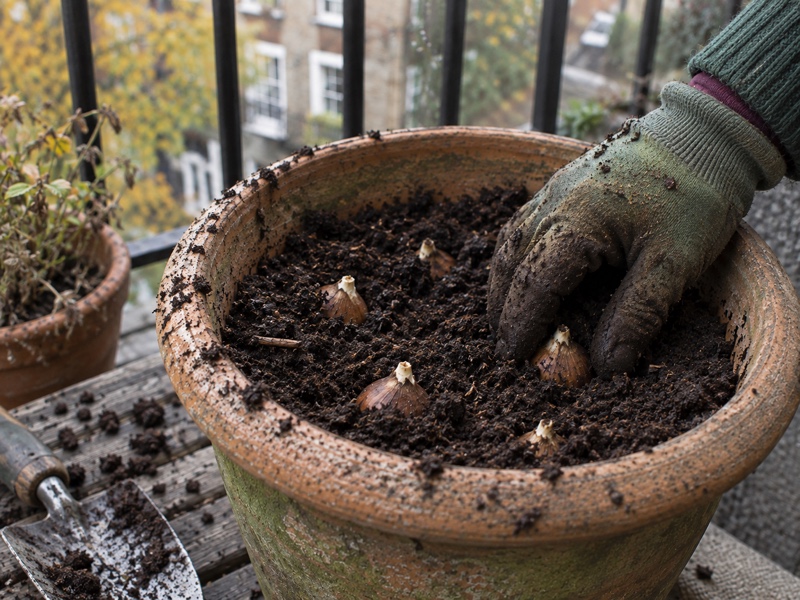
- Spring bulbs — Narcissus (daffodil), hyacinth, Allium and Iris reticulata can all go in through October, from our full bulb range. "Lasagna planting" — layering bulbs by size and flowering time in one container, largest and latest-flowering at the bottom — gives a container a longer succession of colour from a single planting. In containers, a dedicated peat-free bulb compost gives the sharp drainage bulbs need; ordinary garden soil or general multipurpose compost can sit too wet over winter. Tulips are better left until November: planting them slightly later reduces the risk of tulip fire, a fungal disease that thrives in warmer, damp autumn soil.
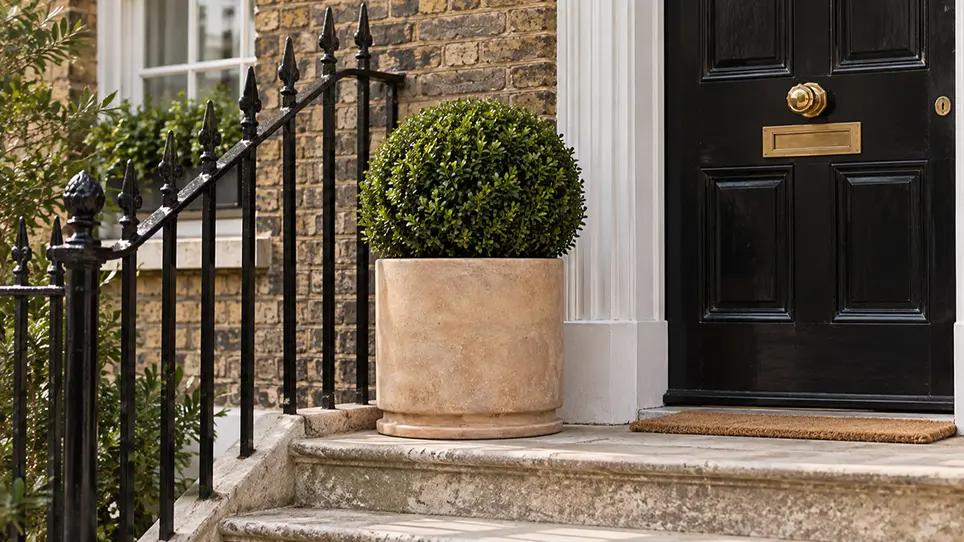
- Evergreen shrubs for structure — Skimmia japonica, Mahonia x media 'Charity' and Pittosporum tenuifolium all earn their place in a London border for structure through winter, and bay (Laurus nobilis) trained as a standard or pair works well either side of a front door. Bare-root planting begins once stock is properly dormant, typically from November; container-grown shrubs and hedging can still go in during October while the ground is workable and warm.
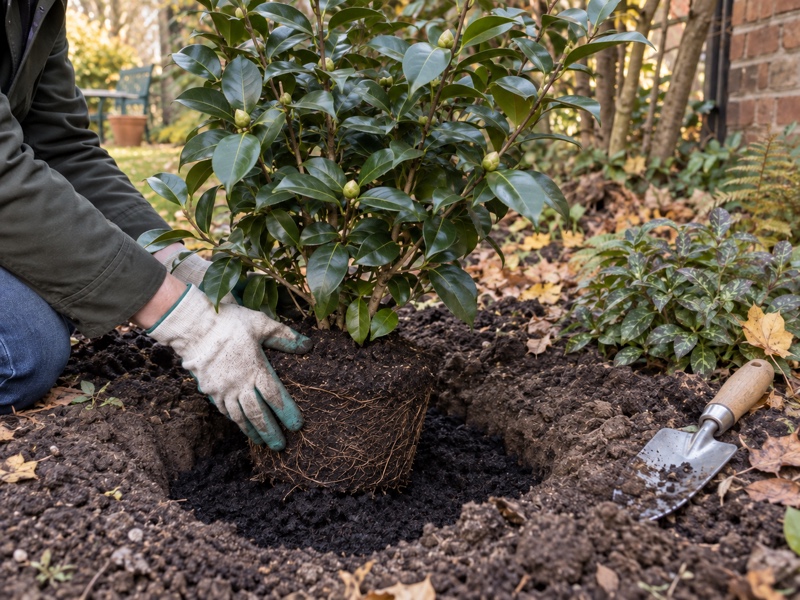
- Acid-loving shrubs — Camellia, Rhododendron and evergreen Azalea are all best planted in October while the soil is workable. Because North London's clay and chalk soils trend alkaline, plant these into ericaceous compost rather than a general mix — see our guide to garden compost for more on choosing the right one. If you're planning a considered new planting scheme for an established border rather than a single specimen, Boma's Garden Planting Service covers consultation and installation within a 5-mile radius of Kentish Town.
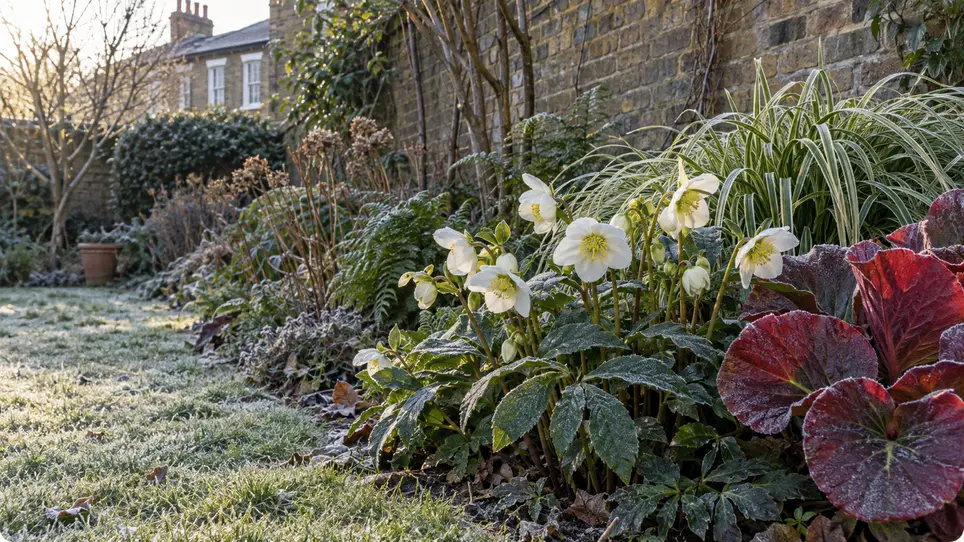
- Winter-flowering plants — Hamamelis x intermedia (witch hazel) and Jasminum nudiflorum (winter jasmine) are both planted in October while dormant, ready to flower on bare stems from December. Helleborus x hybridus (hellebore) is planted the same way and flowers through the darkest months, from around December into spring — a good choice for the shaded front gardens common across Kentish Town and Tufnell Park.
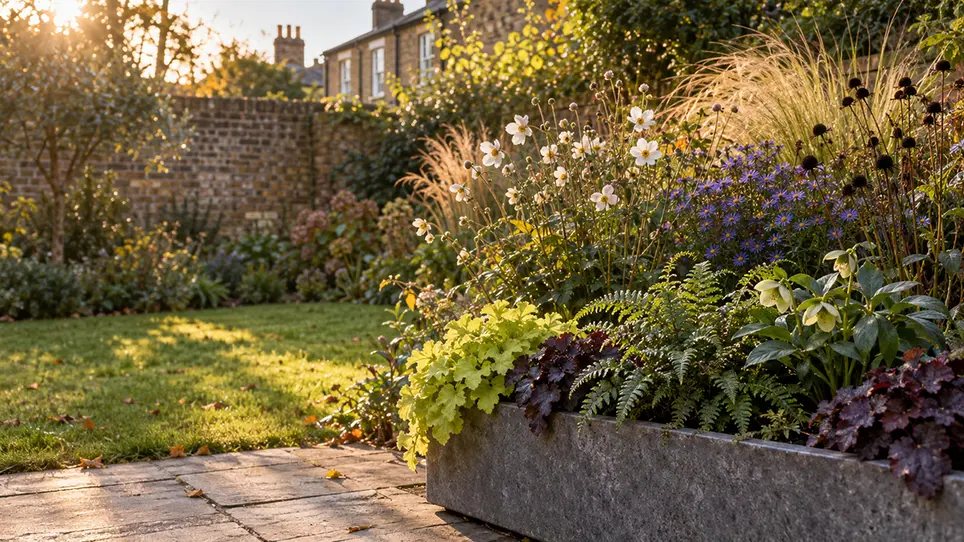
- Autumn bedding — cyclamen, viola, heuchera and Calluna vulgaris (heather) bring colour and foliage contrast to window boxes and containers through the cooler months, and tolerate the shorter days better than summer bedding.
- Ferns and grasses for structure — hardy ferns such as Dryopteris filix-mas and Asplenium scolopendrium hold their own in the shaded side returns common to Victorian terraces, while Miscanthus sinensis and Stipa tenuissima add movement and texture through autumn and winter.
What Lawn and Soil Jobs Matter This Month?
While the soil is still warm — generally above 10°C — October is one of the better windows for lawn renovation: scarifying to remove thatch, aerating compacted areas, and overseeding bare patches before growth slows for winter. Moss becomes more of a problem as the weather cools and wetter, shadier lawns stay damp for longer, so treating it in October is more effective than waiting until spring.
Fallen leaves are a resource rather than a chore. Collected and left to break down over a year or so, they make an excellent soil conditioner, and a thin layer left on borders acts as a free mulch. On London's heavy clay soils — common across Kentish Town, Camden and much of North London — working in compost or well-rotted organic matter in October improves drainage and structure ahead of a wet winter. Viburnum, Cornus (dogwood), Pittosporum and Mahonia all cope well with clay if you'd rather work with the soil than against it. For more on choosing the right growing medium, see our guide to garden compost and soil improvement.
What Pruning and Dividing Should I Do This Month?
Climbing roses benefit from being tied in securely in October to prevent wind rock through autumn storms, and shrub roses can be reduced by around a third to guard against the same. Save hard, formative pruning for late winter, once the plant is fully dormant.
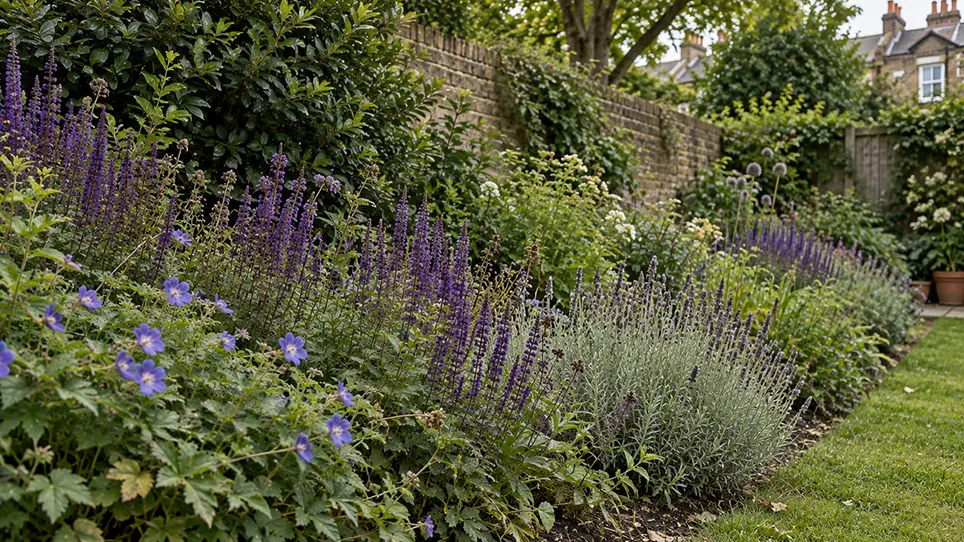
Many spring- and summer-flowering herbaceous perennials — hardy geraniums among them — can be lifted and divided in October while the soil is still workable, which reinvigorates congested clumps and gives you free plants for elsewhere in the garden. Tender or borderline-hardy perennials are better left alone until spring: cutting them back in autumn removes the top growth that helps protect the crown from frost.
What's Still Going In, and Coming Out, of the Veg Patch?
October is planting time for garlic and autumn onion sets, both of which need a period of cold to develop properly and will be ready earlier next year than spring-planted equivalents. Broad beans sown in October overwinter as young plants and crop several weeks ahead of a spring sowing.
On the harvest side, lift any remaining maincrop potatoes before slug damage sets in, bring in the last of the pumpkins and squash before the first frost, and pick runner and French beans while they're still cropping — both stop dead at the first proper cold snap.
What Should I Plant on a Balcony, Roof Terrace or in a Courtyard This October?
The right October planting depends on the exposure your space actually gets, not just its size. A sheltered courtyard in Kentish Town or Tufnell Park behaves very differently to an exposed roof terrace in Muswell Hill or a wind-tunnelled balcony above a Camden high street.
| Space | What Changes in October | What to Plant or Do |
|---|---|---|
| Balconies (Camden, Belsize Park) | Wind exposure increases as deciduous screening around the building loses leaves | Compact evergreens and trailing plants in wind-firm pots; layered bulbs for spring |
| Roof terraces (Muswell Hill, Highgate) | Greater temperature swings and faster-drying compost in wind | Drought-tolerant grasses and evergreens; heavier pots that won't blow over |
| Shaded courtyards | Lower light levels as the sun tracks further south | Ferns, ivy and shade-tolerant evergreens; vertical planting to make use of wall space |
| Established gardens (Highgate, Hampstead) | Borders begin dying back, exposing structure and gaps | Evergreen and acid-loving shrubs to fill gaps; bulbs planted through the border for spring |
Ivy (Hedera) trained up a trellis or wall makes efficient use of vertical space in a shaded courtyard — it's evergreen structure through winter and asks for very little once established. Combining several hardy evergreens and perennials in one large container — skimmia, a fern, heuchera, heather and a trailing ivy, say — gives a balcony or courtyard a settled, layered look through winter that a single specimen can't. Small spaces also benefit from a couple of practical fixes at this time of year: self-watering planters and simple drip irrigation take the pressure off watering as schedules shift with the weather, and grouping pots together raises humidity around plants like ferns that dislike the drying effect of wind on a balcony or terrace.
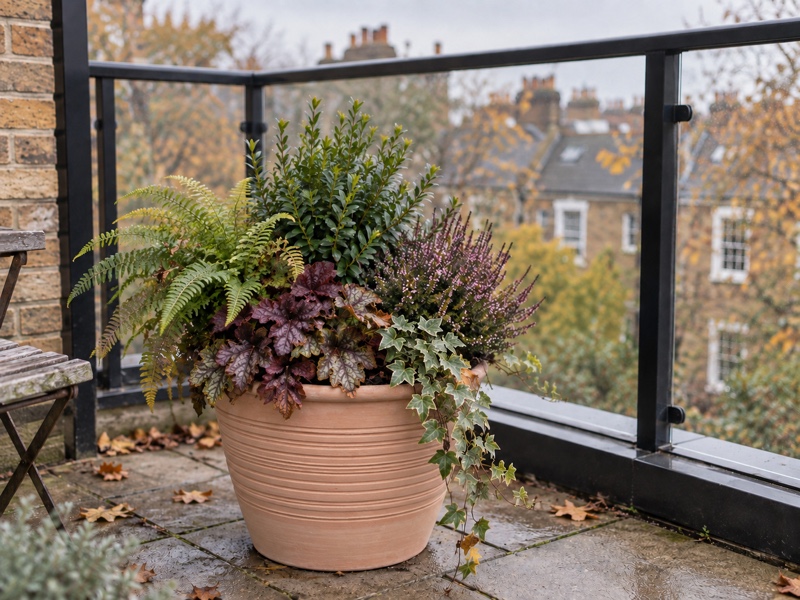
If you're planning container schemes for a balcony, roof terrace or courtyard, or simply not sure what will survive the exposure your space gets, Boma's Courtyard & Roof Terrace Container Planting service covers consultation, planting schemes and installation for spaces like these within a 5-mile radius of Kentish Town.
How Can I Support Wildlife in an Urban Garden This Month?
As natural food sources thin out, a feeder stocked with sunflower hearts or a good seed mix gives garden birds a reliable supplement through the colder months. A pile of leaves or log offcuts left in a quiet corner provides shelter for hedgehogs and other creatures preparing to overwinter — and is one autumn job that genuinely benefits from being left slightly untidy rather than cleared away.

How Should Houseplant Care Change as the Days Get Shorter?
Lower light and slower growth mean most houseplants need less water from October onwards — the most common cause of an unhappy houseplant this time of year is sticking to a summer watering schedule once growth has slowed. Let the top few centimetres of compost dry out between waterings rather than watering to a fixed schedule.
Indoor Begonia varieties are a good example of a plant to make room for at this time of year: grown as much for their patterned, often silver or metallic foliage as for their flowers, they want bright, indirect light, a marked reduction in watering once autumn sets in, and no cold draughts. Overwatering — far more than underwatering — is what typically finishes off a begonia through the darker months.
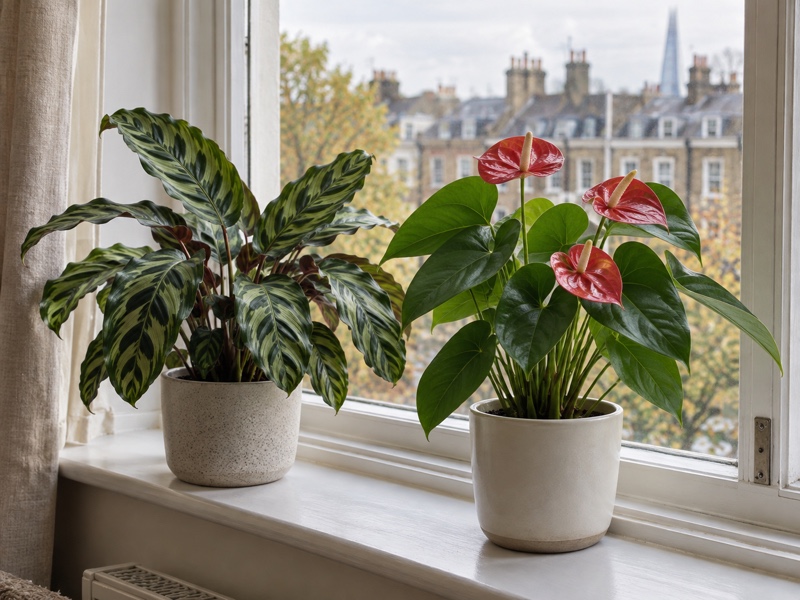
Anthurium (flamingo lily), Calathea (peacock plant), Hoya (wax plant) and Phalaenopsis (moth orchid) all appreciate a touch more humidity as central heating comes on and the air indoors dries out. Grouping plants together, standing pots on a tray of damp pebbles, or misting occasionally all help, so long as plants aren't sitting directly against a radiator or in a cold draught from a single-glazed London window.
If you brought any pots outside for the summer — citrus, tender ferns, or anything not reliably hardy — bring them in before the first properly cold night. Once night temperatures start dropping towards single figures, it's better to move plants in a little early than risk cold damage waiting for a "definite" frost.
We stock spring bulbs, evergreen and acid-loving shrubs, autumn bedding, and a full range of houseplants and houseplant care products at our garden centre at 51–53 Islip Street, Kentish Town NW5 2DL. If you're in Hampstead, Highgate, Muswell Hill, Primrose Hill or further into Central London, we deliver to all postcodes within the M25. The team in store can help you choose what will actually work for your space, whatever its size or aspect. Check delivery zones and charges.
Frequently Asked Questions
Is It Too Late to Plant Spring Bulbs in October?
No — October is one of the best months for it. Narcissus, hyacinth, allium and iris reticulata can all go in during October. Tulips are the exception: planting them in November, once the soil has cooled further, reduces the risk of tulip fire, a fungal disease that spreads more readily in warm, damp autumn conditions.
Can I Plant Camellias, Azaleas and Rhododendrons in October?
Yes — October is a good month, while the soil is still workable and the plant has time to establish roots before winter. Because these are acid-loving shrubs, plant them into ericaceous compost if your garden's soil is naturally alkaline, which is common on North London's clay and chalk.
How Often Should I Water Houseplants in Autumn?
Less often than in summer. Growth slows as light levels drop, so most houseplants need water less frequently — check that the top few centimetres of compost have dried out before watering again, rather than sticking to a fixed schedule.
Why Is My Begonia Dropping Leaves in Autumn?
Overwatering is the most common cause. Begonias slow down markedly as light levels drop, and compost kept as moist as it was in summer quickly leads to root rot and leaf drop. Reduce watering, keep the plant in bright but indirect light, and away from cold draughts and direct radiator heat.
Is October Too Late to Sow or Repair a Lawn in London?
It's close to the cut-off. While the soil is still warm — generally above 10°C — overseeding, aerating and scarifying can all still be done with good results. Leave it much later into a cold November and germination becomes unreliable until spring.
What Should I Do With Fallen Leaves?
Keep them. Collected and left to break down for a year or so, they make a good soil conditioner, and a thin layer on a border acts as a free mulch. Only clear leaves off a lawn regularly, as a thick, wet layer left there can smother and damage the grass beneath.
Do I Need to Bring Houseplants Indoors Before the First Frost?
Yes, for anything not reliably hardy — citrus, tender ferns and similar. Move them in once night temperatures start dropping towards single figures rather than waiting for a confirmed frost, since cold damage can happen before a frost is forecast.
Come and see this month's bulbs, shrubs and houseplants at 51–53 Islip Street, Kentish Town NW5 2DL, or browse online for delivery to all M25 postcodes. If you're planning planting for a balcony, roof terrace, courtyard or border this autumn, the team can help you get it right.
Order For Delivery Book A Consultation