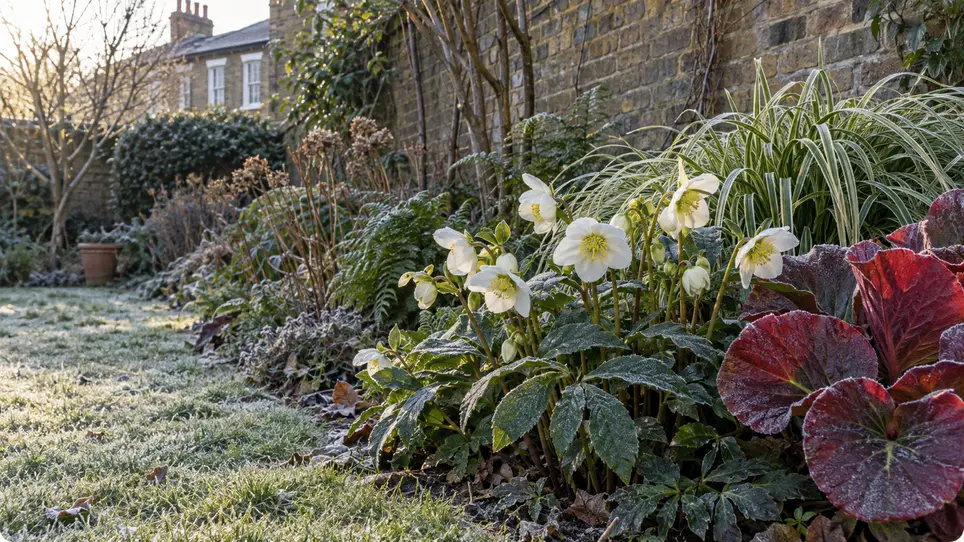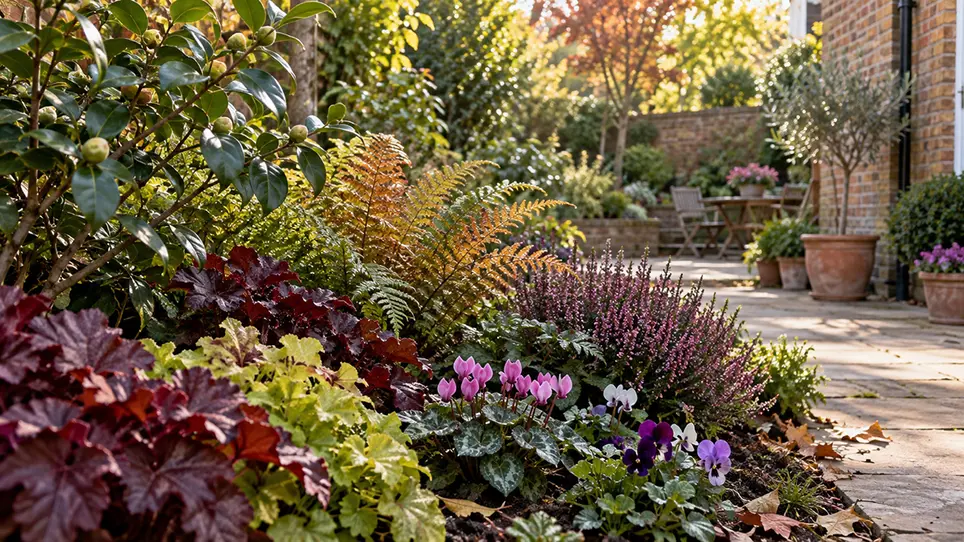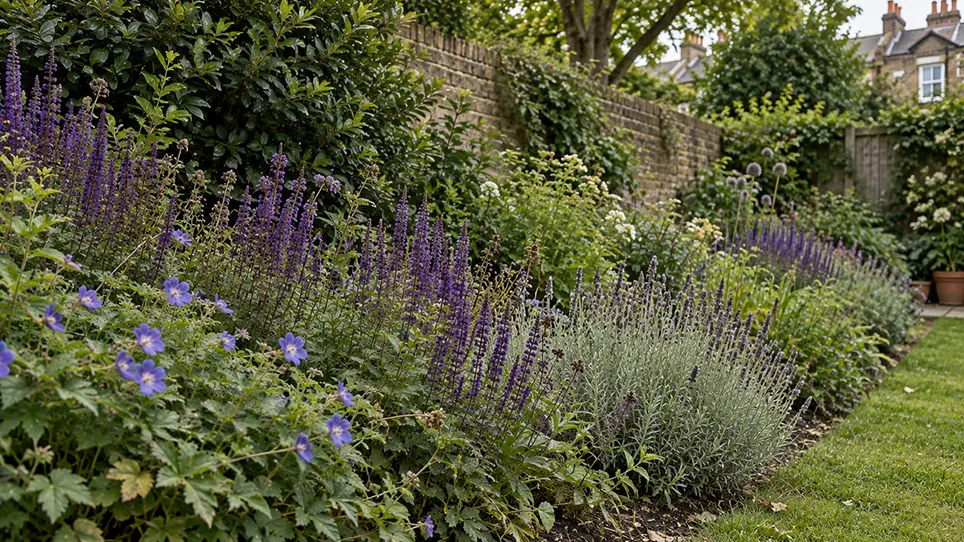


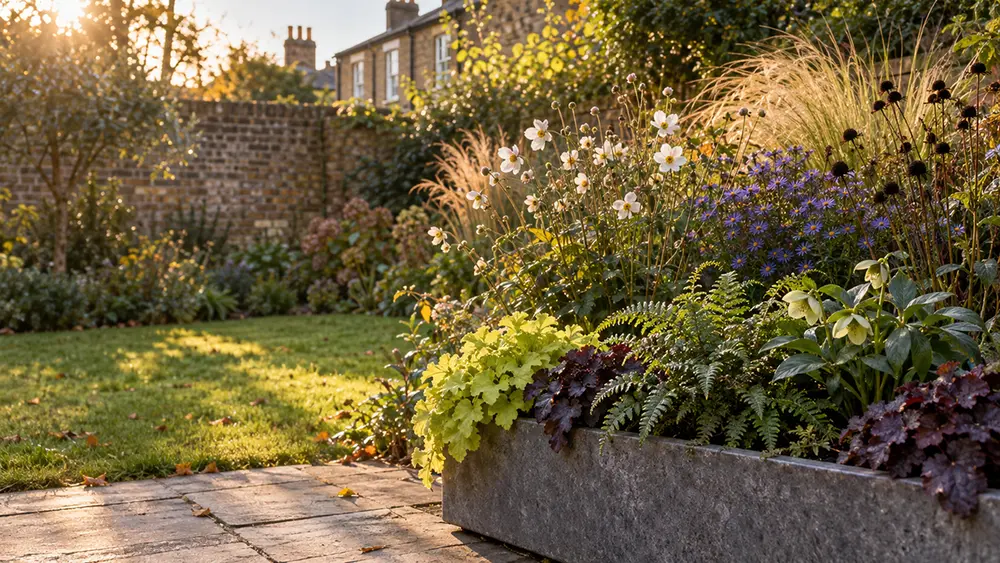
In a London garden, perennials need three jobs in October. Cut back the ones that collapse or carry mildew, and leave seed heads and grasses standing for winter. Plant new hardy perennials while the soil is still warm, ideally by mid-October. It is also the month to plant for winter: heucheras, hardy ferns and hellebores keep pots, window boxes and shady borders looking good until spring.
What Should I Do With Perennials in Autumn?
Autumn work on perennials comes down to four tasks: cutting back selectively, dividing congested clumps, planting and mulching. Summer perennials that have finished and turned brown need attention first. Anything still in flower can be left alone until it has finished.
- Cut back herbaceous perennials that collapse into a wet mat, shelter slugs or carry powdery mildew.
- Leave standing anything with sturdy stems, ornamental seed heads or hollow stems that shelter insects.
- Divide summer-flowering clumps that have become congested or bare in the centre.
- Plant hardy perennials while the soil holds its summer warmth.
- Mulch bare soil once the ground is moist, keeping the mulch clear of the crowns.
Should I Cut Back Perennials in Autumn?
Yes, but only some of them. Cutting every border to the ground in October takes away winter structure, food for birds and shelter for insects, and most plants gain nothing from it. The RHS now recommends a selective approach, and it's the one we follow. Give disease-prone and floppy plants a tidy cut, and leave seed heads and grasses standing until early spring.
What Happens If I Don't Cut Back My Perennials?
For most perennials, nothing harmful. Dead foliage insulates the crown against frost, and the old growth comes away easily in February or March, before new shoots appear. The exceptions are plants prone to mildew, such as garden phlox and bee balm (Monarda), and soft-leaved plants such as hostas, whose collapsed leaves shelter slugs and their eggs through winter.
When Should I Cut Back Perennials?
Cut back perennials once flowering has finished and the foliage has turned brown. For most plants that falls between mid-October and late November. In inner London the first frost usually arrives later than in the surrounding countryside, so many borders keep their colour well into November. If a plant is still green, leave it, because those leaves are still feeding the roots for next year.
How Far Should I Cut Back Perennials?
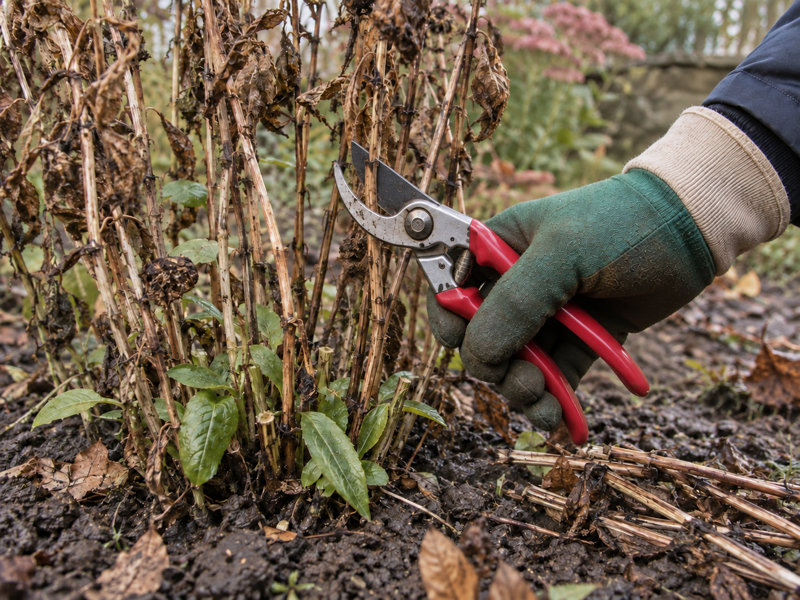
Cut dead stems to 5–10cm above ground level with clean, sharp secateurs, such as the Greenman Compact Bypass Pruner. Leave any low basal leaves or rosettes in place, because these carry next year's growth. Achillea shows this clearly: once the faded flower stems are removed, a green mat of leaves stays at soil level all winter.
Is October Too Late to Cut Back Perennials?
No, October is the start of the main window for cutting back herbaceous perennials. It is, however, too late to cut borderline-hardy plants hard, because they need their top growth as frost protection. Penstemons are the usual example. Cutting them back in autumn exposes the crown to cold and wet, so wait until April, when new shoots are visible at the base.
Which Perennials Should I Cut Back, and Which Should I Leave?
Cut back perennials that collapse, harbour slugs or carry disease. Leave standing those with structural seed heads, evergreen leaves or tender crowns.
- Cut back: garden phlox and bee balm (Monarda), because their mildew overwinters on the stems. Also cut back hostas and deciduous daylilies, whose leaves collapse into slug shelter, and delphiniums. Cut Michaelmas daisies such as Aster 'Henry I Blue' once their flowers turn brown.
- Cut back only the tatty growth: herbaceous hardy geraniums. Leave evergreen types, such as Geranium macrorrhizum, and just remove their dead leaves.
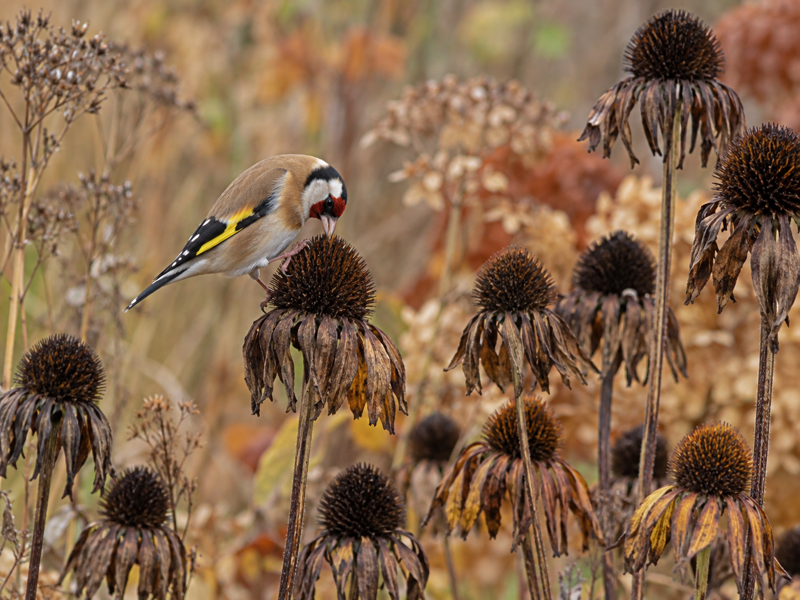
- Leave standing: Rudbeckia and Echinacea, whose seed heads feed finches. Leave sedum (Hylotelephium) too, for its frost-holding flower heads, along with red hot pokers, with the leaves tied over the crown, and penstemons until April.
- Evergreens: heucheras and ferns need only their dead leaves removed. Cut the old leaves off Helleborus × hybridus in December or January to show the flowers and reduce leaf spot.
Put healthy material on the compost heap. Mildewed phlox and Monarda stems should go in green waste, because municipal composting reaches temperatures that a garden heap does not. For more detail, see our tips on cutting back perennials in autumn.
Cut Back or Leave Standing: Quick Reference
| Plant | Autumn Action | When | Reason |
|---|---|---|---|
| Garden phlox, bee balm | Cut to ground level | Once died back, October to November | Removes overwintering mildew |
| Hostas | Clear collapsed leaves | Once the leaves turn yellow | Removes slug shelter |
| Delphiniums, herbaceous hardy geraniums | Cut to ground level | October | Fewer slugs, tidier crowns |
| Michaelmas daisies | Cut to ground level | Once the flowers turn brown | Limits mildew |
| Rudbeckia, Echinacea | Leave standing | Cut in February | Seed for birds, winter structure |
| Sedum (Hylotelephium) | Leave standing | Cut in late winter | Flower heads hold frost |
| Penstemon | Leave standing | Cut in April | Top growth protects the crown |
| Stipa tenuissima | Leave standing | Comb out in spring | Semi-evergreen; dislikes hard cutting |
| Dahlias (on clay) | Lift and store frost-free | After the first frost blackens the leaves | Tubers rot in cold, wet soil |
| Hellebores (× hybridus) | Remove old leaves | December to January | Shows the flowers, limits leaf spot |
Should Ornamental Grasses Be Cut Back in Autumn?
No, most ornamental grasses are left standing over winter. Deciduous grasses such as Hakonechloa macra and Miscanthus hold their shape and colour, and the old foliage protects the crown. Cut them to 5–10cm in February or March, before new growth appears. Evergreen and semi-evergreen grasses, such as Stipa tenuissima 'Ponytails' and Carex, are never cut back hard. Comb out the dead leaves by hand in spring instead.
Should I Divide Perennials in Autumn?
Yes, for summer-flowering perennials. October is a good month to lift and divide hardy geraniums, daylilies, Astrantia and other summer-flowering perennials that have become congested or bare in the middle, while the soil is still warm enough for the new sections to root. Leave autumn-flowering plants, such as asters and Japanese anemones, until spring, because dividing a plant in flower weakens it just as winter arrives. Replant the healthiest outer pieces and discard the woody centre.
Which Perennials Give Winter Interest in Pots and Borders?
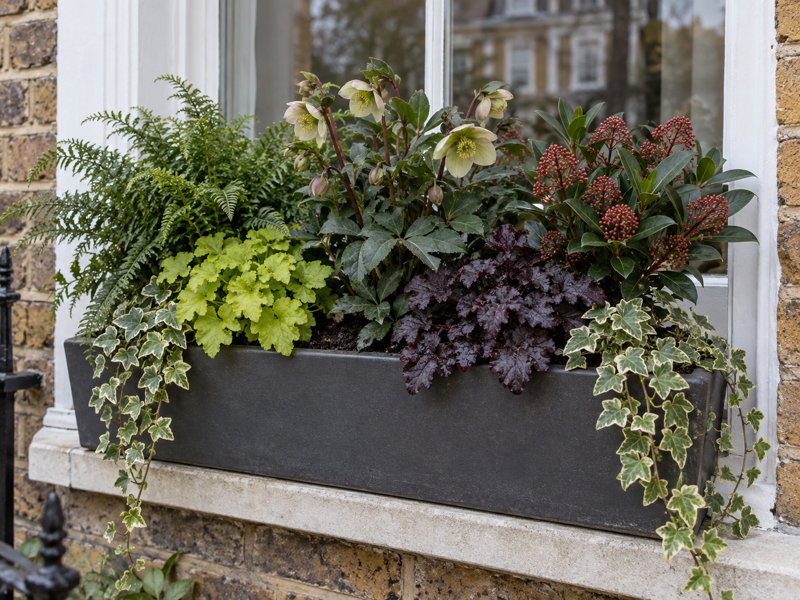
The perennials that keep a London garden looking good from October to spring are evergreens: heucheras, hardy ferns and hellebores. Planted in October, they root in while the soil is still warm. They then carry pots, window boxes and shady borders through winter until the spring bulbs take over.
- Heucheras give colour from their leaves rather than flowers. For contrast, pair the lime-green Heuchera 'Guacamole' with the near-black, ruffled Heuchera 'Black Taffeta'. We have more than 30 varieties in our heuchera range.
- Hardy ferns give structure in shade. The Japanese tassel fern Polystichum polyblepharum keeps glossy evergreen fronds all winter. The autumn fern Dryopteris erythrosora 'Brilliance' has coppery new fronds, and Asplenium scolopendrium (hart's tongue fern) is happy in dry shade at the foot of a wall. See the full hardy fern range.
- Hellebores flower when little else does. Helleborus × sternii 'Wester Flisk' has red-tinted stems and grey-green leaves, with pale green flowers from late winter into spring.
How Do I Plant a Winter Container or Window Box?
Start with one plant for height and structure, such as a hellebore, a fern or a skimmia with its winter buds. Add two or three heucheras for colour. Finish with trailing ivy over the edge, or calluna for a softer finish. Use frost-proof pots and a peat-free compost such as SylvaGrow Multi Purpose, with a few handfuls of grit mixed in. Raise the pots on pot feet so water drains away freely. On roof terraces the main risk is wind rather than frost, so group pots together. Pots are also the best winter home for plants that dislike wet clay, such as Echinacea and penstemons.
Spend £55 on skimmias, outdoor hardy ferns, heucheras, calluna, hellebores and ivy priced at £12.99 or less, and get £5 off. Build your own winter container in store, or choose online from our heucheras and ferns.
Which Perennials Flower in Autumn?
Autumn perennials are hardy plants that come back every year and are at their best from late summer until the first frosts. In an October garden, the most reliable are Japanese anemones, asters (Michaelmas daisies), Rudbeckia, Actaea and penstemons. If you buy them in flower in October, they give colour straight away and settle in before winter.
| Plant | Autumn Interest | Best Position | Worth Knowing |
|---|---|---|---|
| Anemone × hybrida 'Honorine Jobert' | White flowers on wiry stems, late summer to autumn | Sun or part shade | RHS Award of Garden Merit; 1–1.5m; spreads once settled |
| Symphyotrichum novi-belgii 'Henry I Blue' | Violet-blue daisies into October | Sun | Give it air flow to limit mildew |
| Rudbeckia fulgida 'Goldsturm' | Gold petals, then dark seed cones | Sun | RHS Award of Garden Merit; copes well with clay |
| Actaea 'Queen of Sheba' | Scented white spires, late summer into autumn | Part shade, moist soil | Near-black foliage; 1–1.5m; harmful if eaten, so wear gloves |
| Penstemon 'Andenken an Friedrich Hahn' | Wine-red bells until the frosts | Sun, free-draining soil | On clay, keep it in a pot for the winter or plant it out in spring |
You'll find these and more in our autumn perennials range.
Is Autumn a Good Time to Plant Perennials?
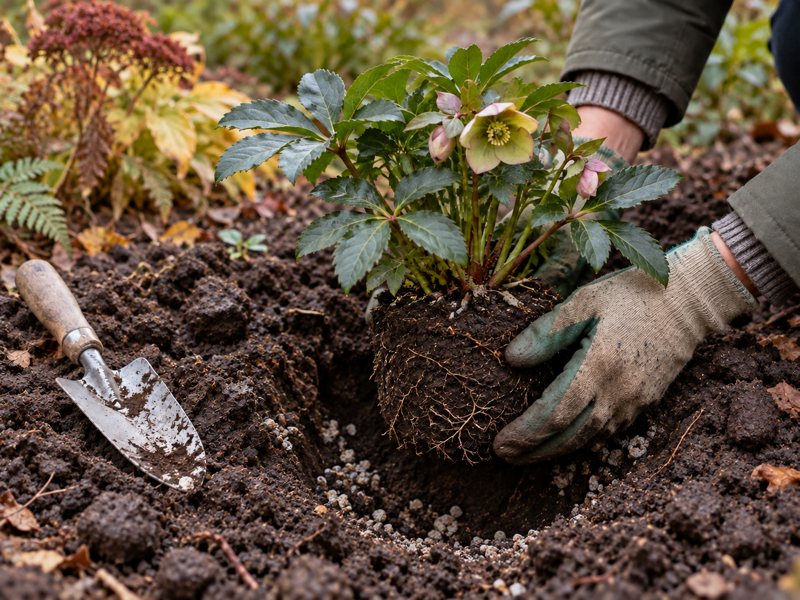
Yes, early autumn is one of the two main planting windows for hardy perennials, alongside spring. Until mid-October the soil still holds its summer warmth, rain is more reliable, and plants put their energy into roots rather than flowers. Perennials planted in early autumn start next spring already established.
- Dig a wide hole, about twice the width of the pot, and loosen the base. On clay, mix in horticultural coarse grit and organic matter.
- Plant at the same depth as in the pot. On heavy clay, set the crown slightly higher than the surrounding soil.
- Water in well, then again during dry spells.
- Hold back drainage-sensitive plants. Echinacea, Gaura, penstemons and Stipa are safer in pots over winter, or planted in spring.
What Perennials Can I Plant in October?
In October, plant fully hardy perennials. Hellebores, heucheras and hardy ferns root well in cooling soil. So do Japanese anemones and asters bought in flower, and grasses such as Hakonechloa. Astrantia major tolerates clay and is a good choice for part shade. Water new plants in well, but don't plant into waterlogged soil. After mid-October, keep plants that are sensitive to drainage in their pots somewhere sheltered and plant them out in spring.
How Do I Mulch Perennials and Prepare Them for Winter?
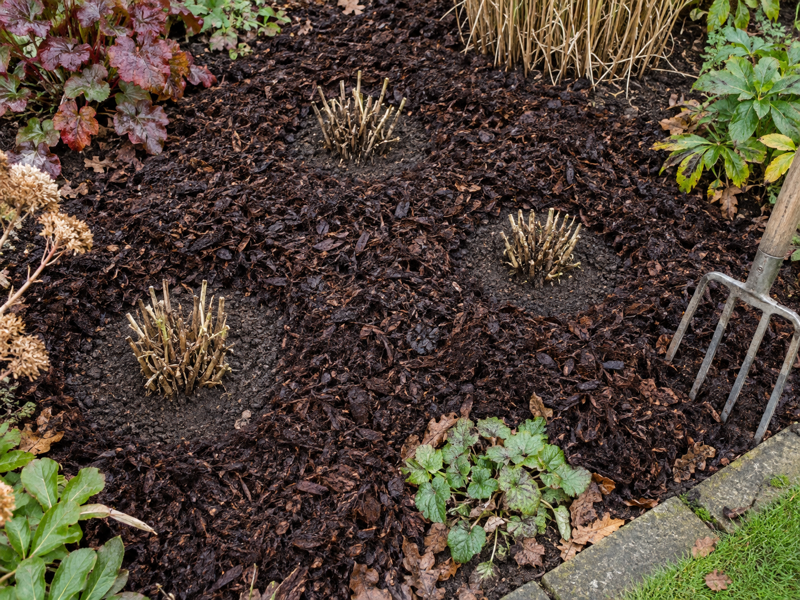
Mulch perennials with a 5–7cm layer of well-rotted organic matter, such as SylvaGrow Farmyard Organic Matter or Melcourt Composted Fine Bark, applied to moist soil and kept clear of the crowns. Do this once you've cut back and planted. Mulch insulates the roots, suppresses weeds and, over time, improves clay soil as worms draw it down. Leave a gap of a few centimetres around each crown, because mulch heaped against the base holds moisture and encourages rot. A 50-litre bag covers roughly 0.8m² at 6cm deep. For help choosing between mulches and composts, see our garden compost FAQs.
Stems left standing also help wildlife over winter. Hollow stems give ladybirds and solitary bees somewhere to shelter until spring. Late asters and Japanese anemones are among the last good sources of nectar for bees before winter. For the rest of this month's garden jobs, including bulbs, lawns and houseplants, see October garden jobs for London gardens.
Most gardens around Kentish Town, Tufnell Park and Highgate are on London clay. It holds nutrients well but drains slowly, and a perennial sitting in cold, waterlogged soil from December to February is more likely to rot at the crown than to be killed by frost. For clay gardens we recommend three things:
Raise the planting level. Work grit and organic matter into the planting area and set crowns slightly proud of the surrounding soil.
Match the plant to the season. Plant clay-tolerant perennials such as Japanese anemones, Rudbeckia, Actaea, Astrantia and hellebores in October. Hold Echinacea and penstemons back for spring, or grow them in containers.
Use the shelter. Walled Victorian gardens stay warmer than open ground, so borderline plants such as penstemons come through winter more reliably here. The trade-off is shade, and that's where ferns, heucheras and Hakonechloa earn their place.
If you have established beds and borders you'd like replanted, our Garden Planting Service can help. We assess your garden and design a planting scheme around its aspect and soil. We then supply and plant everything within a 5-mile radius of Kentish Town. October is a good time to book, while the soil is still warm enough for new perennials to establish. For balconies, courtyards and roof terraces, our Courtyard & Roof Terrace Container Planting service covers window boxes, troughs and planters.
Frequently Asked Questions
Can I Still Plant Perennials in November?
Yes, as long as the ground isn't frozen or waterlogged, fully hardy perennials can go in during November. They'll make less root growth before winter than plants put in during early autumn. On heavy London clay, it's often better to keep late purchases in their pots in a sheltered spot, such as against the house wall, and plant them out in early spring.
Are Heucheras Evergreen?
Most heucheras keep their leaves through a London winter. That's why they're a mainstay of winter pots and window boxes. By late winter the older leaves can look tired, so remove them in spring as new growth appears. In open ground, frost can lift shallow-rooted heucheras out of the soil. A mulch around the crown prevents this, and so does firming them back in after a hard frost.
Is Rudbeckia a Perennial?
That depends on the species. Rudbeckia fulgida varieties, including 'Goldsturm', are reliable perennials that return every year and cope well with clay. Rudbeckia hirta varieties, which have larger and more varied flowers, are short-lived and often last only a season or two. If you want a plant for the long term, check the Latin name on the label.
Are Asters and Michaelmas Daisies the Same Plant?
Mostly, yes. Michaelmas daisy is the common name for the autumn asters that flower around Michaelmas on 29 September. Botanists have moved the North American species, including the New York and New England asters, into the genus Symphyotrichum, which is why you'll see both names on labels. You grow them all in the same way: sun, some air flow, and a cut to the ground once the flowers are over.
Do I Need to Lift Dahlias in London?
On heavy London clay, yes. The RHS advises lifting dahlia tubers once the first frost has blackened the foliage, then storing them somewhere frost-free, because cold, wet soil rots them. In a sheltered garden with light, free-draining soil you can leave them in the ground under a 15cm mulch, but an unusually wet winter can still cause losses.
Where Can I Buy Autumn Perennials in North London?
Boma Garden Centre at 51–53 Islip Street, Kentish Town NW5 2DL stocks a wide range of autumn perennials. It includes Japanese anemones, asters, Rudbeckia, Actaea, penstemons, hellebores, ferns, heucheras and grasses. We deliver to all postcodes within the M25, with charges based on postcode starting from £10. The team in store can help you choose for your aspect and soil.
Come and see the autumn perennials in flower at 51–53 Islip Street, Kentish Town NW5 2DL, or browse the range online for delivery within the M25, along with the compost and mulch to plant them in. Throughout October, our Winter Box Collection gives you £5 off when you spend £55 on winter container plants. Tell us where you'd like to plant, and we'll help you find something that suits.
Shop Autumn Perennials Book a Consultation Check Delivery