

A sure sign that signals the start of the spring season is green shoots of bulbs popping their heads through the soil at the end of winter. In January, there’s the excitement of knowing your garden will soon explode with colour — a welcome sight for gardeners across North London, from the tree-lined avenues of Hampstead to the sheltered terraces of Crouch End. It's also the perfect time for potting your spring-flowering bulbs, ready for a brilliant display.
With proper planning at this time of the year, you can have a colourful display from flowering bulbs for months to come.
18 Quick-Fire January Gardening Jobs To Get You Started
Before diving into our January tips for sensational spring flowers, here is a general overview of the types of gardening jobs and tasks you might want to do this month:
- Plant trees, shrubs, and hedging. Provided the ground isn’t frozen or waterlogged, now’s a great time to plant bare-root or container-grown trees, shrubs, and hedges. Bare-root plants are cost-effective, especially for larger projects. In clay-heavy soils, common in North London gardens, mix in plenty of compost and grit to improve drainage before planting.
- Mulch borders and beds. Spread a 5 cm (2 in) layer of well-rotted manure or garden compost over borders and vegetable beds to improve soil structure, moisture retention, and drainage. A layer of Composted Fine Bark mulch is excellent for insulating roots and keeping moisture locked in during frosty nights.
- Cut back perennials. Remove any dead or soggy perennial growth and clear debris or fallen leaves from beds to reduce hiding spots for pests like slugs and snails.
- Trim ornamental grasses. If winter rains have damaged their flower heads, cut them back to keep them tidy.
- Prune wisteria. Shorten last summer’s growth to 2–3 buds from the main framework for a spectacular display of spring blooms.
- Prune roses. While dormant, remove dead, damaged, or crossing stems, then cut remaining branches back by about a third. Make sloping cuts just above outward-facing buds so rainwater runs off.
- Prune fruit trees and bushes. Tidy apple and pear trees, as well as blackcurrants, gooseberries, and redcurrants, while they’re still dormant.
- Cut back old hellebore leaves. This shows off the flowers and helps prevent fungal problems like leaf spot. Hellebores — celebrated as Boma’s Outdoor Plant of the Month — continue to bloom beautifully through frost, offering elegant shades of white, pink, and purple even in shaded corners.
- Deadhead winter pansies. Regular deadheading encourages a second flush of blooms in early spring.
- Clean and prepare tools and structures. Wash pots and greenhouse benches, sharpen secateurs, and service the lawnmower ready for spring sowing.
- Check stored bulbs and tubers. Inspect dahlias, begonias, and tulips for rot or dryness, discarding any that are diseased.
- Prepare for early sowing. Warm up soil for early peas or other crops by covering the ground with fleece, black plastic, or cloches for a few weeks. Protect delicate plants with fleece or cloches during frosts to keep new growth safe.
- Force early rhubarb. Cover crowns with a large pot or bucket to encourage tender pink stems in a few months.
- Help garden wildlife. Keep bird feeders topped up with seeds and suet, and ensure fresh water is available for drinking and bathing. Winter is harsh on garden birds, so support them with Henry Bell bird feed and feeders—fat balls, sunflower seeds, and mixed feed help them thrive when food is scarce.
- Protect the lawn. Avoid walking on grass when it’s frosty, snowy, or waterlogged to prevent damage.
- Watch for emerging bulbs. Early daffodils, snowdrops, and winter aconites start appearing now—take care not to tread on them.
- Sow microgreens indoors. Grow quick crops like salad leaves on a bright windowsill for fresh greens while you wait for spring. Add indoor greenery with low-light champions such as Dracaena, Philodendron, and Pothos—perfect for brightening homes while outdoor growth pauses.
- Plan the year ahead. Take advantage of quieter garden days to plan new plantings, design changes, or even plant a tree to celebrate the new year.
Top January Gardening Tips for Sensational Spring Flowers
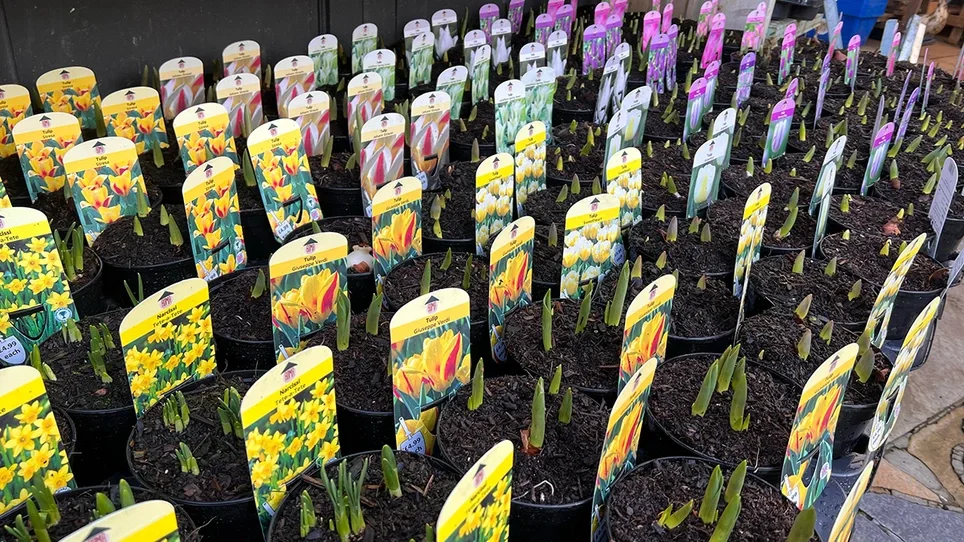
Now, back to the spring bulbs. January is the perfect time to prepare your garden for sensational spring blooms. Here’s how.
1: Try container-grown potted bulbs
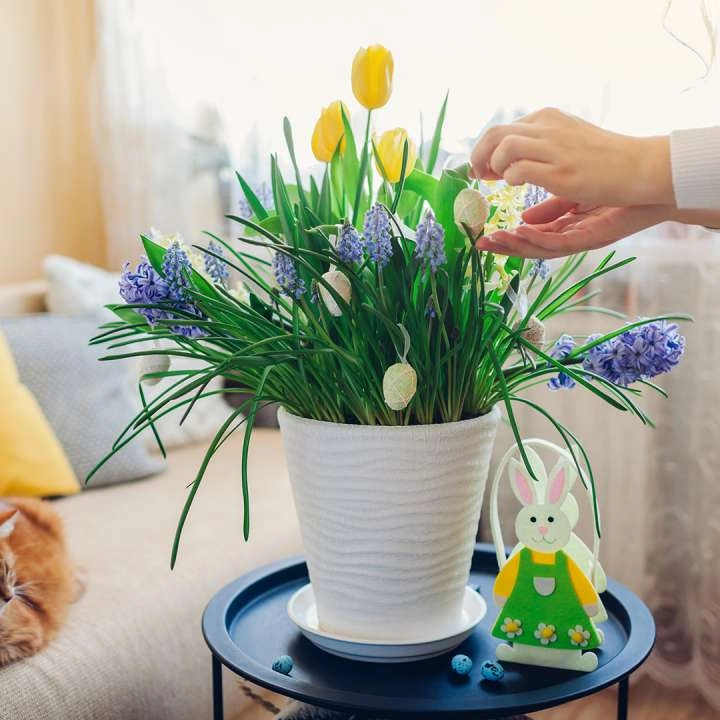
Superb for creating long-lasting, colourful displays, you can plant container-grown bulbs with different textures and heights. For best results, plant Tulips in layers choosing varieties that flower at different heights for a more extended display in your containers at home. Combining bulb species such as Tulips and Forget-Me-Nots makes a long-lasting display for the spring.
Other stunning combinations include dwarf bulbs such as Iris reticulata and Narcissus ‘Tête-à-Tête’. If you prefer instant winter colour, Boma’s range of ready-made winter planters with Cyclamen, Skimmia, and Hedera can fill garden corners or window ledges beautifully until bulbs burst into bloom.
2: Naturalizing smaller flowering bulbs
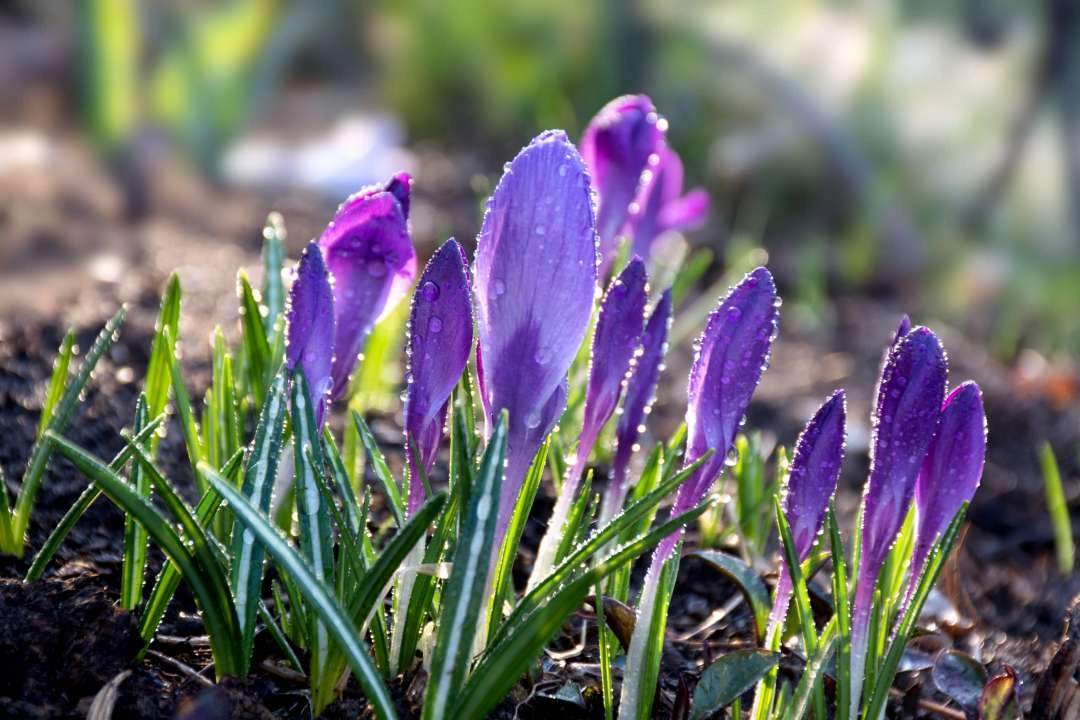
If you have a lawn or communal green space — say, in Highgate Village or around the gardens of Hampstead Heath — naturalized bulbs like Bluebells and Crocuses are ideal. Planting smaller flowering bulbs in their natural surroundings works well, transforming the landscape beyond imagination. Eranthis hyemalis, Hyacinthoides non-scripta (Bluebells), Galanthus sp., Crocus sp., Fritillaria meleagris, and Chionodoxa forbesii are but a few ideal natural bulbs species for lawns or around the bases of trees in your garden at home.
3: Planting bulbs in swathes and groups
Along the front of mixed borders, plant bulbs in swathes and groups. Planting Tulips and Narcissus in large swathes within lawns or throughout mixed borders can create eye-catching displays. Alliums on mass and small Crocus swathes in the lawn are easy combinations for a long season of interest and create an outstanding garden display.
| Combination Type | Bulbs | Planting Location Ideas |
|---|---|---|
| Black & White Chic | Anthriscus sylvestris planted with 'Tulip Black parrot', Tulip' Queen of the night' and Tulip' White Triumphator', Allium Nigrum | Beds and borders or even a shady garden corner |
| Modern tones | Narcissus' Tibet', Muscari' Grape Ice', Tulipa' Queen of the night', Allium sphaerocephalon | Large Containers |
| Purple Revenge | Narcissus' Bridal Crown', Camassia leichtlinii' Alba', Allium' Purple Rain', Allium 'Violet Beauty' | Beds and borders |
| Burgundy Shades | Scilla Peruviana, Allium ascalonicum, Allium sphaerocephalon, Knautia macedonica, Camassia cusickii, Sanguisorba menziesii | Beds and borders |
| Monet's Passion | Tulip' Princess Irene', Narcissus' Avalanche', Tulip' Paul Scherer', Fritillaria persica | Containers |
| Visions of White | Tulip' Green Star', Narcissus' Thalia', Tulip' White Triumphator', Myosotis alpestris (White Forget Me Knot) and White Wall Flowers | Large containers |
| Pink Lucid Dreams | Narcissus' Mount Hood', Tulip' Kings Blood', Tulip' Whispering Dream', Narcissus' Bridal Crown' | Mixed in with bedding plants in a planted border |

4: Cut flower displays in your home
There is nothing like the feeling and joy of creating colourful displays in your home with flowers fresh from your garden. Use Tulips in spring or Gladiolus and Dahlias in summer — they’re easy to grow and superb varieties for cut flower displays that paint your home with colour.
Most species of bulbs will flower for 2 to 3 weeks in spring. You can extend the season by planting a variety of bulb types that bloom at different times. Once they fade, replace them indoors with a bold statement houseplant like a Fiddle Leaf Fig or Monstera to keep your rooms lively post-Christmas.
The following table lists Spring bulbs available at The Boma with an ideal flowering period:
| Type | Flowering period | Duration of blooms |
|---|---|---|
| Tulipa' Little Red Riding Hood' | Early March | 2 to 3 weeks |
| Tulipa White Marvel | Late April | 2 Weeks |
| Tulipa Queen of the night | Mid May | 3 weeks |
| Tulipa Black Parrot | Early May | 2 weeks |
| Tulipa' Candy prince' | Late April | 3 weeks |
| Narcissus' Minnow' | Late March | 3 weeks |
| Narcissus' Pipit' | Early April | 3 weeks |
| Narcissus' February gold' | Late February | 3 weeks |
| Narcissus' Sailboat | April Late | 3 weeks |
| Narcissus' Baby Moon' | Late March | 3 weeks |
| Hyacinths sp. | March | 4 weeks |
| Alliums sp. | June | 4 weeks |
| Fritillaria meleagris | March | 2 Weeks |
| Galanthus sp. (Snowdrops) | February | 4 weeks |
| Iris reticulata sp. | February | 2 Weeks |
| Narcissus 'Tete-a-tete' | Early March | 3 weeks |
| leucojum aestivum | May | 3 weeks |
| Fritillaria imperialis | April | 2 weeks |
| Camassia leichtlinii | May | 4 weeks |
| Hyacinthoides non-scripta (Bluebells) | May | 3 weeks |
| Eranthis hyemalis (Winter Aconite) | Late January to early February | 2 weeks |
| Scilla peruviana | Late May to June | 3 weeks |
5: How and when to plant
Plant bulbs in autumn from October to December and pre-grown potted bulbs from January to March. Always add plenty of grit and bulb fibre to your garden soil and containers when planting any bulbs, helping to improve soil structure and drainage.
Tulips thrive and flower in well-drained sandy soil. That’s why soil structure is essential, as sprouting bulbs are susceptible to a pathogen called ‘Tulip Fire,’ which thrives in poorly drained and heavy clay soils.
If naturalizing bulbs in lawns, a long-armed bulb planter can save you time and stress. Designed to be pressed down, place the potted bulbs or loose bulbs in a deep hole by removing a cork of soil. Firm the soil around the bulbs once you’ve set the plant in the spot.
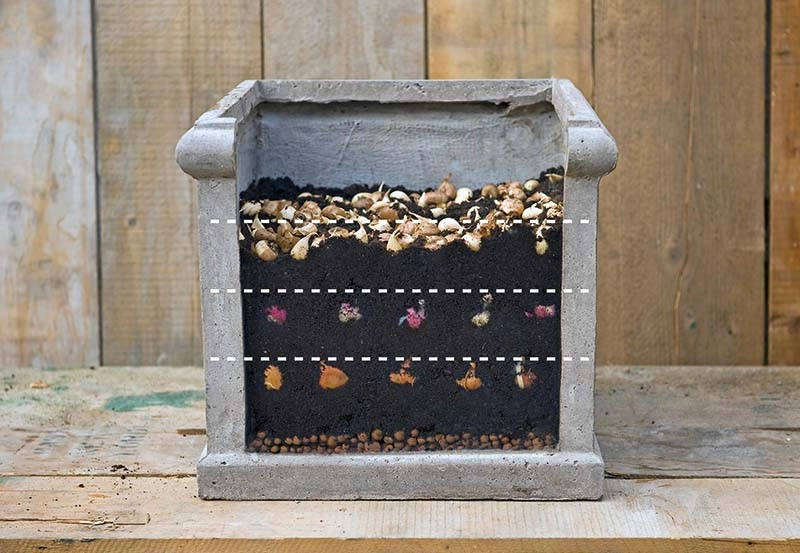
When planting loose bulbs, scatter them and plant them exactly where they land for a natural look. Avoid straight lines or grid patterns. Layering bulbs — known as the “lasagna planting method” — is ideal for potted bulbs, giving continuous blooms for months.
Always make sure the outdoor planters and containers have drainage holes, without which bulbs will begin to rot. Frost can be tough on planters—use pot feet or frost-resistant terracotta pots and wrap them in hessian or bubble wrap for protection.
6: How to care for your bulbs
Plant potted bulbs, matching the depth of the nursery container. Deadhead flowering bulbs such as Narcissus and Tulips to prevent seed set. Allow foliage to die naturally, and mulch over with leaves or compost to feed bulbs below the soil.
7: Top tips for planting bulbs in containers
Before planting your bulbs, place the container in your desired spot, as the containers will be heavy after adding compost and bulbs. Use an excellent loam-based compost for moisture retention, and feed after flowering with Maxi Crop Seaweed Feed.
If you have a shady area in your garden, consider light-lovers like Erythronium ‘Pagoda’, Anemone blanda, and Hyacinthoides non-scripta. Shade-loving plants like Hellebores also thrive beautifully under trees, pairing perfectly with bulbs in partial shade.
Shop All You Need For January Gardening Jobs at Boma
Tending a leafy haven in Highgate, a balcony bursting with bulbs in Hampstead, or a compact courtyard in Crouch End? January is the moment to set your garden up for a spectacular spring. And spring is only weeks away, so let’s make sure your garden is ready to shine!
Our North London soils and microclimates each come with their quirks, but with the right planting, compost, and mulch, any space can flourish beautifully.
At Boma Garden Centre in Kentish Town, we know exactly what local gardeners need to thrive. Discover everything for your January jobs — from quality composts, wildlife feed, and outdoor planters to an inspiring selection of spring-flowering bulbs ready to brighten your borders, pots, and patios.
Our friendly horticultural experts love helping North Londoners bring their unique spaces to life, offering tailored advice to help your gardens thrive.
Visit Boma Garden Centre in-store to explore seasonal plants, or browse online for the essentials to start 2026 off beautifully.
Gardening Tips January FAQs
How to protect tender plants from frosty weather in January?
To protect tender plants in the winter months, cover them with horticultural fleece or cloches on nights when frost is forecast, making sure the cover isn’t pressed tightly against the leaves so a small layer of insulating air is trapped around the plant. For potted plants, raise containers on pot feet and wrap pots with bubble wrap to protect the roots, then use fleece or a cold frame to shield the top growth from cold winds and temperature swings. Adding 5–7 cm of organic mulch, such as compost or fine bark, around the base of plants also helps insulate roots and prevent repeated freeze–thaw damage.
Can I prune apple and pear trees in January?
Yes, January is a good time to prune established apple and pear trees because they are dormant and their branch structure is easy to see. Choose a dry, frost-free day, then remove dead, damaged, or crossing branches and lightly thin the canopy, taking about 10–20% of the growth to keep the tree open and productive without triggering excessive watershoots. Avoid winter pruning stone fruits such as plums, cherries, and apricots, which are better pruned in late spring or summer to reduce the risk of disease.
Can I plant early seeds in January?
Most seeds are best left until later in the season, but some hardy crops can be started under cover in January, such as broad beans, onions, leeks, and salad leaves in trays, modules, or an unheated greenhouse. Indoors on a bright windowsill, you can also sow quick microgreens like mixed salad, rocket, and pea shoots for fresh pickings while the garden is still dormant. Outdoors, it is usually too cold and wet for reliable germination, so focus on warming the soil with fleece or cloches in preparation for early sowings in late winter.
How do I create a healthy garden ecosystem in January?
In January, a healthy garden ecosystem starts with supporting wildlife: keep bird feeders topped up with high-energy foods such as sunflower seeds, fat balls, and peanuts, and ensure there is unfrozen water available for drinking and bathing. Leave some seedheads and undisturbed corners for insects to overwinter, and plan or plant new trees, hedges, and mixed borders that will provide year-round shelter, nectar, and berries for birds and pollinators. Avoid walking on waterlogged or frosted soil to protect its structure and the microorganisms that help keep your garden thriving.
Boma Garden Centre · Kentish Town
Continue your planting journey with Boma
Explore curated plant collections, handmade pots & planters, and garden essentials, carefully chosen to help London's plant lovers create beautiful, thriving spaces.
Pots & Essentials
Independent garden centre · Expert plant advice · Local London delivery