

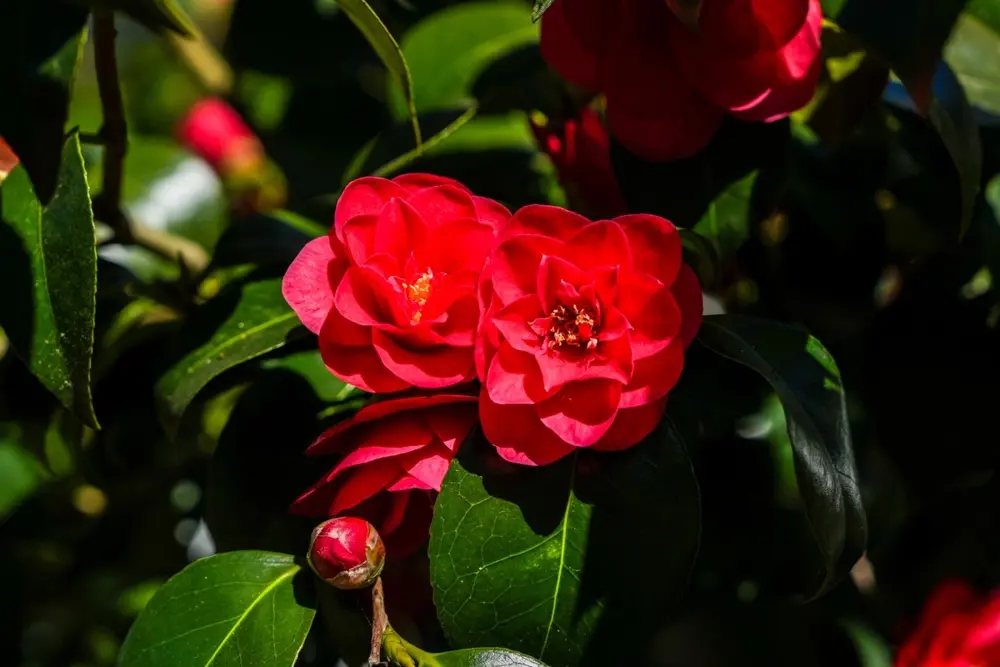
For gardeners across North London, February marks a quiet turning point. Hellebores are holding the last of their peak display, snowdrops continue to drift through woodland corners, and the garden seems to pause—poised between winter restraint and the promise of movement ahead. It is precisely at this moment that the camellia steps forward: that most aristocratic of flowering shrubs, unfurling its flowers with a calm confidence that rewards the patient gardener.
Anyone who has visited Royal Botanic Gardens, Kew at this time of year will understand why camellias hold such esteem among London gardeners. Established shrubs, laden with immaculate blooms, create a spectacle that feels both refined and quietly theatrical. It is little wonder that camellia has become the flowering shrub of choice for urban gardens in late winter and early spring. Passers-by often slow their step, drawn in by cascades of rose-like flowers—deepest crimson, soft blush, or pristine white—set against that unmistakable cloak of glossy evergreen foliage.
These are not merely beautiful plants; they are living statements of horticultural ambition, perfectly suited to the acidic, well-drained soils found in pockets across our local area.
This February, we invite you to consider the camellia not as a single plant but as a collection — a curated assembly of varieties that can provide colour from the first frosts of November through to the soft warmth of late April.
Explore our Camellia collection
Understanding the Camellia as an Ericaceous Treasure
Camellias belong to the family Theaceae — the same botanical family that gives us tea. Native to the woodlands of China, Japan and Korea, they have been cultivated for over a thousand years and arrived in Britain during the eighteenth century, quickly becoming prized specimens in the great gardens of the aristocracy.
As ericaceous plants, camellias share their soil preferences with rhododendrons, azaleas, and pieris. They thrive in acidic conditions (pH 5.5–6.5), detest lime, and reward gardeners who understand their particular needs with decades of increasingly magnificent displays. A well-sited camellia can live for a century or more, becoming a genuine garden heirloom.
For North London gardeners, particularly those around Kentish Town, Hampstead, Crouch End, and Muswell Hill, the naturally acidic London clay — when properly amended with organic matter — provides excellent growing conditions. Even where soil tends towards neutral, container cultivation allows anyone to enjoy these magnificent shrubs.
The Three Seasons of Camellia
What distinguishes an educated camellia collection from a random selection is understanding the three main flowering groups:
- Camellia sasanqua varieties flower from late autumn through early winter, bringing unexpected colour when most shrubs have retreated. Their smaller, delicately fragrant flowers appear on graceful, often spreading plants. At Boma, we stock Sasanqua, Sasanqua White, and the deservedly popular Sasanqua Yuletide — the latter producing cheerful red blooms with golden stamens that coincide perfectly with the festive season.
- Camellia japonica cultivars form the heart of most collections, flowering from late winter into spring. These are the classic camellias — formal, opulent, and available in an extraordinary range of forms from elegant singles to extravagant doubles. Our current collection includes Lady Campbell, Nuccio's Gem, and Dr King — each representing the pinnacle of japonica breeding.
- Hybrid camellias — particularly the williamsii hybrids (crosses between C. japonica and C. saluenensis) — often prove the most garden-worthy of all. They combine hybrid vigour with exceptional flower production and, crucially, they drop their spent blooms cleanly rather than holding them to brown on the branch. Our Anticipation, E.T.R. Carlyon, and Les Jury exemplify this group's virtues.
A Curated Collection by Colour
The Purists: Whites and Creams
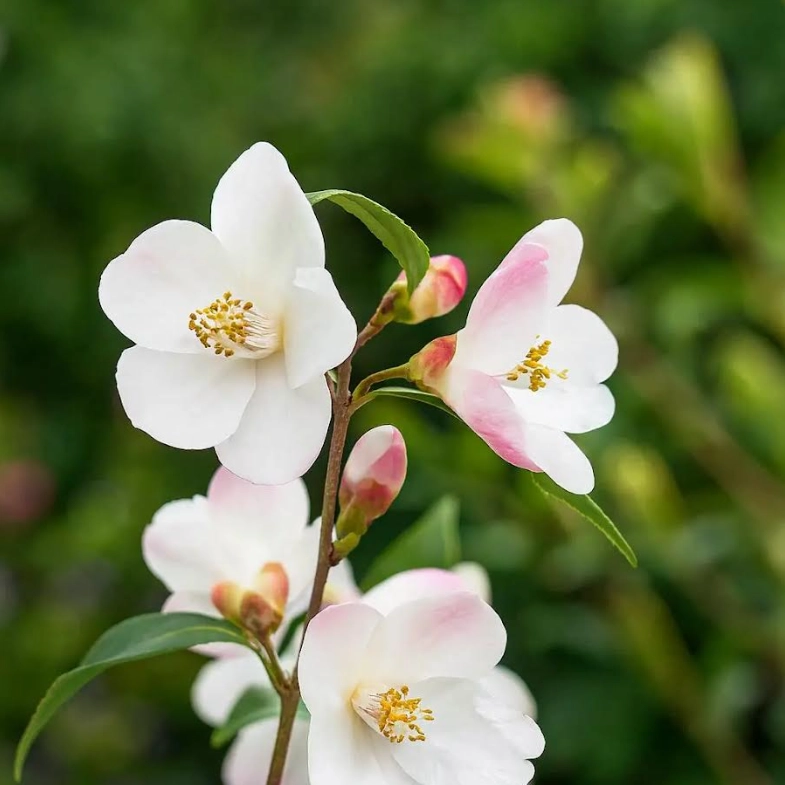
White camellias possess an almost luminous quality in the winter garden, their blooms seeming to glow against the dark foliage.
- Matterhorn — A formal double of exceptional purity, its pristine white petals arranged with mathematical precision. One of the most reliable white japonicas.
- Nuccio's Gem — Perhaps the finest white camellia in cultivation. The formal double blooms are flawless, the petals graduating from pure white to the softest ivory at the centre. A connoisseur's choice.
- Sasanqua White — Delicate single flowers with golden stamens; brings early elegance to the autumn garden. Excellent for training against walls.
- E.T.R. Carlyon — A williamsii hybrid producing semi-double to anemone-form blooms in pure white. Vigorous, free-flowering, and remarkably weather-resistant.
The Romantics: Pinks and Roses
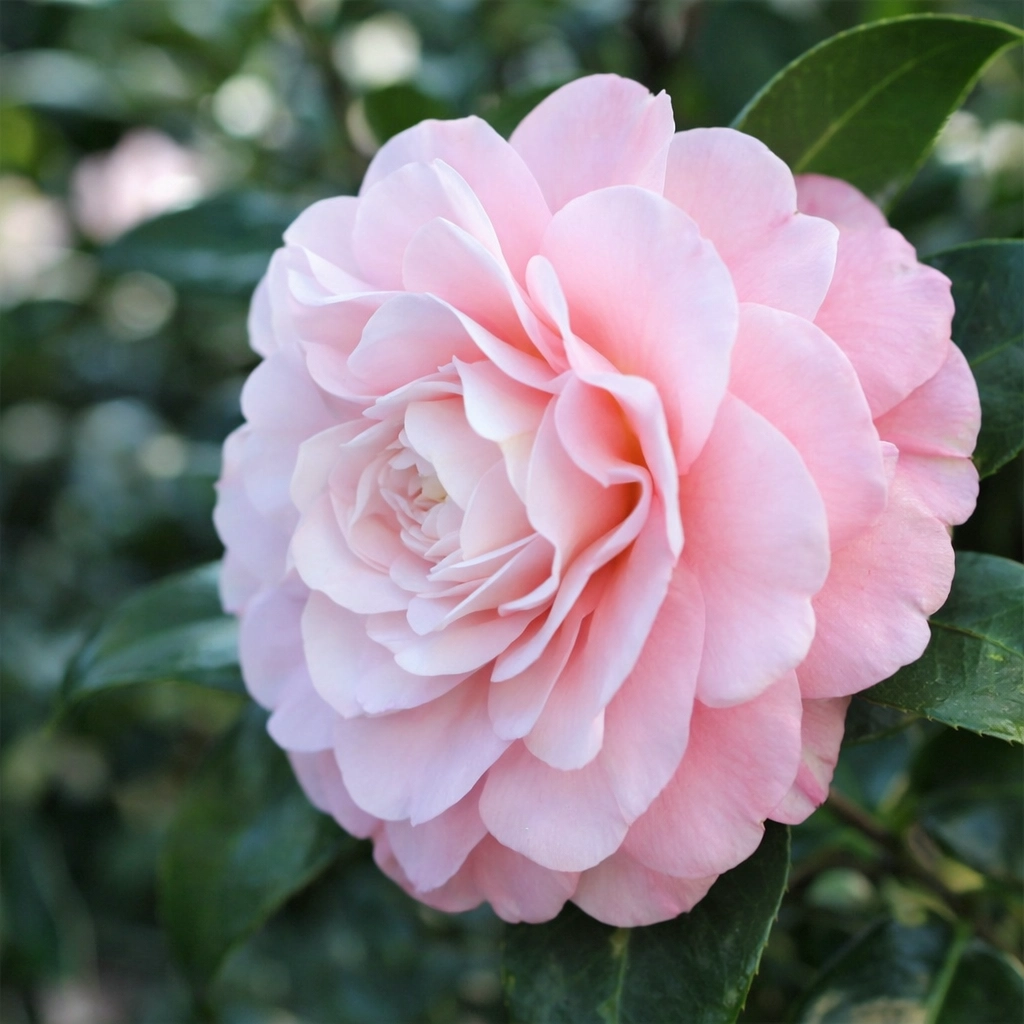
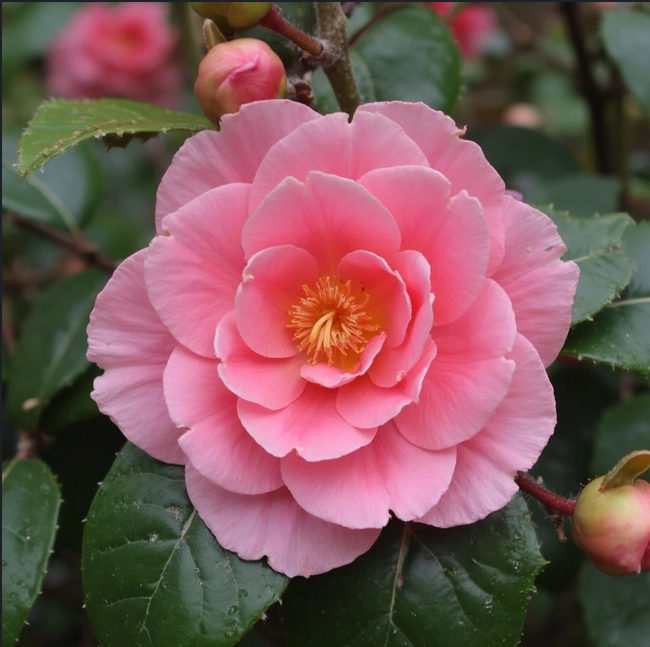
Pink camellias range from the palest shell tones to deep rose, offering warmth that complements the winter light.
- Anticipation — One of the great williamsii hybrids. Deep rose-pink peony-form flowers of exceptional size and substance. Vigorous, upright habit and prolific flowering make this a cornerstone variety.
- Bonomiana and Bonomiana Pink — Historic Italian cultivars with formal double flowers in soft pink. These bring old-world elegance to any collection.
- Lady Campbell — A heritage japonica dating to the Victorian era, still cherished for its perfectly formed rose-pink doubles. Compact habit suits smaller gardens.
- Les Jury — Rich rose-red with deeper veining; a New Zealand hybrid of outstanding garden merit. The peony-form blooms are produced in remarkable abundance.
- Marie Bracey — Large semi-double flowers in coral-rose with distinctive ruffled petals. A warm, romantic presence in the late winter garden.
- Mary Williams — Single to semi-double blooms in clear pink. Named for the plantsman who introduced many fine williamsii hybrids to cultivation.
The Dramatists: Reds and Deep Tones
For those who favour bold statements, red camellias create striking focal points against their lustrous dark foliage.
- Black Lace and Black Lace Red — The darkest of camellias, producing deep crimson-red flowers with near-black undertones. The formal double blooms are breathtaking against the glossy foliage.
- Dr King — Semi-double flowers in bright red with prominent golden stamens. Reliable, vigorous, and exceptionally floriferous.
- Ruby Wedding — Deep ruby-red anemone-form flowers. As the name suggests, a popular choice for anniversary plantings and memorial gardens.
- Sasanqua Yuletide — Cheerful single red flowers with bright golden stamens from November. The perfect companion for Christmas celebrations, whether in the garden or brought indoors as cut branches.
- Volunteer — Large semi-double flowers in rose-red with occasional white variegation. Strong, upright growth and reliable performance.
The Sophisticates: Unusual Tones
These varieties reward close inspection with their unusual colouring and refined character.
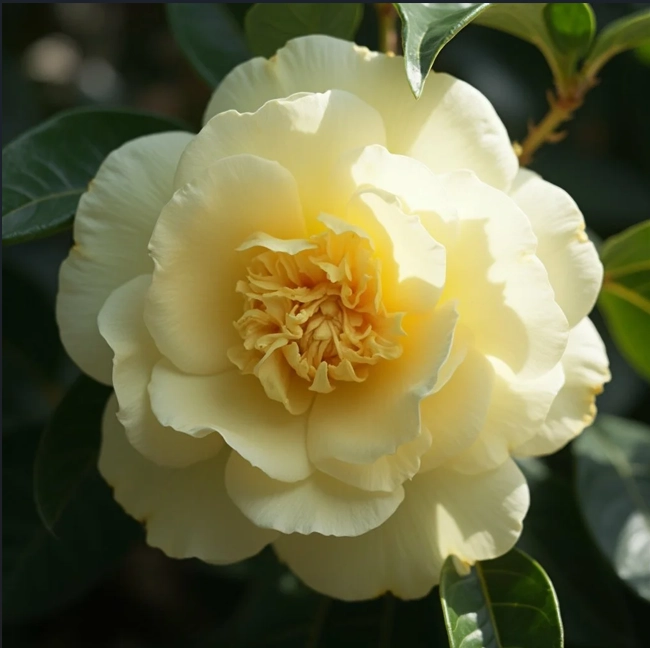
- Brushfield Yellow — The closest approach to yellow in camellias, with anemone-form flowers featuring creamy-white outer petals surrounding a central mass of pale yellow petaloids. Subtle but sophisticated.
- Jury's Yellow — Another breakthrough in yellow tones, producing anemone-form flowers with white outer petals and a creamy-yellow centre. A collector's favourite.
- Cupido — Miniature flowers in soft pink, produced in exceptional abundance. The dainty blooms and compact habit make this ideal for smaller gardens and containers.
- Silver Anniversary — White flowers with the faintest blush of pink. An elegant choice for milestone celebrations.
The Extended Season: Winter and Spring Performers
For those seeking to extend the camellia season from late autumn into spring, these varieties offer particular value.
- Winter Festival — True to its name, this begins flowering in late autumn and continues through winter. Pink formal double flowers on a compact plant suited to containers.
- Winter Perfume — A rare fragrant camellia with pale pink flowers from midwinter. Position near a path or doorway where its delicate scent can be appreciated.
- Cen Alba — White-flowered with an extended season, providing colour when many other camellias have finished.
Placing Your Collection: Aspect and Setting
The Ideal Position
Camellias flourish in dappled shade or positions that receive morning sun and afternoon shade. In North London, a west-facing or north-facing wall often proves ideal — the crucial consideration is avoiding early morning sun, which can damage frosted buds as they thaw too rapidly. The sheltered microclimate of many Hampstead and Highgate gardens, with their established tree canopy, provides near-perfect conditions.
Against a high wall in Crouch End, camellias can be trained as elegant espaliered specimens. In the woodland gardens of Highgate, they naturalise beneath the dappled canopy of oak and beech. In the smaller courtyard gardens of Kentish Town, carefully placed containers bring flowers and foliage to the most challenging spaces.
Companion Planting
As fellow ericaceous plants, rhododendrons and azaleas make natural companions, though their simultaneous flowering can create competition for attention. More subtle partnerships include evergreen ferns such as Polystichum, which echo the camellia's glossy foliage; winter-flowering Sarcococca, which adds fragrance to the winter garden; and early bulbs including snowdrops, winter aconites, and species crocus, which carpet the ground beneath.
Hydrangeas make excellent summer successors in the same acidic conditions, taking over the floral display as camellias rest. The architectural foliage of Japanese maples provides year-round contrast, while the winter stems of dogwoods (Cornus) add colour at ground level.
Container Cultivation
For balconies in Belsize Park, roof terraces in Tufnell Park, or paved courtyards across the borough, containers offer the ideal solution. Choose generous pots — at least 45cm diameter for young plants, moving to larger containers as the plant matures. Use ericaceous compost exclusively, and ensure excellent drainage. Position where plants receive good light but are protected from harsh afternoon sun and drying winds.
The compact varieties in our collection — including Cupido, Winter Festival, and Lady Campbell — prove particularly suited to container life.
The Art of Camellia Care
A well-cared-for camellia will reward you with increasing generosity each year. Here is how to ensure success.
Soil preparation is paramount. Incorporate generous quantities of ericaceous compost, well-rotted leaf mould, and composted bark into the planting area. If your soil tends towards alkaline, consider raised beds or containers filled with ericaceous compost.
Watering requires particular attention. Camellias form their flower buds during late summer and autumn — drought stress at this time results in bud drop the following season. Water consistently during dry spells from July through September, using rainwater where possible, as tap water in London can be alkaline. Container-grown plants need regular watering throughout the growing season.
Feeding should be modest and appropriate. Apply a slow-release ericaceous fertiliser in spring, as new growth emerges. Avoid high-nitrogen feeds, which promote foliage at the expense of flowers. A mulch of composted bark or leaf mould in spring conserves moisture and maintains soil acidity.
Pruning is rarely necessary but can be undertaken immediately after flowering. Camellias respond well to renovation pruning if they become leggy — even hard cuts into old wood will regenerate. Remove any dead or crossing branches, and shape as desired.
Winter protection for buds involves avoiding sites where morning sun strikes frosted flowers. The damage appears as brown-edged petals — disappointing but not harmful to the plant. Fleece protection during severe frost helps preserve the display.
Common Concerns
- Bud drop — usually caused by water stress the previous summer, sudden temperature changes, or physical disturbance. Ensure consistent watering during bud formation and avoid moving container plants once buds have set.
- Yellow leaves — typically indicates lime-induced chlorosis from alkaline soil or water. Test your soil pH and water with rainwater where possible. Iron sequestrate provides a short-term remedy.
- Sooty mould — the black coating sometimes seen on leaves indicates scale insect activity. The mould grows on their honeydew secretions. Treat the scale with horticultural oil sprays, and the mould will gradually weather away.
- Petal blight — brown spots on flowers that spread rapidly indicate fungal infection. Remove and destroy affected blooms, and clear fallen petals from around plants to reduce reinfection.
Visit the Collection
At Boma, our February camellia selection represents one of North London's most comprehensive offerings. We encourage you to visit us and see the varieties in flower — there is no substitute for observing how light catches a petal, or how the foliage frames each bloom.
Our team is always pleased to discuss your garden's conditions — aspect, soil type, available space — and help you select varieties that will thrive in your particular setting. Whether you seek a single statement plant for a prominent position or wish to build a collection that provides colour from November to April, we can guide your choices.
The camellia is a plant for the patient gardener, but patience is rewarded handsomely. A well-chosen variety, properly sited and cared for, will become a treasured presence in your garden for decades to come — a living link between the great gardening traditions of the East and the particular pleasures of gardening in North London.