

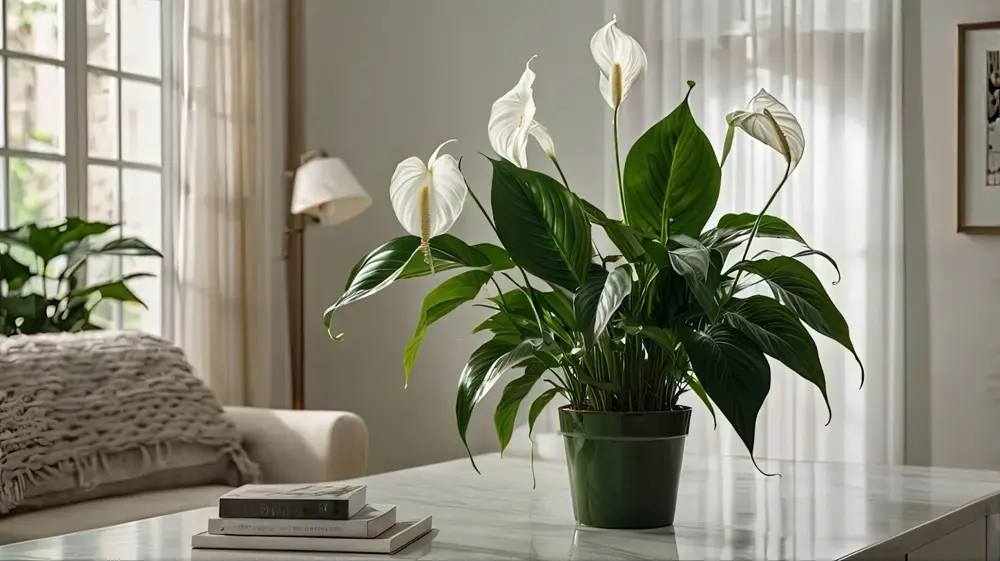
There is a particular stillness to the Peace Lily. Spend time with one in a room and you begin to notice it—the way those elegant white spathes hover above the foliage like small sails caught in an unseen current, the deep green leaves quietly reflecting whatever light they are given. It is a plant that seems to listen to its surroundings, responding to the mood of a space with a presence that feels at once calming and quietly attentive.
Among London’s flat dwellers, a familiar question always arises: is there enough light? In densely built neighbourhoods such as Kentish Town, Belsize Park, and Camden, natural light is something to be negotiated rather than assumed. Square footage is finite, windows are often shared with neighbouring buildings, and every object in a home must justify its presence. In these conditions, the Peace Lily has quietly earned its reputation as a modern classic. This is a flowering houseplant that does not merely endure urban living—it settles into it, responds to it, and, in many ways, improves it.
This February, as the days begin their slow lengthening and we spend more time indoors than out, we invite you to consider the Peace Lily not as a default choice — the plant you buy because you've heard it's easy — but as a deliberate one: a living element that can transform the air, the aesthetic, and even the atmosphere of your home.
Explore our Peace Lily collection
The Science of Serenity
The Peace Lily's reputation for air purification isn't folklore — it's NASA-certified. In the late 1980s, the space agency conducted its Clean Air Study to identify plants capable of filtering toxins from sealed environments. Spathiphyllum emerged as one of the most effective, demonstrating a remarkable ability to remove benzene, formaldehyde, trichloroethylene, xylene, and ammonia from indoor air.
For city dwellers, this matters more than we might think. The air inside a London flat — particularly one with gas heating, synthetic furnishings, and sealed windows — can contain higher concentrations of volatile organic compounds than the street outside. The Peace Lily works continuously, drawing these pollutants through its leaves and roots, where microorganisms in the soil break them down into harmless compounds.
But beyond chemistry, there's something more intuitive at work. Studies have consistently shown that the presence of plants in living spaces reduces stress, lowers blood pressure, and improves concentration. The Peace Lily, with its clean lines and restful colour palette — deep green and pure white — seems almost designed for this purpose. It doesn't demand attention; it simply offers presence.
The February Plant
There's a particular case for the Peace Lily in late winter. The festive decorations have long since been packed away, January's austerity has worn thin, and spring still feels distant. The rooms we inhabit begin to feel stale — not dirty, exactly, but somehow depleted. This is precisely when a Peace Lily earns its place.
Unlike most flowering houseplants, which demand bright windowsills and sulk in shade, the Peace Lily blooms in the low light conditions typical of so many urban interiors — the north-facing sitting room of a Victorian conversion in Tufnell Park, the interior bedroom of a mansion block off Haverstock Hill, the galley kitchen that sees only reflected light. It flowers not in spite of these conditions but seemingly at peace with them.
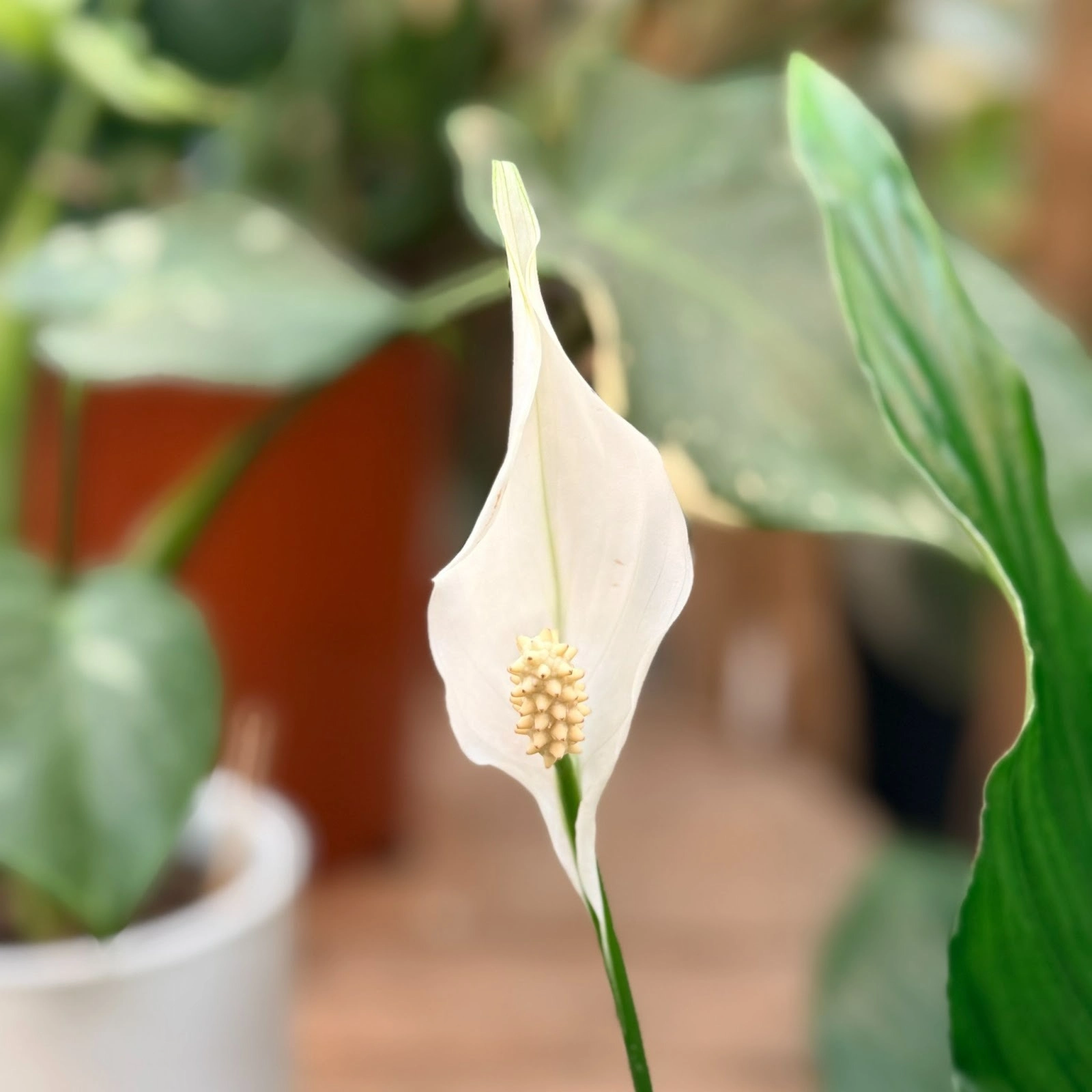
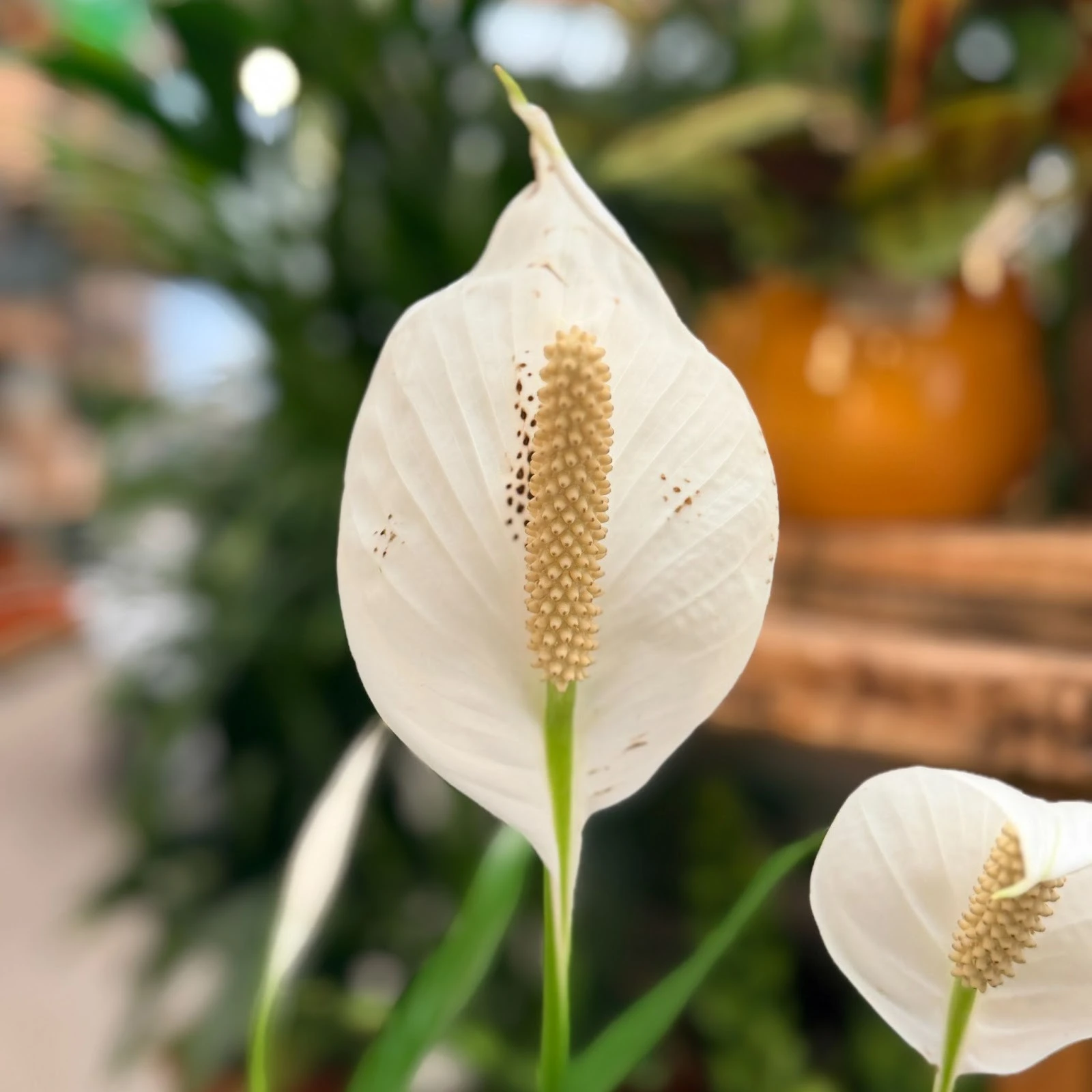
The name itself — Spathiphyllum — comes from the Greek 'spathe' (a broad blade) and 'phyllon' (leaf), describing the elegant modified leaf that surrounds the true flower spike. But the common name, Peace Lily, captures something the Latin cannot: the sense of calm these plants bring to a room, the way their white sails suggest surrender, tranquillity, contemplation.
Reading the Form
Peace Lilies divide naturally into three scales, each suited to different positions and purposes in the home.
The Compact Forms
Smaller varieties reaching 30–45cm, perfect for desks, bedside tables, bathroom shelves, and kitchen windowsills. These are the Peace Lilies for intimate spaces — the home office carved from a corner of the bedroom, the shelf above the sink, the console table in a narrow hallway.
Varieties:
- Chopin — currently in stock and deservedly popular, with neat, proportionate growth and reliable flowering.
- Cupido — another compact favourite, with slightly broader leaves and generous blooming.
- Sweet Chico — a newer selection with particularly glossy foliage and a tidy habit. Also arriving in February: Bellini, Pearl Cupido, and Sweet Silvio.
A Chopin on a bedside table brings a sense of freshness to the first and last moments of the day. A Cupido on a home office desk offers a living focal point for the eyes to rest upon between screens.
The Mid-Size Statements
Medium varieties reaching 45–70cm, substantial enough to anchor a corner or serve as a table centrepiece, yet not so large as to overwhelm a typical London room. These are the workhorses of the Peace Lily world — generous without being greedy with space.
Varieties:
- Alana — a robust grower with excellent foliage and dependable flowering. Vivaldi — elegant and refined, with slightly more elongated leaves.
- Verdi — strong and architectural, with broad, dramatic foliage.
- Strauss — a classic performer. Sebastiano — newer to our collection, with exceptional vigour.
The musical names — Chopin, Vivaldi, Verdi, Strauss — are no accident. Dutch breeders have cultivated these varieties with the same attention to harmony and composition that a conductor brings to an orchestra. Each has been selected for balance: the proportion of leaf to flower, the rhythm of growth, the sustained performance over years.
The Floor Specimens
Larger varieties reaching 70cm to over a metre, with the presence to hold their own as floor-standing specimens. These are statement plants for generous spaces — the open-plan living area, the entrance hall, the corner beside a sofa where something alive and substantial is needed.
Varieties:
- Sweet Ricardo — impressive scale with a graceful habit.
- Diamond — aptly named for its quality.
- Torelli — one of the largest available, making a genuine architectural statement.
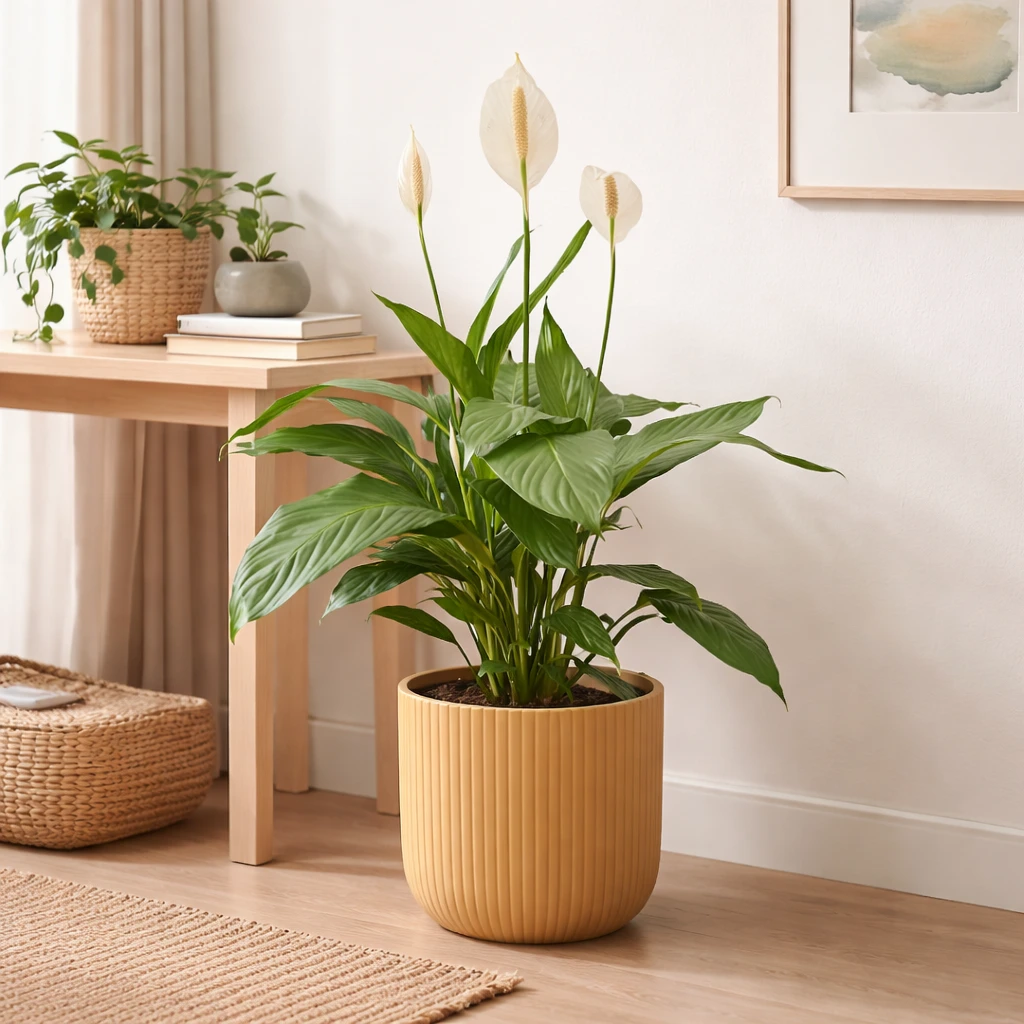
A mature Torelli in a handsome pot can serve as the living centrepiece of an entire room — a presence as significant as any piece of furniture.
The Variegated Forms
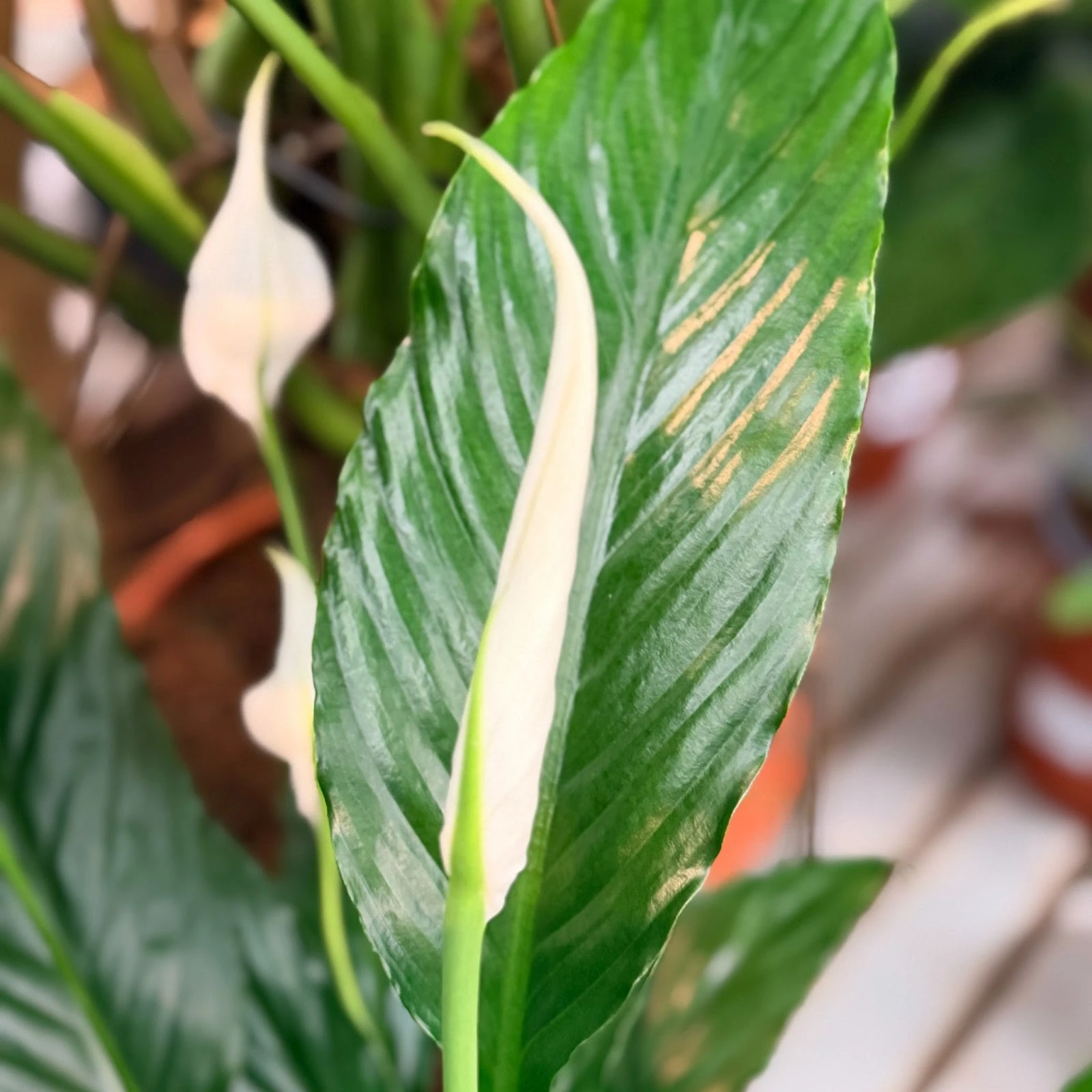
For those seeking something beyond the classic deep green, variegated Peace Lilies offer leaves marked with cream, white, or pale green.
Vari Diamond — green leaves elegantly splashed and edged with cream, bringing additional light to the foliage while retaining the Peace Lily's characteristic grace. These variegated forms require slightly brighter conditions to maintain their markings — a position near (but not in) a window suits them well.
Placement: The Art of Position
The Peace Lily's tolerance of low light opens possibilities closed to most flowering plants. But tolerance is not the same as preference, and understanding the relationship between light and performance helps you place your plant with intention.
Low light — north-facing rooms, interior spaces, bathrooms without windows — the Peace Lily will grow steadily, producing handsome foliage, but flowering will be reduced. In these positions, think of it primarily as a foliage plant, with occasional blooms as a bonus.
Medium light — bright indirect light, the kind found a metre or two from an east or west-facing window — is where Peace Lilies perform best, producing regular flushes of flowers throughout the year. The light should be bright enough to read comfortably without a lamp.
Direct sunlight — avoid. The leaves will scorch, turning yellow then brown. Even an hour of direct summer sun through a south-facing window can cause damage. Always position where light is filtered or reflected.
Room by Room
- The bathroom — perhaps the Peace Lily's ideal habitat. The humidity from showers and baths mimics the tropical forest floor where these plants evolved. A Chopin or Cupido on a shelf, a Sweet Chico beside the basin — these positions combine the aesthetic with the practical. The plant purifies the air while thriving on the very moisture that encourages mould in bathrooms without ventilation.
- The bedroom — Peace Lilies are one of the few plants recommended for sleeping spaces. Unlike most plants, which only photosynthesise during daylight, the Peace Lily continues to release oxygen at night. Combined with its air-purifying properties and restful appearance, it makes a genuinely beneficial bedside companion.
- The home office — in the age of remote working, the spaces we work in have become as important as those we relax in. A Peace Lily on or near a desk offers both the psychological benefits of greenery and the practical benefit of cleaner air — particularly valuable in rooms where we spend concentrated hours.
- The living room — a larger variety like Vivaldi or Torelli, positioned in a handsome pot, can serve as a living sculpture. Group with other foliage plants for an indoor jungle effect, or let it stand alone as a statement of considered simplicity.
Companions and Combinations
The Peace Lily's deep green foliage and white flowers make it remarkably versatile in groupings with other houseplants. Consider these pairings:
- With ferns — the delicate, feathered fronds of Boston Fern or Maidenhair contrast beautifully with the Peace Lily's bold, simple leaves. Both appreciate humidity, making them natural companions for bathrooms and kitchens.
- With Pothos and Philodendron — trailing plants cascading from shelves above a floor-standing Peace Lily create layers of green at different heights. The heart-shaped leaves of Philodendron echo the Peace Lily's form while adding movement and flow.
- With Calathea — for the more adventurous, the patterned leaves of Calathea varieties provide dramatic contrast to the Peace Lily's simplicity. Both share similar care requirements — moderate light, consistent moisture, no direct sun.
- With Snake Plant (Sansevieria) — the vertical, architectural lines of Snake Plant provide striking contrast to the Peace Lily's flowing form. This pairing also maximises air purification — both are NASA-approved clean air plants with complementary filtering abilities.
The white of Peace Lily flowers also harmonises with white orchids, creating an all-white grouping of exceptional elegance for a console table or mantelpiece.
Care: The Forgiving Houseguest
The Peace Lily asks remarkably little — which is why it has become such a staple of offices, waiting rooms, and homes where the best intentions don't always translate into consistent care. But understanding its preferences allows you to help it flourish rather than merely survive.
- Watering — the Peace Lily's most famous characteristic is its dramatic droop when thirsty. The leaves will sag noticeably, sometimes alarming new owners into thinking the plant is dying. It isn't. A thorough watering and the plant will recover within hours, perking back up as if nothing happened. This visual indicator makes overwatering — the more dangerous error — easy to avoid. Water when the top inch of soil feels dry, or when the plant begins to droop. Use room-temperature water and ensure the pot drains freely.
- Humidity — as tropical plants, Peace Lilies appreciate moisture in the air. Brown leaf tips — a common complaint — usually indicate dry air rather than underwatering. Mist regularly, group with other plants, or place on a pebble tray filled with water. Bathrooms and kitchens naturally provide the humidity these plants enjoy.
- Feeding — during spring and summer, a monthly feed with balanced liquid fertiliser supports growth and flowering. In autumn and winter, reduce to every six weeks or stop entirely. Overfeeding causes brown leaf edges and can reduce flowering.
- Cleaning — the broad leaves are dust magnets. Wipe regularly with a damp cloth to keep them glossy and maximise their air-purifying efficiency. This simple attention also allows you to spot any problems early.
- Repotting — Peace Lilies prefer to be slightly pot-bound and will flower more readily when their roots are somewhat confined. Repot only when roots emerge from drainage holes or the plant becomes unstable. Move up one pot size using a good-quality peat-free houseplant compost.
A note on toxicity — Peace Lilies contain calcium oxalate crystals, which can cause irritation if ingested. Keep out of reach of curious pets and small children, or choose non-toxic alternatives for households where this is a concern.
The Language of Flowers
In the Victorian language of flowers, the Peace Lily symbolised innocence, purity, and sympathy — making it a traditional choice for funerals and expressions of condolence. But its meaning has evolved. Today, the Peace Lily is more often associated with hope, healing, and new beginnings — a plant given to mark the start of something: a new home, a new job, a recovery, a reconciliation.
There's something appropriate in this shift. The Peace Lily is, after all, a plant of quiet resilience — one that thrives in challenging conditions, forgives neglect, and returns repeatedly to flower. For city dwellers navigating the particular challenges of urban life — the cramped spaces, the poor air quality, the relentless pace — it offers a gentle reminder that beauty and calm can flourish even where conditions are far from ideal.
Visit the Collection
At Boma, our Peace Lily selection spans the full range of sizes and varieties — from compact Chopin and Cupido specimens perfect for desks and shelves, to statement Torelli plants that can anchor an entire room. Our February delivery will expand the collection further, bringing Alana, Vivaldi, Diamond, and the elegant variegated Vari Diamond.
We encourage you to visit us and see the plants in person — to observe how the light catches those white spathes, how the glossy foliage reflects its surroundings, how each variety holds itself with its own particular character. Our team is always pleased to discuss your space, your light levels, and your lifestyle, and to help you find a Peace Lily that will thrive in your particular corner of North London.
In a city that rarely stops, the Peace Lily offers something increasingly rare: a presence that asks little, gives much, and reminds us that tranquillity is possible — even in a third-floor flat in Kentish Town.