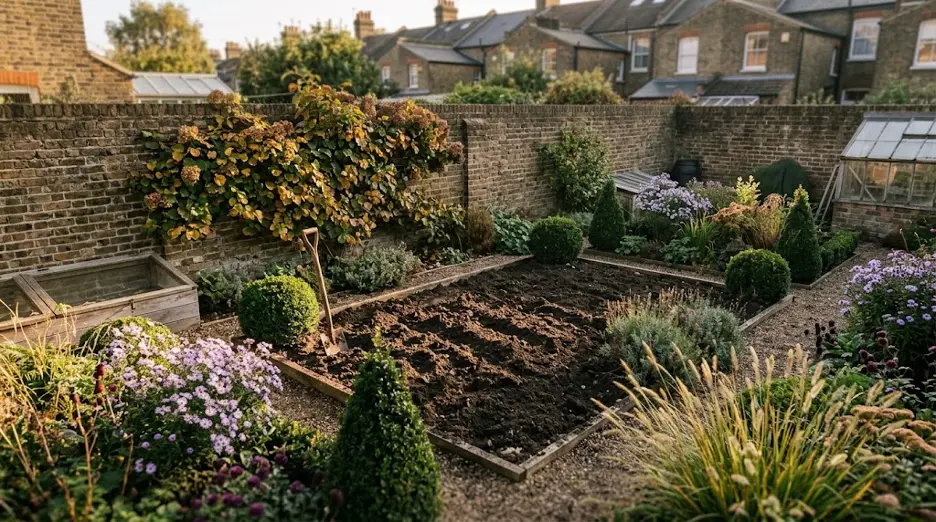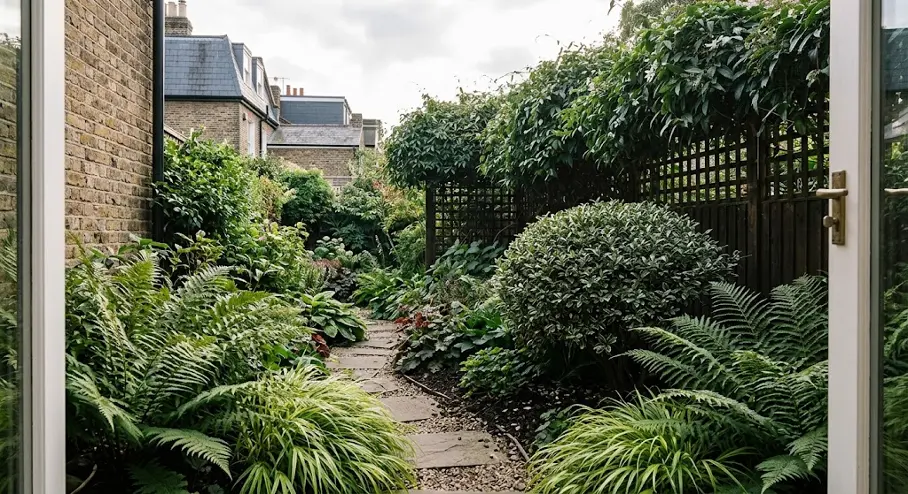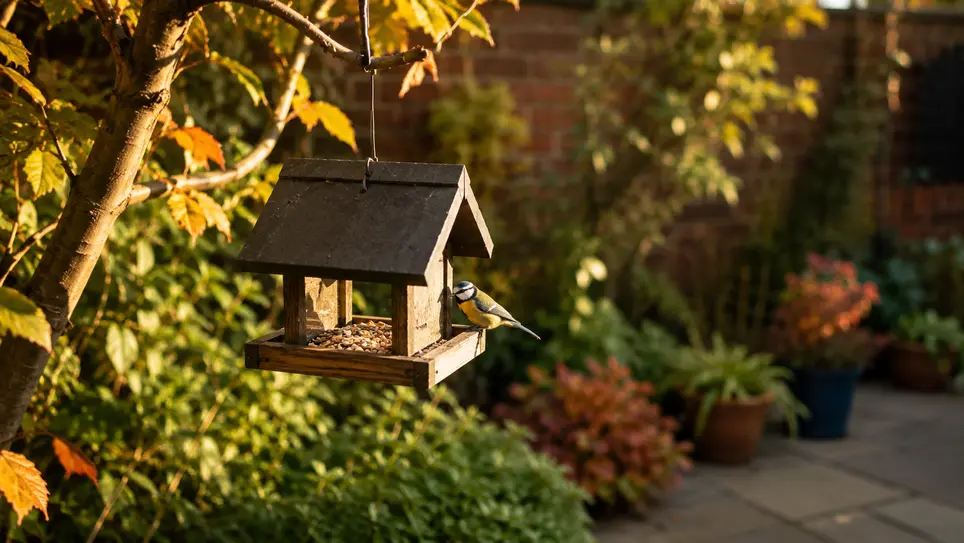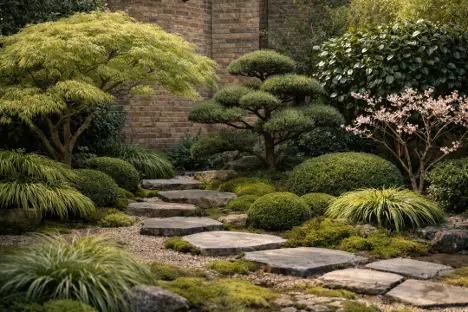


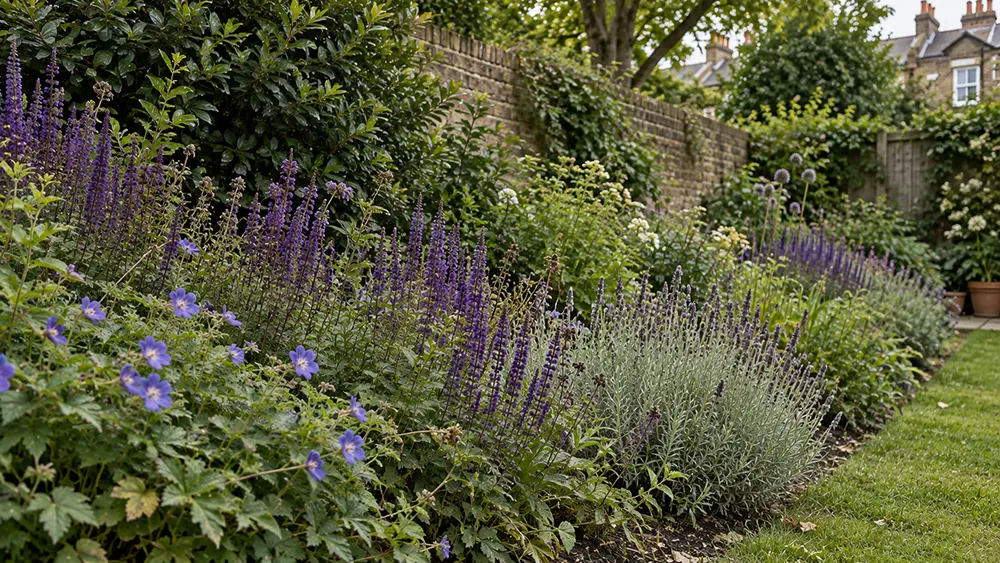
A well-planted border is the result of considered plant selection: varieties chosen for their seasonal contribution, structural value, and capacity to perform with minimal intervention. Whether you are working with a shaded courtyard, a sun-drenched south-facing bed, or a narrow strip beside a Highgate path, the right plant palette makes maintenance a pleasure rather than a chore.
What Makes a Border Low-Maintenance
| Plant | Type | Border Position | Light | Soil | Season of Interest | RHS AGM |
|---|---|---|---|---|---|---|
| Geranium 'Rozanne' | Hardy perennial | Front / ground cover | Full sun to partial shade | Most soils incl. clay | Early summer – autumn | Yes |
| Lavandula angustifolia 'Hidcote' / 'Munstead' | Evergreen shrub | Front to mid | Full sun | Well-drained | June – August | Yes |
| Salvia nemorosa 'Caradonna' | Hardy perennial | Mid | Full sun | Well-drained | Late May – summer | Yes |
| Echinacea purpurea 'Sunseekers Blush' | Hardy perennial | Mid | Full sun | Well-drained | July – September, plus winter structure | No |
| Phlox paniculata | Hardy perennial | Mid | Sun to partial shade | Moisture-retentive / clay | Mid to late summer | Some cultivars |
| Persicaria amplexicaulis 'Firetail' | Hardy perennial | Rear | Sun to partial shade | Most soils | July – October | No* |
| Astilbe (various) | Hardy perennial | Mid | Partial shade | Damp / clay | Midsummer, plus autumn seedheads | Some cultivars |
| Polystichum setiferum | Evergreen fern | Front to mid | Full to dry shade | Dry / clay | Year-round foliage | Yes |
*Per the current RHS listing. Some trade suppliers still market 'Firetail' as AGM — worth confirming before publishing.
Permanence is the foundation of a low-maintenance border. Herbaceous perennials, evergreen shrubs and long-lived ground covers form the backbone: plants that establish, spread to fill their allotted space, and return reliably each season without the need for annual replanting. Layering these across different heights, textures and flowering periods is how a border earns its keep throughout the year.
Evergreen Border Plants
Evergreens are the structural anchors of any border. They provide form and colour when herbaceous plants have died back, define the border's outline through winter, and create the visual rhythm that makes a planting scheme readable at a glance. The best evergreen border shrubs combine foliage interest with seasonal flowering, earning their place in the ground on multiple counts.
Planting a mix of evergreen shrubs across varying heights — low mounding hebes at the front, mid-height choisyas in the middle, and taller structural shrubs at the rear — produces a border that reads as designed and considered, not merely planted and left.
Matching Plants to Your Border's Conditions
Creating a border that largely looks after itself does not mean sacrificing botanical interest or seasonal drama. It means selecting plants well matched to your site conditions — clay soil, the partial shade cast by a Victorian terrace, or the dry summers that have become increasingly common across London — and allowing them to establish on their own terms.
Establish your border's light levels precisely before choosing plants. Full sun (six or more hours of direct sun daily), partial shade (two to four hours) and full shade each support very different plant communities. Mismatching plants to conditions is the primary reason borders fail to thrive.
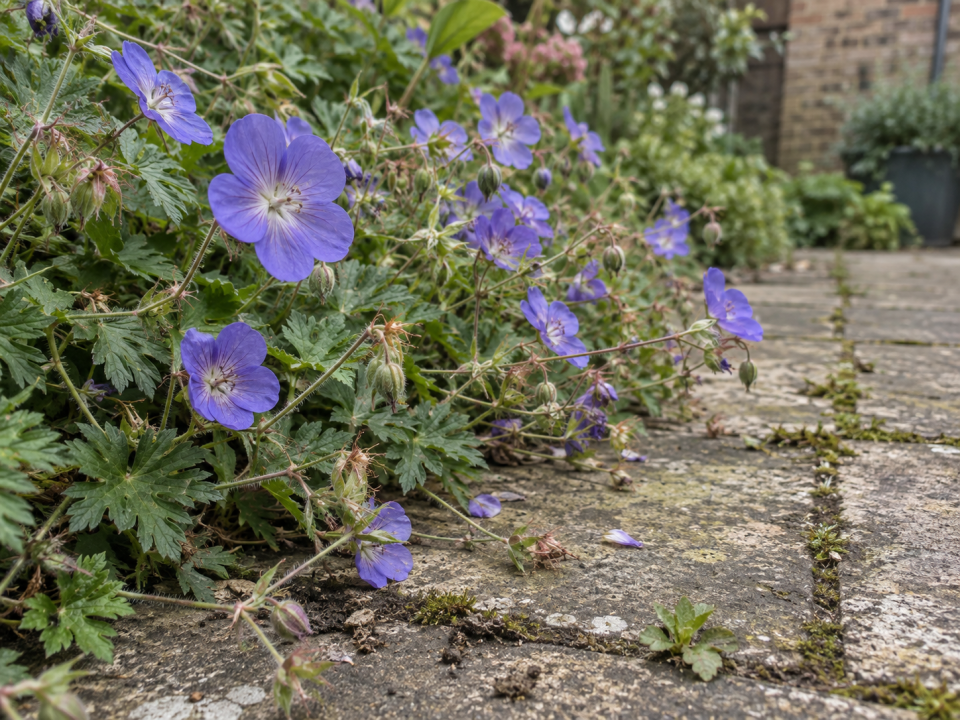
Geranium 'Rozanne' is among the most reliable hardy geraniums in cultivation — winner of the RHS Plant of the Centenary at Chelsea Flower Show 2013. Its violet-blue flowers with white centres open from early summer and continue well into autumn, far outlasting most perennials.
It spreads generously as ground cover, suppressing weeds as it goes, and tolerates partial shade without losing flowering vigour. It is particularly well suited to the edges of borders where root competition from hedging or walls can make establishment difficult for less resilient plants.
Shady Border Plants for Dappled Shade
North-facing borders, beds beneath established trees, and the shaded strip beside a terrace call for plants that are genuinely adapted to lower light, not simply tolerant of it. The distinction matters. A plant that merely tolerates shade produces sparse, drawn growth and poor flowering. Plants that thrive in shade bring their full ornamental value precisely where it is most needed.
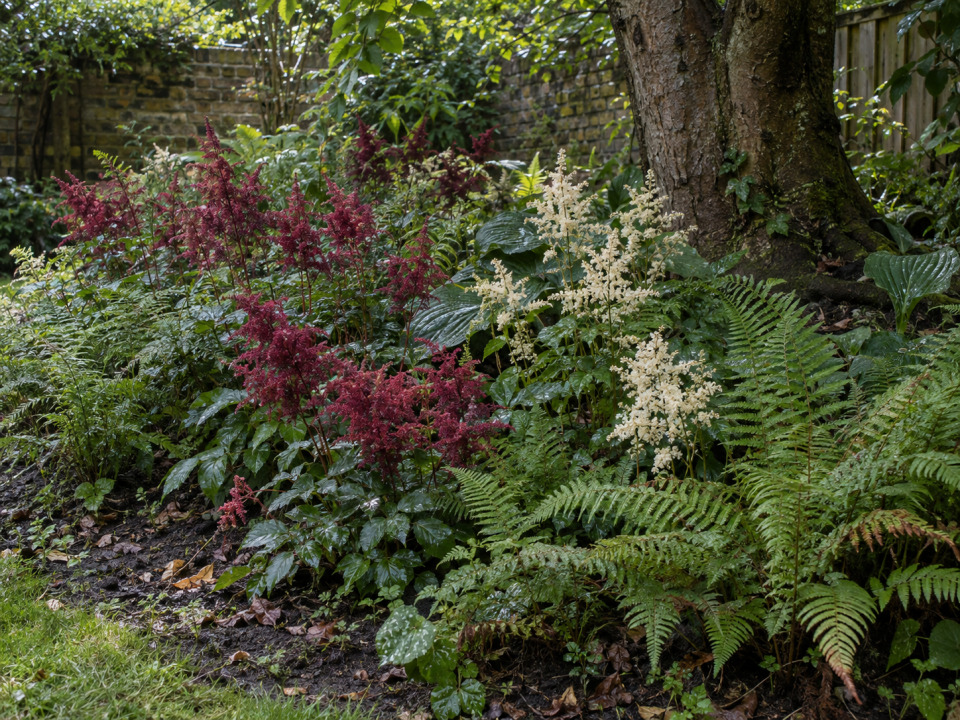
Astilbe species and hybrids are among the most reliable choices for damp, partially shaded borders. Varieties worth seeking out include the white-plumed Astilbe 'Bridal Veil', the deep crimson Astilbe 'Fanal', and the soft pink Astilbe 'Rheinland'. Their feathery plumes rise above deeply divided, fern-like foliage in midsummer, and the dried flowerheads extend ornamental value into autumn.
They prefer reliably moist soil, making them well suited to the clay-retentive beds common across North London, provided drainage does not become waterlogged in winter. Plant in groups of three or five for maximum visual impact.
Hardy ferns — Dryopteris, Polystichum and Athyrium among them — provide structural evergreen or semi-evergreen foliage through the year and act as excellent companions to both astilbes and spring bulbs in shaded beds. Polystichum setiferum (soft shield fern) is particularly well suited to the dry shade beneath mature trees, where even reliable performers can struggle. As the RHS notes, it is one of the few ferns that copes with both dry soil and deep shade.
Sunny Border Plants
A south-facing border is one of the most productive environments a garden can offer. The combination of reflected warmth from walls and fences, strong light, and typically well-drained conditions suits a wide range of Mediterranean-origin plants that perform with very little maintenance once established.
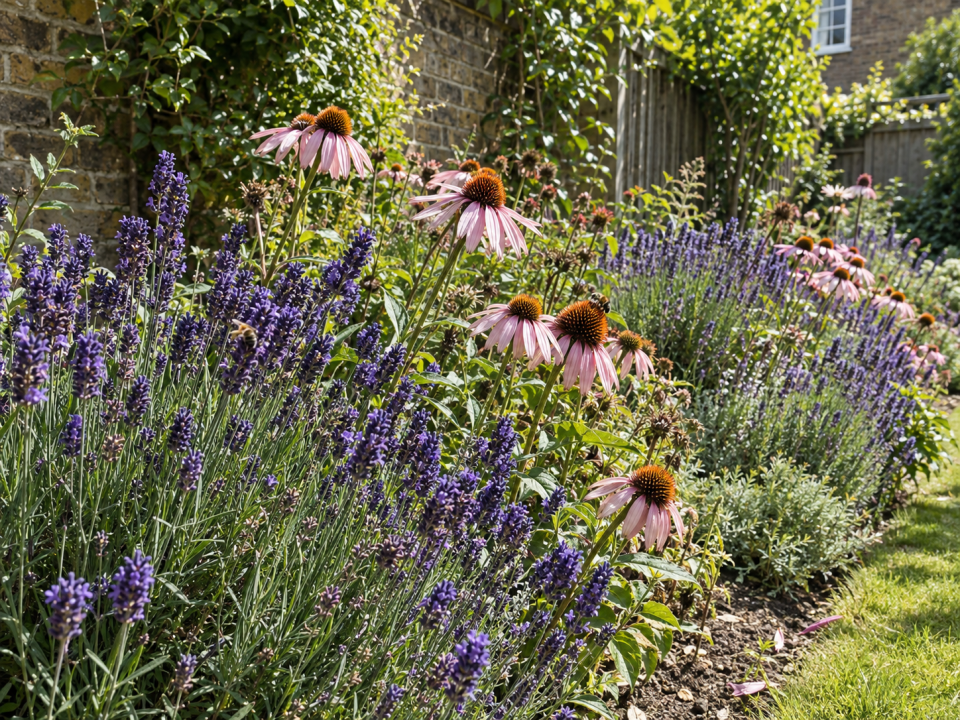
Lavender is the obvious starting point. Lavandula angustifolia 'Hidcote' and 'Munstead' are the most reliably hardy for London conditions: compact, tidy-growing and free-flowering from June through August. They require well-drained soil and full sun. Trim back by a third immediately after flowering each year to maintain shape and longevity. Left unpruned and woody, they split and decline; managed correctly, they last a decade or more.
Pairing lavender with Echinacea purpurea extends the sunny border's interest into late summer and beyond. Echinacea 'Sunseekers Blush' produces pale pink ray florets around prominent central cones from July to September, attracting pollinators throughout its season. It is drought-tolerant once established, a significant advantage as longer dry spells make lower-maintenance planting more of a priority.
Salvia nemorosa 'Caradonna' fills the gap between the two. Its deep violet flower spikes open from late May, bridging the period between spring and the main summer flush. Fully hardy and repeat-flowering if cut back after the first flush, it pairs effectively with both lavender and echinacea in colour and cultural requirements.
Perennial Border Plants for Year-Round Interest
The best herbaceous borders are built around perennials that offer more than a single season of value: plants that contribute foliage interest in spring, flower across summer, provide seedhead structure in autumn, and die back with some grace rather than collapsing untidily.
Phlox paniculata varieties bring substantial, fragrant flowerheads in white, pink and red in mid to late summer, a period when many earlier perennials are already over. They are tolerant of partial shade and prefer moisture-retentive soil, suiting them well to clay beds improved with well-rotted compost. Taller varieties need unobtrusive staking in exposed positions.
As a structural perennial, echinacea earns its ground through multiple seasons. The prominent cones persist through autumn and winter, providing architectural form and a food source for birds at a time when most of the border has retreated below ground. This winter persistence is what distinguishes it as a true year-round plant, not merely a summer-flowering perennial.
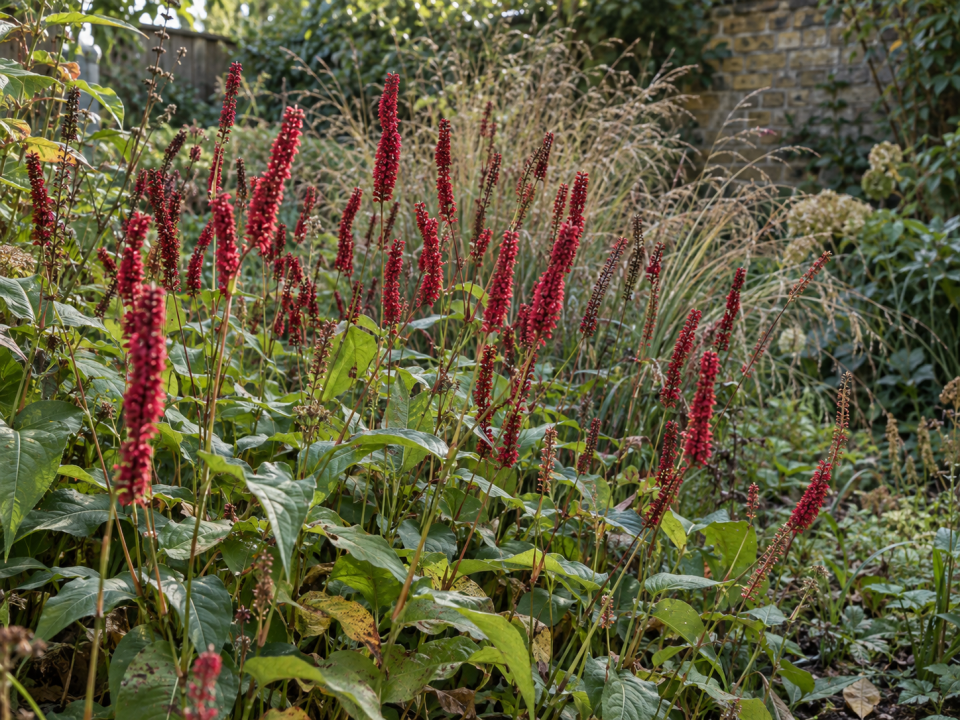
For height and drama at the rear of a perennial border, Persicaria amplexicaulis 'Firetail' is one of the most undemanding tall border perennials available. Deep red bottlebrush spikes rise above handsome, broadly lanceolate foliage from July to October. It forms reliable clumps that require division only every few years to maintain vigour.
Garden Border Design Principles
Plant selection is only part of the equation. A border also needs structure: a clear sense of how height, form and seasonal interest are distributed across the space.
- Work in odd-numbered groups (three, five, or seven plants of a single variety) rather than isolated specimens. Groups create the sense of naturalistic abundance that makes a border feel intentional.
- Define the front edge clearly. Low-growing plants such as Geranium 'Rozanne', Parahebe 'Pink Delight', or a clipped lavender hedge provide a clean transition between border and lawn or path. In narrow London borders — the kind running beside terraced house paths or a garden wall — this edge planting does much of the aesthetic work and deserves careful selection.
- Map bloom succession before buying. Identify which plants contribute colour or foliage interest each month from March to November, and fill the gaps before they appear in the ground. A border that peaks in June and offers little through August and September is a missed opportunity that a considered mix of mid- and late-season perennials resolves entirely.
- Use height deliberately. Tall structural plants (Persicaria, Stipa gigantea) sit at the rear. Mid-border plants (Phlox, Echinacea, Geum) provide the main flowering display. Front-of-border plants (hardy geraniums, parahebes) define the edge and suppress weeds.
Putting It Into Practice
Assess your border's conditions honestly — light levels, soil type, drainage and exposure — before purchasing a single plant. London clay is workable and moisture-retentive, but benefits significantly from the incorporation of grit and well-rotted organic matter before planting, particularly for Mediterranean species that demand sharp drainage.
Mulching established borders annually in late autumn or early spring retains moisture, suppresses weeds, and gradually improves soil structure. A 5–7cm layer of composted bark or garden compost applied around, not over, the crowns of perennials is the single most effective low-maintenance intervention available. The RHS recommends this as standard practice for mixed borders, and in London's variable climate it is close to essential.
If your border needs more than a seasonal tidy — a tired scheme that has run its course, or established beds and paths that would benefit from a proper planting design rather than one-off replacements — Boma's Garden Planting Service covers consultation, planting design and installation for established beds and borders within a 5-mile radius of Kentish Town.
Our team at 51–53 Islip Street, Kentish Town NW5 2DL can advise on plant combinations suited to your border's conditions, space and aesthetic aims, whether that's a shaded courtyard bed or a full sunny border refresh. Our displays are designed to show how plants perform together across the seasons, not merely what they look like in a pot in June. If a border needs more than plants — clearance, design or installation — the Garden Planting Service covers that within a 5-mile radius of NW5.
Visit Boma Garden Centre to explore our current border plant selection, discuss your planting project with our team, or browse the full range online.
Frequently Asked Questions
What Is the Best Low-Maintenance Perennial for a Shady Border?
Astilbe and hardy ferns remain the standouts for damp, partially shaded borders — Astilbe 'Fanal' (deep crimson) and Astilbe 'Bridal Veil' (white) perform consistently in North London clay, and Polystichum setiferum handles drier shade beneath established trees. Brunnera macrophylla, particularly the silver-leaved 'Jack Frost', is worth adding for its blue spring flowers and season-long ground cover under deciduous shrubs. All three need regular watering through their first two summers while roots establish; after that, an annual mulch is normally all the attention they need.
How Do I Stop My Border Looking Bare in Winter?
Evergreen structure is the answer. Retain the seedheads and stems of perennials such as Echinacea and Persicaria through winter, as they provide form and feed birds. Underpin with evergreen shrubs (Choisya, Hebe, clipped box or euonymus) and low ground cover at the front edge, and the border retains readable structure through even the bleakest January.
What Plants Grow Well in London Clay?
Clay holds moisture and nutrients well once it drains freely, which is the main hurdle to solve before planting. Work a 5–7cm layer of well-rotted organic matter or a soil conditioner such as SylvaGrow Farmyard Organic Matter into the top spit before planting, rather than relying on the clay alone. Alongside Astilbe, Geranium 'Rozanne', Persicaria amplexicaulis, Phlox paniculata and Choisya, ornamental grasses such as Molinia and clump-forming Hemerocallis (daylily) tolerate clay well and add texture that flowering perennials alone can't. Reserve grit-hungry Mediterranean plants — lavender, salvia, cistus — for raised beds or containers unless the clay has been substantially improved first.
How Far Apart Should I Space Border Plants?
Spacing depends on ultimate spread. As a general rule, allow each plant the space to reach its mature width without crowding its neighbours. Most herbaceous perennials reach 45–60cm across in three years. Ground-covering geraniums spread to 60–90cm. Shrubs such as Choisya × dewitteana eventually reach 1.5–2.5m in width. Plant at half the mature spread apart for a border that fills in neatly over two to three seasons without becoming congested.
Explore Boma's current range of hardy perennials, evergreen shrubs and ground cover at 51–53 Islip Street, Kentish Town NW5 2DL, or browse online and order for delivery across the M25. If your border needs more than plants, our Garden Planting Service covers consultation, design and installation for established beds and borders.
Shop Perennials Garden Planting Service Check Delivery