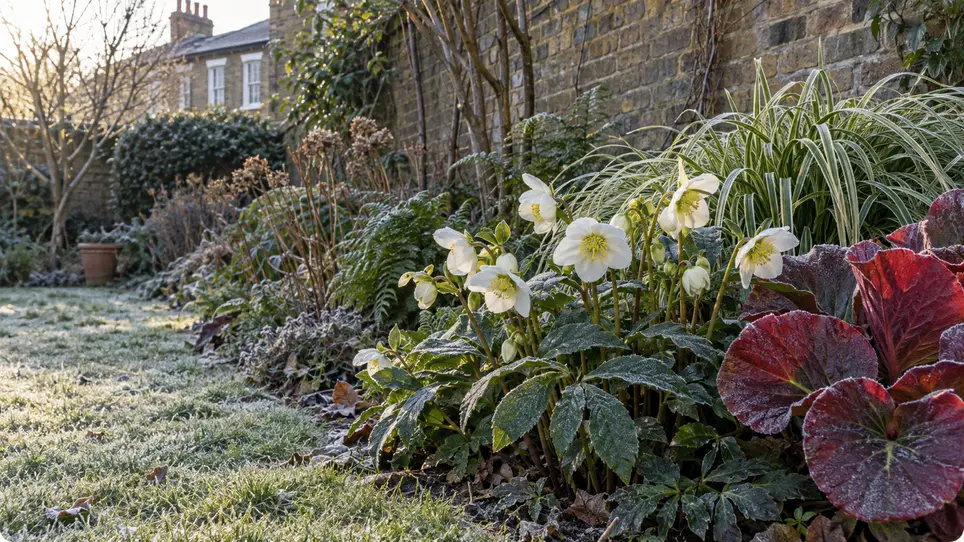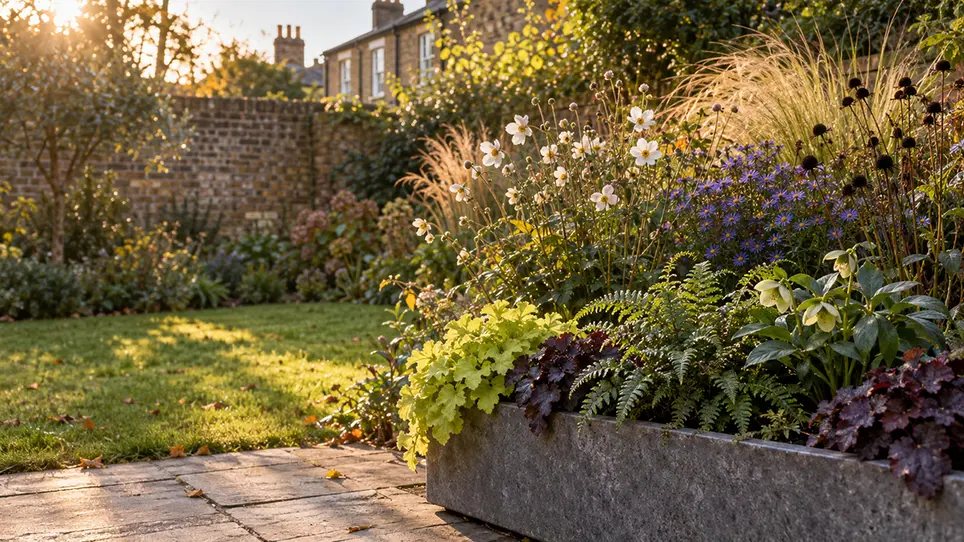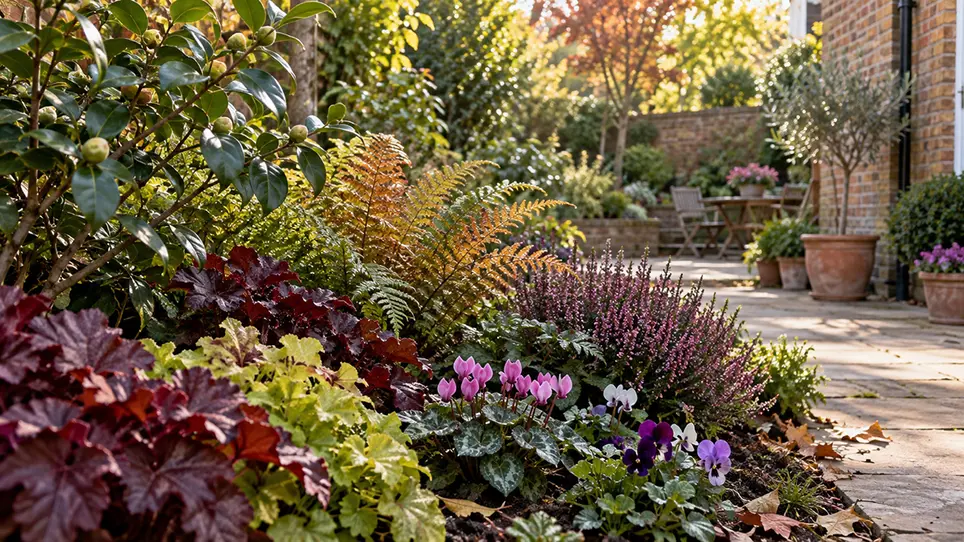


Evergreen shrubs are the quiet backbone of a London garden, holding their shape, foliage and structure while everything else dies back or sleeps. In North and Central London’s small courtyards, front gardens and balconies, these hard-working plants earn their keep by providing year-round greenery, screening from neighbours and traffic, and reliable seasonal interest in even the tightest urban spaces.
In this guide, you will find clear answers to the most common evergreen questions London gardeners ask: what counts as an evergreen shrub, which varieties suit shade or pots, when to plant, move and prune them, how to tackle browning foliage, and how to take cuttings.
Along the way, you will discover tried-and-tested evergreens from Boma’s Kentish Town ranges, curated for London’s clay soils, sheltered courtyards and M25 microclimates, so you can choose shrubs with confidence and keep them thriving all year.
Why are planting schemes for evergreen shrubs important?
Thoughtful planting schemes are essential for evergreen shrubs because they turn year-round foliage into a cohesive garden structure that looks good from every angle and in every season, rather than a scatter of isolated plants.
In compact North London spaces, getting the mix of heights, shapes, textures and light requirements right is what delivers real privacy, winter interest and low-maintenance impact without shrubs outgrowing their spot or sulking in the wrong conditions.
That balance takes skill: someone has to read your soil, aspect and microclimate, plan for how plants will look in three to five years, and position feature evergreens, screens and containers so they work with your routes, views and watering routine.
If you love the idea of beautifully structured evergreen borders or pots but do not want to manage all of that yourself, Boma’s planting services can design, supply and install everything for you, so your shrubs are expertly matched to your space from day one.
Get in touch or visit us to find out more
What are evergreen shrubs?
Evergreen shrubs are woody plants that keep their leaves all year round rather than shedding them in autumn like deciduous shrubs. They provide permanent structure, privacy and ground cover, and many also add flowers, berries or scented foliage through the seasons.
In a North London garden or courtyard, evergreens such as Pittosporum, Hebe and evergreen ferns create a green framework you can weave perennials and bulbs through for changing colour. They are especially useful for small urban spaces, where every pot, border and balcony corner has to work hard all year.
Which shrubs are evergreen?
Many popular shrubs fall into the evergreen (or semi-evergreen) camp and are ideal for London’s clay-based, often sheltered gardens. At Boma, customer favourites include:
- Pittosporum: Dense, glossy foliage, often variegated; excellent for clipped shapes, screens and modern borders.
- Hebe: Compact, evergreen mounds with long flowering seasons; superb in borders and containers alike.
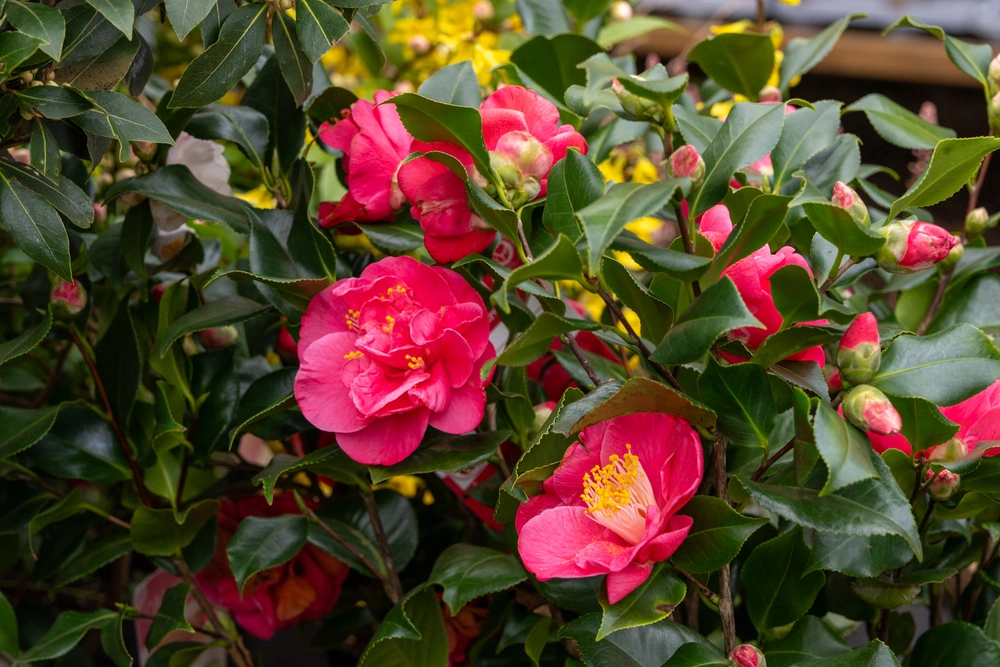
- Camellia: Glossy evergreen foliage and glamorous winter–spring blooms; cultivars such as Camellia japonica ‘Centifolia Alba’ and ‘Nuccio’s Gem’ are ideal focal points for North London gardens.
- Skimmia: Compact, shade-tolerant shrubs with long-lasting berries and buds; options like Skimmia japonica ‘Reevesiana’ and ‘O’Berries Red’ enrich winter containers and beds.
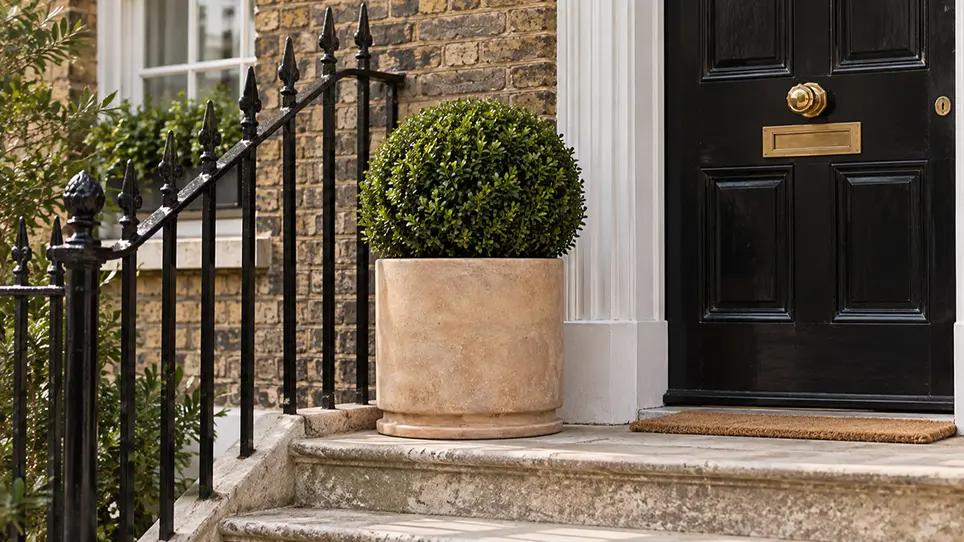
- Laurus nobilis (Bay): Evergreen bay trees, including lollipop and pyramid forms, give clipped formality in pots or as doorway sentinels.
- Euonymus: Reliable, often variegated foliage; forms such as Euonymus japonicus ‘White Spire’ and ‘Green Spire’ balls are excellent low hedges and edging plants.
- Rhododendron & evergreen Azalea: Compact, evergreen shrubs with spring flowers in shades from soft pink (Rhododendron ‘Dreamland’) to rich tones (Azalea ‘Mary Helen’).
- Sarcococca (sweet box): Low, evergreen shrubs like Sarcococca ruscifolia ‘Dragon’s Gate’ offer glossy foliage and intensely scented winter flowers for shaded corners.
- Taxus baccata (yew), Photinia, Aucuba, Choisya, Grevillea, Griselinia, Ilex, Nandina, Pyracantha and Viburnum all provide evergreen options for hedging, wildlife-friendly barriers and feature shrubs.
Grouped with perennials and bulbs, these evergreens become the backbone of borders, planters and garden collections across Boma’s Kentish Town displays.
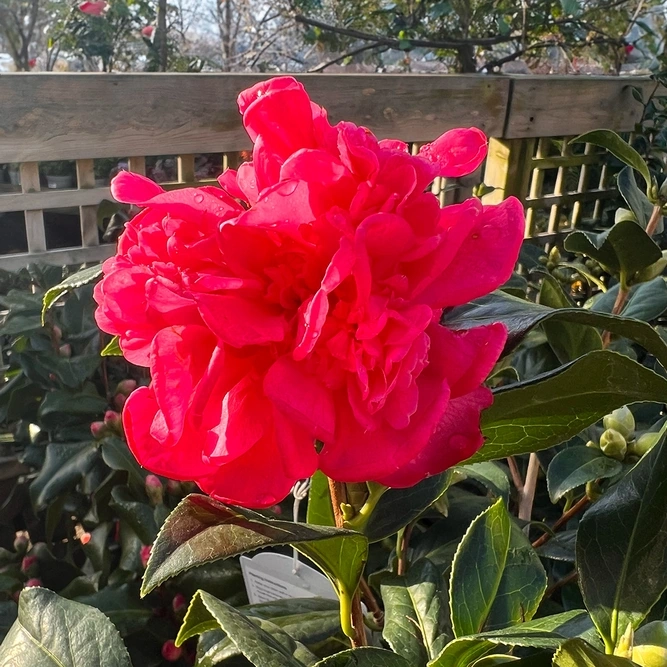
Camellia X williamsii 'Anticipation'
Which evergreen shrubs grow in shade?
Shady side passages, courtyards and north-facing patios in London can still feel lush when you lean into shade-tolerant evergreens. Skimmia, including cultivars like ‘Reevesiana’ and ‘O’Berries Red’, is ideal for partial shade, carrying buds and berries through winter, while Sarcococca ruscifolia ‘Dragon’s Gate’ offers glossy leaves and intensely scented winter flowers along shaded paths.
Fatsia japonica, especially the variegated Fatsia ‘Camouflage’, thrives in deep and dappled shade, and tough Aucuba (spotted laurel) brightens gloomy corners.
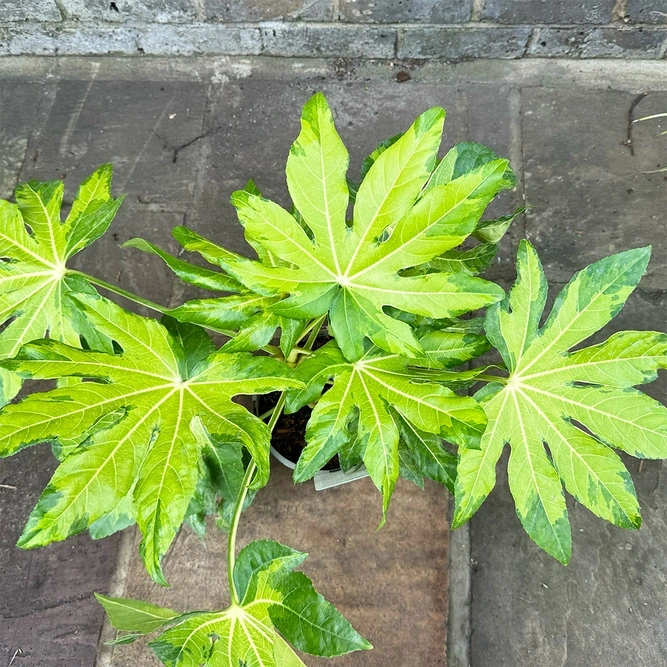
Fatsia ‘Camouflage’
Which evergreen shrubs grow well in pots?
For balconies, roof terraces and paved front gardens, evergreen shrubs in containers provide structure, privacy and colour where soil is scarce. Laurus nobilis bay trees in lollipop, pyramid or spiral form are made for pots and frame front doors and terraces with evergreen formality, while compact Camellia varieties such as Camellia rosthorniana ‘Cupido’ and Camellia × williamsii ‘Ruby Wedding’ perform beautifully in large containers filled with ericaceous compost.
Skimmia is a natural choice for winter pots and window boxes, often featured in Boma’s ready-made planters like the Festive Lollipop Skimmia and Berry Roma Window Box.
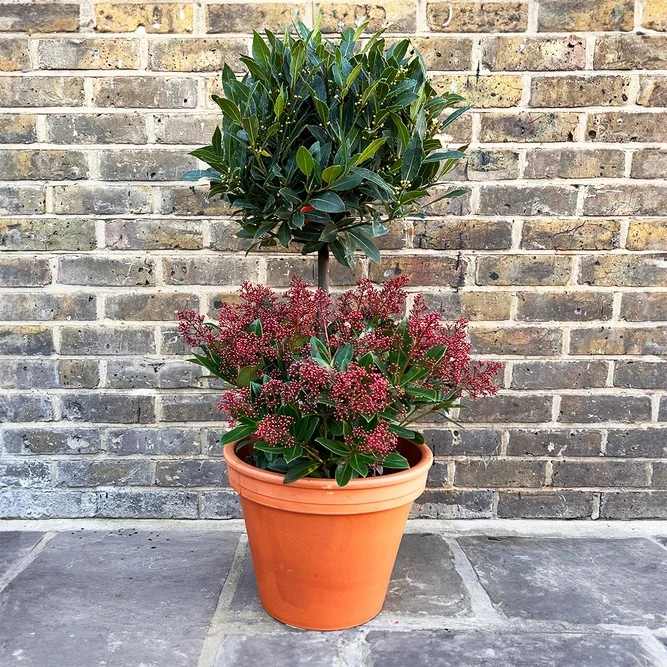
Festive Lollipop Skimmia
Do any evergreen shrubs have bell-shaped flowers?
Yes, several evergreen shrubs reward you with elegant bell-shaped flowers as well as year-round foliage. Camellias and certain Rhododendrons and Azaleas produce nodding, bell-like blooms in late winter to early spring, often opening from tight flower buds held on the shrub through the colder months.
In a sheltered London garden, these can transform shady corners just as growth begins elsewhere, pairing glossy dark green leaves with soft, romantic flowers.
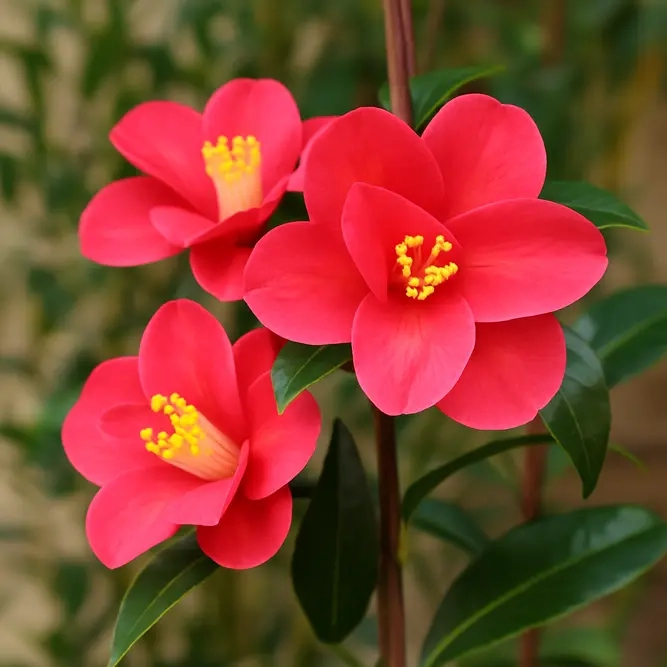
Camellia reticulata ‘Mary Williams’
When to plant evergreen shrubs in the UK?
Evergreen shrubs are best planted when the soil is workable and not frozen or waterlogged, so roots can establish before heat or hard frost. The best time windows for planting include:
- Early autumn (September–October) while the soil is still warm.
- Early to mid-spring (March–April) once the worst frosts have passed.
In London’s relatively mild climate, many gardeners successfully plant container-grown evergreens from Boma almost year-round, as long as they water well and avoid extremes of heat or cold.
When to move evergreen shrubs in the UK?
Moving an established evergreen is more stressful for the plant than moving a deciduous shrub, so timing and aftercare matter. The best time to move evergreen shrubs tends to be from mid-autumn to early spring, when the shrub is not in active growth and the soil still has some warmth.
Key tips for moving established evergreen shrubs include:
- Prepare the new planting hole before you dig up the shrub.
- Lift with as large a rootball as you can manage to keep roots intact.
- Lightly prune back top growth to balance the reduced root system.
- Water thoroughly in dry spells for at least the first growing season after moving.
If a shrub is very old and overgrown, it is often more effective to replace it with a fresh evergreen from Boma’s shrub collection rather than attempt a difficult move.
When to prune evergreen shrubs in the UK?
Most evergreen shrubs are relatively low-maintenance and need little regular pruning beyond light shaping and removing dead material. The usual timing focuses on late spring to early summer once frosts have passed and before it’s too hot.
As a general rule:
- Late spring (around April–May) into the start of summer suits many evergreen shrubs, especially those expected to flower in summer and autumn.
- Avoid hard pruning in late autumn or winter, as cuts can be slow to heal and more prone to dieback or fungal issues in cold, wet conditions.
- Evergreen hedges are often trimmed once or twice a year through the growing season to keep them neat, stopping by late summer.
- Flowering evergreens are usually tidied after flowering and before a flush of new growth.
Can I prune evergreen shrubs in early summer?
Light summer pruning is useful for evergreens that have finished flowering and are putting energy into leafy growth. In early summer to mid summer, you can lightly trim the tips of a vigorous plant to keep the shape compact, encourage bushier new growth and stop it outgrowing its space.
Focus on thinning and tidying rather than cutting back the entire plant, and avoid removing the current season’s flower buds if your shrub forms them well ahead of next year’s display.
How to prune evergreen shrubs
Think of evergreen pruning for shrubs as careful editing rather than starting again from scratch. Most respond best to light, regular work.
Start with the basics
- Remove any dead, diseased or damaged stems first using clean, sharp tools.
- Cut back to healthy wood just above a bud or branching point.
Thin and shape
Take out up to one-third of the oldest stems to open the plant and encourage new growth.
Thin crowded or crossing shoots and lightly trim wayward stems to maintain the natural shape.
Renovating tired shrubs
For overgrown evergreens, renovation may need to be staged over two or three years, gradually removing older stems to ground level.
Feed with a balanced fertiliser and mulch after pruning, then keep well-watered in dry spells, especially in London’s warmer microclimate.
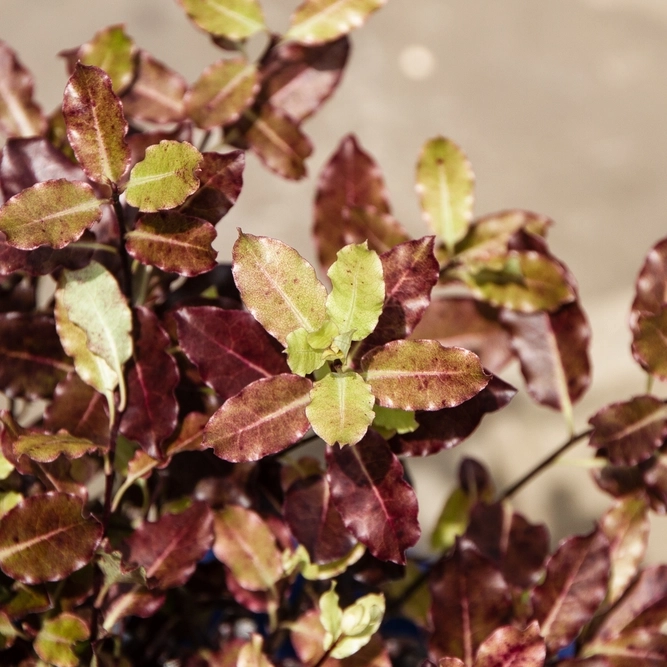
Pittosporum tenuifolium 'Tom Thumb'
What causes evergreen shrubs to turn brown?
Browning foliage is your shrub’s way of signalling stress, and the exact cause can vary. Common issues include:
- Drought or water stress: Roots drying out, especially in pots or free-draining raised beds, leading to browning at tips or along whole branches.
- Waterlogging: In London clay, poorly drained soil can suffocate roots, causing sections of the shrub to brown and die back.
- Cold or wind scorch: Freezing winds and winter sun can desiccate foliage, particularly on exposed balconies or roof terraces.
- Nutrient deficiency or compacted soil: Poor, compacted soils restrict root growth and can result in dull, yellow-brown foliage.
- Pests and diseases: Fungal infections or infestations can cause patchy browning or dieback of individual stems.
Improving drainage with compost, watering consistently, and mulching around the base of shrubs will often help them recover.
How to take cuttings from evergreen shrubs in the UK?
Evergreen shrubs are often propagated from semi-ripe or hardwood cuttings, letting you clone favourite plants from your garden or from Boma’s range. Basic approach for semi-ripe cuttings (summer):
- Take non-flowering shoots from this year’s growth, around 8–10 cm long, cutting just below a leaf joint.
- Strip the lower leaves, leaving a small cluster at the top.
- Dip the cut end in rooting hormone if desired, then insert into a free-draining potting mix (for example, a mix of peat-free compost and grit) around the edge of a pot.
- Water gently and cover with a clear bag or place in a propagator to maintain humidity, keeping in bright but indirect light.
- Once rooted, pot on into individual containers using quality compost and grow on before planting out.
Some evergreen shrubs root well from semi-ripe cuttings if you work with healthy, non-flowering shoots.
Example evergreen choices for different garden needs
| Garden need | Suggested evergreen from Boma | Why it works |
|---|---|---|
| Small shady London courtyard | Skimmia japonica ‘Reevesiana’, Sarcococca ‘Dragon’s Gate’, Fatsia | Shade-tolerant, scented winter flowers, bold foliage and berries. |
| Sunny balcony or roof terrace pots | Cordyline ‘Red Star’, Phormium ‘Platt’s Black’, Euonymus ‘Green Spire’ | Architectural shapes, wind-tolerant foliage, great in modern containers. |
| Low-maintenance front garden screen | Photinia, Griselinia, Taxus baccata | Dense, evergreen foliage ideal for smart, easy-care hedging. |
| Acid-loving, part-shade border | Camellia ‘Nuccio’s Gem’, Rhododendron ‘Dreamland’, Azalea ‘Mary Helen’ | Evergreen leaves with spectacular spring flowers in London’s sheltered plots. |
| Winter interest by the path | Sarcococca ‘Dragon’s Gate’, Skimmia ‘O’Berries Red’, Daphne odora ‘Aureomarginata’ | Fragrance, berries and evergreen foliage at nose height for winter walks. |
Discover stunning evergreen shrubs collections at Boma Garden Centre
Boma’s evergreen shrub collections are curated for real London gardens, from compact balconies to layered Hampstead gardens, so you can build structure, texture and year-round colour with confidence.
You will find Pittosporum, Hebe, evergreen ferns, grasses and many more foliage plants chosen to thrive in city conditions, plus pots, planters, compost and garden equipment to help them settle in.
Visit The Boma Garden Centre in Kentish Town to walk through the displays, see mature evergreens in situ and talk to the horticultural team about our garden planting services, or browse the ranges online for delivery across London’s M25.
Boma Garden Centre · Kentish Town
Continue your planting journey with Boma
Explore curated plant collections, handmade pots & planters, and garden essentials, carefully chosen to help London's plant lovers create beautiful, thriving spaces.
Pots & Essentials
Independent garden centre · Expert plant advice · Local London delivery