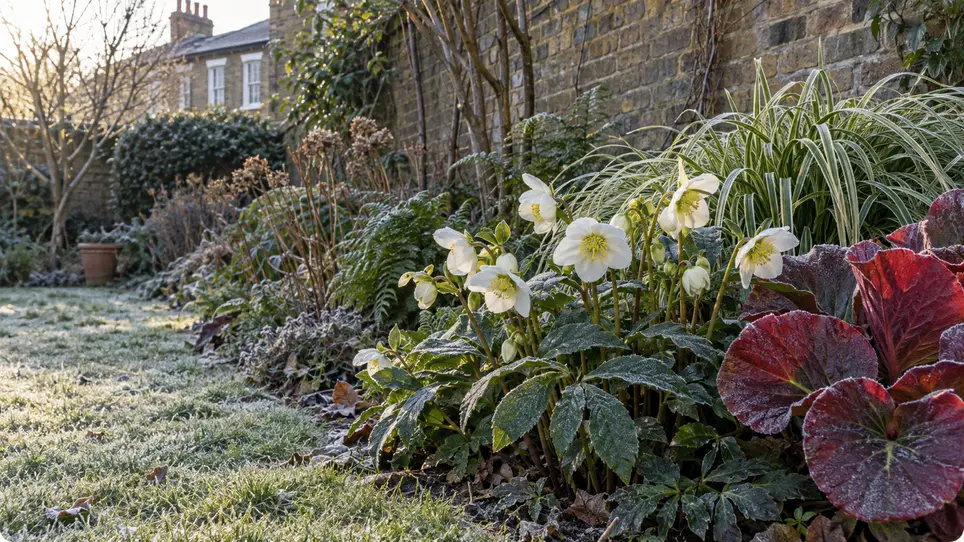


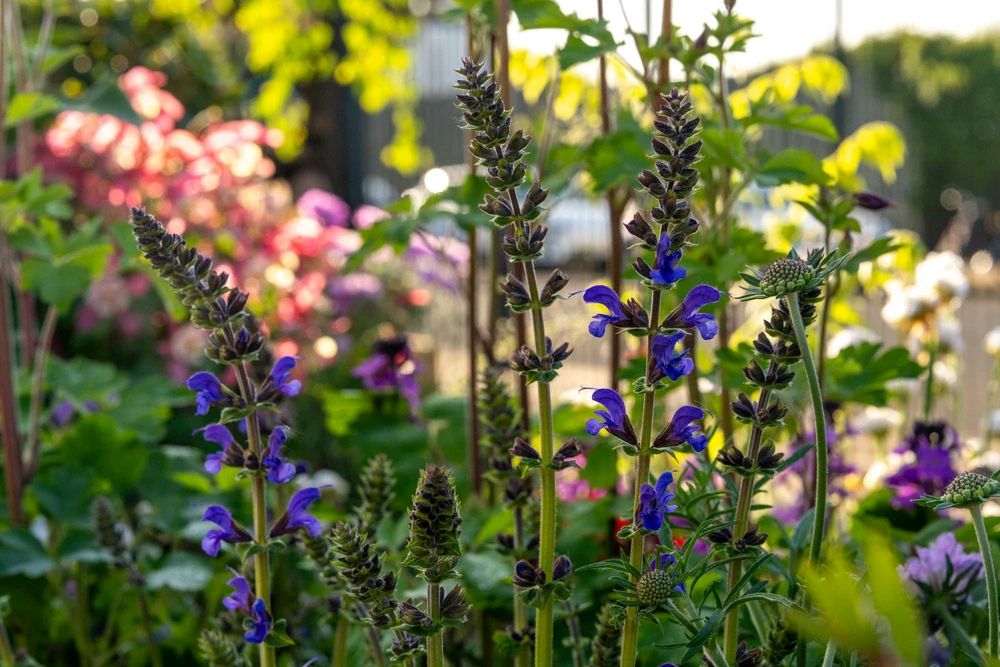
May sits between the last frosts and the first real heat of summer. For London gardens — Victorian terrace plots in Kentish Town, Hampstead courtyards, Primrose Hill roof terraces, Muswell Hill borders, city apartments in W1 and E1 — the work this month is less about planting everything in sight and more about patience, hardening off, and choosing a few things well. This guide covers what to do, what to plant, and how to think about your space, whether that's a windowsill, a balcony, a courtyard, or a mature garden.
Five Jobs That Actually Matter in May
May's garden jobs look endless on a generic list. In a London garden, most of them aren't urgent. The five that genuinely move the needle this month are: harden off anything you've raised indoors, refresh the top few centimetres of compost in permanent containers, prune spring-flowering shrubs as they finish, support climbers before they sprawl, and decide what's going where for summer. That's it. The rest — weeding, watering, dead-heading — is ongoing rather than a May job.
Harden off before you plant out
Anything grown under glass or on a windowsill — bedding, tomatoes, tender perennials — needs a week to ten days of acclimatisation before it goes into a pot or border. Move trays outside during the day, bring them in (or close the cold frame) at night, and extend the outdoor time gradually. Plants that skip this step sulk for weeks or collapse in the first wind.
Top-dress permanent containers
If a container has held the same shrub, tree or perennial for more than a year, scrape off the top 3–5 cm of compost and replace it with fresh. It's the single most effective thing you can do for long-term container health, and it takes ten minutes per pot. Pair it with a slow-release feed and water in well.
Prune what's finished flowering
Forsythia, spring-flowering clematis (group 1), choisya, and early viburnums all benefit from a light prune as the last flowers drop. Cut back to a healthy outward-facing bud, remove anything crossing or dead, and resist the temptation to go further. Rhododendrons and camellias need only the spent flower heads removed — never cut into the older wood.
Support climbers before they need it
Clematis, sweet peas, climbing roses and honeysuckle all put on visible growth in May. Tie in new shoots to a wire, cane or trellis now while they're still flexible. A shoot tied in at 30 cm stays where you want it; the same shoot at 90 cm has already decided where it's going.
Plan before you plant
Walk the garden with a cup of tea and a notebook. Where are the gaps? Where does the sun actually fall at 3 pm? What looks tired? Spending twenty minutes thinking in May saves three wasted trips to the centre and a boot full of plants that don't suit the space.
Planting Containers, Balconies and Roof Terraces
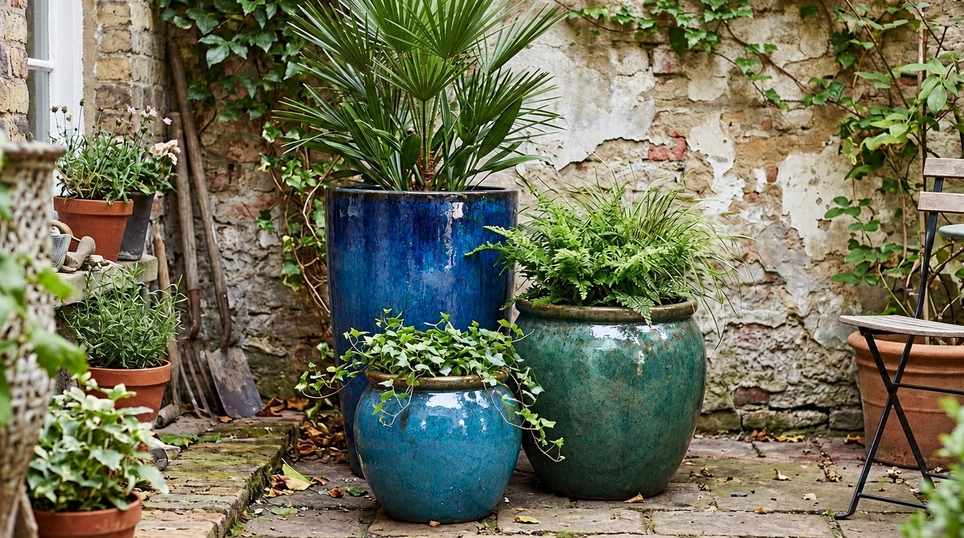
For a huge proportion of Boma's customers — Kentish Town side returns, Primrose Hill balconies, Belsize Park courtyards, W1 roof terraces — May is when container planting earns its keep. The priorities are drainage, wind tolerance, and choosing plants that can cope with a substrate that dries faster and heats up more than open ground.
For a London balcony or terrace, think in layers rather than individual plants. A small evergreen or clipped shrub for structure (a Pittosporum tobira 'Nanum' or a Hebe), a mid-height flowering perennial (Salvia 'Caradonna', Nepeta 'Walker's Low'), and something that trails or softens the edge (Erigeron karvinskianus, ivy, trailing verbena). Three layers, repeated in a few pots of the same material, reads as considered rather than cluttered.
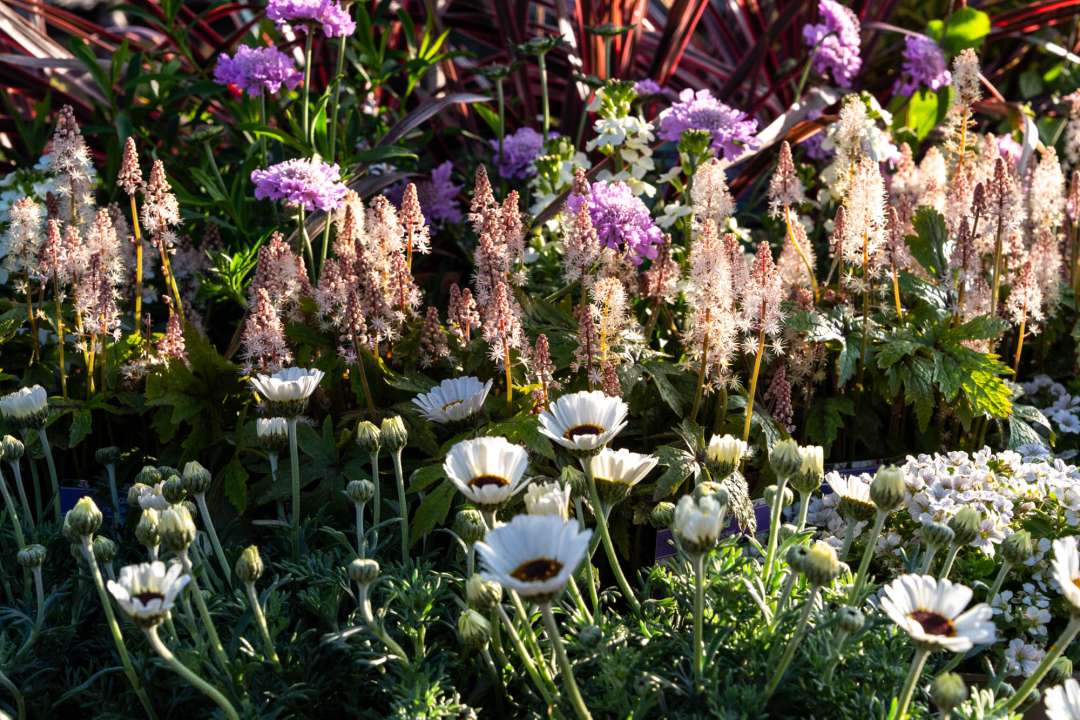
Wind on a roof terrace is the single most underestimated factor. Anything above the third floor in London gets meaningfully more wind than the street-level version of the same plant. Favour smaller-leaved, tougher subjects — Rosmarinus officinalis, Lavandula angustifolia 'Hidcote', Pittosporum, smaller ornamental grasses like Stipa tenuissima — over anything with large, soft leaves that tear.
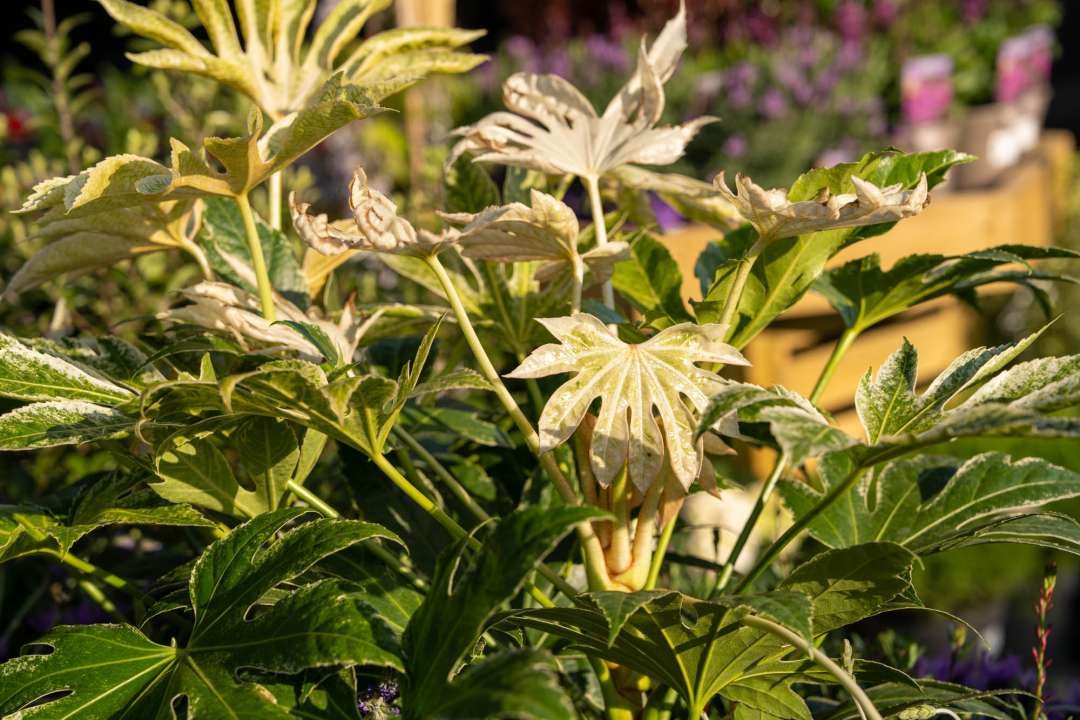
For a shaded courtyard or north-facing terrace, reach for evergreen architecture that doesn't need sun. Fatsia japonica and the variegated Fatsia japonica 'Spider's Web' give a bold, almost tropical leaf form that anchors a container scheme through the year; Aucuba japonica, Sarcococca confusa (scented in winter), and clipped Buxus or Ilex crenata spheres round out the same brief.
Thinking About Planting a Terrace, Balcony or Courtyard?
Boma's Courtyard & Roof Terrace Container Planting service covers everything from a single window box to a fully planted terrace — consultation, bespoke planting schemes suited to the microclimate, troughs and planters supplied and installed, irrigation where needed, and aftercare guidance. We work within a 5-mile radius of NW5.
Book a ConsultationPlanting Beds and Borders in May
For readers with an established garden — a Muswell Hill Edwardian plot, a Hampstead border under mature trees, a Crouch End back garden with structure already in place — May is the month to fill gaps, refresh tired sections, and plant anything that needs to establish before summer dryness sets in. Clay soils across much of North London hold water well but compact easily; fork in a generous layer of compost before planting and water deeply rather than often.
Perennials that earn their place
Reach for Geranium 'Rozanne' (flowers from May to frost, utterly reliable), Salvia nemorosa 'Caradonna' (dark stems, long season), Achillea 'Moonshine' (dry, sunny spots), Nepeta 'Walker's Low' (bee magnet, softens paths), and Alchemilla mollis for shadier corners. For late-summer presence, plant Echinacea purpurea and Verbena bonariensis now — both establish quickly and flower from July onward.
Shrubs for structure
May is a good moment to plant Hydrangea paniculata 'Limelight' or 'Little Lime' in a half-shaded spot — the lime-green panicles in August carry a border through late summer. For the classic mophead look, Hydrangea macrophylla varieties offer blue, pink or mauve flower heads depending on soil pH (acidic London clay tends toward blue). Viburnum tinus gives year-round evergreen bulk; Choisya ternata 'Sundance' brings acid-yellow foliage and orange-blossom scent; Spiraea japonica 'Anthony Waterer' is bulletproof in clay. Water new shrubs thoroughly every few days for the first six weeks.

Climbers
If there's a bare wall or fence, May is the right time for Trachelospermum jasminoides (star jasmine — evergreen, scented, slow then steady), Clematis 'Étoile Violette' or 'Madame Julia Correvon' (group 3, easy to prune), or a David Austin climbing rose such as 'A Shropshire Lad' or 'The Generous Gardener'. Plant with the graft 5 cm below soil level and give the roots a bucket of water at planting.
A note on naturalistic planting
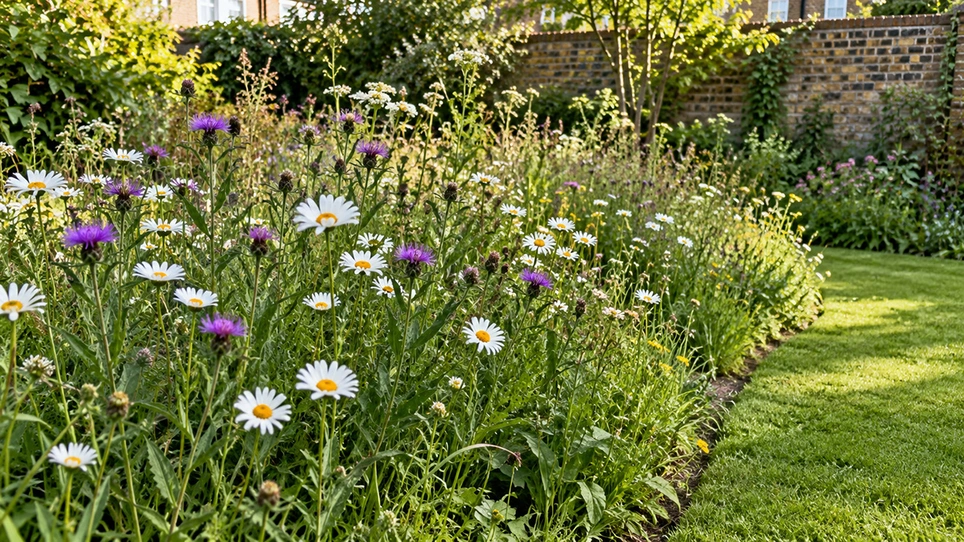
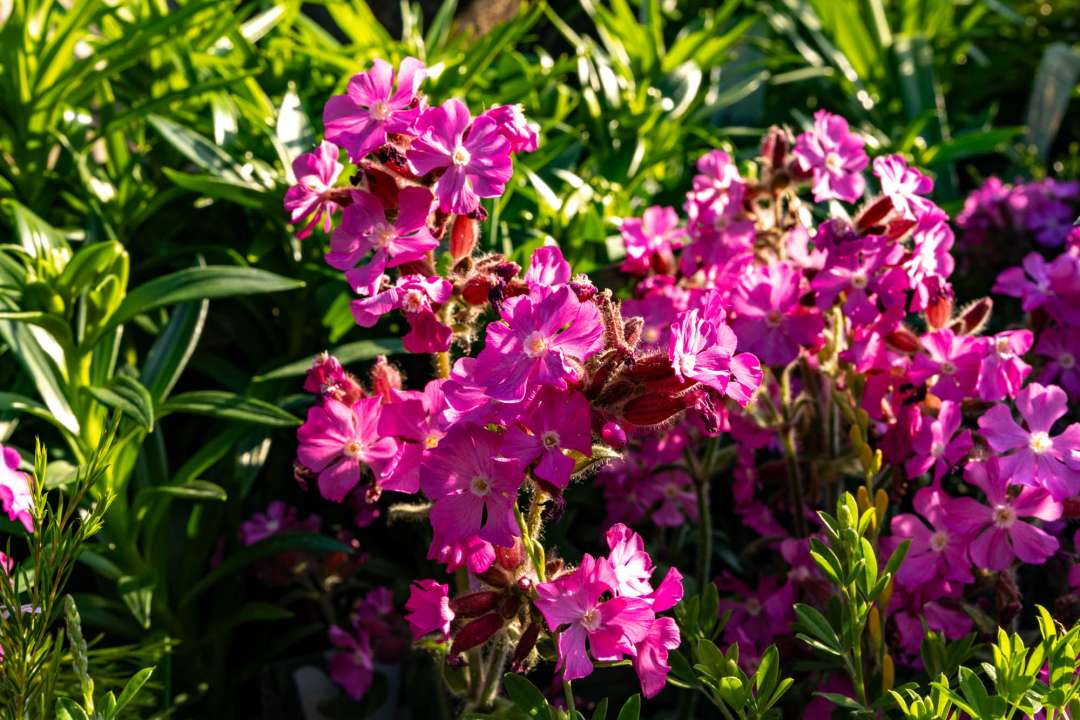
London gardeners are increasingly drawn to naturalistic and meadow-style schemes — less lawn, more movement, more room for wildlife. Plants that suit this approach and suit London conditions include Silene dioica (red campion), Astrantia major, Knautia macedonica, Geranium 'Claridge Druce', wild-type foxgloves, and softer grasses such as Deschampsia cespitosa. A half-shaded corner under a mature tree, or the back third of a longer garden, is the easiest place to start. Boma stocks a rotating selection through spring and early summer.
May Plant Picks by Type of Space
A short comparison to help you match plant to place before visiting the centre. All varieties listed are ones Boma typically stocks in May — check with the team in store for current availability.
| Space | Try | Why it works | Light |
|---|---|---|---|
| Windowsill / small balcony | Lavandula 'Hidcote', Thymus vulgaris, Erigeron karvinskianus | Compact, drought-tolerant, thrive in small pots with full sun | Sun |
| North-facing courtyard | Asplenium scolopendrium, Heuchera 'Marmalade', Hakonechloa macra | Cope with low light, add texture and warm foliage colour without needing direct sun | Shade / part shade |
| Roof terrace (exposed) | Pittosporum tobira 'Nanum', Rosmarinus officinalis, Stipa tenuissima | Small-leaved or needle-like; tolerate wind and reflected heat | Sun |
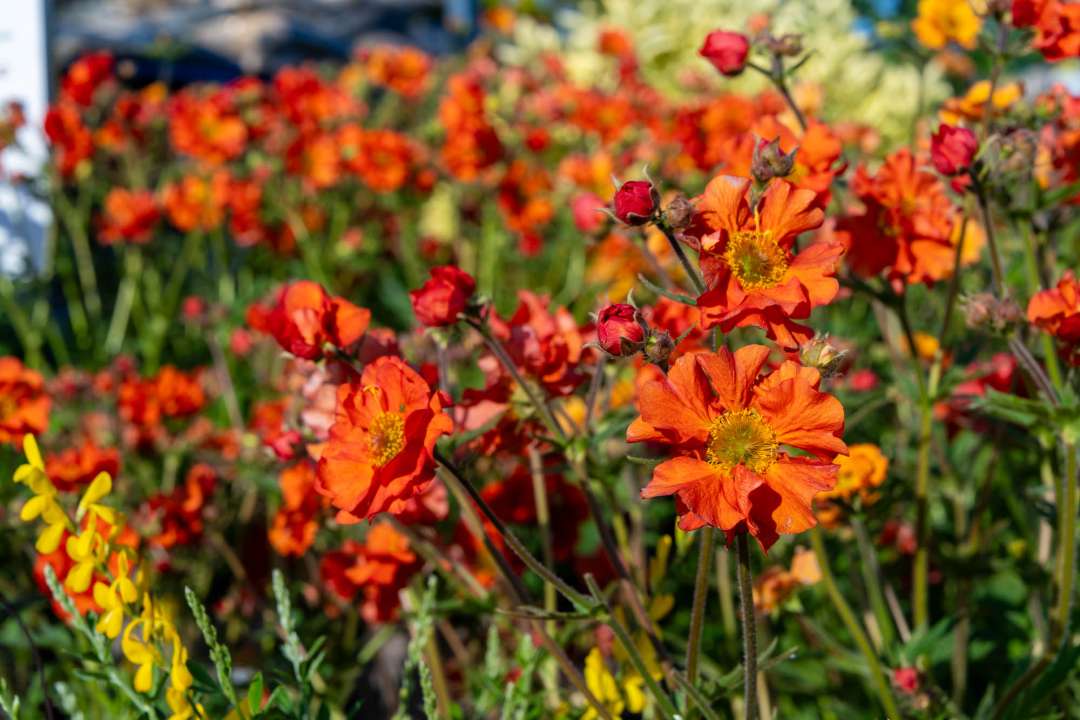
| Victorian terrace back garden | Geranium 'Rozanne', Nepeta 'Walker's Low', Geum 'Totally Tangerine', Hydrangea paniculata 'Little Lime' | Long flowering season, work in clay, look right against brick | Sun / part shade |
| Mature garden / established border | David Austin roses, Salvia 'Caradonna', Verbena bonariensis | Add seasonal depth without competing with existing structure | Sun |

- Wait until mid-to-late May to plant tender bedding outside in London — the last frost date is typically around 10 May but can slip
- Harden off anything raised under glass for 7–10 days before planting out
- Top-dress permanent containers with fresh compost and a slow-release feed
- Clay soils: fork in compost at planting, water deeply rather than often
- On a balcony or roof terrace, plan for wind before you plan for colour
A Short Note on Kitchen Gardens
May is a busy month in the kitchen garden, but it's outside the scope of this article. If you're sowing and growing edibles — courgettes, beans, salad leaves, herbs — the short version is: direct-sow tender crops after mid-May, keep salad sowings small and frequent, and pot on anything that's outgrown its module tray. Boma stocks herb plants, compost and seed compost year-round; ask the team in store about availability.
Frequently Asked Questions
When is it safe to plant out tender bedding in London?
In central and North London, the last frost typically falls around 10 May, though urban heat means most Zone 2 and Zone 3 gardens have already warmed up. A sensible rule for tender bedding — petunias, cosmos, dahlias, basil — is to wait until the third week of May. If a cold snap is forecast, cover plants overnight with horticultural fleece.
What should I do with spring bulbs that have finished flowering?
Leave the foliage intact for at least six weeks after flowering so the bulb can build up reserves for next year. Don't tie the leaves in knots — it reduces photosynthesis. Once the foliage has yellowed, you can cut it back. A liquid feed while the leaves are still green makes a real difference the following spring.
How often should I water containers in May?
Depends on pot size, material, exposure and weather, but a useful baseline is: check daily, water when the top 2 cm of compost is dry. Terracotta dries faster than glazed or fibreglass. Roof terraces dry faster than ground-level courtyards. An automated drip irrigation system pays for itself within a season for anything over five or six pots.
Can Boma help plan and plant a roof terrace or courtyard?
Yes. Boma's Courtyard & Roof Terrace Container Planting service covers consultation, bespoke planting schemes, supply and installation of planters and plants, and irrigation. For established gardens with beds and borders, the Garden Planting Service covers the same scope for in-ground planting. Both operate within a 5-mile radius of Kentish Town.
Visit Us in Kentish Town
The May bedding tables, container displays and seasonal stock are at their best right now. The team is in the centre seven days a week and happy to talk through a space — bring photos, rough dimensions and a sense of how you want it to feel.
The Boma Garden Centre
51–53 Islip Street, Kentish Town, London NW5 2DL
020 7284 4999
Delivery is available across all M25 postcodes — see the Boma delivery page for zones and charges.