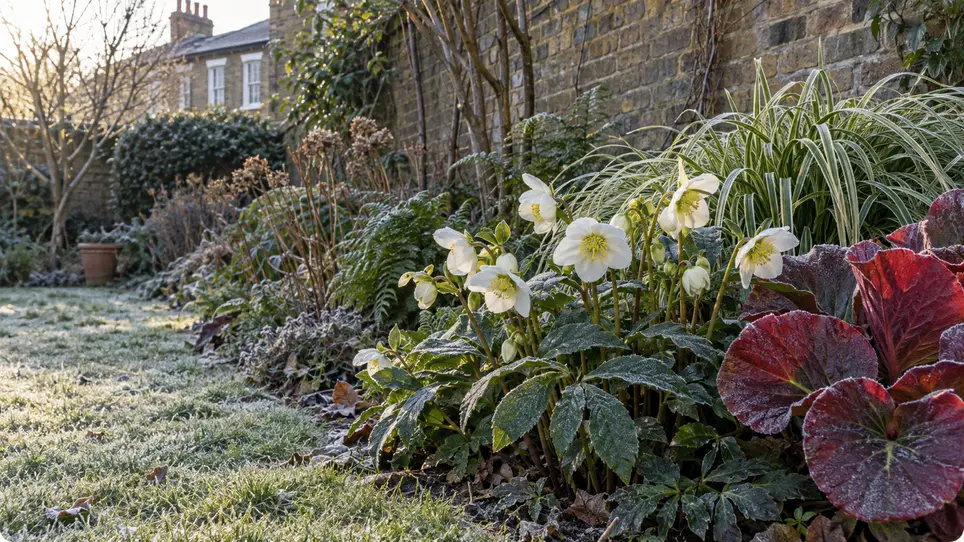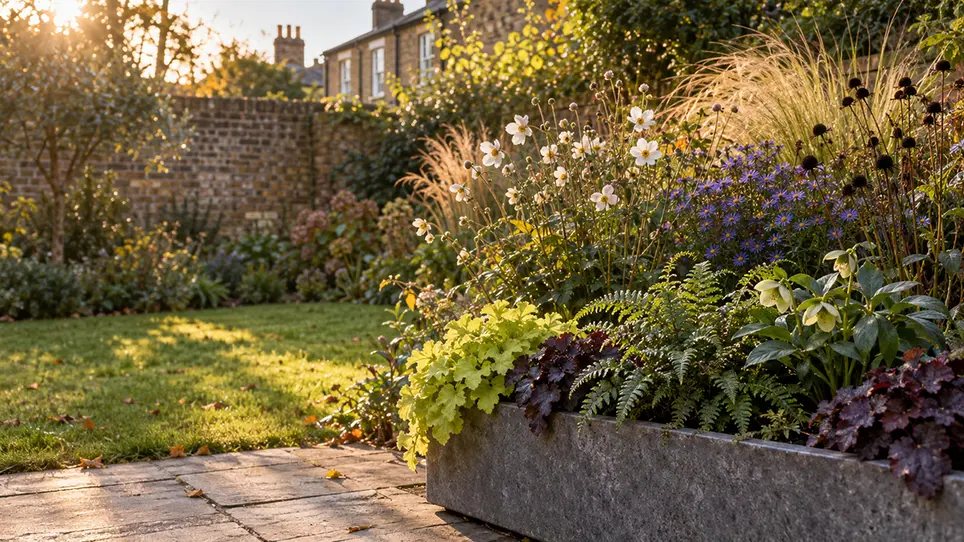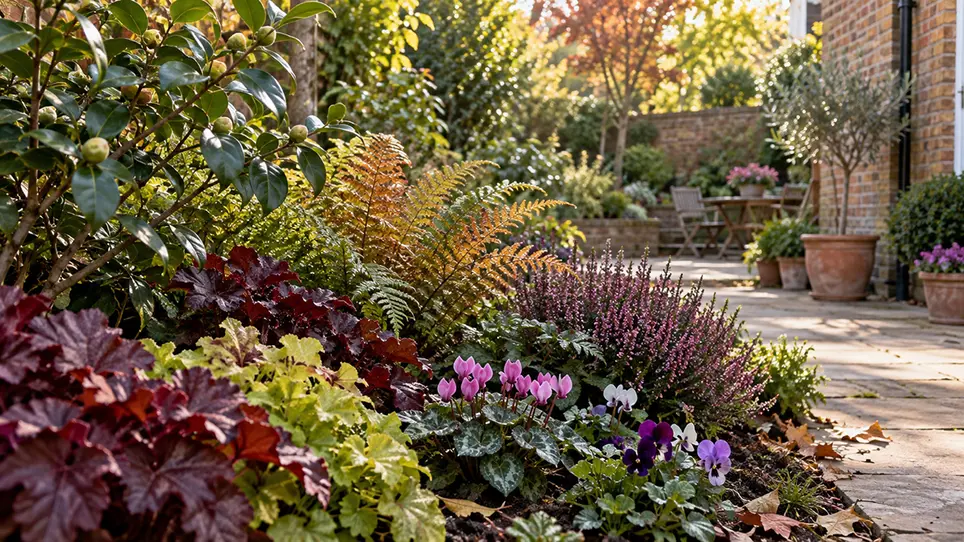


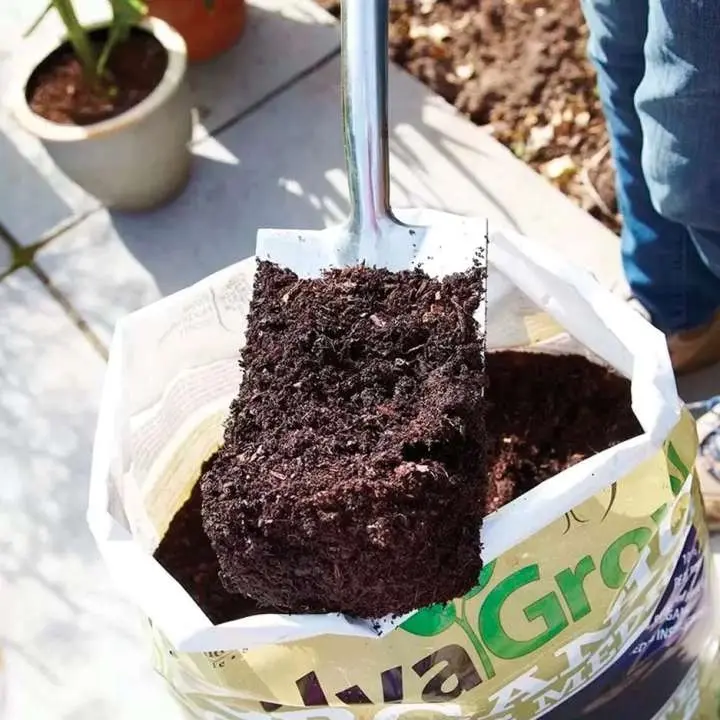
While London’s underlying geology is often clay, many gardens now have imported topsoil, raised beds, or heavily amended soils, so they no longer behave like true clay. In practice, gardeners are usually dealing with soil behaviour (drainage, compaction, moisture retention) rather than a single soil type.
This guide explores the problem of soil behaviour, drainage and structure in cities like London, helps you identify which type of soil conditions you are dealing with, and then shows you which plants actually thrive in difficult urban soils around London and the wider UK.
Is your soil really clay?
Before you reach for the compost, it helps to understand what you’re dealing with. Here are some quick pointers:
- True clay feels smooth and sticky when wet, holds together in a tight ball and can be rolled into a sausage without crumbling. (You can test this by rolling into a ball to see if it sticks!)
- Many London gardens now sit on imported topsoil, builders’ rubble or raised beds, so the surface layer may behave more like a loam or mixed fill even if heavy clay lies underneath.
- Whatever the label, the classic problems are slow winter drainage, summer cracking, compaction and a short “workable” window when you can dig without ruining the structure.
If your borders are squelchy after rain, solid in summer and hard to fork over, treat them as poor-draining or heavy soils, not just “clay”.
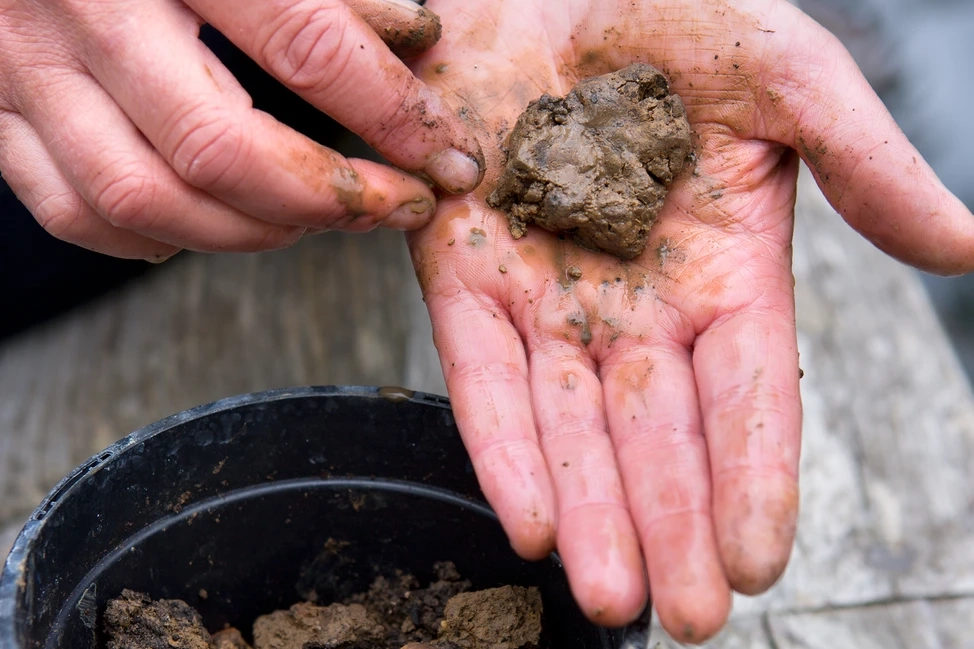
Rolling actual clay soil into a ball. Sarah Cuttle
London soil drainage
Drainage in London gardens is shaped as much by building history and hard landscaping as by geology. Two neighbouring plots can behave very differently: one might sit on relatively open, free‑draining made‑up ground, while the other perches on a saucer of compacted subsoil where water has nowhere to go and can easily flood.
Common drainage patterns you’ll see in London urban gardens include:
- Waterlogged strips along fences or walls where run‑off collects and the subsoil is compacted.
- Soggy lawn edges adjacent to patios or paths, where water sheds off hard surfaces and pools on heavier soil.
- “Perched water tables” in borders where a free‑draining topsoil sits over dense clay; water moves easily through the top layer, then slows dramatically at the boundary and backs up around plant roots.
Soil compaction and moisture retention
Compaction is one of the biggest hidden enemies of urban soil. Every time a builder’s digger drives over a future border, or you repeatedly walk the same route across a bed, heavy particles are pressed closer together. The spaces that should hold air and water collapse, roots struggle to push through, and drainage slows dramatically.
In London gardens, compaction usually shows up as:
- A hard, pan‑like layer just below the surface where topsoil was spread over compacted subsoil or rubble.
- Water beads on the surface after rain instead of soaking in evenly.
- Plants that sit and sulk, growing shallow, tentative root systems and wilting quickly in dry spells despite apparently rich soil.
At the same time, clay‑rich soils are naturally good at moisture retention, which is a blessing once you manage the structure. The fine particles hold onto water and nutrients far better than very sandy soils, so the long‑term goal is to keep that moisture‑holding benefit while easing compaction.
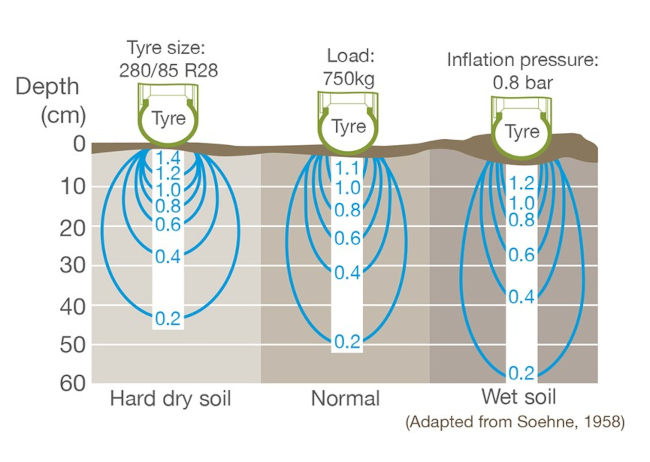
The effect of increasing soil moisture on the depth and severity of soil compaction (AHDB)
How to improve soil drainage in London gardens
Enlist professional planting expertise
The tips in this guide are a great starting point for planting schemes in difficult urban areas where soil conditions vary, but if you’re new to gardening or dealing with very heavy clay, poor drainage or complex levels, it can be worth getting expert help.
A professional planting team can assess your soil structure, drainage patterns and light levels on site, then design and install a planting plan that works with your existing conditions rather than against them. Boma’s trained horticulturalists can:
- Test how your soil behaves across different areas of the garden, from wet, compacted spots to lighter, loamier corners.
- Recommend plants that will reliably cope with your specific mix of London clay, imported topsoil and hard landscaping, including options for shade, sun and season‑round interest.
- Prepare borders correctly by adding organic matter, improving drainage in heavy areas, creating raised or mounded beds and protecting soil structure as they work.
If you’d like tailored advice and hands-on support to get planting right the first time, you can visit us or get in touch to learn more about our planting design and installation services.
Add organic matter to the top layer
Focus on improving the top 20-30 cm of soil with garden compost, well‑rotted manure or leafmould once or twice a year. This opens up heavy soil, improves drainage and aeration, and gradually builds a looser, more workable structure without having to dig out the underlying clay.
Don’t mix sand into clay
Avoid the classic “concrete” mistake of digging sand directly into clay, which can create a dense, cement‑like mix instead of better drainage. If you need extra bite, it’s safer to rely on bulky organic matter and only a modest amount of sharp grit, rather than large volumes of sand.
Raise the planting level
Raised beds and gentle mounds that lift the soil 15-30 cm above the surrounding ground give plant roots a freer‑draining zone while still tapping into London’s moisture‑retentive subsoil. This simple change is especially helpful in small, enclosed gardens where there’s nowhere for excess water to run.
Protect soil structure underfoot
Try not to walk on or dig borders when they’re wet, as this squeezes out air spaces and makes drainage worse. Stepping stones, defined paths and a light‑touch, no‑dig approach help keep clay soils open so water can move through more easily.
Manage where the water goes
Use water butts on downpipes, permeable paths and gentle slopes to slow and spread run‑off instead of dumping it into your best borders. Where possible, direct surplus water into deliberately wet or boggy planting zones so the garden works more like a sponge than a paddling pool.
Design for wet and dry zones
Plan at least one area that can stay wetter for moisture‑loving plants, and one slightly raised or mounded border for species that need better drainage. Over time, this zoning lets you match plants to the way your soil behaves rather than chasing an impossible “perfect” texture.
Best plants for clay soil and urban soil conditions
- ✓ = Excellent choice for these conditions
- ○ = Fair / will cope with care
- ✗ = Not suitable
Best shrubs & trees for clay soils
| Plant | Heavy / wet clay (waterlogged in winter) | Typical London clay (seasonal wet–dry) | Dry clay & shade |
|---|---|---|---|
| Viburnum tinus 'Eve Price' | ○ Tolerates occasional wetness but prefers not waterlogged | ✓ Excellent evergreen for standard London clay; winter flowers, low maintenance | ✓ Good in dry shade with mulch; tough once established |
| Viburnum tinus 'Gwenllian' | ○ Copes with damp but not permanently wet soil | ✓ Excellent compact evergreen; pink buds, white flowers, tolerates clay well | ✓ Good for dry shade; benefits from annual mulch |
| Mahonia media 'Charity' | ○ Prefers well-drained; struggles in waterlogged clay | ✓ Excellent on improved clay; scented winter flowers, architectural foliage | ✓ One of the best shrubs for dry shade on clay |
| Camellia japonica | ○ Dislikes waterlogged conditions | ✓ Good on moisture-retentive acid to neutral clay with added organic matter | ✓ Tolerates some dry shade once established |
| Camellia rosthorniana 'Cupido' | ○ Needs reasonable drainage | ✓ Unusual white/pink blooms; happy on enriched clay in part shade | ✓ Fair in dry shade with consistent mulching |
| Laurus nobilis (Bay) | ○ Dislikes wet feet | ✓ Evergreen structure; copes with heavy soil if not waterlogged | ○ Struggles in very dry, shaded positions |
Best perennials & flowering plants for clay soils
| Plant | Heavy / Wet Clay (Waterlogged in Winter) | Typical London Clay (Seasonal Wet–Dry) | Dry Clay & Shade |
|---|---|---|---|
| Lavender 'Hidcote White' | ✗ Needs good drainage; will rot in wet clay | ✓ Excellent on improved, well-drained clay in full sun | ○ Prefers sun; not suitable for deep shade |
| Salvia officinalis | ✗ Dislikes waterlogged soil | ✓ Good on heavy but improved clay; aromatic foliage, purple-blue flowers | ○ Needs sun; poor in heavy shade |
| Anemone hupehensis 'Prinz Heinrich' | ○ Tolerates some moisture but not stagnant water | ✓ Excellent late-summer flowers on fertile clay; spreads gently | ✓ Good for part shade and alternating wet-dry conditions |
| Heuchera 'Lime Marmalade' | ○ Prefers not waterlogged | ✓ Good evergreen foliage on improved clay; tolerates part shade | ✓ Useful for dry shade; crown needs some drainage |
| Rosa (David Austin varieties) | ○ Tolerate heavy soil but not permanently wet | ✓ Excellent on enriched, moisture-retentive clay; many varieties available | ○ Need sun and good air flow; not for deep shade |
| Rosmarinus officinalis (Rosemary) | ✗ Will not tolerate wet clay | ○ Needs drainage improvement; works on raised beds over clay | ✗ Prefers sun; unsuitable for shade |
| Euonymus japonicus 'White Spire' | ○ Accepts heavy soil if not waterlogged | ✓ Tough evergreen shrubby perennial; variegated foliage on clay | ✓ Good for dry shade and difficult urban spots |
| Pachysandra terminalis | ○ Tolerates moist but not stagnant soil | ✓ Excellent evergreen groundcover for clay borders | ✓ Perfect for dry shade under trees on clay |
All plants listed are available for delivery across London M25 postcodes from Boma Garden Centre, with free delivery on eligible orders.
Get expert support with difficult London soils at Boma Garden Centre
For tailored planting advice, plant recommendations and practical help with heavy clay or awkward urban soil, our team at Boma Garden Centre is ready to help.
Visit us in person to talk through your garden, explore plants that thrive in London conditions and discover materials to improve drainage and soil structure. Whether you want a full planting scheme or just a few reliable performers for tricky spots, you’ll find friendly, expert guidance to get your borders working harder all year round.
Best plants for clay soil and improving soil drainage FAQs
How can I improve drainage in heavy clay soils without ruining the soil structure?
On London’s heavy clay soils, the safest way to improve drainage is to add plenty of organic matter (garden compost, well‑rotted manure, leafmould) to the top 20–30 cm once or twice a year, rather than digging deeply or adding lots of sand. This slowly opens up the soil structure, creates better air spaces for plant roots and helps excess water move away, while still allowing the clay soil to retain moisture and nutrients in a similar way to good loamy soils.
Which are the best perennial plants for clay soil in London gardens?
Many perennial plants cope well with clay soil once established, including Japanese anemones, hellebores, asters, rudbeckia and roses, which all enjoy moisture‑retentive but improved, fertile soil. Deep‑rooting clay soil plants and other hardy plants gradually break up compacted layers and can make life easier for other plants over time, especially when combined with regular mulching and choosing varieties that plant flowers from early summer into autumn.
What plants should I choose for partial shade on heavy or wet clay?
For partial shade on clay soil, hardy plants such as hostas, Japanese anemones, ferns, vinca, ivy, mahonia and viburnum will generally perform well if the ground is not permanently waterlogged. These plants for clay soil appreciate consistent moisture but still need some drainage, so improving the top layer with organic matter and avoiding standing wet clay around the crown helps prevent root rot and supports reliable plant growth.
Will adding sand help my clay soil drain better, or should I try something else?
Large amounts of sand mixed into heavy clay can create a dense, concrete‑like mix that actually worsens drainage, so it is usually better to focus on organic matter and, if needed, a modest amount of sharp grit. If your garden has very poor drainage or wet clay in low areas, raising the planting level with mounds or raised beds filled with a loamier, more free‑draining mix is often a more reliable way to protect plant roots and support healthy plant growth.
Are there evergreen shrubs and early‑season plants that suit clay soil?
Several evergreen shrub options cope well with heavy soil, including choisya, aucuba, Viburnum tinus and some mahonias, which give year‑round structure and flower on clay if drainage is reasonable. For seasonal interest, look for shrubs and clay soil perennials that plant flowers in early spring or early summer on clay or loamy soils, such as forsythia and ribes with early white or yellow flowers, followed by hydrangeas, hibiscus, rudbeckia and daylilies as the weather warms.
Boma Garden Centre · Kentish Town
Continue your planting journey with Boma
Explore curated plant collections, handmade pots & planters, and garden essentials, carefully chosen to help London's plant lovers create beautiful, thriving spaces.
Pots & Essentials
Independent garden centre · Expert plant advice · Local London delivery