

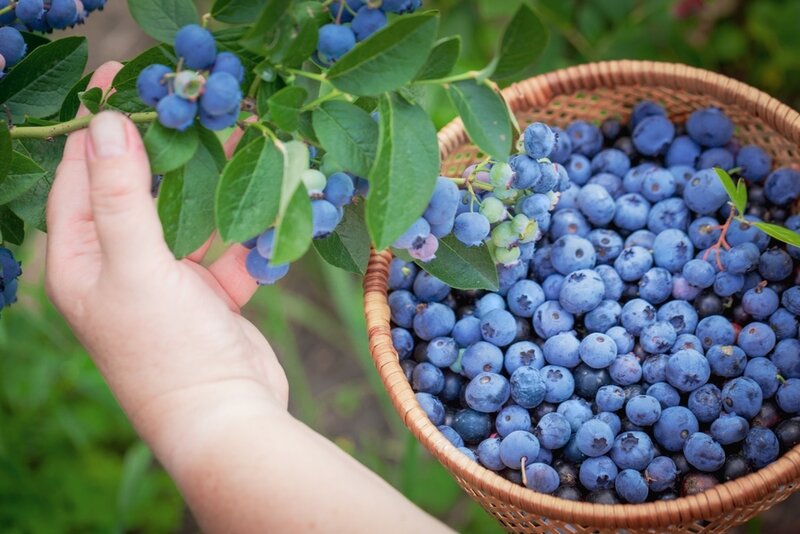
Packed full of vitamin C and antioxidants, blueberries are both healthy and delicious. They’re also surprisingly easy to grow, and very ornamental, with pretty flowers in spring and beautiful autumn foliage. You don’t need lots of space to grow blueberries – a big pot in a sunny place will do.
Which blueberries to plant
Most blueberries are self-pollinating to some extent, but they will all produce a better crop if grown near another blueberry of a different variety to allow for cross-pollination. However, if you only have space for one plant, these varieties will still produce a good crop:
-
Blueberry ‘Bluegold’ – a compact variety, good for containers.
-
Blueberry ‘Patriot’ – a very vigorous, hardy variety.
-
Blueberry ‘Duke’ – an early-harvesting variety good for northern regions with short summers.
-
Blueberry ‘Nelson’ – harvests late in the season, producing large juicy fruits.
Where to plant blueberries
To grow blueberries successfully, it’s vital to get the soil right. Blueberries will only grow in acidic soil, with a pH of around 5.5. (The pH level of a soil is a measure of its acidity or alkalinity. For reference, the pH of a neutral soil is 7.) You can test your soil’s pH yourself very easily with a pH test kit, available in our centres. Or, bring a cup of soil to our garden centre and we test it for you. Please contact us for this service.
You can increase the acidity of your soil by adding sulphur chips. This should be done at least one month before planting, to allow time for it to take effect. However, if your soil conditions are not ideal, it’s often easier to grow blueberries in pots filled with ericaceous compost. For heavy crops and good autumn foliage colour, plant your blueberry bushes in a sheltered, sunny spot.
How to care for blueberries
- Water container-grown blueberries regularly, using rainwater rather than tap water if possible, especially in hard water areas.
- Feed container-grown blueberries once a month with a liquid feed designed for ericaceous plants. Mulch field-grown blueberries in autumn with an ericaceous mulch such as pine needles or leaf mould, and give them a high-nitrogen feed in late winter.
- To stop birds stealing your blueberries before you can harvest them, net the bushes once the fruit starts to ripen. Drape the netting over the bushes to cover them right down to the ground, and peg it down carefully to stop birds from getting in and becoming trapped.
- Once blueberry bushes are over two years old, they should be pruned annually in late winter or early spring. Cut back one in every four old stems to the base to promote new growth and keep the plant producing berries.
Your blueberries should be ready to harvest from midsummer to early autumn, depending on the variety you grow. When ripe, the berries are a dusty blue colour. They’re delicious cooked or eaten fresh, and can also be frozen.
We have a fantastic range of fruit and vegetables in our centre, so visit us soon and get your garden ready for a great harvest.