

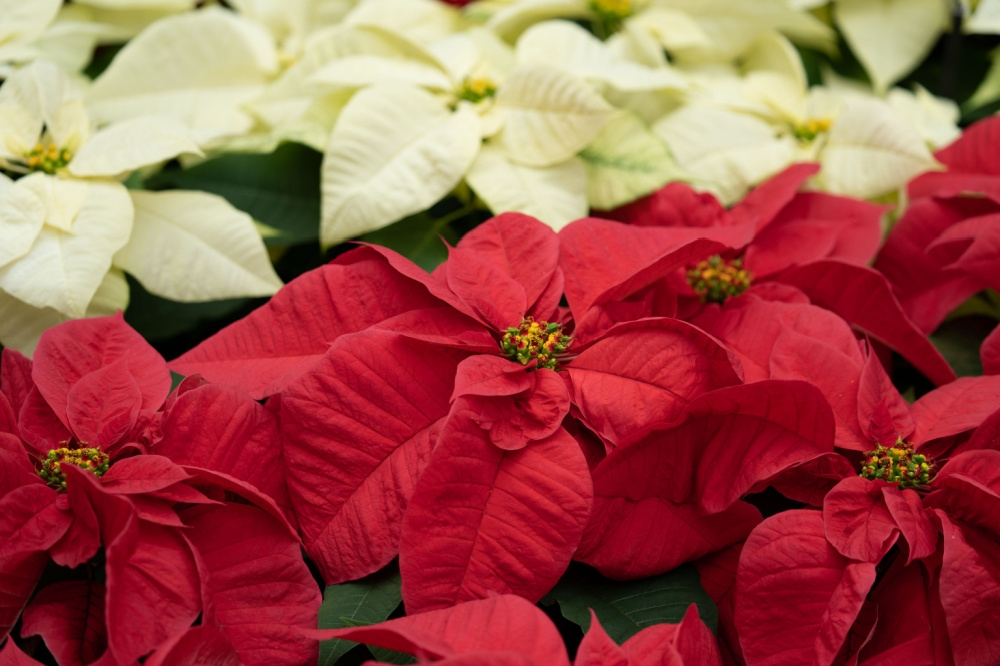
Poinsettias are fantastic Christmas house plants with bright red flowers, adding a festive touch to any room. They have a reputation for being difficult to grow, but with our top tips, you can keep your poinsettia looking good all through the festive season and even get it to flower again next year.
About poinsettias
Poinsettias are tropical plants, so they like a warm, slightly humid environment. They are also what’s known as ‘short-day plants.’ This means that they respond to day length, coming into flower as the days get shorter, which makes them perfect houseplants for our winters.
How to care for a poinsettia
- The critical thing to remember with poinsettias is to avoid letting them get cold. Any temperature below 13 °C (55°F) is too cold for a poinsettia.
- Keep your poinsettia well-wrapped up while getting it home to avoid any sudden shock from the cold air outside. Once home, place it somewhere with bright, indirect light, in a room that will stay consistently between 15°C and 18°C, and preferably not on a windowsill, as these can often be cold in winter. To create humidity around the plant, fill a shallow saucer with pebbles, top it up with water and stand the poinsettia in its pot on top of the pebbles.
- Be careful not to overwater your poinsettia. You should only need to water it if the soil starts to dry out. If your poinsettia is over- or under-watered, its leaves may start to wilt and turn yellow – use your fingertip to check the moisture level of the compost and adjust your watering accordingly. Feed monthly with a high-potassium house plant food.
How to get your poinsettia to rebloom
Yes, it is possible to get your poinsettia to bloom again! Here’s how it’s done:
- After Christmas, encourage your plant to become dormant by letting the soil dry out until the plant wilts and drops its leaves. Store it in a cool, dry place and moisten the ground until spring.
- In spring, prune your poinsettia back to around 4-6 inches high and keep it warm. Once it starts to grow back, feed and water it regularly.
- At the end of summer, around mid-September, place the poinsettia somewhere completely dark, such as a cupboard or wardrobe, for around 12 hours a day. For the remaining 12 hours each day, give the plant plenty of bright light (you can supplement daylight with artificial light if necessary). Keep the temperature between 18°C to 20°C.
- After four weeks, you should notice your poinsettia’s petals start to turn red, and after eight to ten weeks, they should be in full bloom. Move it into a slightly cooler place (but still above 15°C) to intensify its colour, and enjoy another festive season of beautiful red flowers.
Come in and see our fantastic range of poinsettias and other flowering houseplants in our centre – the perfect way to add colour to your home this festive season!