

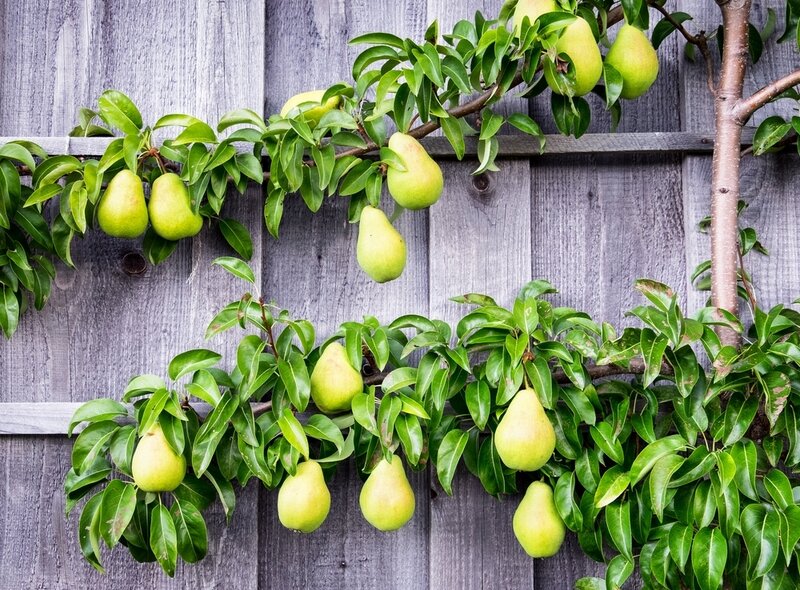
A fruit tree adds so much to a garden. Many make superb ornamental trees with their beautiful spring blossom, and some can even be grown in a large pot on a patio or balcony. Plus, you get to pick and enjoy your own home-grown fruit! To get you started, here are our top tips on growing fruit trees.
Which fruit trees to grow
For colder areas of the country, apple and plum trees are the best choice, planted in a sunny sheltered spot. In mild areas, there’s a wide range of fruit trees to choose from, including pears, cherries and even apricots and nectarines in very sheltered sunny sites. Or, for a touch of Mediterranean atmosphere, try a fig tree, which has beautiful architectural leaves as well as a delicious fruit and will grow well in a large pot.
Fruit trees for small gardens
The size of a fruit tree is mainly determined by its rootstock, and trees are grown on very dwarfing, dwarfing, or semi-dwarfing rootstocks that are ideal for small spaces. If you want to grow fruit in a pot, look for a tree on a very dwarfing rootstock – this information will usually be on the plant label. Ballerina apples are ideal for pots, producing just one central stem with very short spurs bearing fruit. Espaliered or fan-trained fruit trees can be grown against a wall, taking up very little space.
If you only have space for one fruit tree, choose a self-pollinating variety. To produce fruit, some fruit trees need a pollination partner, i.e. another tree of the same type but a different variety. Still, self-pollinating fruit trees can produce fruit even if they are the only tree for miles around. Check the plant label or look up the various online to determine whether your preferred tree is self-pollinating.
Tips on caring for fruit trees
- Give your fruit tree the best conditions for the best results - fertile, well-drained soil with lots of compost dug in and a sheltered, sunny position.
- If possible, plant fruit trees in winter while they are dormant so the roots can get settled before the tree starts growing again in spring.
- Water newly planted trees weekly from spring to autumn, giving them at least one full watering can’s worth of water.
- Keep the area around the tree roots clear of weeds and grass that compete with the tree for water and nutrients.
- Feed fruit trees annually in late winter or early spring – different fruit trees need different types of fertiliser, so check your tree’s requirements first.
- Mulch around the base of your tree with garden compost, leafmould or well-rotted manure in spring and autumn, making sure the mulch doesn’t sit against the tree's trunk as this could cause rotting.
If you’d like to grow your own fruit, visit our centre where we have a fantastic range of fruit trees as well as soft fruit and lots more. We’re always happy to help with your gardening questions!