

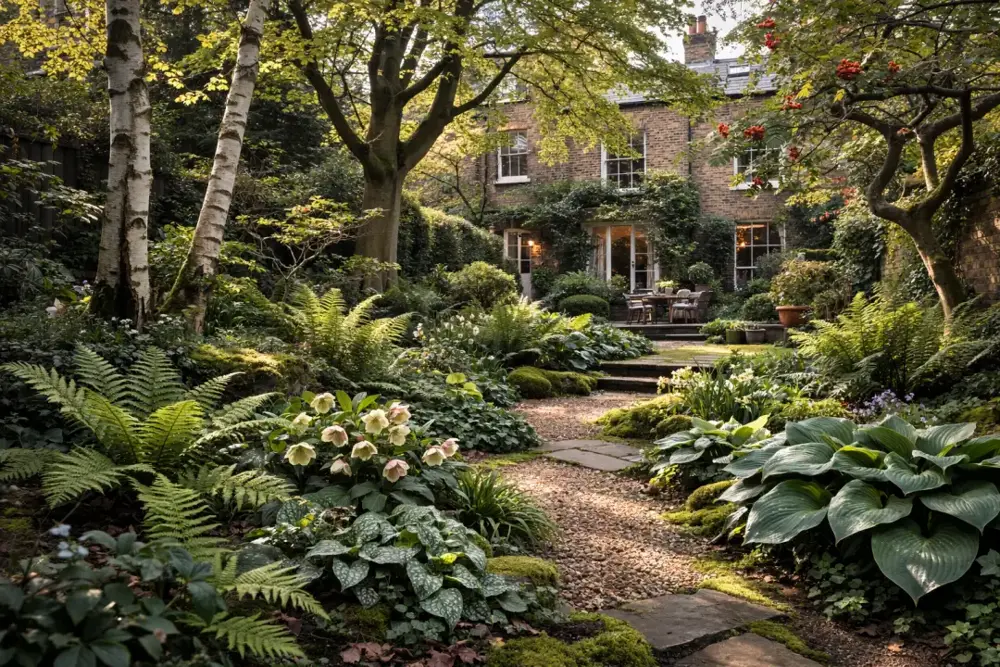
Small London gardens (whether a 4-metre Highgate courtyard, a Hampstead terrace, or a Belsize Park basement plot) are defined by one constant: every planting decision carries weight.
The right design turns a constrained space into something that performs across all four seasons, gives structure to a narrow border, and makes 20 square metres feel like twice that.
These seven ideas address the questions North London gardeners ask most often: what to plant in shade, how to create privacy, which containers actually work on a roof terrace, and when to call in a specialist. Each idea is paired with specific plant combinations and links to Boma's current stock and services for easy pickings.
1: Use Vertical Structure to Reclaim Lost Ground
The most common mistake in a small London garden is treating it as a horizontal problem. Walls, fences, and boundaries are growing surfaces; and in a 5 x 8-metre plot, a well-dressed rear wall changes the spatial experience entirely. Evergreen wall shrubs such as Trachelospermum jasminoides (star jasmine) deliver year-round foliage, fragrant summer flowers, and good tolerance of London's frequently semi-shaded walls.
For a more architectural effect, Hydrangea anomala subsp. petiolaris (the climbing hydrangea) clings without ties, handles north-facing aspects without complaint, and delivers those flat, lacecap flowerheads in early summer.
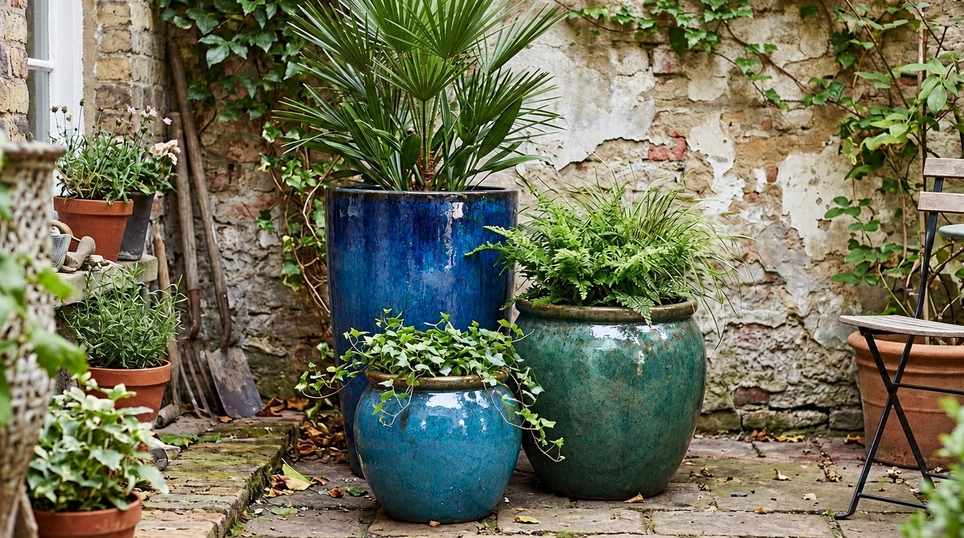
Layering vertically also means thinking about containers at different heights. A pair of tall aged terracotta planters planted with clipped box spheres or a standard Laurus nobilis (bay) draw the eye upward and impose a sense of scale. Boma's container planting service includes on-site microclimate assessment, which is really critical when you're deciding what will genuinely thrive on a north-facing brick wall versus one that gets four hours of afternoon sun.
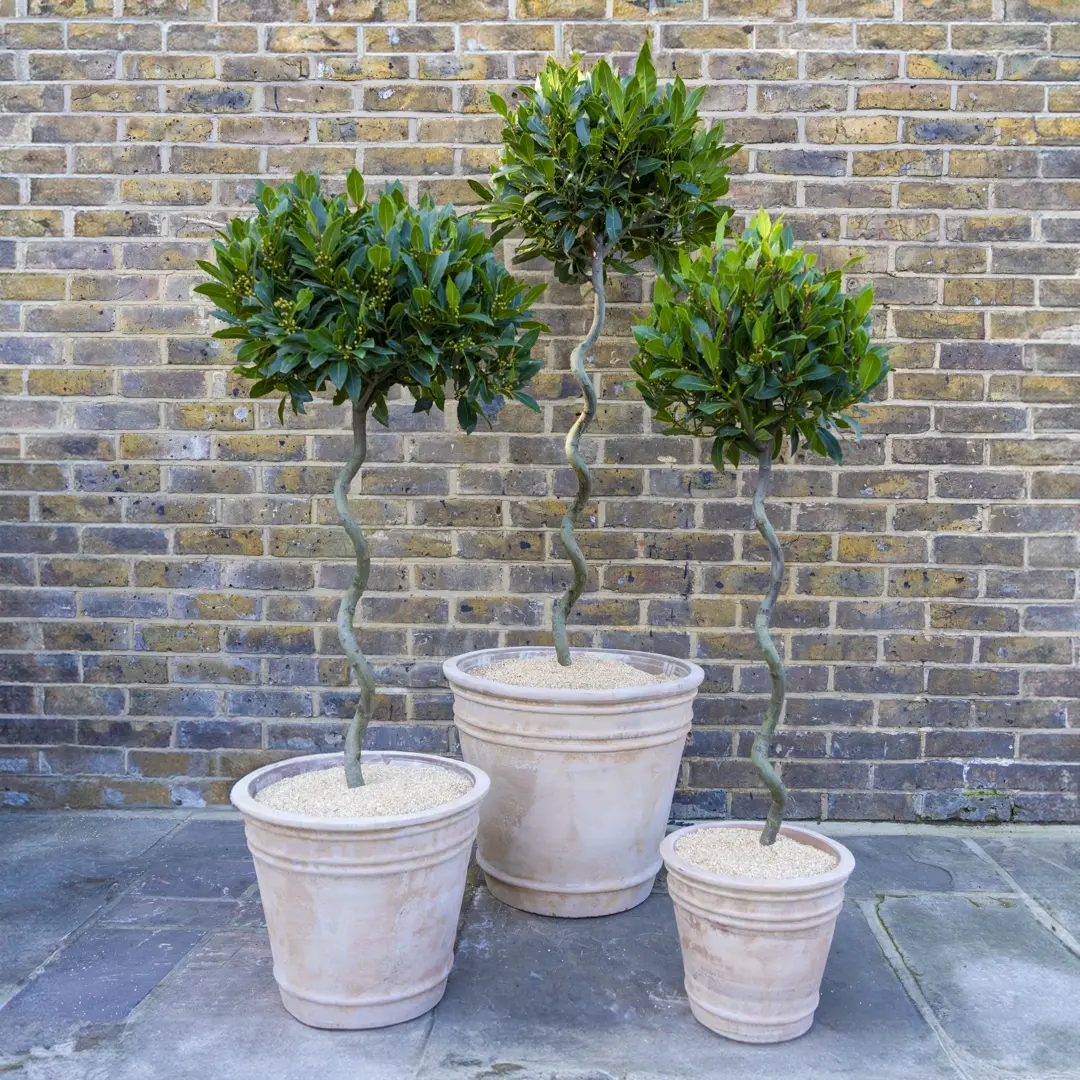
Laurus nobilis - 1/4 Std Spiral Stem (Foliage Diameter D35-40cm) Bay tree
2: Build a Year-Round Planting Scheme Around an Evergreen Spine
Seasonally replanted beds are labour-intensive and often leave the garden looking bare in winter; a problem in North London, where outdoor spaces are visible from living rooms for most of the year. A robust evergreen spine gives the garden bones across all 12 months, with perennials and bulbs providing the seasonal punctuation on top.
For London clay and partial shade, a reliable combination runs as follows:
- Viburnum tinus 'Eve Price' as a structural back-of-border anchor (evergreen with glossy foliage, deep pink buds opening to white winter flowers, compact and tidy habit)
- Underplanted with Geranium 'Rozanne' for weed-suppressing summer cover, with Narcissus 'Thalia' bulbs pushed in between for March colour.
- Sarcococca confusa (sweet box) provides glossy winter evergreen and heavily scented January-February flowers; useful near a path or patio edge where the fragrance registers.
- If the brief leans contemporary, Miscanthus sinensis 'Little Zebra’ grass planted at border intervals introduces movement and feathery autumn plumes, standing well through to February before being cut back.
Boma's garden planting service creates full planting schemes for established beds and borders (including clearance of existing plantings, supply of stock, and installation) which makes a complete replanting far more achievable than attempting it piecemeal.
Explore the Garden Planting Service
3: Design for Your Microclimate, Not Against It
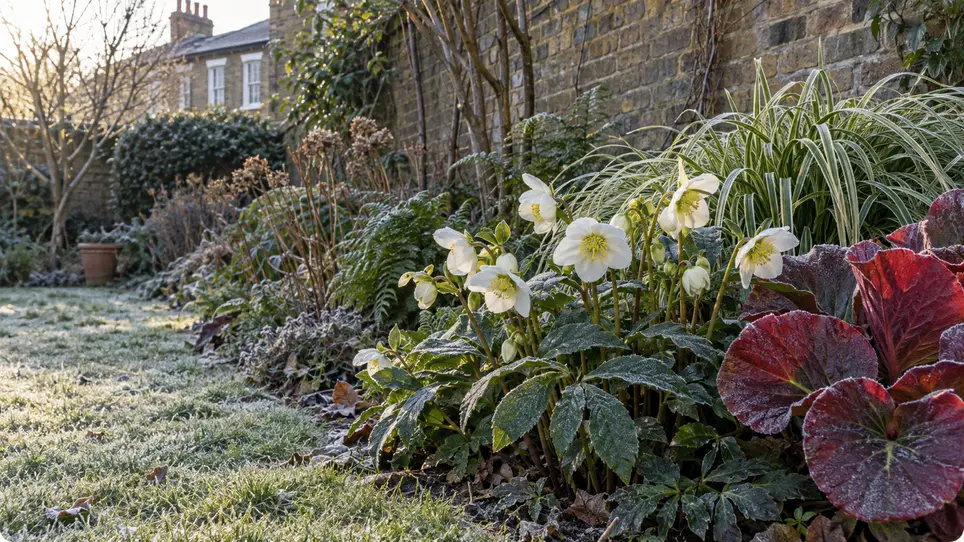
North London gardens rarely behave like textbook examples. A south-facing Muswell Hill plot with a brick rear wall generates measurable warmth, making it viable for slightly more tender subjects, Salvia, Agapanthus, or a container-grown Olea europaea (olive). A north-facing Camden courtyard with dense adjacent buildings may receive less than two hours of direct sun; which means Fatsia japonica, Aucuba japonica, hellebores, and ferns are the plant palette, not the consolation prize.
Soil is the other variable. London clay drains poorly and compacts readily. Before planting any border scheme, work in a 10cm layer of well-rotted garden compost and, for heavier patches, add horticultural grit at roughly 30% by volume to the planting zone. Plants that cope with clay (Astilbe, Ligularia, Hosta, Rodgersia) actually perform well once established because clay retains moisture through dry spells.
Boma's planting specialists assess each site's microclimate as standard (soil type, light levels, exposure, and proximity to boundary walls) before recommending a plant palette. It is this site-specific reading that separates a scheme that thrives from one that merely survives its first winter.
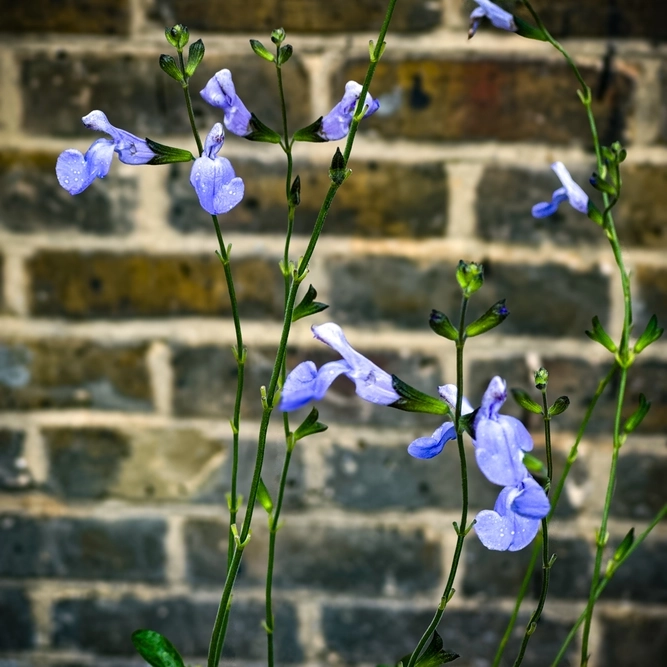
Salvia microphylla ‘Delice Aquamarine’
4: Make Privacy Planting Work Harder
Screening in a small London garden is often a primary objective; neighbours, overlooking windows, or an exposed boundary wall. The instinct is to plant a hedge and wait. Faster and more interesting is to combine a structural screen with ornamental value.
Bamboo is the standard answer for speed, but Pittosporum tenuifolium 'Elizabeth' (compact evergreen, non-spreading) is the choice for a London garden where root spread is not an option. It reaches 2–3 metres with clipping and provides dense, evergreen cover year-round.
For roof terraces and balconies where weight loading is a constraint, screening solutions shift to planters with tall Phormium tenax or clipped Taxus baccata balls in lightweight polystone troughs. Boma's courtyard and roof terrace container planting service includes structural planning around weight limits, and supplies irrigation systems so container-grown screens don't fail in London's increasingly dry summers.
Explore Container Planting for Roof Terraces & Courtyards
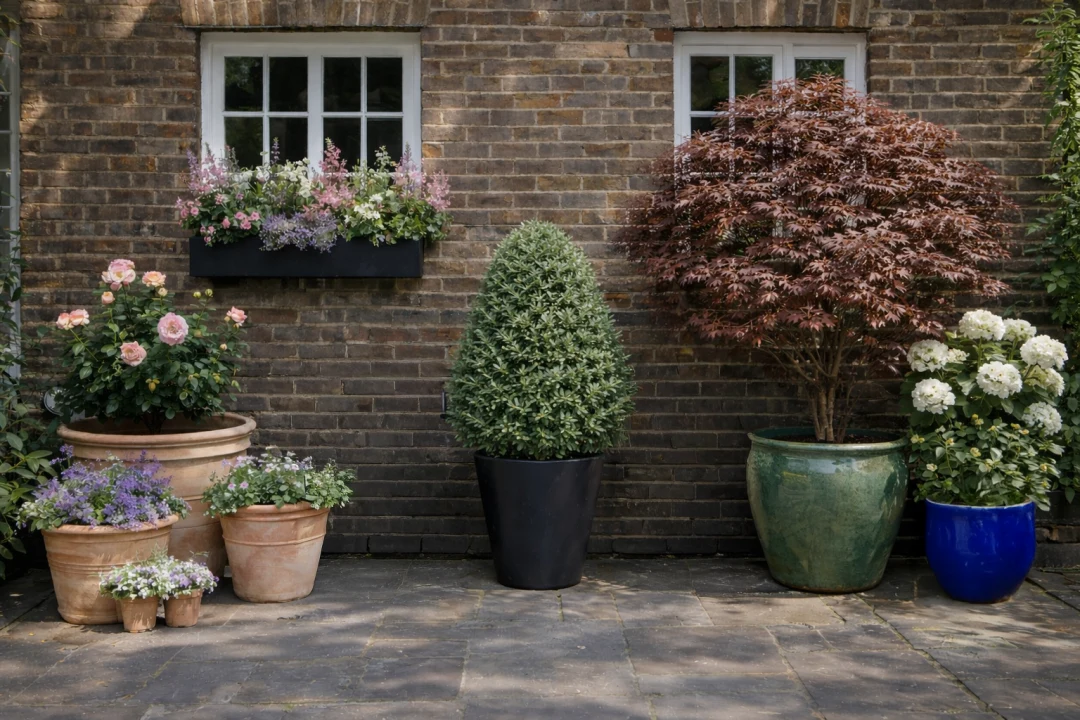
5: Choose a Garden Style, Then Commit to It
The gardens that look most resolved in North London are almost always the ones where a clear design language has been applied and held. A contemporary urban garden; clean-lined raised beds, feather reed grass, Hydrangea paniculata, and Verbena bonariensis, sits in genuine tension with a cottagey interruption of mixed annuals.
Boma's Garden Styles pages work as a useful starting framework. The 8 defined styles (from Cottage and Tropical to Japanese and Naturalistic) are not rigid templates but creative starting points that Boma's specialists interpret for your specific space.
 |
 |
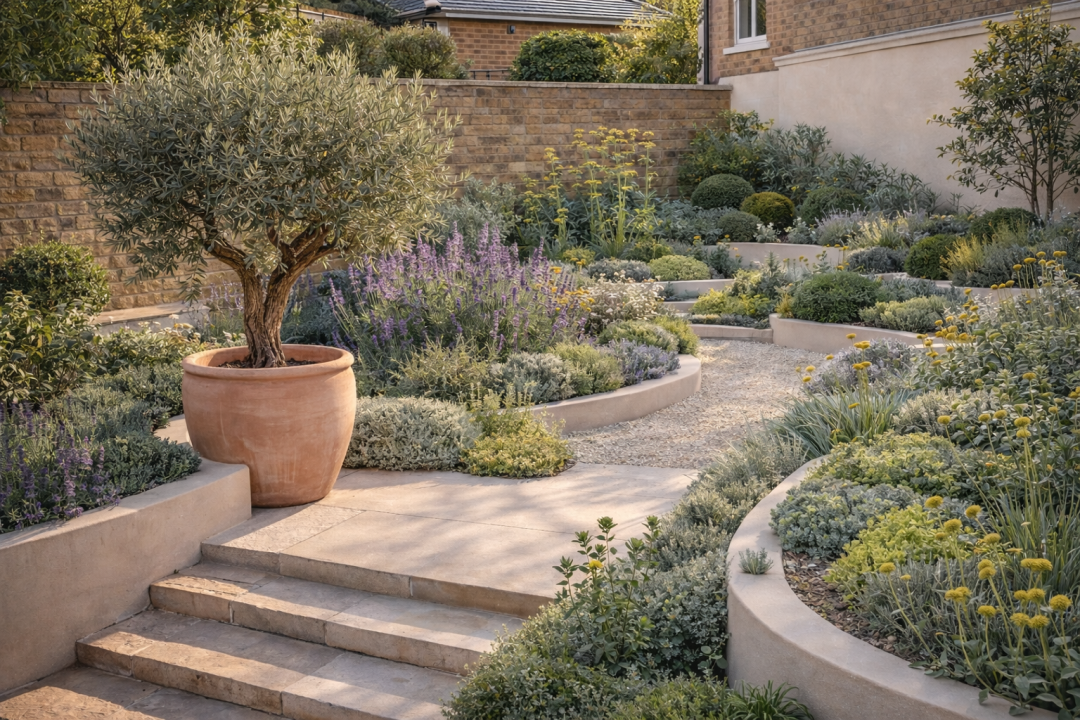 |
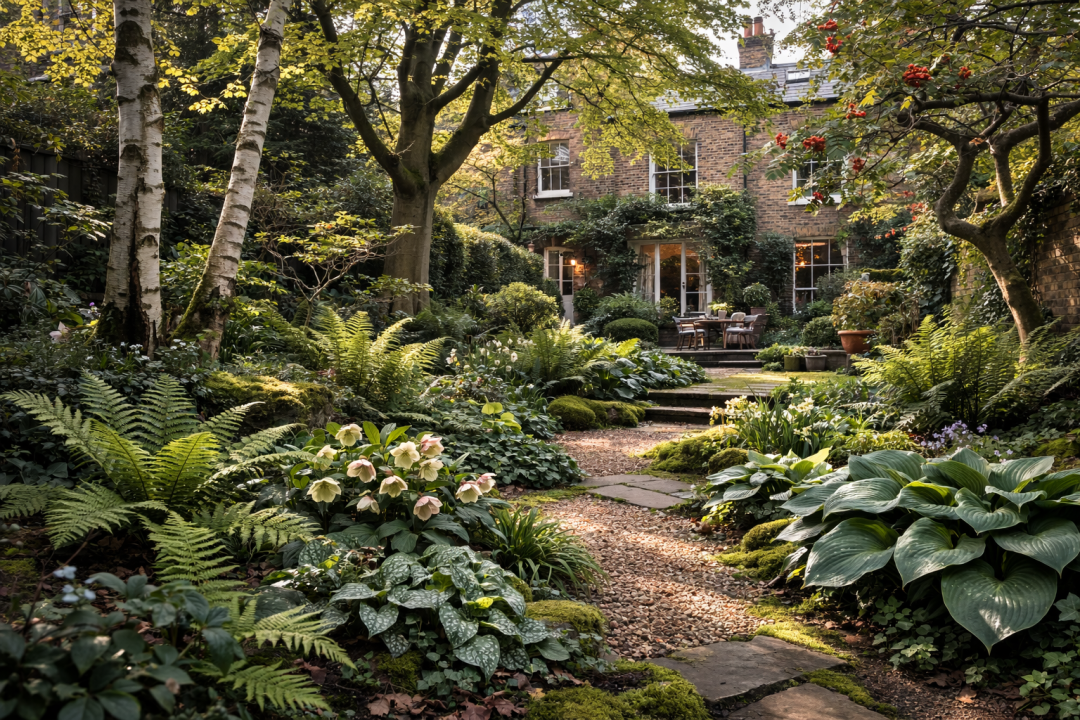
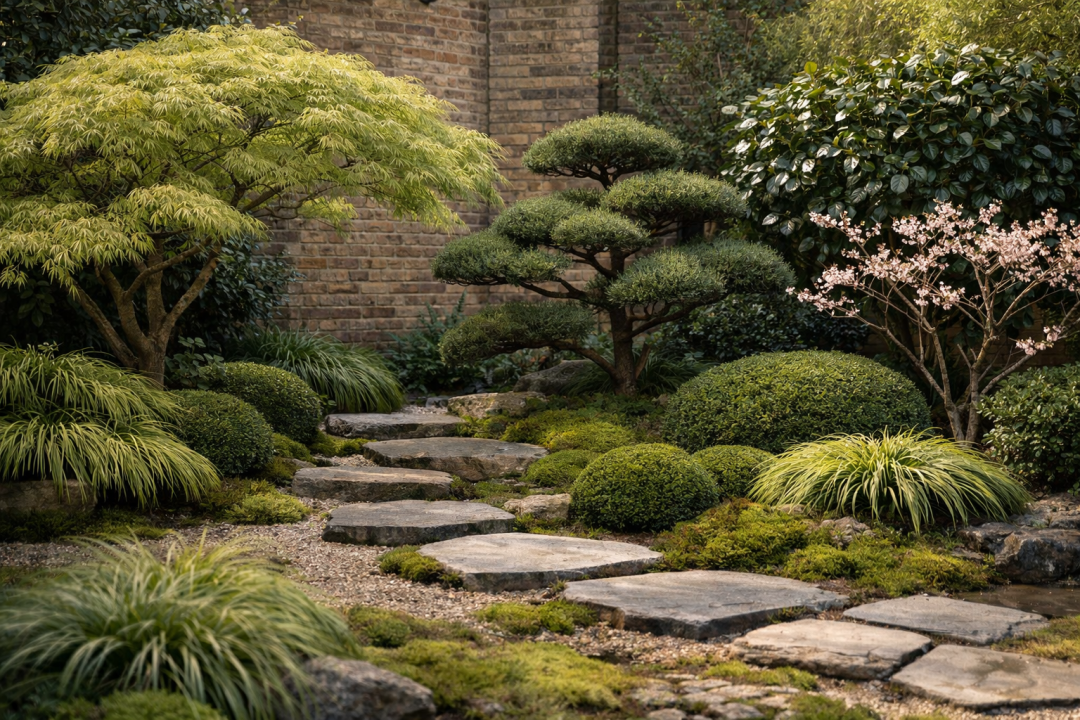
Architectural, Contemporary, Naturalistic Garden Styles
| Garden Style | How to Achieve It |
|---|---|
| Cottage Garden | Romantic and abundant, with roses, clematis, salvia and nepeta weaving through soft-edged, layered planting. |
| Tropical Garden | Bold and dramatic, with palms, tree ferns, banana and canna creating lush, architectural foliage impact. |
| Japanese Garden | Restrained and intentional, with Japanese maple, pine, ornamental cherry and flowing grasses shaping form, texture and calm. |
| Mediterranean Garden | Sun-loving and aromatic, with lavender, rosemary, olive and euphorbia in a drought-tolerant, silver-toned planting. |
| Woodland Walk | Calm and layered, with birch, acer and sorbus sheltering ferns, hellebores and hosta in a textured, shade-loving planting. |
| Architectural Garden | Geometric and considered, with clipped box, yew and pleached hornbeam anchoring phormium, agapanthus and feather reed grass. |
| Contemporary Urban Garden | Relaxed and contemporary, with hydrangea, miscanthus and verbena bringing movement and texture to clean-lined raised bed planting. |
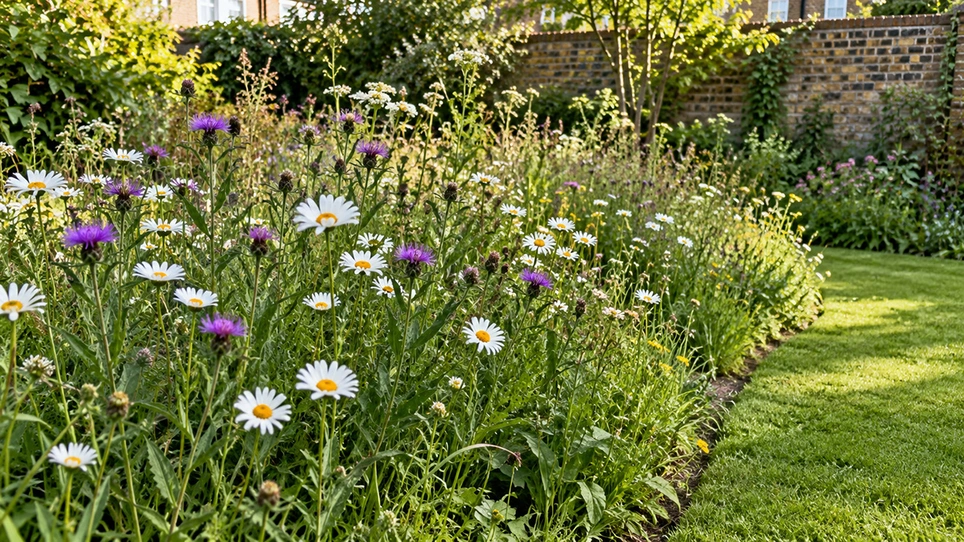
| Naturalistic & Wildlife Garden | Soft and naturalistic, with echinacea, rudbeckia, salvia and grasses drifting through a wildlife-rich, pollinator-friendly planting. |
Most completed projects blend elements from two styles: a Japanese-influenced planting scheme for structure and calm, for instance, with a naturalistic perennial layer underneath. Style coherence matters most at the hard landscaping level. The combination of surface material (porcelain tile, weathered board, York stone), boundary treatment, and container choice sets the tone that planting then reinforces.
For gardens where the hard and soft landscaping both need addressing, Boma's garden design and landscaping service coordinates both from initial concept through to installation; working alongside trusted hard landscapers while retaining direct control of the planting scheme.
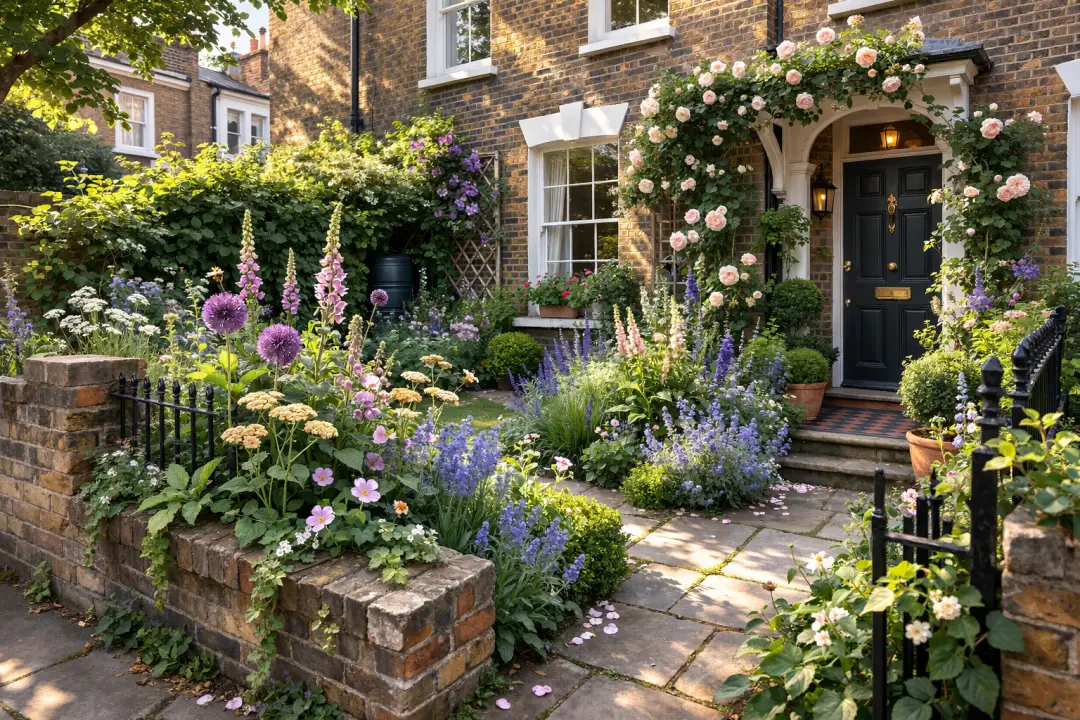
Cottage Garden Style
6: Think Seasonally, Plant Permanently
The most effective small garden planting schemes front-load permanent planting (shrubs, structural perennials, and evergreen ground cover) and use seasonal colour as an accent rather than the foundation.
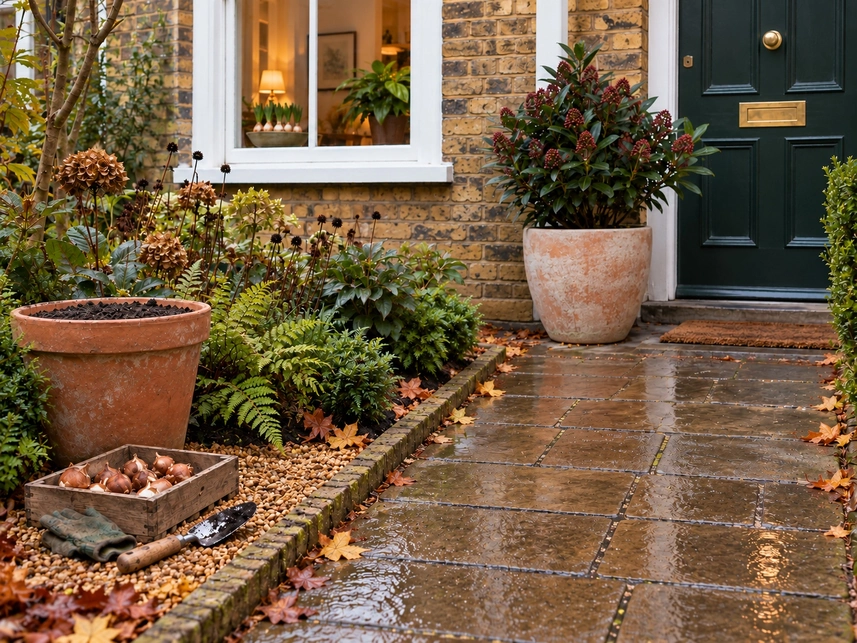
For spring, bulbs in pots give reliable, dateable colour without committing bed space. Tulipa 'Queen of Night' (deep purple, late April) or Narcissus 'Jetfire' (reflexed petals, early and reliable in London conditions) in terracotta or zinc planters positioned at a seating area register without disrupting the border scheme.
Summer perennials carry the longest season of interest when chosen correctly. Echinacea purpurea flowers from late June through September and the seed heads persist decoratively into December. Salvia nemorosa 'Caradonna' produces upright violet spires from May and repeats reliably with dead-heading. Both tolerate London clay better than many summer perennials and need minimal intervention once established.
For autumn, seasonal plants at Boma include Cyclamen hederifolium for low-growing October-November colour and Skimmia japonica 'Rubella' for red-budded winter interest alongside evergreen foliage. These work equally well in the ground or in containers on a patio.
7: Commission a Planting Scheme Before Buying a Single Plant
The most common route into a failed small garden is buying plants individually as they catch the eye, then attempting to resolve them into a coherent scheme afterwards. The reverse (establishing a scheme first, then sourcing it) costs the same or less, takes no more time, and produces a garden that reads as intentional from the outset.
Boma's planting service guide sets out exactly what to expect: an initial consultation and site assessment, followed by a client brief, bespoke mood boards with colour and plant selections tailored to your space, a formal proposal and quotation, then delivery and installation. The service operates by recommendation and appointment, across North and Central London.
Three service tiers cover the full range of North London outdoor spaces:
- Courtyard & Roof Terrace Container Planting: bespoke container schemes for balconies, roof terraces, and courtyard spaces, including supply of containers and irrigation.
- Garden Planting Service: considered planting schemes for established gardens with patios, beds, and borders.
- Garden Design & Landscaping Service: complete redesign from concept to installation, coordinating hard landscaping, planting schemes, and irrigation for gardens requiring full transformation.
All three include aftercare guidance on maintenance and seasonal replanting — the detail that turns a good installation into a garden that continues to improve year on year.
Request a Planting Consultation
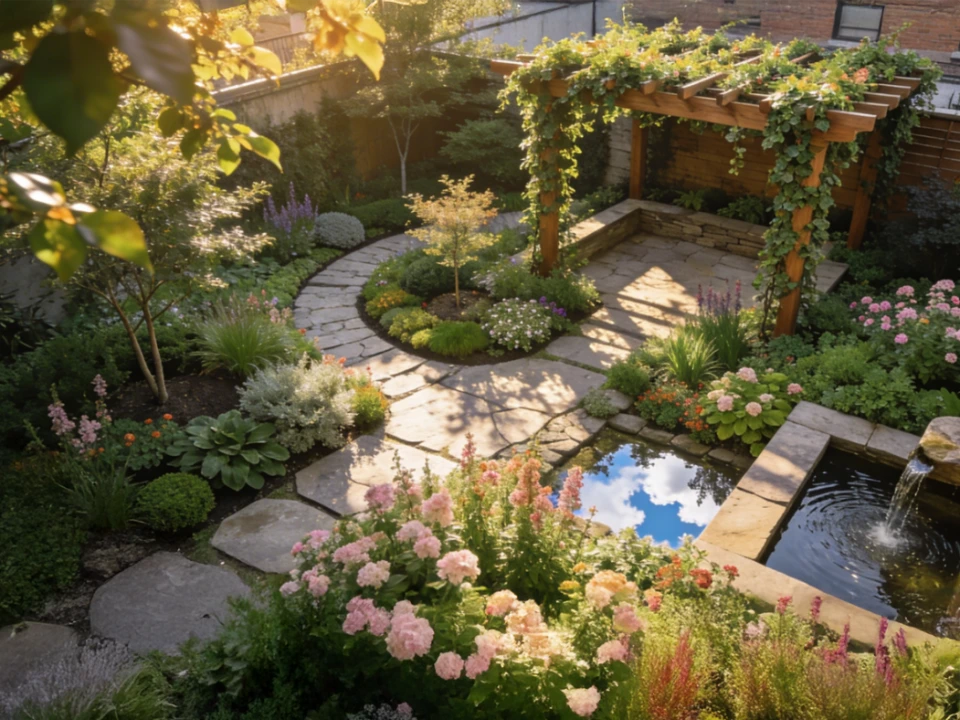
Plan Your 2026 Garden with Boma
The questions North London gardeners are asking heading into 2026 (how to screen a boundary, which perennials actually last, whether a roof terrace planting scheme is viable, when to start from scratch) have clear answers. They are answered best by people who have been working with London's clay soil, urban microclimates, and compact spaces since 2002.
Explore outdoor plants, browse pots and planters, or call 020 7284 4999 to speak with Boma's planting specialists to discuss your specific space.
Visit Boma Garden Centre – Kentish Town, North London
Frequently Asked Questions
What plants work best in a small, shaded London garden?
Shade-tolerant planting for a tiny garden in North London includes Fatsia japonica, Aucuba japonica, hellebores, and ferns, all of which cope well with low light and urban conditions. For structure and winter interest, Sarcococca confusa (sweet box) is particularly effective, offering evergreen foliage and scented flowers early in the year. These plants work reliably in shaded courtyards and north-facing plots where direct sun is limited.
How do I create privacy in a small urban garden?
Effective privacy planting in a city garden combines dense evergreen structure with height. Pittosporum tenuifolium ‘Elizabeth’ provides compact, non-invasive screening at 2–3 metres, while roof terraces and balconies benefit from tall Phormium or clipped Taxus in lightweight planters. Incorporating climbing plants along a garden wall can further enhance screening without taking up valuable ground space.
Is a planting consultation worth it for a small garden?
For small London gardens with limited space, a planting consultation helps ensure the scheme reflects the site’s exact conditions, including light, soil, and exposure. Boma’s process begins with an on-site assessment followed by a tailored planting plan and installation, creating a cohesive scheme that is designed to establish and perform long-term.
What is the best garden style for a small London garden in 2026?
There is no single “best” style; the most successful small gardens (whether in a London house or compact courtyard) are those that commit to a clear design language. Whether contemporary, cottage, Japanese, or naturalistic, consistency in planting and materials creates a more resolved outdoor room. Boma’s Garden Styles provide a framework of eight approaches that can be adapted and combined to suit the site, including schemes that feature exotic plants for added impact.
How should I choose containers for a roof terrace?
Weight and exposure are the key considerations for roof terraces. Lightweight planters are typically required, paired with structural planting such as Phormium or Taxus for screening. In more design-led schemes, a living wall can be integrated to maximise greenery without increasing load. A site-specific assessment ensures containers and planting are suitable for the conditions, including sun, wind, and load constraints.
Boma Garden Centre · Kentish Town
Continue your planting journey with Boma
Explore curated plant collections, handmade pots & planters, and garden essentials, carefully chosen to help London's plant lovers create beautiful, thriving spaces.
Pots & Essentials
Independent garden centre · Expert plant advice · Local London delivery