

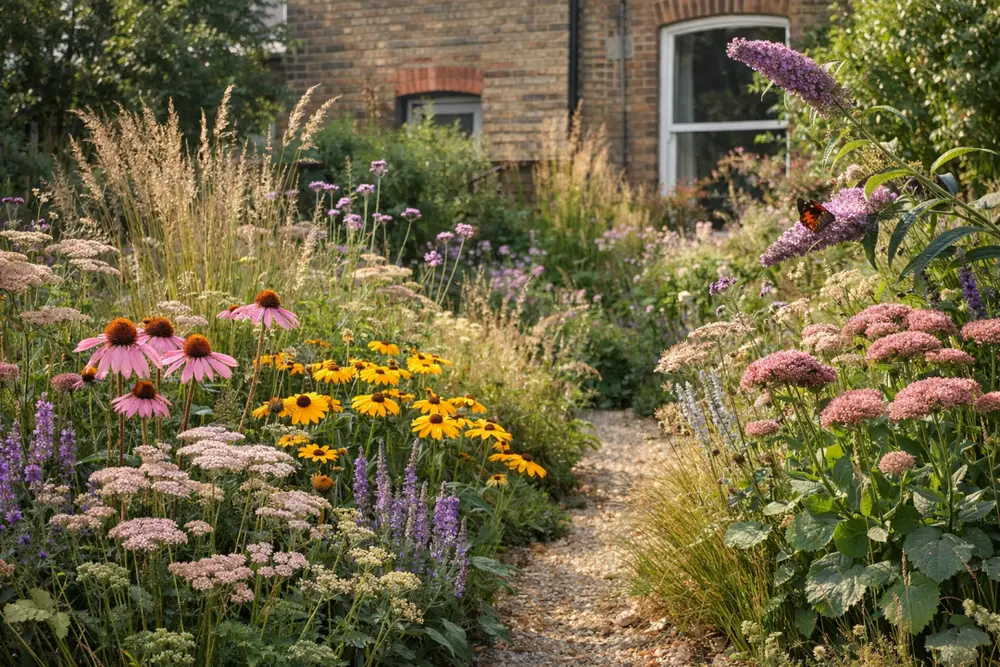
This is the planting language behind Boma's Naturalistic garden style — one of the frameworks our planting team draws on when shaping borders and beds for North London gardens. It suits anyone who wants colour and movement without the clipped formality of a traditional herbaceous border, and it holds up well on the capital's heavy clay once the ground has been properly opened up.
What Makes a Border Naturalistic
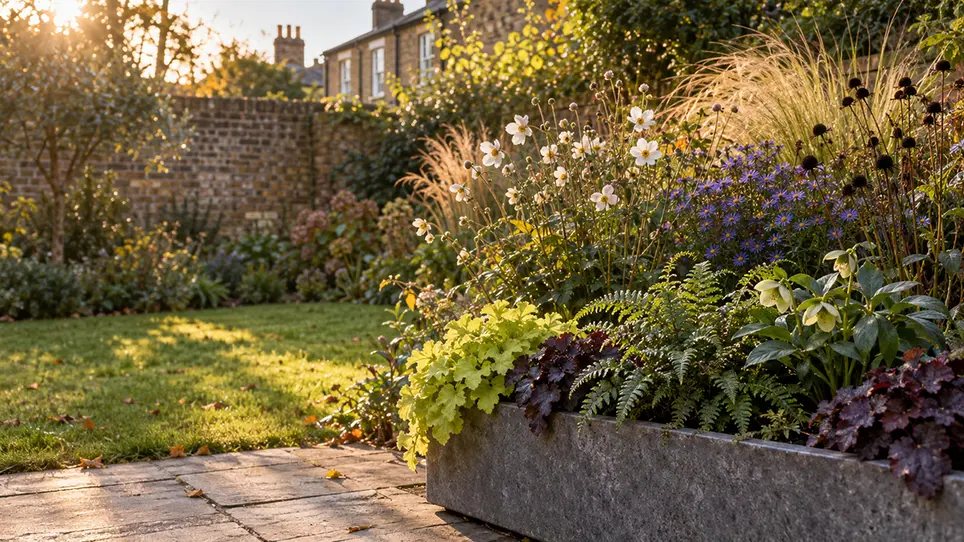
A naturalistic border reads as a loosely woven tapestry rather than a series of blocks. Plants sit in informal, odd-numbered drifts that overlap at the edges, and height moves front to back without a strict stepped line. The effect rests on contrast of form: the flat daisy discs of Echinacea and Rudbeckia set against the upright spikes of Salvia, while grasses fill the gaps with movement and soft, diffused light.
London clay holds moisture well and suits most of these perennials once they are established — but only if drainage is improved at planting. Nearly every plant in this palette, from Salvia 'Caradonna' to Pennisetum and Achillea, dislikes sitting in cold, wet soil over winter, and that, more than anything, is why naturalistic borders fail on heavy ground. Fork in horticultural grit and well-rotted organic matter before you plant, and the same dense planting that gives the style its character will knit together and suppress weeds as it matures.
Seedheads and grass plumes are left standing through autumn and winter rather than cut back after flowering. This carries the border's interest into December and January, and gives shelter and food to overwintering insects and birds — part of the wildlife-friendly thinking the style is built on.
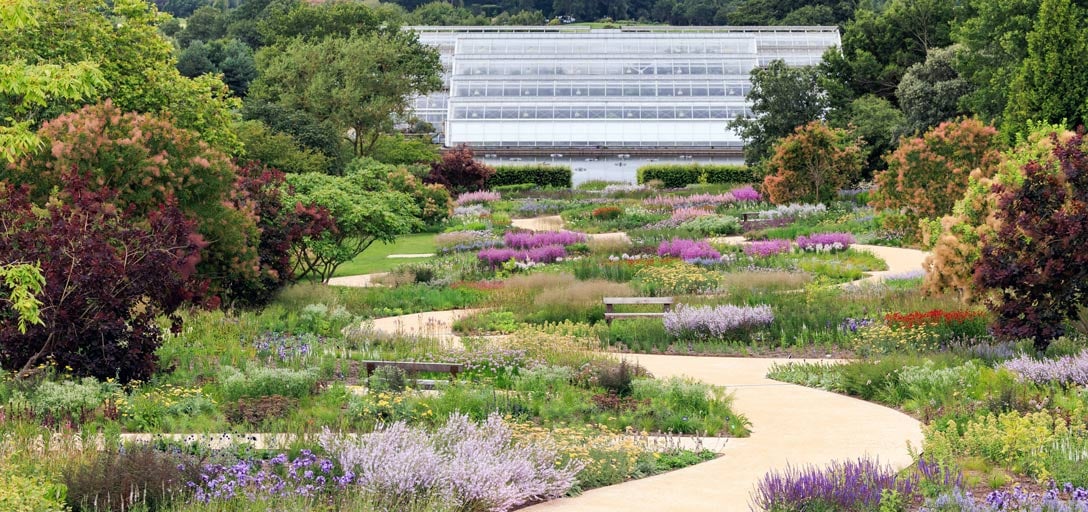
The approach draws on the New Perennial movement, shaped largely by the Dutch designer Piet Oudolf. His public plantings — the High Line in New York, and the two-acre Oudolf Landscape at RHS Garden Wisley — brought meadow- and prairie-derived plant communities to a wide audience, with plants chosen to earn their place across the whole season rather than at a single peak. It is worth saying plainly what the style is not: it is not native-only planting. Many of its signature plants, Echinacea and Rudbeckia among them, are North American prairie species, chosen for how they perform and combine rather than for where they originate.
The Structural Perennial Layer: Echinacea, Rudbeckia and Salvia
Three perennials give a naturalistic border its structure: Echinacea and Rudbeckia for repeated daisy discs from midsummer into autumn, and Salvia nemorosa for the vertical spikes they lack. Together they set the mid-border rhythm — dark uprights punctuated by gold and pink — from early summer through to the first frosts.
Echinacea (coneflower) is the anchor, its upright clumps and prominent central cones giving a repeated architectural note. Echinacea 'Sunseekers Purple Power' carries dark pink petals around a yellow-brown cone at 50–60cm, a dependable mid-border height; 'Delicious Candy' brings brighter pink petals and a red cone, and sits happily beside the golds of Rudbeckia planted alongside it.
Rudbeckia contributes the classic black-eyed-Susan daisy in golds, garnets and rusts. Rudbeckia hirta 'Kissing SmileyZ' flowers from summer into early autumn with garnet-red petals tipped in gold on a compact, upright plant. One thing worth knowing: Rudbeckia hirta is a short-lived perennial, often behaving as an annual or biennial — it flowers generously but may not persist for years the way a true perennial does. Where you want a permanent clump, the reliably perennial Rudbeckia fulgida ('Goldsturm') is the more durable choice.
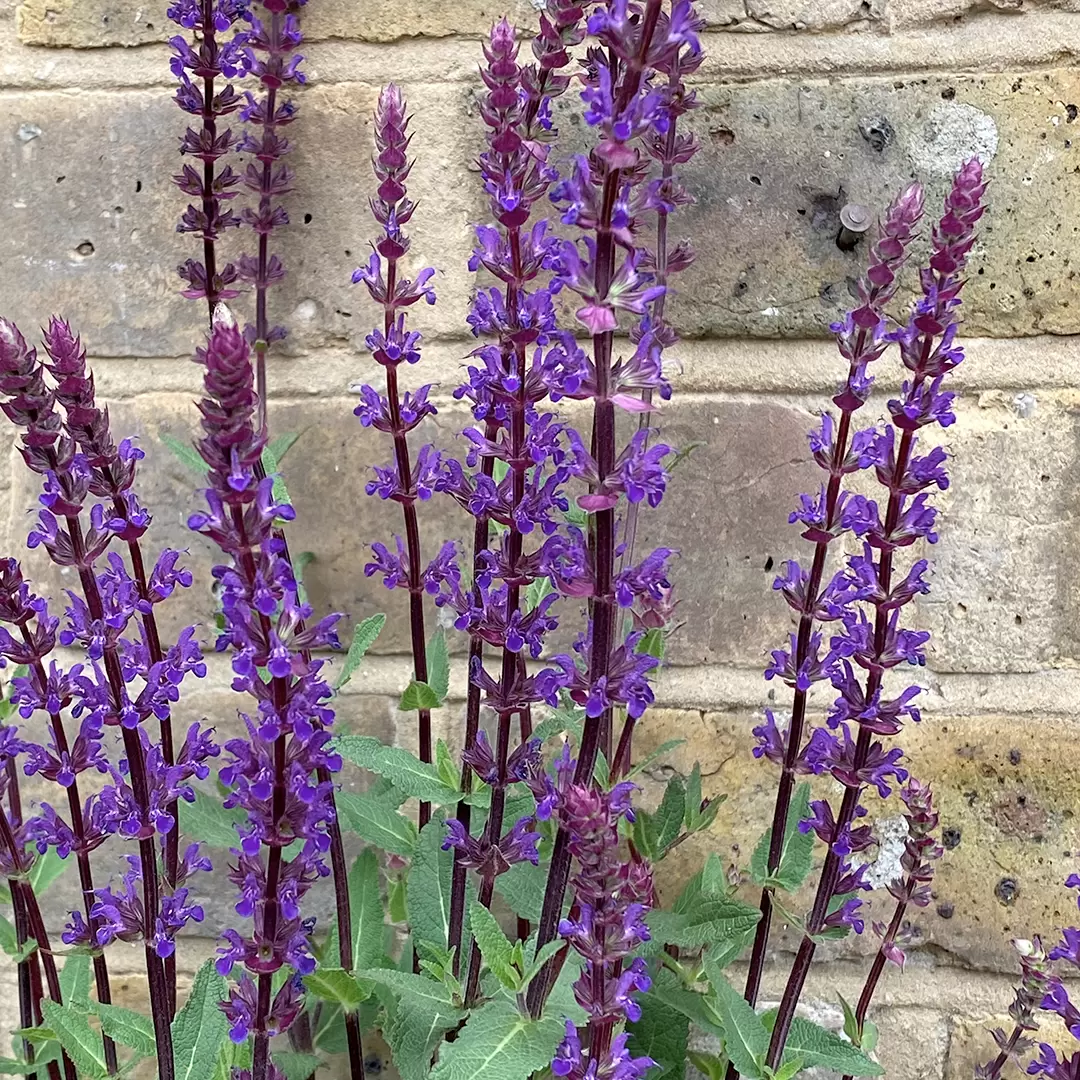
Salvia nemorosa supplies the vertical note the daisy-flowered perennials lack. Salvia nemorosa 'Caradonna' sends up deep violet-blue flower spikes on near-black stems from early summer into autumn, and holds the RHS Award of Garden Merit; cutting back the spent spikes through summer prompts a reliable second flush. Like the rest of this group it wants sharp drainage — on unimproved clay it sulks, so the grit you dig in at planting genuinely matters.
Grasses That Add Movement and Light
Ornamental grasses do what the flowering perennials cannot: they catch light, move in the wind and soften the joins between drifts. Two earn their place in most London gardens — one compact and structural, one fine and airy.
Pennisetum alopecuroides 'Hameln' is a compact, clump-forming fountain grass with pinkish-white plumes from late summer, turning golden in autumn, and it holds the RHS Award of Garden Merit. It is happiest in a warm, well-drained spot — on heavy or wet winter soil it can struggle — so give it the sunniest, sharpest-draining position you have and it will stay tidy enough for a smaller garden.
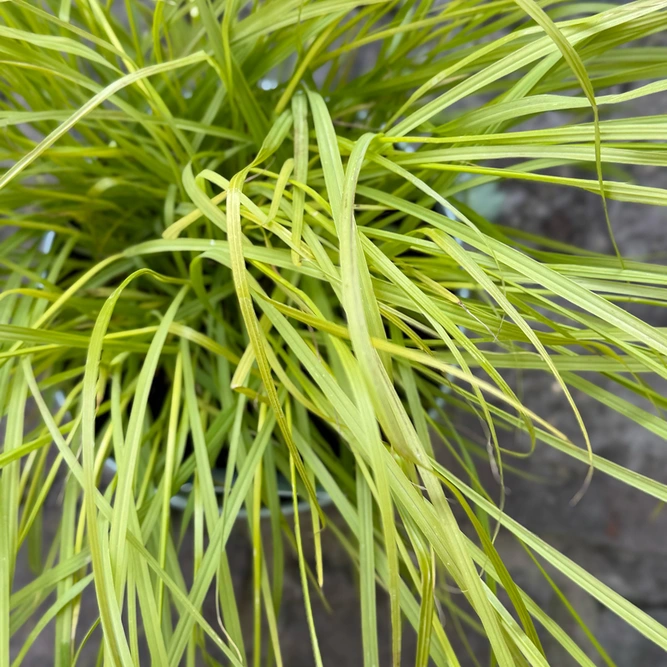
Stipa tenuissima 'Ponytails' offers the opposite texture: fine, wispy foliage in constant motion that catches low autumn light. Set at the border's edge, it softens the line between planting and path without competing with the structural perennials behind it. It self-seeds readily in warm, well-drained spots; in a London garden that is easily managed — hoe off or move any seedlings you don't want — rather than a problem, though it is worth keeping a loose eye on.
Extending Interest Into Late Summer and Autumn
A few later performers keep a naturalistic border going as the coneflowers fade: a flat-topped sedum, a see-through verbena and a long-flowering yarrow, each adding a different shape to the scheme.
Hylotelephium (still widely sold as Sedum) closes the season with distinct flat-topped flower clusters. 'Autumn Joy' opens pale pink in late summer and deepens to rust-red by autumn, and its dried heads hold their shape through winter frosts.
Verbena bonariensis adds height without bulk. Its wiry, near-leafless stems carry small clusters of light purple flowers well above the surrounding planting, so it reads as a see-through layer rather than a screen, letting the border behind stay visible. It self-seeds gently and tends to reappear where it is happy.
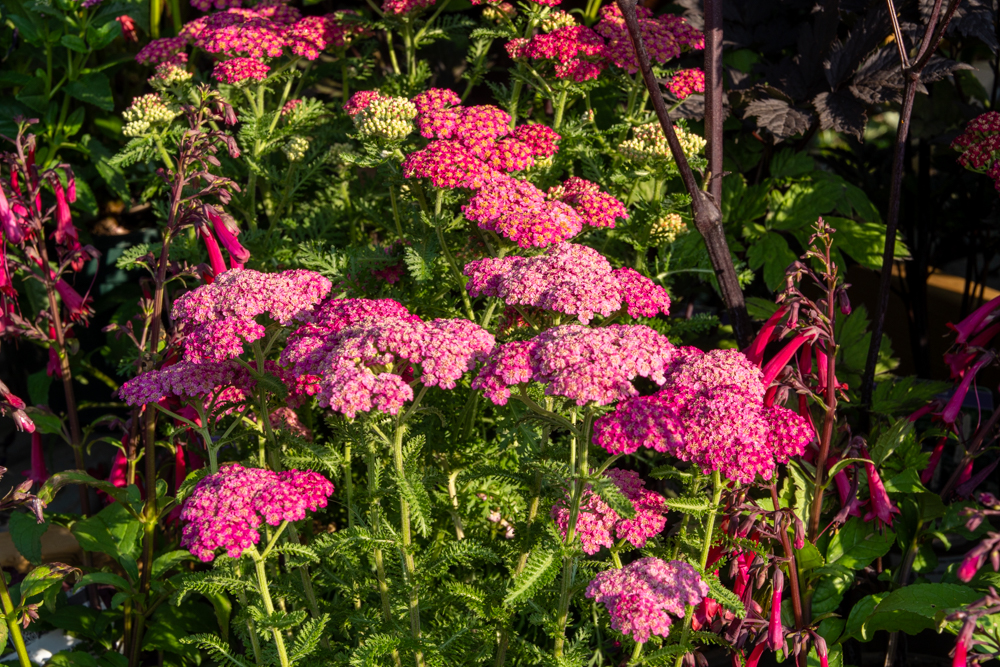
Achillea 'New Vintage Rose' brings flat, plate-like flowerheads in rose-pink from early summer into autumn — a horizontal counterpoint to the vertical Salvia spikes that echoes the flat form the coneflowers establish elsewhere. Like the rest of the palette it prefers full sun and free-draining soil, and dislikes a wet winter clay.
Naturalistic Border and Traditional Herbaceous Border Compared
The difference is less about which plants you use than how you arrange them and how much upkeep you take on. A naturalistic border is looser, cut back once a year and generally lower-maintenance; a traditional herbaceous border is more formal and more hands-on. The table sets the two side by side.
| Attribute | Naturalistic Border | Traditional Herbaceous Border |
|---|---|---|
| Planting arrangement | Informal, overlapping drifts of five to seven plants | Blocked groups arranged by strict height order |
| Maintenance rhythm | One late-winter cutback, minimal staking | Regular deadheading, staking and edge trimming |
| Pollinator value | High; open, nectar-rich flowers through the season | Variable; depends on cultivar selection |
| Winter structure | Seedheads and grass plumes left standing | Cut back to bare soil after flowering |
| Best suited to | Wildlife gardens, informal beds, improved London clay | Formal beds, period properties, show borders |
Planting a Naturalistic Border in Five Steps
Five steps take a naturalistic border from bare ground to established planting:
- Fork horticultural grit and well-rotted organic matter into London clay before planting, to open up drainage.
- Group each species in odd-numbered drifts of five to seven for a natural, informal spread.
- Layer plant heights loosely from front to back rather than in a strict stepped line.
- Leave seedheads and grass plumes standing through autumn and winter for birds, insects and structure.
- Divide congested clumps of Echinacea, Rudbeckia and Salvia every three to four years in spring.
Naturalistic Planting on a Smaller Scale
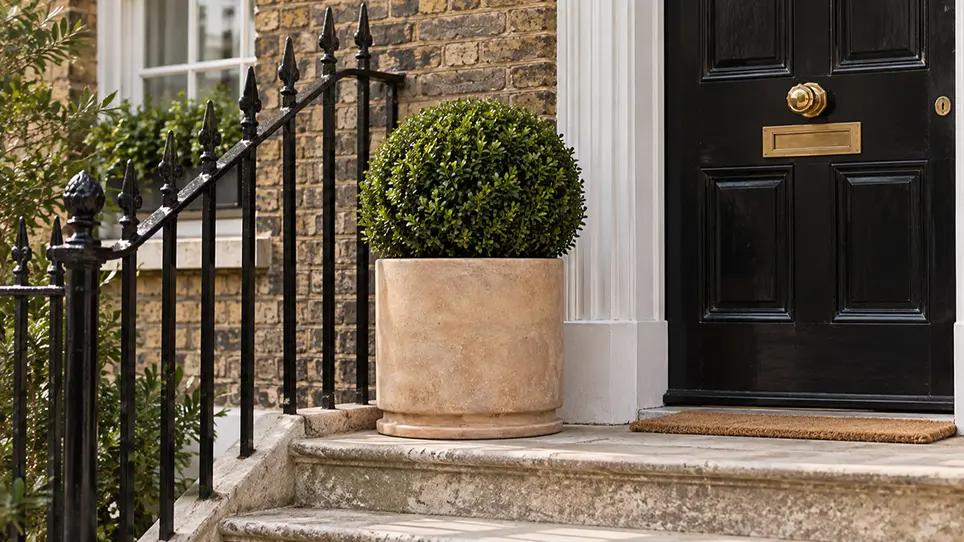
A courtyard, balcony or roof terrace can carry the same planting language in large containers. Dwarf Pennisetum, compact Salvia and a flat-topped Sedum in deep, free-draining pots give the same contrast of spike, disc and plume on a reduced footprint.
The principles hold at any scale, and they begin with the site: soil or compost, aspect and the space you have all shape what will establish well. Choosing plants that suit the conditions — rather than imposing a look regardless — is what makes these schemes last, so a border evolves and improves from one year to the next with little intervention.
Whether you are filling an established border or starting a terrace from scratch, Boma's planting team works across North London within five miles of Kentish Town.
- Garden Planting Service — considered planting schemes for existing beds, borders and patios: the natural fit for a naturalistic border.
- Courtyard & Roof Terrace Container Planting — the same style in containers, matched to the microclimate of a courtyard, balcony or roof terrace.
- For a garden being reimagined from the ground up, the Garden Design & Landscaping Service covers the full scheme, with hard landscaping delivered through a trusted recommended landscaper.
Frequently Asked Questions
What Is a Naturalistic Garden Design?
Naturalistic garden design sets structural perennials such as Echinacea, Rudbeckia and Salvia alongside ornamental grasses in loose, overlapping drifts, recreating the informal rhythm of a wildflower meadow within a defined border. The palette favours plants that hold their seedheads and offer interest across the whole year rather than at a single peak.
Which Perennials Suit Naturalistic Borders in London Clay Soil?
Echinacea, Rudbeckia, Salvia nemorosa, Verbena bonariensis, Achillea and Hylotelephium all establish well on London clay — provided horticultural grit and organic matter have improved drainage at planting time. Almost all of them dislike sitting wet over winter, so on heavy ground that drainage step is what makes the difference.
Do Naturalistic Borders Need More Maintenance Than a Traditional Border?
Generally less. A single late-winter cutback replaces the regular deadheading and staking a traditional herbaceous border needs, because the plants and grasses are chosen to support themselves. Some, such as Verbena bonariensis and Stipa tenuissima, self-seed gently between clumps, and the planting tends to improve year on year as it matures.
Can a Naturalistic Planting Style Work in a Small Garden?
Yes. Compact cultivars such as Pennisetum 'Hameln' and Rudbeckia 'Kissing SmileyZ' keep the scheme in proportion, and the same style transfers into containers on a courtyard, balcony or roof terrace. Boma's Courtyard & Roof Terrace Container Planting service can plan a scheme for a space with no open ground to plant into.
What Influenced Modern Naturalistic Planting?
The New Perennial movement, which emerged in the Netherlands and Germany from the 1980s and is most associated with the Dutch designer Piet Oudolf. It arranges perennials and grasses in loose, meadow- and prairie-inspired communities that give interest through foliage, flower, seedhead and winter form. It is not a native-only approach — many of its signature plants are North American prairie species, chosen for how they perform and combine.
You'll find the perennials and grasses behind this style — Echinacea, Rudbeckia, Salvia, Pennisetum, Stipa and more — at our garden centre at 51–53 Islip Street, Kentish Town NW5 2DL, alongside the compost and grit that help them thrive on London clay. If you're in Hampstead, Highgate, Primrose Hill or further across the city, we deliver to all postcodes within the M25. The team in store can help you build a border that suits your soil, light and space.
Come and see this season's naturalistic planting in person at 51–53 Islip Street, Kentish Town NW5 2DL — the team can help you choose perennials and grasses for your own borders. Prefer to plan first? Book a Garden Planting Service consultation, or order perennials, grasses and compost for delivery across the M25.
Shop Perennials & Grasses Book a Consultation Check Delivery