

With their rich, earthy colours and fragrant plants, Mediterranean-style gardens instantly evoke that holiday feeling, and you don’t even need to get on a plane to experience it! Here’s how to make a Mediterranean paradise in your own back garden.

- Start with the soil. Most Mediterranean plants do best in well-drained soil, so dig in plenty of organic material, such as well-rotted farmyard manure, to improve soil drainage. If your garden is on very heavy clay, you may need to plant in well-placed terracotta pots and urns for a Mediterranean effect, as plants like lavender will struggle to survive cold wet winters on clay soil.
- Consider adding a gravel area or using a paved courtyard or patio to create your Mediterranean atmosphere. To create a gravel area, first clear any weeds and turf, then put down a weed membrane. Spread a 30-40mm layer of gravel over the membrane, using larger grades of gravel (10-20mm) for paths and finer grades (between 6-8mm) around plants. When planting through a weed membrane, make an X-shaped cut where your plant is to go and fold back the flaps of membrane, then dig a hole, place the plant in it, backfill with soil and fold the membrane back around the base of the plant.
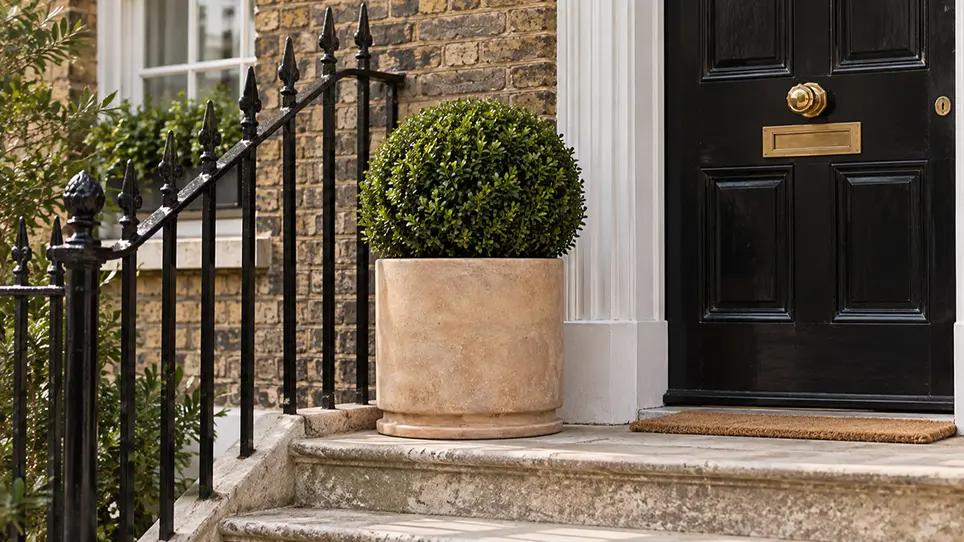
- Evergreens like clipped yew and bay are ideal for adding structure to your Mediterranean garden. Irish yew (Taxus baccata ‘Fastigiata’), with its narrow, upright silhouette, provides vertical accents in borders, and rounded topiary balls look good either side of a path, contrasting with softer flowering plants. Clipped ‘lollipop’-style bay trees in pots add a classic Mediterranean touch to frame an entrance.
- Plant aromatic Mediterranean shrubs like lavender, rosemary and thyme along paths so that you release the scent of the leaves as you brush past, or place them around a seating area where they will perfume the air on a sunny day.

- Brightly flowering pelargoniums spilling from terracotta pots are a must for any Mediterranean garden. For added appeal, include a few scented-leaved pelargoniums as well. For more colour, fill beds with Mediterranean favourites like salvia, rock rose (Cistus) and catmint (Nepeta).
- Herbs like chives, basil, mint, marjoram, sage and parsley are essentials for any Mediterranean kitchen, and they look pretty in pots or herb beds too. (Always plant mint in a pot, not in the ground, to stop it spreading.)
- A huge part of Mediterranean-style life is all about getting together with friends and family! A pergola adds extra appeal to an outdoor seating area, with shade provided by climbing plants like passionflower (Passiflora caerulea), star jasmine (Trachelospermum jasminoides) or climbing roses.

- Choose your garden furniture carefully to suit your Mediterranean theme. Wooden or wrought iron chairs and tables will fit perfectly, and will weather beautifully over the years.
If you’re dreaming of making your own Mediterranean getaway, why not start with a visit to our centre? With our fantastic range of plants, pots and garden furniture, you can create the garden of your dreams!