

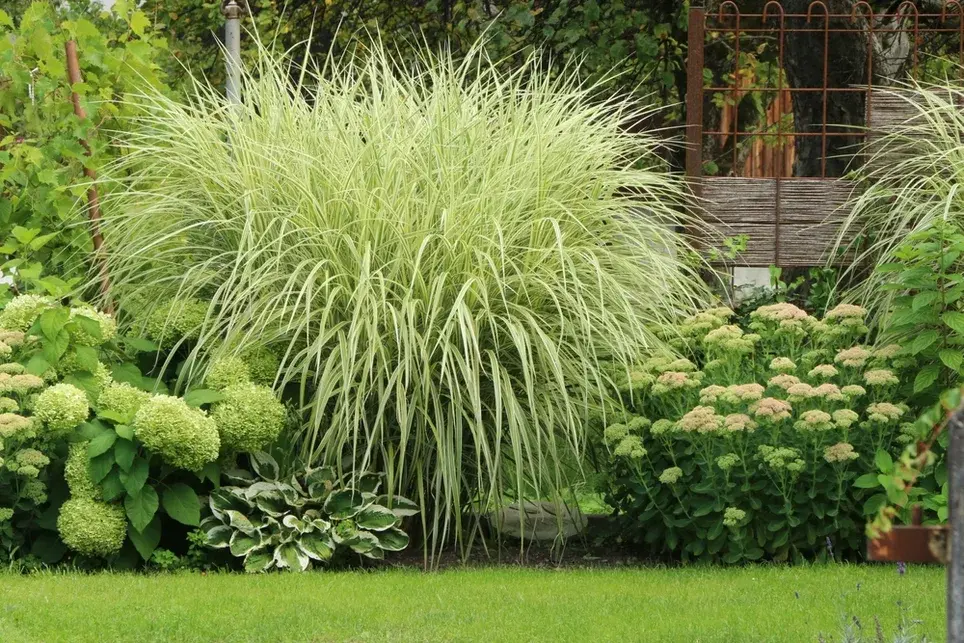
As September arrives in the UK, gardens begin their annual shift from the vibrancy of summer to the crisp richness of autumn. This is the month to prepare for cooler days ahead, tackle key seasonal tasks, and set the stage for thriving displays in spring.
In this guide, Boma’s horticultural team share top tips for September gardening, with advice for Londoners across Hampstead, Highgate, Belsize Park, Camden, Muswell Hill, Finchley, St John’s Wood, and beyond. From balconies and roof terraces to larger family gardens, discover how to make the most of the season while keeping your plants healthy and vibrant.
Visit Boma Garden Centre for expert gardening tips, product advice, and stunning London displays.
What Jobs To Do in the Garden in September
As autumn approaches, it’s time to make the most of the milder weather and prepare your garden for the months ahead. September gardening is all about the prep, tidying up summer growth and protecting plants to set the stage for a thriving spring. Top September gardening jobs might include:
- Maintaining lawn and bedding
- Refreshing vegetable garden
- Preparing for Autumn & Winter by mulching, protecting and netting ponds
- Adding support for wildlife (bird feeders, etc)
- Mixing up container garden with new pots and planters
These small seasonal tasks will keep your garden healthy and vibrant through the changing weather. A little preparation now means less work in the colder months and a head start for next year’s growth.
Shop online for all your autumn gardening needs. Get next day delivery within the M25.
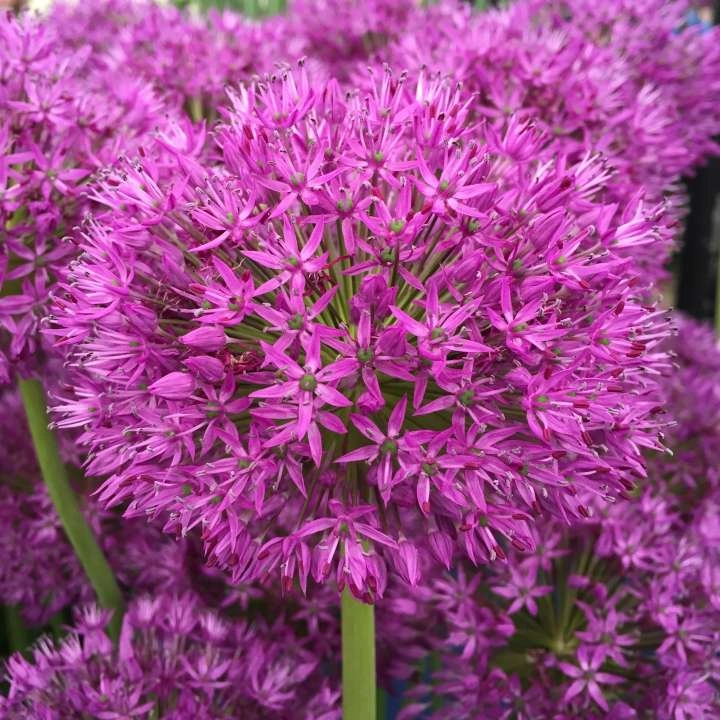
Average September Weather Conditions To Consider (UK)
Here’s a concise breakdown of typical weather in London during September, essential for planning your gardening tasks for this month and protecting your plants.
| Weather Factor | Typical Range / Condition |
| Daytime Highs | Around 20 °C (68 °F), gradually dipping to about 18 °C (64 °F) by month-end (Weather Spark) |
| Nighttime Lows | Typically between 10 °C (50 °F) and 12 °C (54 °F) (Wanderlog) |
| Rainfall | Average monthly precipitation ≈ 44–49 mm, with around 12–15 rainy days (Time and Date) |
| Sunshine | Approximately 11–12 hours of daylight daily; clear to partly cloudy around 48% of the time (Wanderlog) |
| Humidity & Wind | Humidity hovers around 75–78%, with moderate breezes typical (Time and Date) |
What this means for your gardening
- Mild days and cool nights make this a great transition month—perfect for planting spring bulbs and autumn perennials while roots establish before winter.
- Moderate rainfall helps newly planted or mulched beds—but having mulch and quick water sources (like watering cans or hoses) can be a helpful backup.
- Still-decent daylight hours allow natural light for extending outdoor tasks and caring for sun-loving houseplants like Monsterra indoors.
- Stable humidity and gentle wind reduce stress on plants—ideal for container gardening and hardening off seedlings.
Top September Gardening Tips For a Strong Start to Autumn
Master September Gardening Jobs: Lawn and Garden Maintenance
Boost your lawn’s health for the winter months by aerating with a garden fork and applying a layer of top dressing. This improves air circulation and helps bare patches recover quickly. As a timely tip, new lawns can be sown now while soil temperatures remain warm from the summer, allowing grass to establish before winter arrives. Add targeted products, like Miracle EverGreen Lawn Food, Weed & Moss Control, for a lush, green lawn free from weeds and moss.
In flower beds, you can clear away fallen leaves and spent annuals. By September you should only need a light trimming for herbaceous perennials such as lavender, salvia, and gaura. Cut back dead growth to strengthen plants for the next few months. This sets your borders up for autumn and makes space for new seasonal bedding plants.
Refresh Your Vegetable Patch & Start the Autumn Harvest
Take advantage of September’s remaining warmth to sow hardy annuals and winter crops in your vegetable patch. Pick blackberries and autumn raspberries, and harvest late-summer vegetables for next year’s crop. While it’s too late to start planting potatoes now, hardy greens and salads at this stage will work perfectly.
Prepare soil by adding organic matter (compost or leaf mould) to rejuvenate beds for autumn planting.
Prepare for Autumn & Winter: Mulch, Protect, & Net Ponds
Apply mulch around perennials and shrubs to protect roots from first frosts and retain soil moisture through winter. Net ponds to prevent autumn leaves from clogging water features and reduce maintenance.
Houseplant Focus: Monsterra and Easy-Care Varieties
As natural light diminishes, focus on caring for indoor plants like Monsterra. Place your plants near bright, indirect light and reduce watering—allow soil to dry slightly before the next water. Other houseplants that thrive in autumn include ZZ plant, snake plant, and pothos—these are generally straightforward to grow and perfect for busy lifestyles.
Support Wildlife with Feeders and Houses
As birds become more active and natural food wanes, set up bird feeders and bird houses to attract local species and support them through the winter months. This also provides enjoyable wildlife watching from your home.
Get Creative with Pots, Hanging Baskets, and Containers
Experiment with glazed, terracotta, polystone or metal garden pots—plant hardy bedding plants and bulbs for autumn and early winter display. Hanging baskets can be refreshed with violas and hardy annuals. Use moisture-control compost to reduce watering frequency.
September Gardening Tips By Urban Garden Type
Even in urban spaces, September is an important month for preparation: refreshing displays, protecting plants, and preparing for the colder months ahead. September transforms London’s diverse outdoor spaces in unique ways.
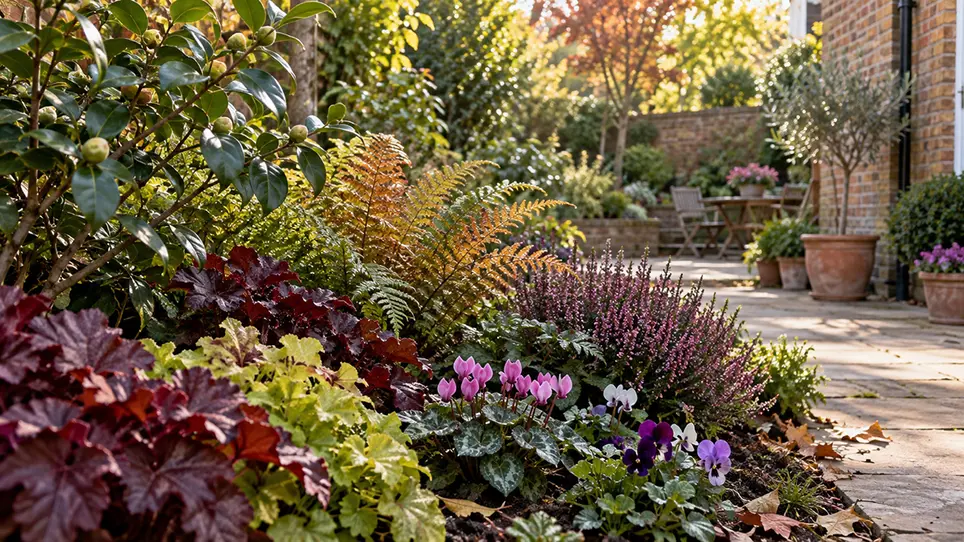
- A shady Highgate courtyard comes alive with ferns, anemones, and cyclamen.
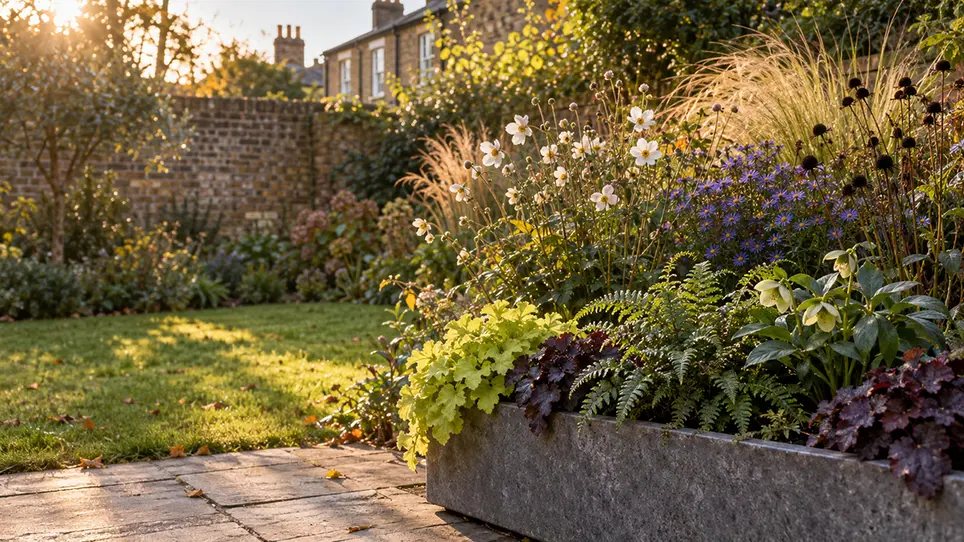
- In Hampstead gardens, ornamental grasses and rudbeckia sway in the autumn breeze.
- On Camden roof terraces, sedums, thyme, and herbs thrive in well-drained pots.
- Belsize Park balconies brighten with violas, primrose, and hardy cyclamen.
- In St John’s Wood patios or Muswell Hill family gardens, small trees and shrubs bring lasting structure.
Wherever you are (balcony, courtyard, or large North London garden) seasonal planting this month ensures resilience, colour, and interest well into winter.
| Garden Type | Key Priorities in September | Planting Ideas | Care & Maintenance Tips |
| Balcony Gardens | Refresh containers with hardy bedding and spring bulbs. Add evergreen structure for year-round interest. | Violas, pansies, primrose, dwarf conifers, cyclamen. | Use frost-proof pots, raise containers on feet to prevent waterlogging, and group plants for shelter. |
| Rooftop Gardens | Prepare for high winds and temperature changes. Secure pots and trellises, mulch generously. | Ornamental grasses, sedum, heuchera, herbs like thyme and rosemary. | Install windbreaks, check drainage, and water deeply before dry autumn spells. |
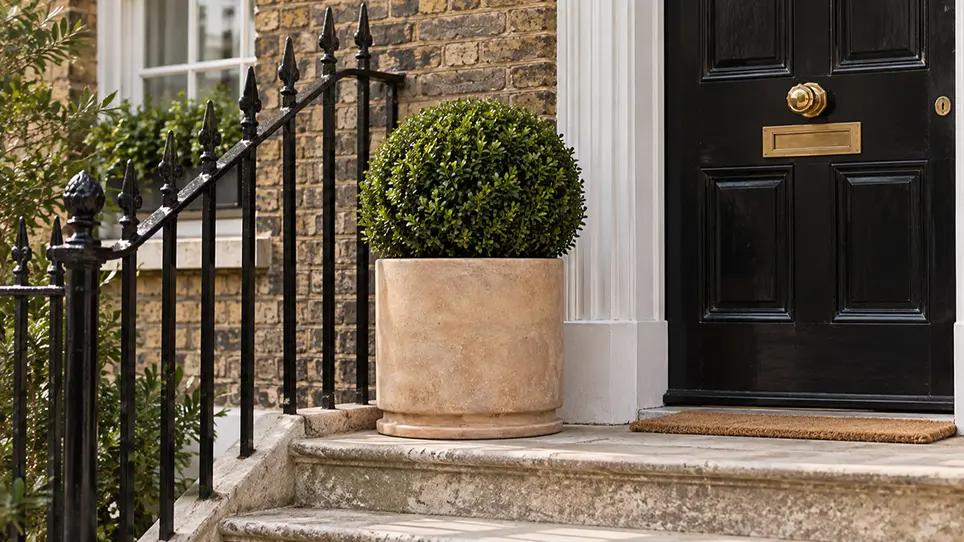
| Urban Courtyard / Small Patios | Maximise vertical space with wall planters or shelves. Introduce structure with pots of shrubs or small trees. | Bay tree, olive tree, hebe, small acer, late-flowering perennials. |
Sweep leaves regularly, ensure pots get enough light, and rotate planters for even growth. |
Thinking bigger? Boma’s Premium Planting Service offers tailored advice and planting for London gardens—from compact Finchley patios to expansive Hampstead plots.
What To Plant in Your September Garden
Evergreen shrubs, perennials & grasses
Transition your garden by planting evergreen shrubs such as Heuchera and Hebe, autumn-flowering perennials like asters and sedum, and ornamental grasses. These plants provide structure and colour throughout the colder months. Mulch around new plants and trees with compost or bark to insulate roots and suppress weeds.
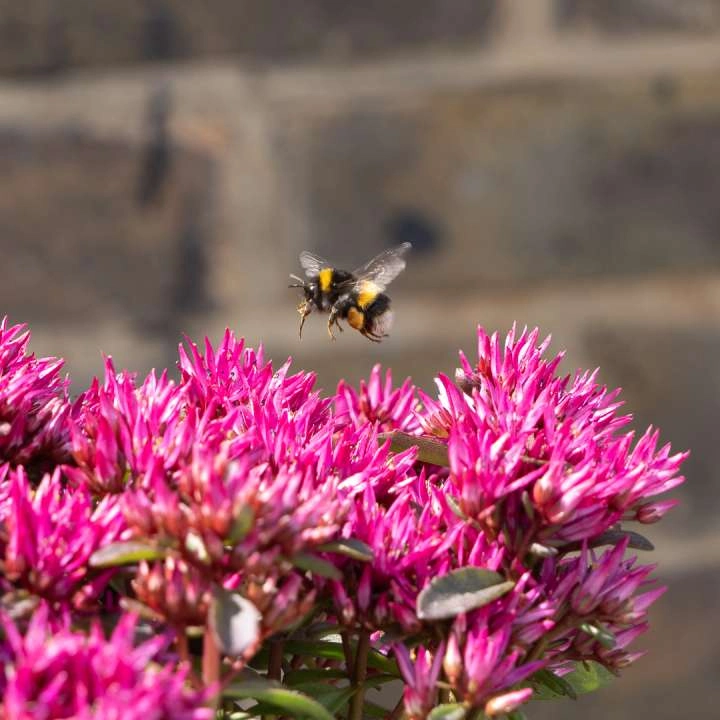
Perennials planted now will have enough time to settle and establish before spring and summer next year. It is possible to plant perennials that are now established in pots already for some autumn colour, such as Hylotelephium spectabile (Sedum).
Shop Shrubs & Perennials
Fruit trees and berries
September onwards is an excellent time to introduce new container fruit trees. Plant them in containers now, and they’ll be well established by spring. Bare-root stock should be saved until November-March. Strawberry runners can also be planted at ground level for fruitful displays. Container roses can be planted in September, but cooler months are preferable.
Shop Bay Trees & Olive Trees
Spring-flowering bulbs
September is the optimum time to plant spring bulbs: daffodils, crocus, muscari, and alliums need the winter chill to flower in spring. Use bulb fibre compost for best results. Try lasagna planting in pots by layering different bulbs so they bloom in succession—ideal for garden and kitchen windowsills.
Don’t forget to plant hardy annuals such as violas and primrose, which add colour as summer bedding plants fade. Sow hardy annuals now for robust spring blooms.
Cut flower seeds
Not only can you plant out trees, shrubs and perennials, but you can also still sow seeds. If you would like an abundance of colour, great for pollinators and cutting - sowing in autumn is a great way to get them started easily. Sow seeds for a colourful patch such as wildflowers, cornflower, and poppies.
Salad seeds
There are many different types of salads that can be sown and will grow in the colder months. Not only can you be harvesting them to enjoy as part of a meal, but they will also keep colour and interest in your garden. Sow seeds such as Pak Choi, Mizuna, Spinach, and Giant Red Mustard.
Visit Boma Garden Centre for Expertise & Supplies
September is the perfect month to plan the next phase of your garden. Boma’s Premium Planting Service offers tailored advice and hands-on planting for everything from Muswell Hill roof terraces to larger Hampstead gardens. Our team designs combinations of shrubs, perennials, and bulbs that thrive together, ensuring your garden carries interest and colour into the cooler months.
Visit Boma Garden Centre
Gardening Tips September: FAQs
What should I be doing in my garden in September?
As summer fades and autumn takes hold, focus on seasonal tasks that protect plants and prepare for next year’s growth. Harvest late-summer crops, plant spring bulbs, clear away spent annuals, and mulch borders to insulate roots. Net ponds, tidy lawns, and refresh containers with hardy bedding for autumn colour.
What should I plant in September in the UK?
Plant spring-flowering bulbs such as daffodils, crocus, and alliums, along with evergreen shrubs and autumn perennials like asters, sedum, and ornamental grasses. Introduce fruit trees, strawberry runners, and currant bushes to establish before winter. Sow hardy salad greens (spinach, pak choi, and mizuna) for fresh winter harvests.
What to cut back in September in the UK?
A light trim for faded herbaceous perennials like lavender (best fully pruned in July-August) and salvia, cut back dead annuals, and deadhead dahlias and roses to extend flowering. Prune summer-fruiting raspberries and clear away fallen leaves to reduce pests and disease. Lightly tidy evergreen shrubs, but avoid heavy pruning until spring.