

Even the shadiest room in the house deserves a houseplant to add a touch of style. This list of some of the best indoor plants for dark rooms will help you find the perfect plant for any shady space.
8 Houseplants that don’t need much light
-
The cast iron plant (Aspidistra elatior) gets its name because it’s very hard to kill! It can cope with drought, low light and general neglect; in return, it’s excellent at cleaning the air. Don’t over-water it – let the compost dry out before watering to avoid root rot. Wipe the leaves occasionally with a damp cloth to remove dust.
-
Lucky bamboo (Dracaena sanderiana) has long bamboo-like stems topped with narrow green leaves. It’s said to bring good luck, especially when received as a gift. Although it does best in bright indirect light, it will cope with moderate shade. Water regularly.
-
Golden Pothos (Epipremnum aureum) is also known as Devil’s Ivy, thanks to its ability to grow in various conditions. Its heart-shaped variegated leaves will show stronger colour in bright indirect light, but it will also grow happily in low light. The long stems can be trained to climb upwards on supports or allowed to trail elegantly. Allow the compost to dry out between waterings and mist occasionally to increase the humidity around the plant.
-
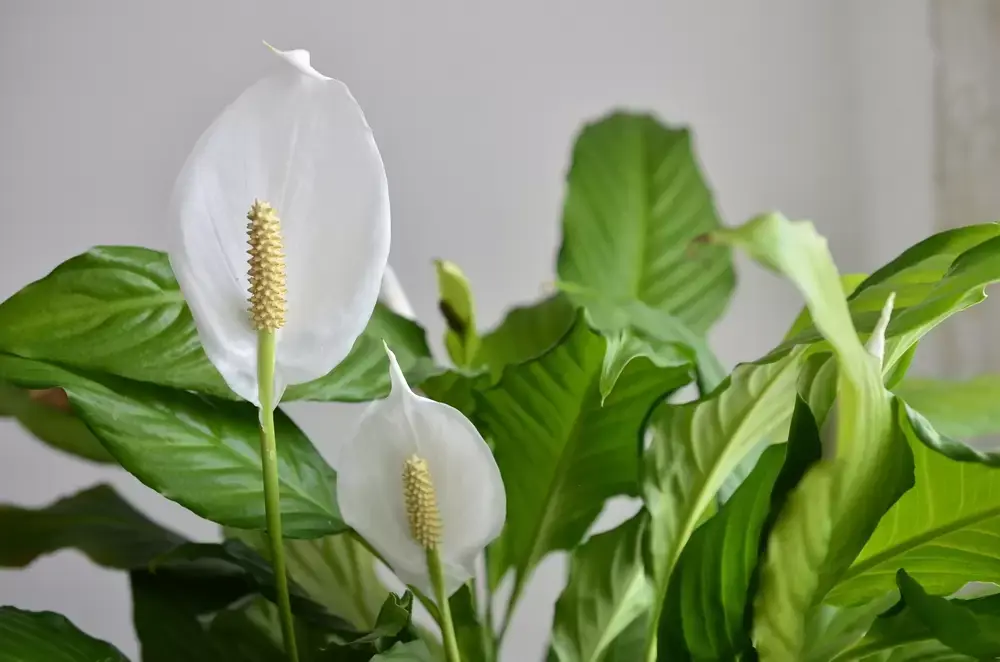
The Peace lily (Spathiphyllum wallisii) is one of the classic plants for shady rooms, with large glossy green leaves and occasional elegant white hooded flowers. It grows well in indirect light and likes to be watered regularly, preferably with rainwater or filtered water. Peace lilies are good at removing toxins from the air.
-
The snake plant (Sansevieria) is excellent for anyone struggling to keep a houseplant alive. With long, upwards-pointing variegated leaves, this tough, reliable plant looks extraordinary and contemporary and copes well with shade and neglect. Let the compost dry out between waterings to avoid root rot.
-
Chinese evergreen (Aglaonema commutatum) forms a compact clump of glossy green leaves. It grows well in low light levels, although the variegated varieties will have better colour in bright indirect light. Water regularly and mist occasionally.
-
Spider plants (Chlorophytum comosum) will grow in most positions out of direct light. They will tolerate some neglect, but remember to water them regularly. Spider plants are very easy to propagate and make great gifts for family and friends. Cut off the baby spider plants that occasionally appear on long stems, pot them up in individual pots and grow on.
-
The Money tree (Pachira Aquatica) probably won’t make you rich, but its five-fingered leaves and braided stems make it a beautiful houseplant! It prefers bright indirect light but can grow under fluorescent light and is ideal for an office. Money trees need regular watering, but don’t let them sit in wet compost for long periods as this could cause root rot.
Come in and see the wide range of beautiful houseplants in our centre today. You’re sure to find one that’s just right for you!