

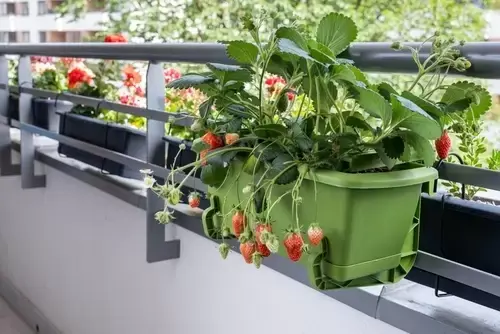
Imagine picking and eating your own fresh fruit straight from your balcony garden. It’s perfectly possible to do – many fruit trees and bushes grow well in pots and look beautiful and taste delicious. Here’s how to grow your own fruit on your balcony.
Tips for balcony gardening
When gardening on a balcony, there are a few things to bear in mind:
- Pots filled with wet soil can be weighty, so take care not to overload your balcony. Lightweight plastic or fibreglass pots are a better bet than heavy terracotta, provided they are securely fixed down and won’t blow around.
- Most fruit needs at least 6 hours of sun per day, but there are also fruits which will do well on a shady balcony, like alpine strawberries, gooseberries and blackcurrants. Look at how much sun your balcony gets and choose the fruits that will grow best there.
- Balconies are often windy, so put up a windbreak to protect your plants. Bamboo cane screening fixed to the balcony railings in the direction of the prevailing wind (usually the west-facing side) is ideal.
- Look for clever space-saving solutions like balcony planters that hook over balcony railings.
Balcony gardens and pollination
All plants need to be pollinated to produce fruit. Some fruits need to be pollinated by a different variety of that fruit, while others are self-fertile. Since space is limited on a balcony, plant self-fertile fruit varieties wherever possible, it’s also worth having a few flowering plants to attract bees and other pollinators to your balcony garden. Coastal and Mediterranean plants such as sea thrift, lavender and thyme cope well with exposed conditions on balconies and are great for attracting pollinators.
Fruit to grow on balconies
- Strawberries are easy to grow in pots and look good even when the strawberry harvest is over. Look for new varieties like the ‘Summer Breeze’ range with colourful flowers and a very long harvest period.
- Ballerina apples are ideal for pots with their very upright shape, and fruits held on short side stems off the main trunk. However, they are not self-fertile, so you’ll need a second apple tree or crab apple nearby to allow for pollination. Apple trees need at least 6 hours of sun a day to do well.
- Blueberries need acidic soil, so they’re ideal for pots filled with ericaceous compost. Their white spring flowers and beautiful autumn foliage give them added appeal. If you only have space for one plant, choose a self-fertile variety like ‘Bluecrop’ or ‘Sunshine Blue’ but if possible, grow two different types for a better harvest.
- Gooseberries will grow well in a large pot filled with loam-based compost, and they can cope with some shade. They’re self-fertile, so you only need one plant for a good harvest.
With our superb range of soft fruit and fruit trees to choose from, you’ll soon be harvesting your own delicious fresh fruit. Visit us soon to get your balcony garden started!