

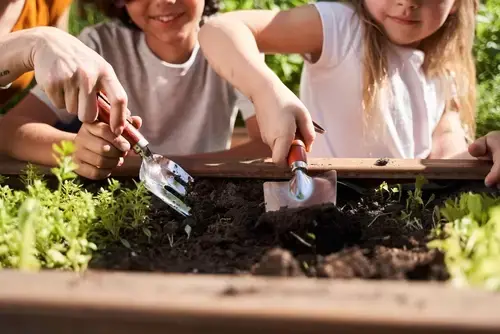
Gardening is great for children, letting them learn about nature and their environment while developing practical skills. Help your kids develop green fingers with these fun gardening activities!
Garden activities for children
-
Sunflowers are spectacular and easy to grow from seed, and children will enjoy seeing whose sunflower will grow the tallest. For really tall sunflowers, sow Sunflower ‘Mammoth’, ‘High Hopes’ or ‘Tall Timbers’.
-
Plant seed potatoes. This needs a bit of patience as they take at least three months before they’re ready to harvest, but in the meantime, kids can keep watching for shoots to appear and earthing up the plants, plus there’s all the fun of digging up the potatoes later on.
-
Sow fast-growing seeds in the shape of your child’s initials so that they can enjoy the effect when the seedlings appear. Radishes and salad leaves are quick to germinate and can be left to grow for a tasty harvest.
-
Track your garden snails. Go out in the evening armed with a bucket and a bottle of correction fluid or nail polish and gather all the snails you can find. Mark the shells with correction fluid or nail polish, then dispose of the snails somewhere outside your garden. Over the next few days, watch to see whether any of your snails return.
-
Small children love to water plants. Please give them a small watering can or make one out of a plastic bottle with holes poked into the lid. Just keep an eye on things to make sure no plants get drowned by over-enthusiastic watering!
-
Get the kids onto pest control duty, wiping aphids off plants and picking cabbage white caterpillars off brassicas. It’s a great way to learn about bugs and the garden's ecosystem.
-
Make a seed bomb. You’ll need powdered clay from a craft shop, wildflower seeds, and peat-free compost. Mix 1 cup of seeds, 5 cups of compost and 2-3 cups of clay powder. Add water gradually, mixing the ingredients until they stick together. Roll the mixture into balls and leave them to dry. Once the seed bombs are dry, you can all have fun throwing them where you want your wildflowers to sprout up!
-
Make cress heads. Wash out empty yoghurt pots, remove the labels and paint faces onto the pots. Fill the pots with damp cotton wool, scatter cress seeds over the top of the cotton wool and gently press them down. Place the pots on a sunny windowsill. The cress ‘hair’ will appear in a few days and can be snipped off to add to sandwiches or scattered over soups.
-
Make a log pile. Gather any stray logs and twigs in your garden and pile them up in some dappled shade. Keep an eye on the pile over the year, and you should be able to spot beetles, woodlice and other wildlife making their homes there.
Visit our centre and get the whole family gardening with our fantastic range of garden tools, seeds and plants. It’s a great day out!