

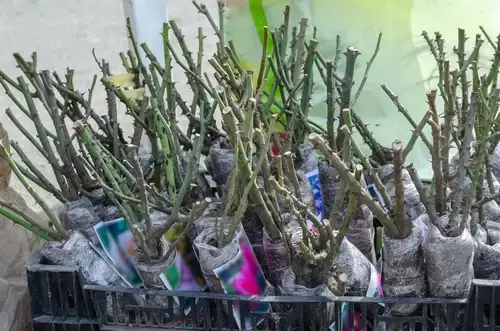
With their beautiful flowers and superb fragrance, roses add glamour and style to any garden and planting them as bare-root plants allow you to choose from a wide range of varieties. They’re cheaper than container-grown roses, so you can indulge yourself without hurting your pocket! Here's our guide on how to plant bare-root roses and how to take care of them.
Preparing to plant your bare root rose
Bare root roses are roses that have been grown outdoors in the ground and then dug up for sale in winter while dormant, with no soil on their roots. Because the roots are bare, it’s essential not to let them dry out, so bare root roses ideally need to be planted as soon as possible. Choose a spot that gets at least four hours of sun a day, and prepare the ground for planting beforehand by digging it over and clearing any weeds and stones.
If you can’t plant your rose straight away, place it somewhere cool and dark for a few days. If the conditions aren’t suitable for planting for several weeks (for example, if the ground is frozen or waterlogged), fill a bucket with compost and plant your rose in this temporarily. Keep the compost moist (but not soggy) until you are able to grow your rose outside.
How to plant a bare root rose
-
Before planting your rose, soak the roots in a bucket of water for at least two hours to rehydrate them.
-
Dig a hole big enough to allow the roots to spread out naturally.
-
Loosen the soil at the base of the hole with your fork, and mix in some well-rotted farmyard manure.
-
Place the rose in the hole so that the graft union (the bulge at the bottom of the stem) is approximately 5cm (2in) below soil level. To check if your rose is at the correct depth, lay a bamboo cane across the top of the hole and measure from this. If you’re planting a climbing rose, place it in a hole at a 45° angle, leaning it towards the wall or support against which it will be trained.
-
Backfill the hole and lightly firm the soil with the heel of your boot. Water well to settle the soil around the roots of the rose.
How to care for roses
Give your roses a little care and attention, and they’ll reward you with a fantastic display of flowers that can last all summer long. Feed them in spring with a rose fertiliser and mulch around the base of the plant with well-rotted farmyard manure. Water them regularly and thoroughly, especially during dry spells. Give them another feed in mid-summer and deadhead faded blooms to encourage the plants to keep flowering.
With our extensive range of roses, you’ll find the perfect rose for your garden. Visit us today to see what’s in store.