

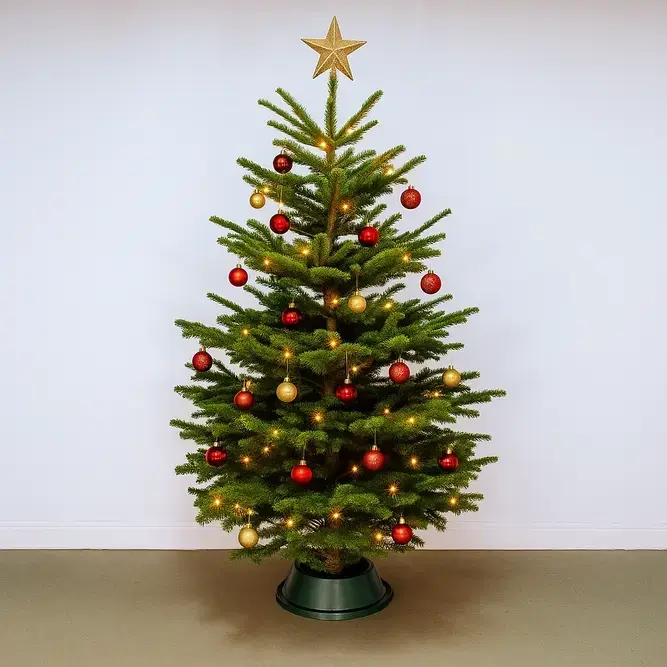
Choosing your Christmas tree is one of the highlights of the festive season — but with so many species and options, where do you start? While we’ve covered when and where to buy real Christmas trees in London, this guide is all about the different types of Christmas trees available, and how to choose a real Christmas tree that’s right for you and your home.
At Boma Garden Centre in Kentish Town, we help North Londoners find the perfect Christmas tree for their home, based on style, space, and sustainability. For those seeking a classic holiday look, the appeal of a traditional Christmas tree remains timeless.
This article will help you navigate the most popular Christmas trees, highlighting their key features and suitability for different homes, whether you’re in a compact Islington flat with underfloor heating or a Highgate townhouse with tall ceilings. Understanding the difference between cut and pot-grown trees — and the best species for your conditions — will make your choice simple and satisfying.
Shop Real Premium Christmas Trees at Boma Garden Centre
Key Considerations For Choosing the Right Tree
- Space: Measure your room; choose a slim or full tree accordingly.
- Decorations: Heavy ornaments need strong branches; trees with stiff branches and upright branches are ideal because stiff branches hold decorations securely and upright branches provide a strong vertical structure for displaying ornaments. Trees with less sturdy branches are best suited for lightweight ornaments, while delicate ones suit open structures.
- Location: Keep your real tree away from heat sources and water it daily to help maintain its freshness.
- Artificial: Look for realistic artificial Christmas tree types like Balsam Hill’s Fraser or Balsam Firs if you prefer artificial.
Pot-Grown vs Cut Christmas Trees: What’s the Difference?
Pot-grown trees are an excellent choice for eco-conscious Londoners who want to reduce waste. They thrive on north-facing balconies or small gardens after the festive period — given good drainage and partial shade. A pot-grown tree can also be enjoyed as a living tree indoors during the holidays and then planted outdoors, making it a sustainable and reusable option. Some species are prized for their dense tree structure, adding to their visual appeal.
Fresh cut trees, on the other hand, are best if you prefer a full, symmetrical shape and a lighter, easier-to-handle option. Many artificial Christmas trees are now designed to closely resemble trees cut from natural forests, offering a realistic appearance for those who want the look of freshly cut trees without the maintenance. To extend the life of a cut tree, ensure you keep it away from direct heat sources and place it in a water-filled stand, which helps reduce needle drop.
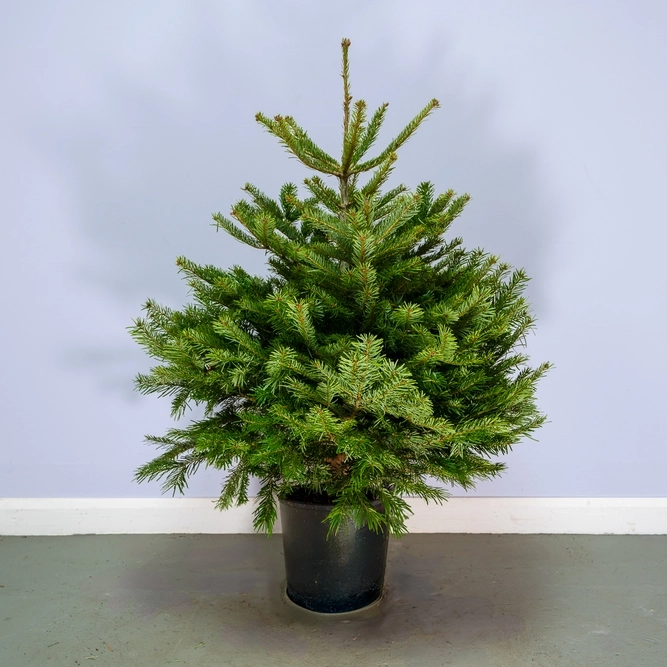
| Feature | Pot-Grown Tree | Fresh Cut Tree |
|---|---|---|
| Root System | Tree comes with its full root ball, allowing it to live after Christmas as a living tree that can be planted outdoors. | Cut at the trunk base; cannot be replanted. |
| Longevity Indoors | Can stay fresh longer with proper watering and acclimatisation. | Typically lasts 4–6 weeks before drying out, but proper care can help minimize needle drop and extend freshness. |
| Sustainability | Can be reused each year or planted outdoors post-Christmas as a sustainable living tree. | Fully recyclable but single-season use. |
| Weight & Portability | Heavier due to roots and soil. | Lighter and easier to position. |
| Cost | Generally higher due to long-term potential. | Lower upfront, ideal for one-time display. |
Best Christmas Tree Types: Choosing the Right Species for You
Each Christmas tree species has its own charm, scent, and shape — and knowing their traits helps you match your choice to your living environment. Traditional species of Christmas trees, especially fir trees, are popular for their attractive shape and festive appeal.
Nordmann Fir
- Best for: Families and busy households in Camden, Crouch End, or Finchley.
- Available sizes: 3ft (90cm) to 10ft (300cm).
- Expert tip: In London’s well-insulated homes, this species performs best in the coolest part of the room, away from radiators or sunny windows.
Fresh cut Nordmann Fir is prized for its soft needles, making it gentle to the touch and one of the most child- and pet-friendly options. It offers excellent needle retention, ensuring minimal mess throughout the season. Its dense foliage and classic pyramid shape create a lush, full appearance with deep green foliage that delivers that unmistakable Christmas look.
At Boma, our Nordmann Firs are premium grade and freshly cut for maximum freshness, ensuring they stay beautifully scented throughout the season.
Pot Grown Nordmann Fir are also available.
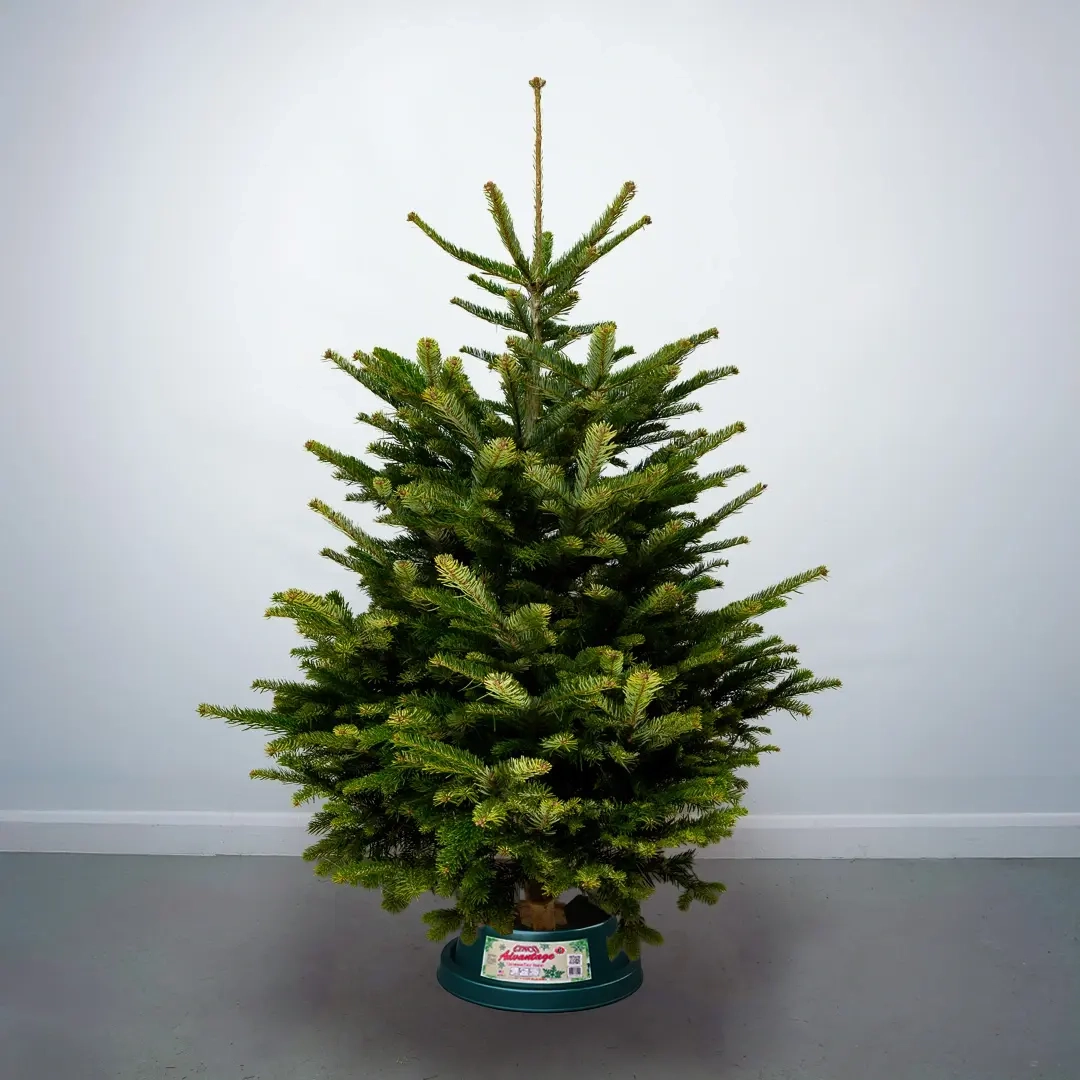
Fraser Fir
- Best for: Cosier spaces such as flats in Stoke Newington or Hampstead.
- Available sizes: 4ft (120cm) to 8ft (240cm).
- Expert tip: Regularly mist this species if your home air is dry — helpful in heated period properties where humidity drops quickly.
The Fraser Fir’s strong, evenly layered branches make it perfect for displaying ornaments without drooping. Its fresh pine scent enhances the festive atmosphere, filling smaller rooms with a traditional holiday aroma. The deep green needles add to its visual appeal and provide excellent needle retention.
Native to the Appalachian Mountains, the Fraser Fir’s unique characteristics are shaped by this natural habitat. Because of its dense needles and narrower profile, it suits the compact proportions of many London homes where space is at a premium.
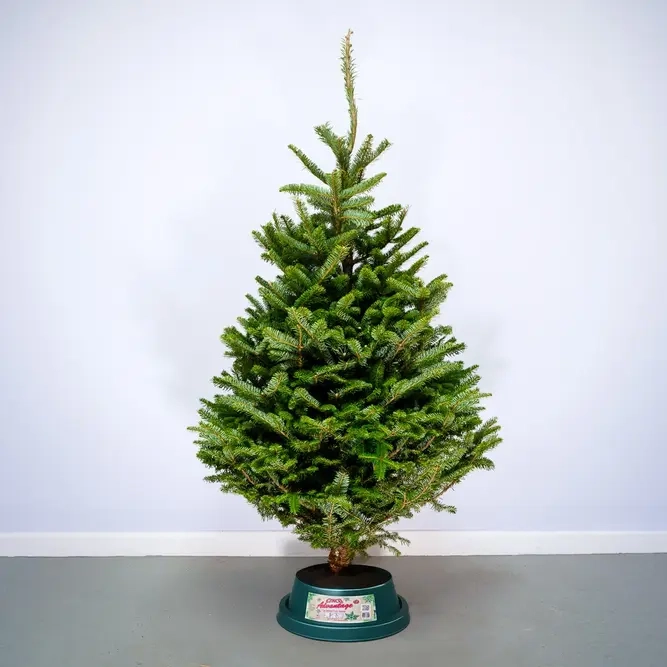
Noble Fir
- Best for: Larger homes or open-plan living spaces in areas like Muswell Hill or Highgate.
- Available sizes: 5ft (150cm) to 8ft (240cm).
- Expert tip: Though its needles hold well, ensure consistent hydration by using a stable, water-retaining stand, especially if placed near fireplaces.
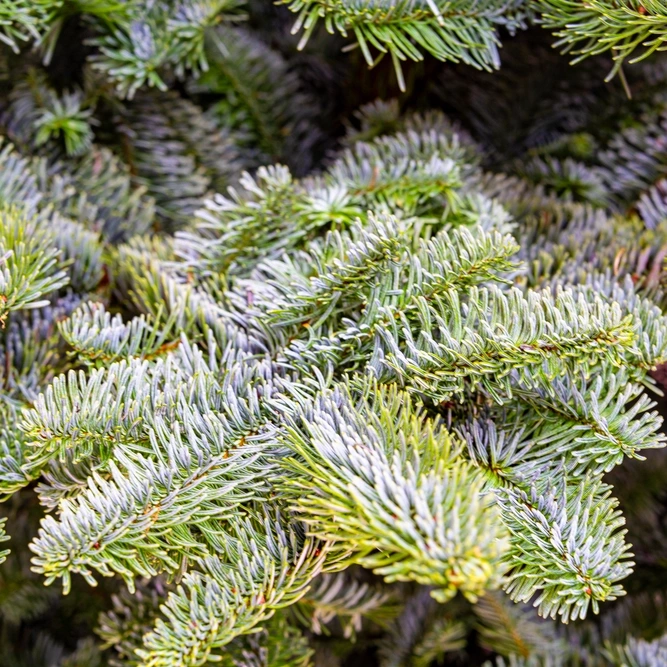
The Noble Fir is known for its elegant blue-green needles with silvery undersides, which add visual interest and sophistication. Its sturdy branches are ideal for supporting heavy decorations, making it perfect for statement displays — think bay window showcases or hall entrances with tall ceilings.
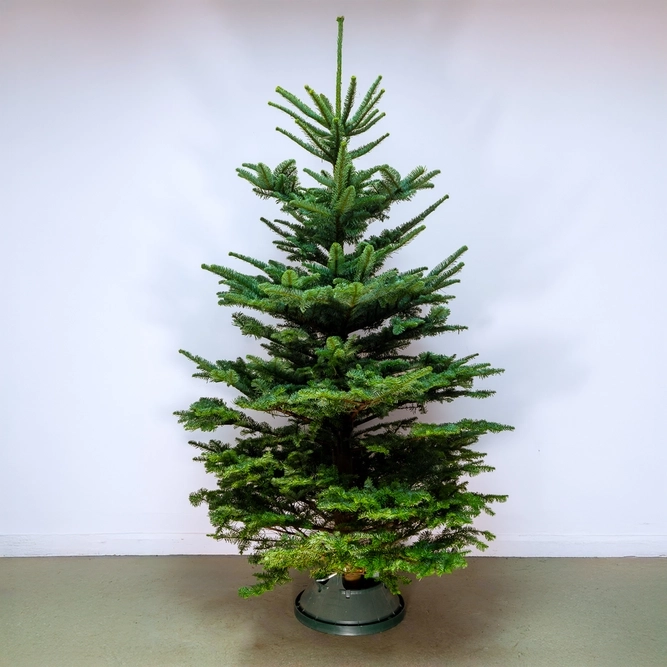
The Best Christmas Tree for Your North London Home
North London homes vary hugely — from Edwardian houses to modern flats — so choosing a tree to complement your space is key. Finding the perfect tree depends on matching the tree's features to your home's style and needs.
- Small flats and maisonettes: Choose a pot-grown Nordmann or Fraser Fir under 6ft. They bring festive cheer without overpowering the room and can even move outdoors post-Christmas.
- Traditional terraced homes: A cut Nordmann Fir (6–7ft) is a classic Christmas tree, offering the perfect balance of height, fullness, and durability.
- Open-plan or higher-ceiling homes: Opt for a cut Noble Fir (7–8ft) for majestic symmetry and robust branch strength.
- Eco-conscious households: Go for a pot-grown natural tree to replant or reuse each year — and consider Boma’s aftercare advice on acclimatisation and repotting.
Which type of real Christmas tree is best?
- Best Needle Retention: Nordmann Fir – UK’s most popular tree with soft, dark green needles and excellent needle hold for low drop all season.
- Best Scent & Strong Branches: Fraser Fir – narrower, pyramid shape with dark green needles and silvery undersides, great fragrance, and strong branches for heavier ornaments.
- Premium/Luxury Feel: Noble Fir – striking blue‑green to silvery needles, open, symmetrical structure and very good needle retention for a smart, high‑end look.
Local Expertise and Delivery
As one of the few independent garden centres in North London, Boma Garden Centre, Kentish Town, specialises in bespoke tree selection and local delivery. Our horticultural experts carefully hand-pick each tree, ensuring it’s freshly cut or properly established in its pot.
We also provide seasonal tips tailored to North London’s unique microclimates — from sheltered courtyards to leafy garden squares. Our team is knowledgeable about the origins of specialty trees, such as the Canaan fir, which originates from regions like West Virginia, ensuring a diverse and high-quality selection.
Visit Boma Garden Centre in-store for our full range of Real Nordmann Fir, Fraser Fir, and Noble Fir Christmas trees, available for local home delivery or collection in time for the festive season.
Shop Real Premium Christmas Trees at Boma Garden Centre
Boma Garden Centre · Kentish Town
Continue your planting journey with Boma
Explore curated plant collections, handmade pots & planters, and garden essentials, carefully chosen to help London's plant lovers create beautiful, thriving spaces.
Pots & Essentials
Independent garden centre · Expert plant advice · Local London delivery