

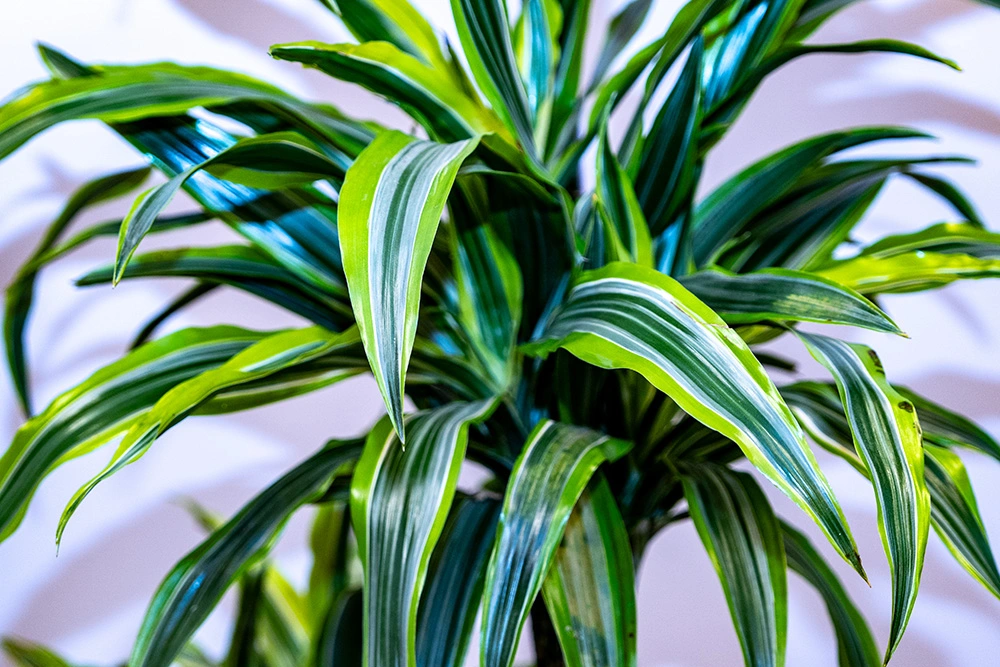
There's a particular graciousness to Dracaena. Watch one near an open window or a doorway and you'll see it — the slender fronds catching the faintest movement of air, shimmering and swaying with the breeze. It's a plant that seems to breathe with the room, responding to draughts and warmth with a gentle, almost meditative presence.
And yet Dracaena in neglectful households, can sit in a corner for weeks, and still quietly get on with living. Its fronds will droop, some leaves may dry and drop, but on the whole it doesn't sulk. It waits. It endures. Honestly, homes that are too busy to care for a Dracaena don't deserve this truly amazing specimen — but the plant forgives them anyway.
In our previous companion guide, we explored Dracaena's tropical origins, care essentials, and the breadth of varieties available at Boma. Here, we turn to a different question: how to choose a Dracaena not by colour or name, but by form — and how to place it with the intentionality of a designer.
Dracaena: The January Plant
There’s a particular case for Dracaena in winter. The Christmas tree comes down, the decorations return to the loft, and the corner of the living room feels suddenly bare — a vacuum where the festive focal point stood. A tall Dracaena, with its upward energy and graceful fronds, fills that void beautifully. It’s not trying to replace the tree; it’s offering something quieter, more permanent. A living presence for the months ahead.
The name Dracaena comes from the ancient Greek word 'drakaina', meaning female dragon. This etymology reflects the plant's mythological association, as the red resin produced by some species is known as "dragon's blood," linking the plant to legends of dragons and the term female dragon.
January is also when we need gentleness. The garden is dormant, the light is thin, and indoor greenery becomes more precious. Dracaena — serene, undemanding, content in low light — is perfectly suited to the season. The dracaena genus is diverse, encompassing a wide range of species with varying forms and characteristics, making it a popular choice for both botanical enthusiasts and those seeking easy-care houseplants.
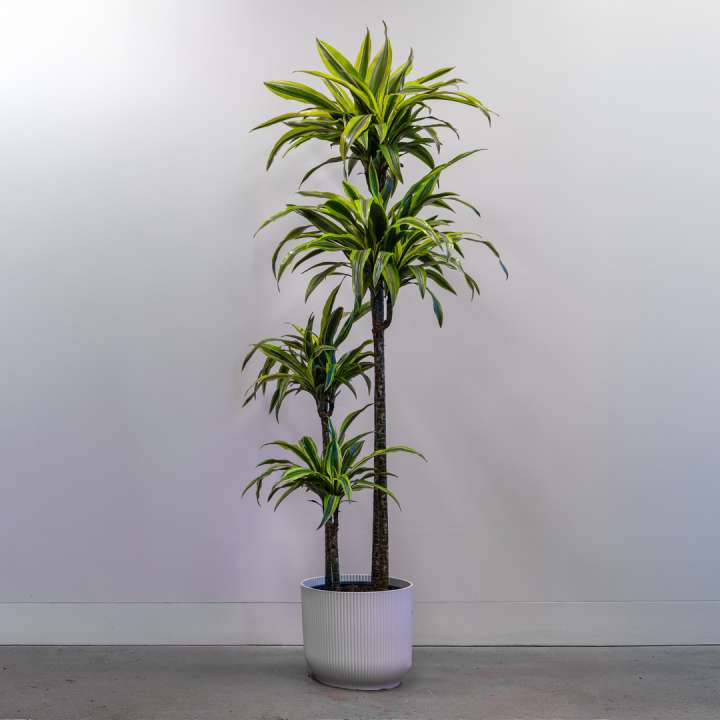
Dracaena Fragrans 'Lemon Lime' at Boma Garden Centre
Reading the Silhouette
Before considering colour or variegation, learn to see Dracaena by form. The genus divides naturally into four architectural types, each creating a distinct spatial effect. These forms represent different species within the dracaena genus, each with unique growth habits and characteristics.
The Vertical Spire: Dracaena Marginata
Clean upward energy on a slender stem, drawing the eye to the ceiling without consuming floor space. The brush-like crown of foliage shimmers with the slightest breeze. These suit narrow hallways, flanking positions beside doorways, and any room where you want height without bulk.
Varieties: Marginata (also known as dracaena marginata, a popular and striking indoor plant from Madagascar), Marginata Bicolour, Tricolour, Colorama, Magenta, Rainbow
A pair of Marginatas in matching pots can frame an entrance with almost architectural formality; a single specimen in a tall ceramic cylinder becomes a living column — and the perfect successor to a discarded Christmas tree.
The Branching Candelabra
Multi-stemmed specimens with several crowns of foliage at varying heights. These have presence and maturity — the sense of a plant that has lived and grown. Some mature dracaena species can even grow to resemble small trees, adding architectural interest to indoor spaces. They suit larger rooms where a single stem would feel lost: the double-height ceiling of a warehouse conversion, the generous proportions of a Victorian drawing room on South Hill Park.
Varieties: Marginata Branch, Compacta Branch, Ulisses Branched, Anita Branched
The branching forms reward a prominent position. Give them space to be admired from multiple angles.
The Dense Rosette
Tight, sculptural clusters of foliage radiating from a central point. These offer visual weight without height — substantial, grounded, almost monumental in their compactness. They suit tabletops, plinths, console tables, and mid-level positions where you need presence at eye height rather than floor-to-ceiling drama.
Varieties: Compacta, Janet Craig, Green Jewel, Jade Jewel, Charley
A Compacta on a plinth beside a reading chair; a Janet Craig centred on a dining table — these are plants that command attention through density rather than stature. Their vibrant, lush foliage creates a lively and energetic atmosphere, making them stand out as focal points in any space.

Dracaena 'Anita' at Boma Garden Centre
The Fountain
Softer, more relaxed silhouettes with arching or gently cascading foliage. These introduce movement and organic flow, the fronds caressing the air as you pass. They balance the rigidity of modernist furniture or soften a room dominated by straight lines.
Varieties: Anita, Lemon Lime, Lemon Surprise, Sunshine, Sunray, Gold Dragon, Dorado. Some of these fountain forms, such as Marginata, are also known as the Madagascar dragon tree, renowned for their distinctive arching leaves and their origin from Madagascar, making them especially popular for tropical, island-inspired decor.
The fountain forms are the most forgiving compositionally — happy on a shelf, a sideboard, or the floor, their arching leaves creating a natural spray of green.
Scale and Placement
Proportion matters. A towering Marginata in a low-ceilinged flat, feels oppressive; a modest Compacta lost in a double-height hallway looks like an afterthought.
Dracaenas are ideal house plants due to their adaptability to different spaces and interior design needs.
- Floor specimens (1 metre and above) anchor corners, flank doorways, and fill the vertical void beside low furniture — or the empty corner where the Christmas tree stood. In the generous ceiling heights typical of a Victorian terrace on The Grove or a converted chapel in Gospel Oak, a tall branching Dracaena can hold its own against the architecture. Choose Marginata, tall Janet Craig, or mature branching specimens.
- Tabletop and plinth (30–60cm) create focal points at eye level. A dense Compacta on a console table in a hallway; a Jade Jewel on a bedside surface; a pair of Green Jewels on matching plinths flanking a fireplace. These positions demand the rosette and compact forms.
- The power of multiples. A single Dracaena is a plant. Three Marginatas of graduating heights, grouped in a corner, become an installation. Repetition signals intention — it elevates the domestic into something closer to designed space.
Light and Colour: The Importance of Indirect Light
Dracaena’s tolerance of lower light is well known — part of what makes it such a forgiving companion — but the relationship between light and leaf colour deserves closer attention. In addition to thriving in less sun, dracaena plants also help improve indoor air quality by filtering toxins from the air.
- Deep greens hold their colour in shade. Janet Craig, Compacta, Green Jewel, and Jade Jewel will thrive in the reduced light of a north-facing room or a hallway set back from windows — the kind of space common in the older properties lining Swain’s Lane or the mansion blocks off Fitzjohn’s Avenue. These varieties maintain their rich, saturated colour without demanding a sunny spot.
- Variegated varieties need brighter positions. The lime stripes of Lemon Lime, the cream and green of Bicolour, the dramatic colouring of Tricolour and Colorama — these require moderate to bright indirect light to maintain their contrast. In lower light, they’ll survive, but the variegation fades toward green, and the plant loses its point. Avoid placing variegated dracaena in direct sunlight, as this can cause leaf scorch; instead, provide bright, indirect sun for best results. Position your statement variegates where the light rewards them: near (but not in) a south or west-facing window, or in a bright room with good, reflected light.
- The practical upshot: use your deep greens to bring life to darker corners; reserve the variegated forms for positions where their colour will sing.

Dracaena 'Janet Craig' at Boma Garden Centre
Material Pairings
The pot is not an afterthought. Plant and container form a single composition, and the right pairing elevates both.
- Concrete, stone, and cement finishes complement the structural forms of Marginata and the branching types. The industrial weight of concrete grounds the vertical energy of the plant. This pairing suits minimalist interiors, warehouse conversions, and contemporary schemes. Use a Chelsea Alpine White pot topper, with its textured surface and clean geometry and contrasting colour. It works beautifully with tall Marginatas and branching specimens.
- Warm ceramics and terracotta soften the rosette forms. The earthiness of terracotta brings warmth to the dense foliage of Compacta and Janet Craig, making them feel less sculptural and more organic — suited to kitchens, studies, and rooms with natural materials.
- Brass, copper, and metallic finishes elevate variegated varieties. The gold tones of Dorado or Gold Dragon sing against dark metal; a Lemon Lime in a brushed brass planter becomes a deliberate accent piece.
- Rattan, cane, and natural fibres suit the fountain forms. Anita or Sunshine in a woven basket feels relaxed and organic — appropriate for bedrooms, informal living rooms, and spaces aiming for warmth rather than drama.
Caring for Your Gentle Friend: Propagation by Stem Cuttings
Dracaena asks remarkably little — which is precisely why it tolerates the neglect of so many households. That’s not to say one should be cruelly neglectful. Respect the plant and it gives so much in return, a peace that is so absent in urban living. A little love keeps the silhouette sharp and the foliage lustrous. Dracaena houseplants are known for their easy care, making them ideal for beginners.
As tropical plants, dracaenas thrive in warm temperatures and higher humidity, and exposure to cold or dry air can cause damage, such as leaf tips that turn brown.
- Water sparingly. Overwatering is the most common error. Allow the top few inches of compost to dry between waterings, in winter, water even less. Dracaenas store moisture in their stems and will forgive drought far more readily than sodden roots. Always use well-draining soil to prevent root rot. This is a plant that would rather be ignored than fussed over.
- Feed during the growing season. From spring through early autumn, a monthly feed with a balanced liquid fertiliser — something like House Plant Focus — supports healthy foliage without encouraging leggy growth. Use plant food monthly during this period, but reduce or stop feeding in fall and winter when growth slows.
- Repot only when necessary. Dracaenas are slow growers and tolerate being slightly pot-bound. When roots emerge from drainage holes or growth stalls, move up one pot size using a free-draining mix. Boma’s Peat-Free Repotting Mix works well, or for those using decorative cache pots without drainage, consider potting into a nursery pot set within the cover, with a layer of LECA clay pebbles beneath to prevent waterlogging.
- Prune with confidence. If a Marginata or Janet Craig grows leggy or loses lower leaves, don’t hesitate to cut the stem back. New growth will emerge below the cut, often producing a branching form that’s more interesting than the original single stem. This is how those characterful multi-headed specimens are created. Dracaena can also be propagated by rooting stem cuttings; simply cut a healthy stem, remove lower leaves, and root the cutting in water or soil—even bare stem cuttings can develop roots this way.
Maintain adequate humidity, especially in winter or in homes with dry air, to prevent leaf tips from turning brown. Misting, using a humidifier, or grouping tropical plants together can help. Regularly wipe dust from the leaves to ensure optimal light absorption and plant health.
Dracaena varieties, including dracaena fragrans (commonly known as the corn plant), are mildly toxic to pets such as cats and dogs, so keep them out of reach of pets and children. Despite this, dracaena houseplants offer many benefits, such as improving indoor air quality and adding a vibrant, tropical touch to interiors.
Visit the Collection
At Boma, our Dracaena selection spans the full range of forms — from compact tabletop specimens to statement floor plants with years of growth behind them. Dracaena is a popular indoor plant, valued for its low maintenance and decorative appeal, making it an excellent choice for homes and offices.
Among our collection, the dragon tree stands out for its striking appearance and is especially well-suited as a decorative feature in any indoor space. We encourage you to visit us and consider the silhouettes in person: to see how a branching Marginata differs from a single-stemmed one, or how the dense rosette of a mature Compacta might anchor your hallway console.
Our team is always pleased to discuss your space, your light, and your intentions — and to help you find not just a houseplant, but a quiet, graceful presence that will ask little and give much in return.