

You don’t have to have a big garden to grow your own vegetables. As long as you have a sunny windowsill, you can still enjoy growing your own food. Your harvests may not be huge, but they’ll be no less satisfying for being small. Here are a few tips on indoor-grown vegetables to get you started.
Growing organic vegetables
Growing vegetables organically – i.e. without the use of man-made chemicals – gives you the benefit of knowing exactly what went into your vegetables. It can take time and effort to become a fully organic grower, but you can get started by sowing organic seeds, avoiding chemical pesticides and using organic fertilisers such as liquid seaweed.
Tips for growing vegetables indoors
- As for growing plants in containers outdoors, choose the right size container for the plant you are growing. Vegetables with long taproots will need deep containers, while smaller salad leaves will grow happily in a window box.
- Use a good quality potting compost, and check what sort of fertiliser your vegetables need. Most composts contain enough nutrients for at least 6 weeks’ growing, but after that, you will need to feed your plants regularly.
- Most vegetables need at least 6 hours of sunlight a day to grow well, so you may need to consider adding supplementary lighting such as LED grow lights, especially if you’re growing plants in mid-winter when the days are short.
Vegetables to grow indoors
Salad crops can be grown all year round on a sunny windowsill. Choose cut-and-come-again varieties so you can just pick the leaves you need and leave the rest to grow. Sow regularly and you’ll have a constant new supply of leaves. You don’t have to stick to just lettuce either. Beetroot, spinach and pak choi can all be grown indoors for delicious ‘baby leaf’ salad leaves.
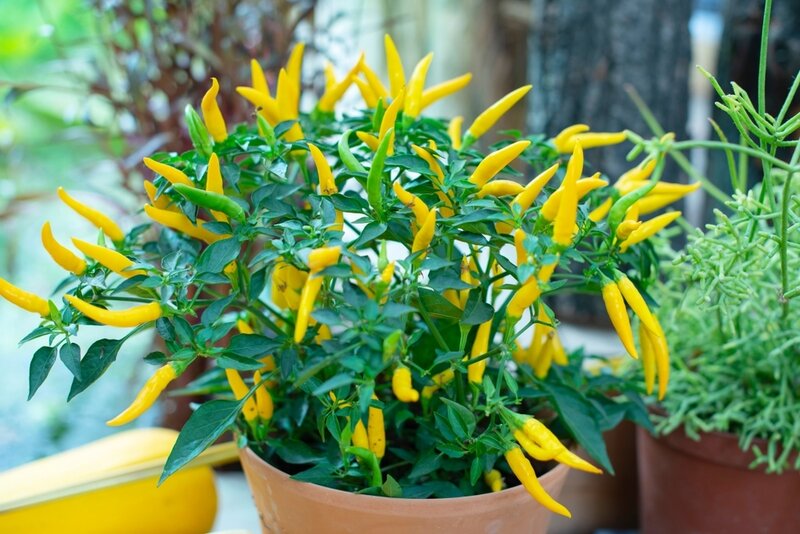
Chilli peppers can be grown in a pot on a sunny windowsill. They need around 10 hours of sunlight a day, so you may need to invest in grow lights. Outdoor-grown chilli plants are pollinated by a combination of bees and wind shaking the plants, so when growing indoor plants, give them a gentle shake once or twice a day once the flowers have formed to achieve the same result. You won’t get as big a crop as you would outdoors, but your plants will still be fruit, and they look pretty too.
Tomatoes need warmth and plenty of sunlight, so grow them on a south-facing windowsill or in a conservatory in summer. Look for small varieties like the Tomato ‘Balconi’ range that have been specially bred to be very compact. Like chilli peppers, indoor-grown tomatoes need a gentle shaking to pollinate the flowers, unless you are growing them next to an open window.
Whether you’re growing vegetables in a pot on your windowsill or in rows on your allotment, we have everything you need for a great harvest. Visit us today to see our great range of seeds, plants and gardening tools!