

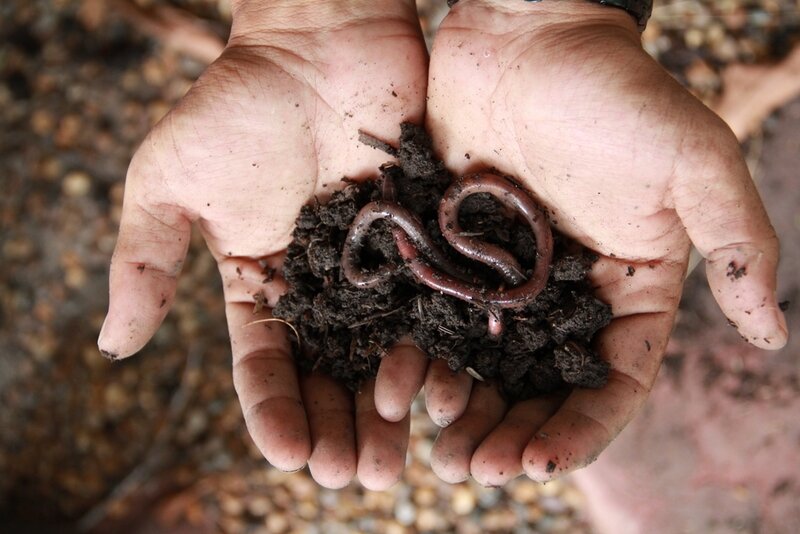
Here’s why you should love earthworms. Many people see them as a fun insect that continues to live as two worms if split in half. This is a myth! So leaving the worms to work the soil is much better than messing them around. There’s a reason why leaving them in the soil is the best thing to do and here is why:
1. Earthworms improve the soil structure
Earthworms do a wonderful job of improving the soil structure - even clay soils and sandy soils. When you mulch your soil, earthworms naturally take that down to where the roots of your plants will be nourished. If you have earthworms in your soil, you are doing something right.
2. Earthworms are also food
Not only do they help to ensure your plants are happy, but they are also a protein-rich meal for your garden birds. Have you ever noticed that as your garden turns your soil, your garden birds won’t be far behind you? As the soil is turned, earthworms come to the surface, and they do the same when it rains.
3. Earthworms are incredible insects
Earthworms have the remarkable ability to breathe through their skin because they don’t have lungs. They eat almost any dead matter in the soil and the average life span of the year is up to 4 years! That’s a long and bust soil life for a small insect.
4. Life would be difficult without earthworms
If earthworms became extinct, the soil would diminish, and the food we eat would be vastly less, if any. We would have more floods (since earthworms also help the soil structure) and more pollution.
5. A wormery is useful
Wormeries are incredibly useful in the garden for home composting. Worms break down organic matter such as food scraps from the kitchen and make them into perfect garden compost. Just like magic! Wormeries are great additions to a kitchen garden or allotment and are also great for children to watch in action as well.
6. Worm castings are full of nutrients
Those little piles of worm mounds on the grass or soil are full of nutrients which make a great soil conditioner. So worms in your soil both under the surface and above are a good sign of a healthy, biodiverse garden.
Keep your garden full of earthworms and other insects by planting a range of plants for pollinators from our nursery.