

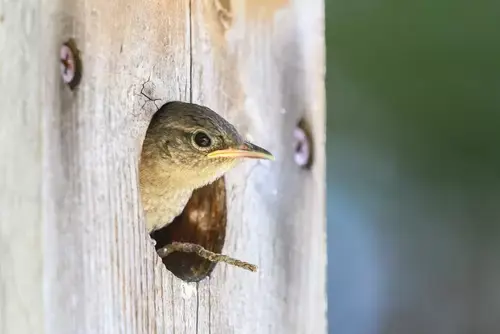
Adding a nest box to your garden can provide small birds with a home and give you the chance to learn more about these beautiful creatures. Watching birds nesting is a real thrill, and by putting up nest boxes you can encourage more birds to make their homes in your garden. For the best results, it’s crucial to have the correct type of nest box in the right place, so we’ve put together our top tips on selecting the best boxes for your garden birds.
Types of nest boxes
There are two main types of nest boxes:
- Open-fronted boxes: are used by birds such as robins, song thrushes and blackbirds that usually nest in thick undergrowth.
- Boxes with an entrance hole in the front: are available with holes of different sizes to suit different bird species. These boxes are often used by tits, sparrows and starlings, which might otherwise nest in rot holes in tree trunks or other cavities.
Hole sizes and openings for nest boxes
You’ll need to select a nest box with a suitable entrance hole size or opening for the birds most likely to use it. Here are the hole diameter sizes and openings recommended by the RSPB for some common garden birds:
- Blue tits and coal tits: 25mm entrance hole
- Great tits, pied flycatchers and tree sparrows: 28mm entrance hole
- House sparrows and nuthatches: 32mm entrance hole
- Starling: 45mm entrance hole
- Spotted flycatchers: 60mm high open front panel
- Robins and pied wagtails: 100mm high open front panel
- Wrens: 140mm high open front panel
Where to place nest boxes
For the best results, follow these tips when siting your nest box:
- Never place a nest box in a south-facing location where it will get sunlight all day, as it will get too hot inside the box, and the young birds could die. Avoid west-facing spots, too, as the box will be in the direct path of prevailing westerly winds. A sheltered north or north-east facing position is ideal.
- Ensure the birds have a clear flight path into the box, with no trees or other obstacles in the way.
- Hide open-fronted boxes amongst the foliage to screen them from predators.
- Place nest boxes at least 1.5m above ground level. Tits and sparrows will usually use boxes placed between 2-and 4m high. House sparrows, swifts and starlings prefer a box set under the eaves of a house.
- Put up your nest boxes in autumn or early winter, as birds can start looking for nesting sites in January and will also often use nest boxes as shelters in winter. It can sometimes take up to a year for birds to find and use a nest box. If your nest box is still not used after a year, try moving it to a different spot.
Bring more birds into your garden with our fantastic range of nest boxes, feeders and other birdcare products. Visit our centre in London to find everything you need!