

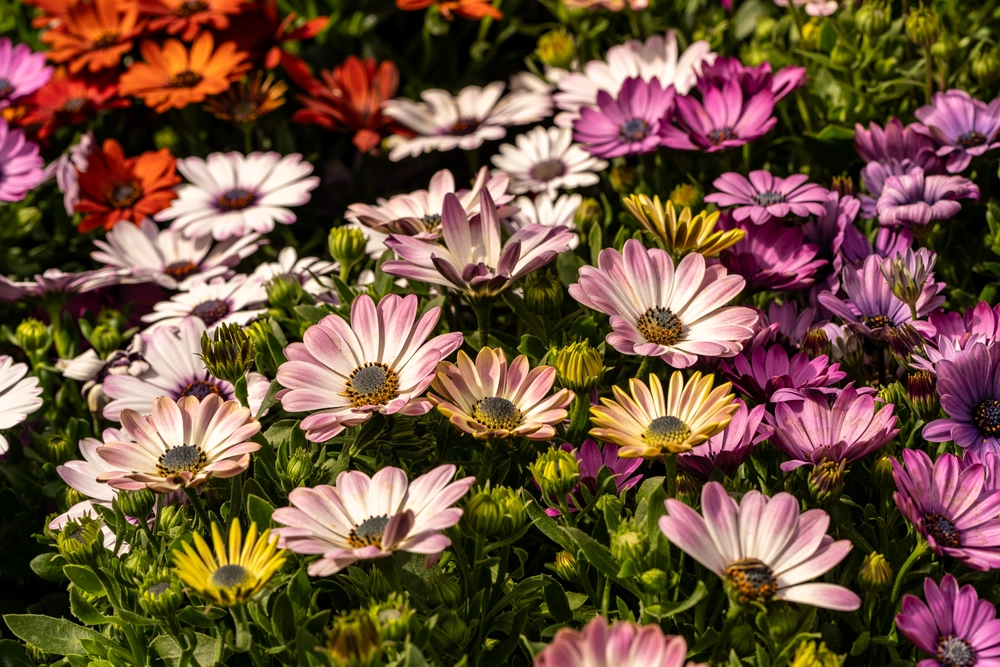
June is the month a London garden stops promising and starts delivering. The longest days are here, the last frosts are weeks behind, and there is now no good reason not to commit to whatever you want for summer. For North London gardens — Kentish Town courtyards, Hampstead borders, Primrose Hill terraces, Muswell Hill back gardens — June asks you to switch from preparation to maintenance: feeding what you’ve planted, deadheading what’s performing, staking what’s about to outgrow itself, and watching the season build. The jobs are real, but so is the reward.
Five Jobs That Actually Matter in June
June garden advice on most websites runs to thirty items. In a London garden, five of them actually change the outcome: deadhead anything in flower, stake tall perennials and dahlias before the wind does it for you, feed containers properly, give wisteria its summer prune, and water before plants show stress rather than after. Everything else — the weeding, the lawn, the general tidying — is maintenance, not intervention.
Deadhead regularly, and do it correctly
The principle is straightforward: remove spent flowers before the plant puts energy into setting seed, and it redirects that energy into producing more flowers. For roses, cut back to the first leaf with five leaflets — not just the hip. For Nemesia, Calibrachoa and trailing verbena in containers, run your fingers through the whole plant and strip anything that’s browning. For Salvia nemorosa and other perennial salvias, cut the spent spikes back by about a third once the first flush has finished — they’ll send up a second round of flower stems within three to four weeks. For Geranium ‘Rozanne’, which tends to sprawl by midsummer, a hard cut to about 15 cm will encourage fresh compact growth and a second flush by August.
Stake dahlias and tall perennials before they fall
The useful rule is to stake when the plant is at about a third of its eventual height. By the time it’s fallen over, the stem has usually kinked at the base and the display is compromised regardless of what you do next. Use bamboo canes and soft tie, or purpose-made dahlia rings for multi-stemmed clumps. For tall border plants like delphiniums and verbascum, a single strong cane set just behind the main stem, tied loosely at two or three intervals, is usually enough. Don’t wait for the first June windstorm.
Feed containers — the slow-release has run out
Most container composts are pre-loaded with a slow-release fertiliser that lasts eight to twelve weeks. If your containers were planted up in late March or April, that feed is now exhausted, and you will see it in the foliage: paler leaves, reduced flowering, the plants looking slightly tired despite adequate water. Switch to a liquid high-potassium feed applied every ten to fourteen days. For flowering containers — summer bedding, geraniums, petunias — a tomato feed works perfectly well and is often cheaper. For foliage-led containers with ferns, hostas or grasses, a balanced liquid feed suits better.
Give wisteria its summer prune
Wisteria produces long, whippy lateral shoots through June and July. Left unpruned, these shade out the flower buds and make the plant increasingly unmanageable. The summer prune is simple: cut all of this year’s new lateral shoots back to five or six leaves from the main framework branch. Do it now, in June, and again in August if needed. The winter prune (cutting the same laterals back to two or three buds) follows in January or February. Skipping the summer prune means the winter prune becomes a much larger job and the plant flowers less reliably.
Water before the stress shows
In a prolonged dry spell, which June increasingly delivers in London, the mistake is waiting until plants wilt. Wilting is stress after the fact. The useful habit is to push a finger 3–4 cm into the compost of any pot or container: if it’s dry at that depth, water now. For borders and open ground, clay soils across much of North London actually hold water reasonably well — but a new plant’s root ball is still largely the original nursery compost, which dries faster than the surrounding clay. For the first six weeks after planting, water directly over the root ball rather than assuming the surrounding soil is sharing moisture.
If you have more than five or six containers, or a terrace you can’t always reach in time, a drip irrigation system is worth considering. Gardena’s range — available at Boma — covers everything from individual pot drippers to full micro-drip systems for a planted terrace, all connectable to a tap timer so containers are watered at the right time of day without you having to be there. It pays for itself quickly in reduced plant losses during hot spells.
Planting Containers, Balconies and Roof Terraces
June is the most forgiving month of the year for container planting in London. There is no frost to worry about, the soil temperature is reliably warm, and plants establish quickly in the long days. If a terrace or balcony went into May with half-finished planting, now is the moment to complete it.
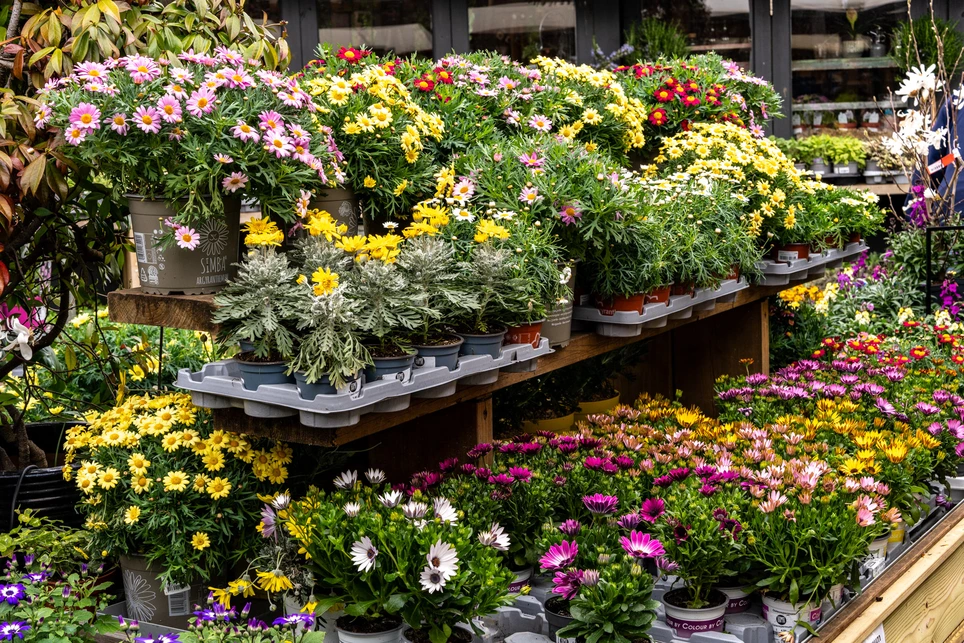
Summer bedding is in full season. For window boxes and smaller containers, Nemesia is one of the best choices available this month — compact, long-flowering, available in soft pink, orange, white and bicolour forms, and genuinely suited to the confined root space of a window box. It flowers from now through September with minimal deadheading, tolerates brief dry spells, and works well mixed with trailing verbena or bacopa for a layered effect. Other reliable June bedding for London containers: Calibrachoa (million bells) for continuous colour without deadheading, Lobularia maritima (sweet alyssum) for fragrance and ground coverage, and Antirrhinum (snapdragon) for height.
For a terrace or balcony that you want to look considered rather than just full, the layering principle from May still applies in June. Start with structure — a clipped Pittosporum tobira ‘Nanum’, a compact Hebe, or a terracotta-planted Lavandula angustifolia ‘Hidcote’. Add a mid-height performer in its own pot: a Salvia ‘Caradonna’ or Agapanthus ‘Headbourne Hybrid’ will flower from June through August. Then let something trail from the edge — Erigeron karvinskianus, ivy, or a long-stemmed Bidens ferulifolia. Three layers, pots of the same material or two complementary glazes, and the scheme reads as planted rather than assembled.
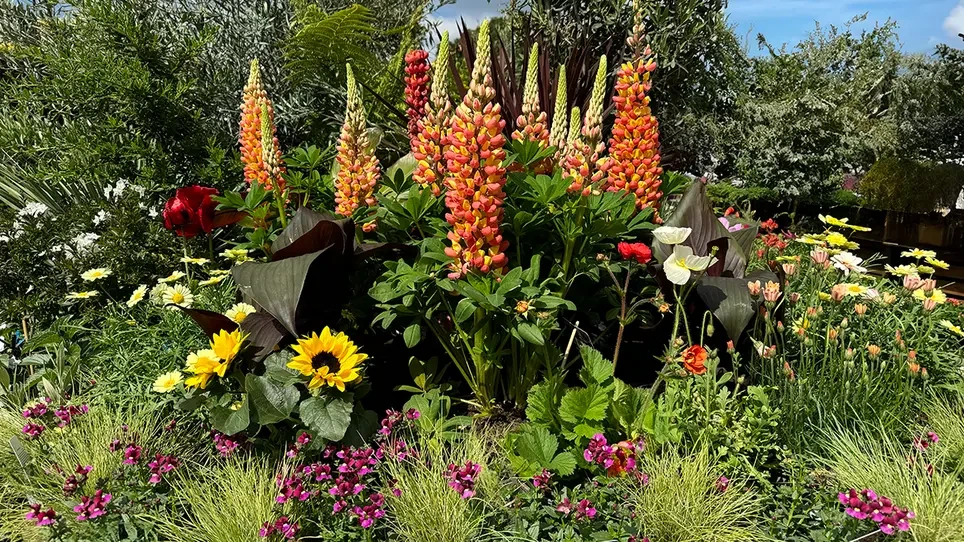
South-facing and roof terraces: by June, exposed south-facing positions in London can push air temperatures well above 30°C on a clear day. The practical consequence is that containers may need watering twice daily in a heatwave — early morning and early evening, never midday. Switching to larger containers (a 40–50 cm diameter pot holds more water and buffers temperature swings better than a 25 cm one) and setting a saucer underneath does help, though drainage must not be compromised. Mulching the top of the compost in containers with a thin layer of fine gravel slows surface evaporation meaningfully.
North-facing courtyards: the summer shift doesn’t change what works in shade, but there are some additions worth considering for June. Astilbe is at its best now — feathery plumes of pink, red or white in containers, doing the heavy lifting that sun-lovers can’t manage in a shadier space. Impatiens (busy lizzie) in its New Guinea forms, which are more robust than the older bedding types, provides reliable summer colour in low light. Hakonechloa macra — the arching Japanese forest grass — hits its most attractive form in summer and is genuinely worth a container of its own.
Thinking About Planting a Terrace, Balcony or Courtyard?
Boma’s Courtyard & Roof Terrace Container Planting service covers everything from a single window box to a fully planted terrace — consultation, bespoke planting schemes suited to the microclimate, troughs and planters supplied and installed, irrigation where needed, and aftercare guidance. June and July are good months to book — the full range of summer plants is available and the team can see exactly what’s working in comparable spaces nearby.
Book a ConsultationPlanting Beds and Borders in June
For gardens with open ground — Victorian terrace plots, Edwardian back gardens, established borders in Highgate or Hampstead — June is not too late to plant. If anything, buying in June is an advantage: plants are in flower, you can see what you’re getting, and a plant that establishes in June still has the whole summer to root into the border before autumn.
Salvia in its first flush
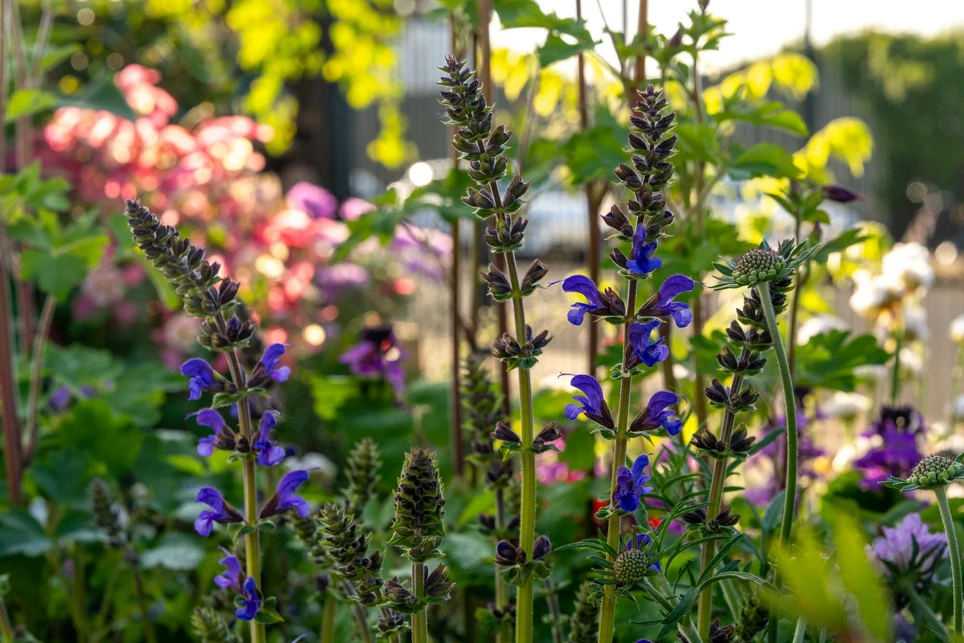
This is the month when the perennial salvias come into their own. Salvia nemorosa ‘Caradonna’ — dark purple stems, violet spikes — is in full display from early June and is one of the defining border plants of early summer. ‘Blue Marvel’ is a stronger, more upright form suited to a larger border; ‘Compact Bright Rose’ works at the front of a mixed planting where something more restrained is needed. For a warmer climate-feel on a south-facing border, Salvia microphylla varieties — ‘Cerro Potosi’, ‘Hot Pink’, ‘Mirage Blue’ — are woody-based salvias that reach their stride in June and flower continuously into October. All are bee-magnets and genuinely drought-tolerant once established.
Cut back the first flush of Salvia nemorosa by a third once the spikes fade — not the whole plant, just the flowered stems — and a second flush follows within three to four weeks. Don’t feed heavily; salvias in rich soil produce more leaf than flower.
Roses: the first flush and what to do with it
Most repeat-flowering roses in London gardens hit their first flush in early to mid-June. The quality and volume of the second flush depends almost entirely on what you do now. Deadhead promptly — cut back to the first outward-facing leaf with five leaflets, or to a strong bud lower on the stem if the plant is sparse. Apply a balanced rose feed (high in potassium, with added magnesium) immediately after deadheading, water it in well, and the second flush follows in six to eight weeks. For climbing roses, cut spent lateral sprays back to a strong leaf joint without shortening the main framework stems.
Dahlias and the June build
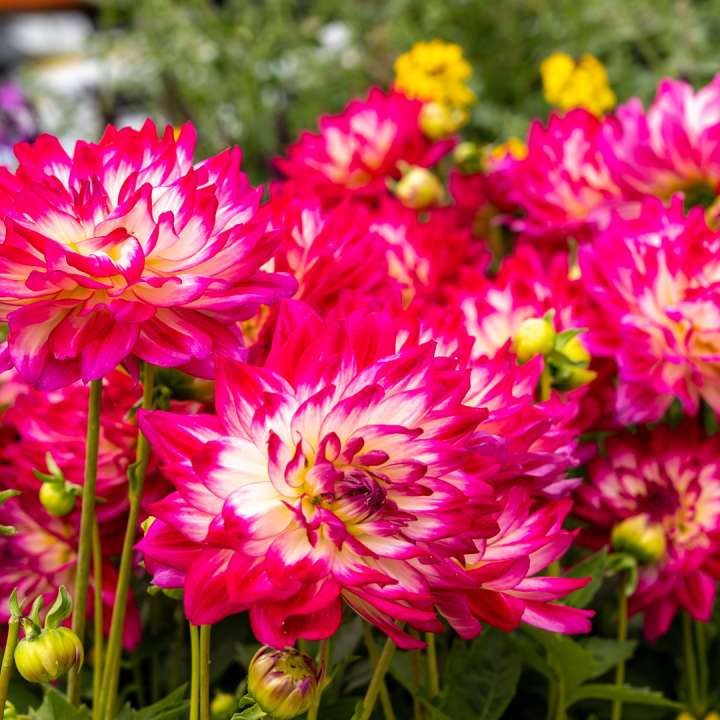
If dahlias went in the ground in May, June is when they start making real progress. Stake the main stems now if not already done. Pinch out the growing tip once the plant is about 30–40 cm tall — this forces side-branching and produces far more flowers than allowing a single unbranched stem. Feed with a high-potassium feed from now on, every two weeks. The first flowers on early varieties arrive in late June; most will be at their best from July through September.
Gap-filling with intention
June is arguably the best month to identify and fill border gaps because you can see exactly what’s missing while everything is in flower. Plants that go in now and flower before summer’s end: Echinacea purpurea (coneflower — plant now, flowers from August), Rudbeckia fulgida var. sullivantii ‘Goldsturm’ (late summer and autumn colour), Verbena bonariensis (tall, airy, bee-attracting from July onward), Agastache ‘Black Adder’ (long season, butterfly plant). For something that contributes immediately: Hemerocallis (daylily) in its mid-season varieties will flower within a few weeks of planting.
Naturalistic and meadow-style borders
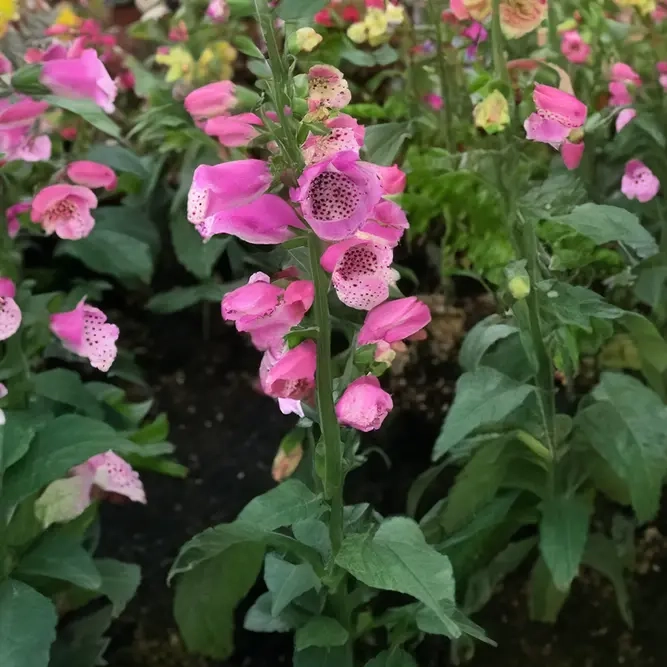
The naturalistic strand in London gardens — less edge, more movement, more wildlife — is well served by June planting. Knautia macedonica (crimson scabious), Astrantia major (masterwort), Persicaria amplexicaulis ‘Firetail’, and Thalictrum aquilegiifolium are all at or approaching their best this month and available at Boma now. Meadow-style schemes under partial shade — increasingly popular in gardens with mature London planes overhead — benefit from Digitalis, Aquilegia, and wild-form Geranium phaeum.
June Plant Picks by Type of Space
All varieties listed are ones Boma typically stocks in June. Check with the team in store for current availability.
| Space | Try | Why it works | Light |
|---|---|---|---|
| Window box / small balcony | Nemesia mixed, Erigeron karvinskianus, Thymus vulgaris | Long-flowering, compact, suited to limited root space; Nemesia tolerates brief dry spells | Sun / part sun |
| North-facing courtyard | Astilbe ‘Sprite’, Hakonechloa macra, Impatiens New Guinea | Summer colour and structure without direct sun; all peak June–August | Shade / part shade |
| Roof terrace (exposed) | Lavandula angustifolia ‘Hidcote’, Agapanthus ‘Headbourne’, Stipa tenuissima | Wind-tolerant, drought-tolerant once established; Agapanthus flowers July–August | Full sun |
| Victorian terrace back garden | Salvia nemorosa ‘Caradonna’, Geranium ‘Rozanne’, Echinacea purpurea | Long season, work in clay, wildlife value, good against brick | Sun / part shade |
| Mature border / established garden | David Austin roses + Salvia microphylla, Verbena bonariensis, Dahlia | Depth and succession — roses in June, dahlias from July, Verbena through to frost | Sun |
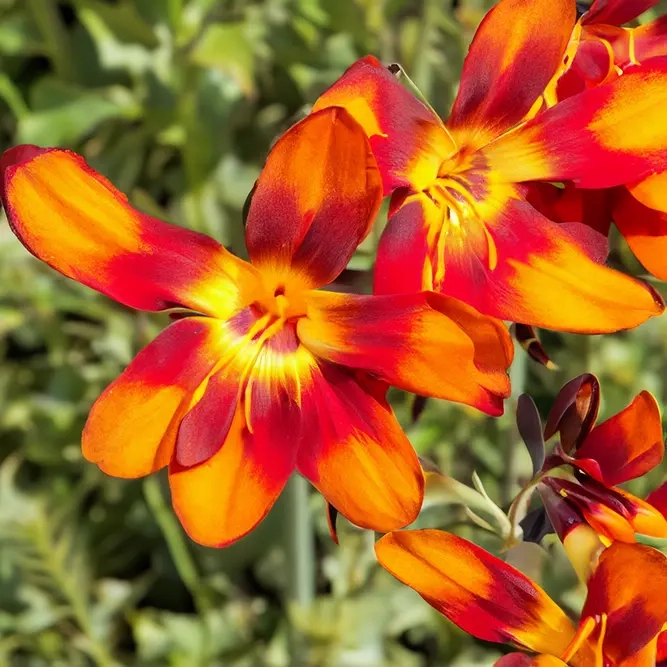
- All frost risk is past in London — tender bedding, dahlias and basil can all go out safely
- Container feeds from slow-release composts are likely exhausted by now; switch to fortnightly liquid
- Deadhead roses, Nemesia, geraniums and early perennials to extend the flowering season
- Cut wisteria’s new lateral shoots back to five or six leaves
- Water containers before stress shows — check daily in warm weather
A Short Note on Kitchen Gardens
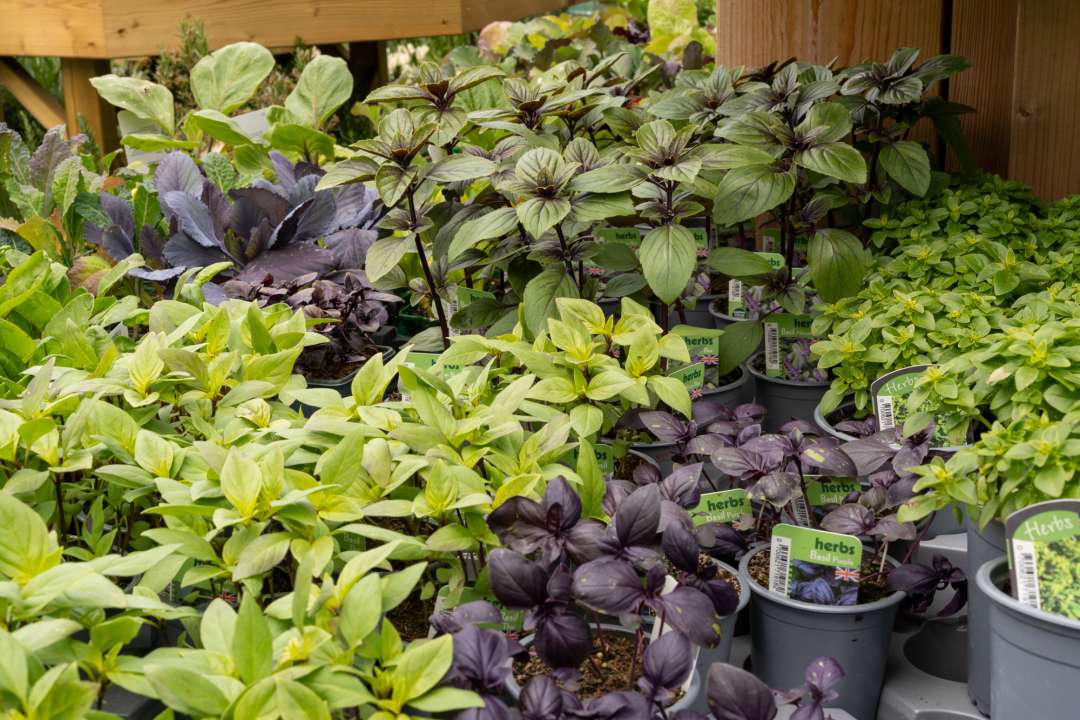
The kitchen garden is busy in June but the details are outside the scope of this article. The short version: sow fast-growing salad leaves (lettuce, rocket, mizuna) in small batches every two to three weeks for a continuous supply; stake and feed tomatoes every fortnight with a high-potassium feed; net soft fruit before it ripens. Boma stocks herb plants, vegetable compost and seed compost year-round — ask the team in store for what’s available.
Frequently Asked Questions
Is it too late to plant dahlias in June?
Not at all. Dahlias planted in June will be later into flower than those planted in April or May, but they will still produce a full display from around August through to the first frosts. June-planted dahlias often miss the slug damage that hits early plantings and go in the ground when the soil is already warm, so they establish quickly. Plant at the same depth as the container, stake immediately, and pinch out the growing tip once established.
My roses flowered well in May but very little in June — what’s happening?
This usually comes down to one of three things: no deadheading of the first flush (which signals to the plant that setting seed is more useful than producing more flowers), insufficient feeding (roses in June need a high-potassium feed to fuel repeat flowering), or a severe rose black spot infection that has defoliated the plant. Check the undersides of the leaves. If there’s significant black spot, remove and bin all affected leaves (don’t compost them), spray with a fungicide, and feed. A stressed, defoliated plant will often produce a weak second flush once it recovers foliage.
How often do I need to water containers in June?
The honest answer is: it depends. A terracotta pot on a south-facing Primrose Hill terrace in a heatwave may need watering twice a day. A large glazed pot on a sheltered Camden courtyard may be fine every two days. The practical rule is to check by feel — push a finger 3–4 cm into the compost; if it’s dry, water. If it’s still damp, leave it. Consistent deep watering is more effective than frequent light watering; you want moisture reaching the lower roots, not just wetting the surface.
Can Boma help with planting a terrace or courtyard in June?
Yes. Boma’s Courtyard & Roof Terrace Container Planting service runs through the full growing season. June is a good time to commission a scheme — the full range of summer plants is available, and a June-planted terrace looks established and settled by August. For gardens with beds and borders, the Garden Planting Service covers the same scope for in-ground planting. Both operate within a 5-mile radius of Kentish Town.
What perennials can I still plant in June for flowers this year?
Quite a few. Echinacea purpurea planted in June will flower from August. Hemerocallis (daylily) flowers quickly — some varieties within two to three weeks of planting. Salvia microphylla varieties flower continuously from the moment they go in. Agapanthus planted now may give a first partial flower spike in July or August and will be better the following year. Verbena bonariensis is fast and will be in flower by July. For immediate effect, any perennial already in bud or early flower at the centre can be planted and will continue its season in the border.
Visit Us in Kentish Town
The summer displays are at full height. Salvias in their first flush, dahlias staking up, container bedding at its best — and the team is in the centre seven days a week to talk through any space. Bring photos, rough dimensions and a sense of what you want the garden to feel like.
The Boma Garden Centre
51–53 Islip Street, Kentish Town, London NW5 2DL
020 7284 4999
Delivery is available across all M25 postcodes — see the Boma delivery page for zones and charges.