

These top 5 plants to grow in containers are perfect for small spaces such as a patio or balcony where there is less space but plenty of potentials. If you have a small space, use as much space as you can, including vertical growing to maximise the greenery! There are many varieties perfect for growing in pots to give you a productive and beautiful display. Here are our top 5 for your garden containers:
1. Verbena bonariensis ‘Lollipop’
Firstly, encouraging pollinators to your garden is a great way to bring it to life and also help to pollinate any crops you have growing. Even up high on a balcony, it is surprising what wildlife will find your plants. Verbena ‘Lollipop’ is a lower growing verbena with vibrant, small lilac flowers on rough green stems magnet for bees. Attract bees and other insects to your garden by planting Verbena 'Lollipop'.
2. Blueberries
As they require acidic soil to grow, they can easily grow in a pot rather than alter your neutral to alkaline soil. The little bell-shaped flowers are so pretty in springtime, and you will soon be harvesting ripe, tasty and nutritious fruits in the summertime. If birds visit your garden, a little netting may help the berries disappearing!
3. Courgettes
There is no reason why you can’t grow your own vegetables in a small garden with containers. There are many! Courgettes are so prolific and very easy to grow. They germinate well, and with some early protection from climate and pests, they will soon grow and provide you with a healthy number of delicious vegetables to cook with. Courgettes will need:
- a big pot,
- plenty of suns,
- lots of water,
- feed.
4. Fuchsia
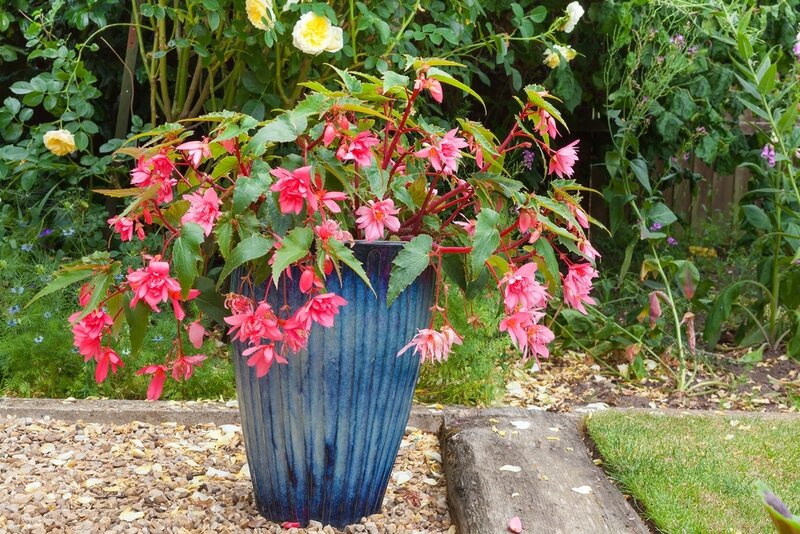
The ballerina shaped flowers of the Fuchsia are available in many different colours and some fun names! Fuchsia ‘Princess Charlotte’ has the most pretty pink flowers, and Fuchsia ‘Sarah Eliza’ has flouncy pale pink and cream flowers that look much like a tutu! Fuchsias grow well in containers, and some of them are even edible! Fuchsias berries make an excellent jam.
5. Nasturtiums
Not only are Nasturtiums edible, pretty and great for deterring pests, but they are also easy to sow, germinate and care for. The fabulous foliage is both pretty and edible too, plus, they are great annuals for children to grow as well. The seed pods are edible, too and can be used instead of capers.
- Nasturtium ‘Orange Gleam’ is great for hanging baskets and is incredibly vibrant,
- Nasturtium ‘Black Magic’ has deeply dark red flowers looking almost mystical,
- Nasturtium ‘Alaska’ has variegated foliage.
They're all perfect to grow in pots and containers to brighten up your garden, patio or balcony.
Find a range of containers, compost and seeds to grow in store.