

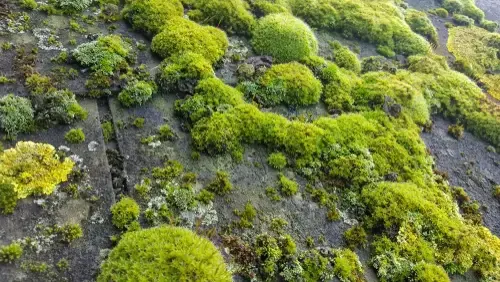
There are a few good options for getting rid of green algae in the garden. Green algae plus moss and liverworts can appear just about anywhere in a garden, from ponds to pots and soil to lawns. Many are perfectly harmless and, in fact, very good for the environment, but there will also be times you would prefer to clean them away to make space, to clear pond water or remove it from soil, stones and pavement or decking. The growth of green algae is generally due to damp and shady conditions on surfaces, or if it’s in a pond, it’ll be due to an imbalance of nitrates and phosphate. There are plenty of ways to deal with it.
A natural way to get rid of green algae in the garden
- If you are ready to put in some work, grab a stiff bristle brush and mix some dish soap, water and bicarbonate of soda.
- Once applied to patios and paving, give them a really good scrub. It’s pretty surprising how clean it will come up, and it will look as good as new!
- You can also use this method on pots, containers and decking, but if your brush is stiff and you are working on wood, test it first so you don’t scratch the surface too hard.
Other ways to get rid of green algae in the garden
You can buy many products off the shelf that can be applied to green algae, which will vanish very quickly. Ensure the products you are purchasing are safe for wildlife, pets and children. Many are diluted with water, sprinkled over the affected area and then left to work their magic. Others can be used with a pressure washer or a stiff scrubbing brush.
Get rid of green algae in the garden pond
Pictures of lovely clear ponds are only half of the story! Most ponds, at some point, will get some green algae. There are various factors from too much sun to not enough fish and not an imbalance of plants. Green algae can be helped by putting some barley straw in small bales, using pond clearing substances/water treatment that can be bought in store. Ultimately, it’s about a good balance of oxygenators, marginal and other pond plants to bring balance naturally. Keep it clear of leaves and other debris, and add some fish. If you have fish, feed them with good quality fish food that won’t affect the water balance.
For pond care, plants, accessories, and advice, visits us in store and make sure your pond thrives.