

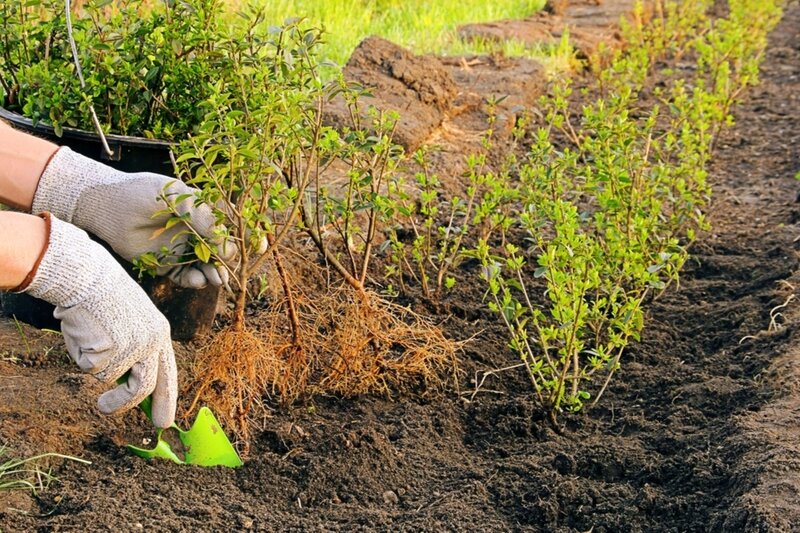
If you’re planning on planting a lot of shrubs or trees, bare-root plants are ideal. Grown in the ground rather than in containers, bare-root plants are dug up and sold between November to March while they are dormant. They’re cheaper than container-grown plants and don’t use plastic pots, so they’re better for the environment too. Provided they’re planted correctly, bare-root plants will grow into strong, healthy plants. Here’s how it’s done:
How to plant bare-root shrubs and trees
-
Plan ahead. Bare root plants need to be planted as soon as possible to stop the roots from drying out, so prepare the planting area beforehand by clearing weeds and stones and add compost or well-rotted farmyard manure to improve the soil structure.
-
If you can’t plant your bare root shrub or tree straight away, store it carefully so that the roots don’t dry out. If it’s only going to be stored for a few days, wrap the roots in damp sacking or newspaper and place the plant somewhere cool and dark. Keep the sacking or paper damp.
-
If it’s going to be several weeks before you can plant, heel your plants in by digging a trench, placing the plants with their roots in the trench and backfilling with soil. If the ground is frozen or waterlogged, pot the plants up in large pots filled with compost, taking care not to bend the roots.
-
Before you plant a bare root plant, soak the roots in a bucket of water for an hour to rehydrate them.
-
To plant your bare root shrub or tree, dig a square hole the depth of the rootball and 2-3 times its width. Digging a square hole encourages the roots to spread out into the surrounding soil, rather than simply to circle round as they might do in a round hole.
-
Leave a mound of soil at the centre of the hole and place the base of the plant on this, allowing the roots to drape over the mound.
-
You should be able to see a ‘tidemark’ on the plant's trunk that will show the previous soil level. When planting, ensure that the plant is at the same level in the soil as previously. Planting too deep can cause the trunk to rot, killing the plant. (The exception to this rule is bare-root roses, which are best planted deep.)
-
There’s no need to add fertiliser when planting, but a sprinkling of mycorrhizal fungi over the roots can help the plant establish a good root system.
-
Backfill with soil and firm down gently with the heel of your boot.
-
Add a stake if necessary to support tall trees. Trees less than 1m tall don’t usually need staking.
-
Water well after planting to settle the soil, and water regularly during the first year after planting.
Now’s a great time to plant shrubs and trees, and you’ll find everything you need in our centre, so why not visit us?