

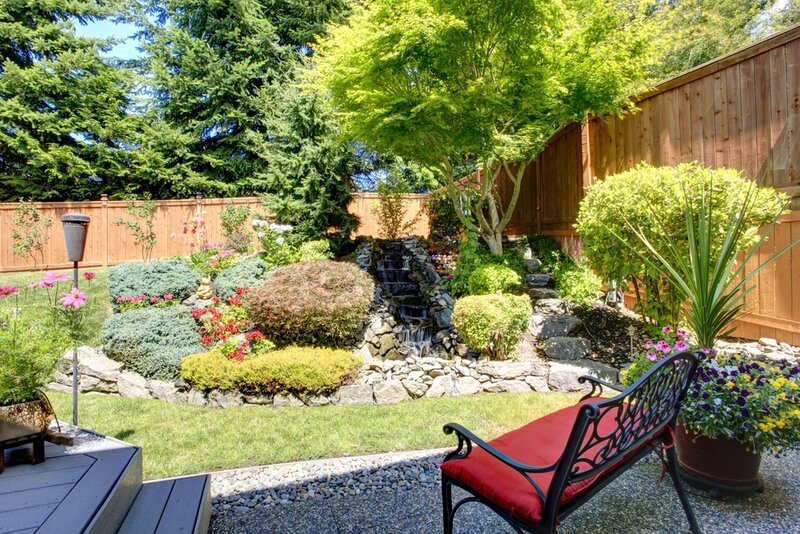
Trees and shrubs are the backbones of any garden, creating a living framework for all the other plants. Deciduous trees change with the season, with beautiful spring flowers or spectacular autumn foliage. Even when the leaves have fallen, the bare branches add height and interest to the winter garden. Conifers add evergreen structure and come in a surprisingly wide range of colours, shapes and styles. Finally, shrubs are the perfect choice for low-maintenance gardens. There are spring, summer and autumn-flowering shrubs, and many of them need an annual trim to keep them tidy.
How to plant trees and shrubs
To give your newly-planted trees and shrubs the best chance of success, follow these steps when planting.
-
Before planting, water your potted tree, conifer or shrub well.
-
Dig a square hole three times as wide as the pot and the same depth. Tree roots will spread out better in a square hole than a round one.
-
Check that the tree or shrub will be at the same level in the ground as it was in its pot. If planted too deep, the trunk may rot. To check the soil level, place the rootball in the hole and lay a cane across the top of the hole so that you can see what the final soil level will be.
-
Remove the tree, shrub or conifer from its pot and place it in the hole.
-
Backfill with soil. If the soil is very heavy or sandy, mix some compost with the soil before backfilling.
-
Firmly press the soil down around the rootball with the heel of your boot.
-
Water well.
How to stake a tree
Larger trees will need to be staked to keep them from rocking in the wind and loosening the roots. Here’s how it’s done:
-
Before staking your tree, check what the prevailing wind is in your area (this information is readily available online). Place the stake so that the wind will blow the tree away from the stake, not onto it. For example, if the prevailing wind is westerly (i.e. coming from the west), place the stake on the westward side of the trunk.
-
Hammer the stake in firmly at a 45-degree angle to the ground. 60cm (2ft) of the stake should be below ground, and the part above ground should be one-third the height of the tree.
-
Attach the stake to the trunk of the tree with a tree tie.
Aftercare
Water trees, conifers, and shrubs regularly in the first year, while their root systems are getting established. There is no need to feed straight after planting but apply a general-purpose fertiliser the following year.
We have a wide range of conifers, ornamental trees and shrubs in the centre, so visit us and choose the one that’s perfect for your garden.