

Decide what to plant in a raised garden bed by considering what you’d love to grow. Most raised beds can be used to produce almost anything you’d like, much like in a ground bed or border. There are advantages to growing in a raised bed, from better drainage, fewer weeds, easier access and much more. They can be placed in tricky areas of the garden or accessible areas to get to, around a seating space or out on the lawn. The design is entirely up to you, so here are our suggestions for growing in a raised bed.
Plants to grow in a raised garden bed
- Fruit and vegetables
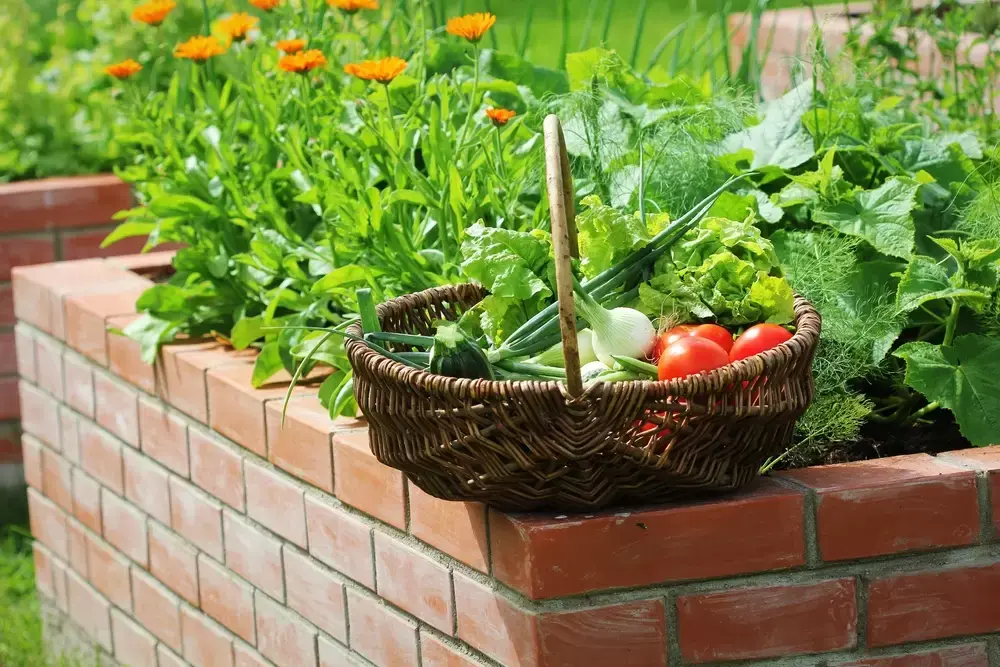
There’s no need to be restricted by space because you can grow many fruits and vegetables in a raised bed. Consider the size and depth of the bed before you sow your seeds to make sure there is enough space for what you’d like to grow. For example, you could have a whole bed of strawberries or a complete bed for raspberries. Or you could plant multiple varieties of salads in one bed or mix and match with other vegetables and companion plants to make your own mini-potager garden.
- Edible flowers
If you are interested in growing your own edible flowers and not sure what to pick from the garden or out on walks, why not dedicate one raised bed purely to edible flowers so you know they are safe to eat? Pansies, nasturtiums, cornflowers, and snapdragons are just a few to choose from. The bed will be full of glorious colours at different times of the year, and before you bake or cook with them, the bees will enjoy them too.
- Medicinal flowers
If you would like to try growing some medicinal flowers, you could easily make a bed full of flowers that you cab harvest to make your own toiletries, medicines and cosmetics. From calendula to lavender and echinacea to chamomile, the options are endless.
- Herbs
Herbs will grow well in a raised bed, and if allowed to flower as well, it will be a haven for insects. Make sure you plant herbs that thrive in the aspect where your bed is placed - the shade or sun - and if you are planting mint or lemon balm, the roots can take over to keep them in a pot and sink the pot into the soil which will help to contain the roots.
- Annuals
Sowing directly into a raised garden bed, either in the spring when the soil has warmed or in early autumn, is a lovely way to create a bed full of flowers. Try Cosmos and Nigella, Ammi visnaga and Cerinthe.
Visit us in store for raised beds and tools, plus plants and seeds to fill the bed with.