

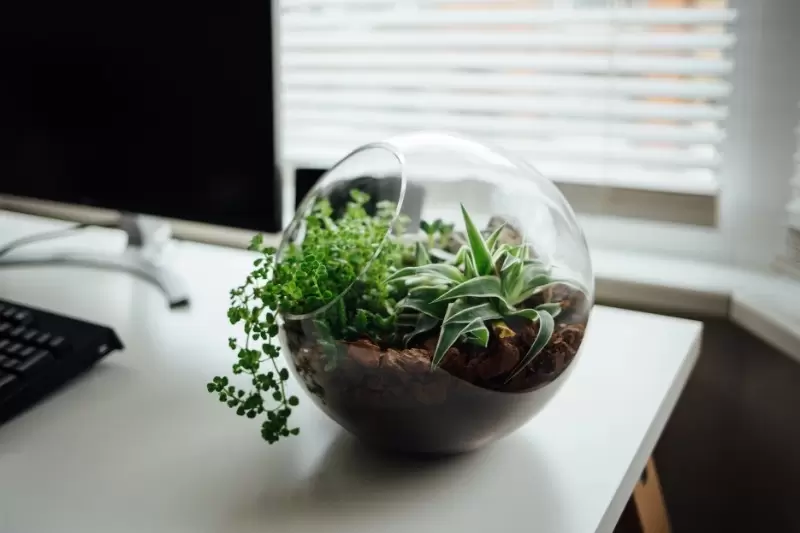
Why not make your own terrarium to add plants to your home in a fun and stylish way. Terrariums can be bought pre-planted and ready for you to take home and enjoy but making your own is even better as you get to choose the container, the plants and even the theme, making it a personal terrarium to have in your home. They are easy to both create and maintain.
Know the history before you make your own terrarium
Victorian physician Nathanial Bagshaw Ward was the first to find out ferns could be grown inside a bottle, and this was then used to transport plants around the world. Essentially a glass bottle, it was then called ‘The Wardian’.
Make your own terrarium with a choice of containers
You can use many shapes and sizes to create a terrarium, depending on the style you want it to be. You can take your pick from glass bottles to a bell-shaped cloche to even a hanging bauble.
Know the growing mediums used to make your own terrarium
Usually, there will be gravel at the bottom, charcoal, moss, and soil on top. This means plants that love moisture will take it from the soil, which evaporates via the leaves (transpiration), and as the water drops form, they will drip down and back into the soil, and the process happens over and over sustaining the plants in the terrarium.
Which plants to choose when making a terrarium
Moisture-loving plants are ideal for a closed terrarium due to the humidity, and plants such as cacti and succulents will grow well in an open terrarium where it is drier. Moss, mini Ferns, Hypoestes, Peperomias and even carnivorous plants will grow well in a terrarium. For dryer plants, try any mini succulent, cacti or air plant.
Make your own terrarium with a theme
You can delicately place your plants into the soil using tweezers if the opening is small, and it’s bound to look lovely no matter what you include. If you want to try going with a theme, here are some ideas:
- you could make your terrarium into a fairy world with a bit of house and mini fairy,
- if you have a dry terrarium, add a little sand and a mini beach ball and people hanging by the beach,
- another lovely idea is to create a fantastic underwater-themed terrarium with seastars, sand, seashells and coral,
- a popular choice is a woodland theme. Just add in some bark and moss,
- and many more, you can have lots of fun!
After you’ve made your own terrarium, how to care for it?
Make sure it isn’t placed in direct sunlight, and check how much water they need. Many won’t need any at all, but some will so gentle water or even use a mister to get the humidity up inside. If you have cacti and succulents, watering will be far less. You may need to prune some plants as they grow lightly.
To make your own terrarium plants and accessories, visit us in store.